![1-Butanol, 4-[(tetrahydro-2-furanyl)oxy]-](/_next/image/?url=https%3A%2Fstatic.cymitquimica.com%2Fcas-image%2Fthumb-webp%2F118925-1-butanol-4-tetrahydro-2-furanyl-oxy.webp&w=3840&q=75)
CAS 64001-06-5
:1-Butanol, 4-[(tetrahidro-2-furanil)oxi]-
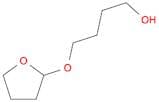
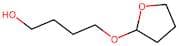
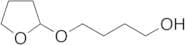
4-((Tetrahydrofuran-2-yl)oxy)butan-1-ol
CAS:Fórmula:C8H16O3Pureza:95%Forma y color:LiquidPeso molecular:160.21084-((Tetrahydrofuran-2-Yl)Oxy)Butan-1-Ol
CAS:4-((Tetrahydrofuran-2-Yl)Oxy)Butan-1-OlPureza:95%Peso molecular:160.21g/mol2-(4-Hydroxybutoxy)tetrahydrofuran
CAS:Producto controladoApplications 2-(4-Hydroxybutoxy)tetrahydrofuran is an impurity of Poly(butylene terephthalate) and a by-product of 1,4-Butanediol.
References Rafler, G., et al.: Acta Polymerica, 39, 661 (1988);Fórmula:C8H16O3Forma y color:Colourless LiquidPeso molecular:160.2112-(4-Hydroxybutoxy)tetrahydrofuran
CAS:Producto controlado2-(4-Hydroxybutoxy)tetrahydrofuran is a cyclic ether that is synthesized by the cyclodehydration of 2-butyrolactone. The reaction vessel used for this process must be inert and have an opening with a diameter of 1/8 inch to allow atomization. A catalyst such as sulfuric acid or phosphoric acid is used to promote the reaction and the desired product is obtained in high yield. The liquid phase is then removed from the reaction vessel and the product precipitates out as a white solid, which can then be washed with ether and dried under vacuum. This compound has been shown to have viscosity properties similar to those of tetrahydrofuran, but with a lower vapor pressure and higher boiling point. It also has been shown to react with amines, forming amides.
Fórmula:C8H16O3Pureza:Min. 95%Peso molecular:160.21 g/mol