CAS 652-37-9
:Acefilina
Descripción:
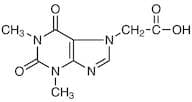
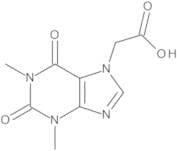
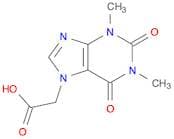
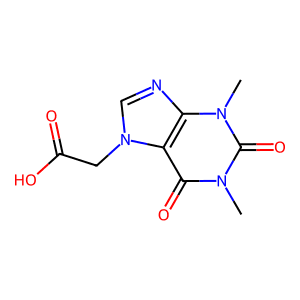
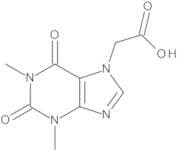
Acefilina, con el número CAS 652-37-9, es un compuesto químico que pertenece a la clase de los derivados de xantina, conocidos por sus propiedades farmacológicas. Se reconoce principalmente por su uso como broncodilatador, ayudando en el tratamiento de condiciones respiratorias como el asma y la enfermedad pulmonar obstructiva crónica (EPOC). El compuesto exhibe características típicas de las xantinas, incluida la capacidad de relajar el músculo liso bronquial y mejorar el flujo de aire. Acefilina es soluble en agua, lo que facilita su administración en diversas formulaciones farmacéuticas. Su mecanismo de acción implica la inhibición de la fosfodiesterasa, lo que lleva a un aumento de los niveles de AMP cíclico, contribuyendo a la broncodilatación. Además, puede poseer propiedades antiinflamatorias, lo que lo hace beneficioso en el manejo de la inflamación respiratoria. Sin embargo, al igual que otras xantinas, puede tener efectos secundarios como trastornos gastrointestinales y efectos cardiovasculares, lo que requiere un monitoreo cuidadoso durante su uso. En general, Acefilina es un compuesto valioso en la terapia respiratoria, contribuyendo a mejorar los resultados de los pacientes en el manejo de enfermedades de las vías respiratorias.
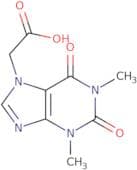
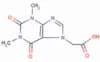
Fórmula:C9H10N4O4
InChI:InChI=1/C9H10N4O4/c1-11-7-6(8(16)12(2)9(11)17)13(4-10-7)3-5(14)15/h4H,3H2,1-2H3,(H,14,15)/p-1
Clave InChI:InChIKey=HCYFGRCYSCXKNQ-UHFFFAOYSA-N
SMILES:C(C(O)=O)N1C2=C(N(C)C(=O)N(C)C2=O)N=C1
Sinónimos:- (1,3-dimethyl-2,6-dioxo-1,2,3,6-tetrahydro-7H-purin-7-yl)acetate
- (1,3-dimethyl-2,6-dioxo-1,2,3,6-tetrahydro-7H-purin-7-yl)acetic acid
- 1,2,3,6-Tetrahydro-1,3-dimethyl-2,6-dioxo-7H-purine-7-acetic acid
- 1,2,3,6-Tetrahydro-1,3-dimethyl-2,6-dioxopurine-7-acetic acid
- 2-(1,3-Dimethyl-2,6-dioxo-2,3,6,7-tetrahydro-1H-purin-7-yl)acetic acid
- 2-(1,3-Dimethyl-2,6-dioxo-2,3-dihydro-1H-purin-7(6H)-yl)acetic acid
- 2-(1,3-Dimethyl-2,6-dioxopurin-7-yl)acetic acid
- 7-(Carboxymethyl)theophylline
- 7-Theophyllineacetic acid
- 7-Theophyllinylacetic acid
- 7H-Purine-7-acetic acid, 1,2,3,6-tetrahydro-1,3-dimethyl-2,6-dioxo-
- Acefylline
- Acephylline
- Carboxymethyltheophylline
- N-7-Theophyllineacetic acid
- NSC 52996
- Purine-7-acetic acid, 1,2,3,6-tetrahydro-1,3-dimethyl-2,6-dioxo-
- Theophyllineacetic acid
- CAFFEINE CARBOXYLIC ACID
- THEOPHYLINE ACETIC ACID
- LABOTEST-BB LT00053164
- THEOPHYLLINE-7-ACETIC ACID
- 1,2,3,6-tetrahydro-1,3-dimethyl-2,6-dioxopurine-7-aceticacid
- (1,3-DIMETHYL-2,6-DIOXO-1,2,3,6-TETRAHYDRO-PURIN-7-YL)-ACETIC ACID
- theophyllin-7-ylacetic acid
- 1,2,3,6-tetrahydro-1,3-dimethyl-2,6-dioxo-purine-7-aceticaci
- Theophylline-7-aceticacid,98%
- 7-theophyllinylaceticacid
- acidetheophylline-ethanoique-7
- 7-Theophyline Acetic Acid
- 1,3-DIMETHYLXANTHINE-7-ACETIC ACID
- 7-THEOPHYLLINE ACETIC ACID
- Ver más sinónimos
Ordenar por
Pureza (%)
0
100
|
0
|
50
|
90
|
95
|
100
Encontrado 14 productos.
Theophylline-7-acetic Acid
CAS:Fórmula:C9H10N4O4Pureza:>98.0%(T)(HPLC)Forma y color:White to Almost white powder to crystalPeso molecular:238.20Theophylline-7-acetic acid, 98%
CAS:This Thermo Scientific Chemicals brand product was originally part of the Alfa Aesar product portfolio. Some documentation and label information may refer to the legacy brand. The original Alfa Aesar product / item code or SKU reference has not changed as a part of the brand transition to Thermo SciFórmula:C9H10N4O4Pureza:98%Forma y color:White, PowderPeso molecular:238.27H-Purine-7-aceticacid, 1,2,3,6-tetrahydro-1,3-dimethyl-2,6-dioxo-
CAS:Fórmula:C9H10N4O4Pureza:%Forma y color:SolidPeso molecular:238.2001Acefylline
CAS:Acefylline (Theophylline-7-acetic acid), a stimulant drug of the xanthine chemical class, acts as an adenosine receptor antagonist.Fórmula:C9H10N4O4Pureza:99.57%Forma y color:White Crystalline SolidPeso molecular:238.2Theophylline 7-Acetic Acid
CAS:Fórmula:C9H10N4O4Forma y color:White To Off-White SolidPeso molecular:238.202-(1,3-Dimethyl-2,6-Dioxo-1,2,3,6-Tetrahydro-7H-Purin-7-Yl)Acetic Acid
CAS:2-(1,3-Dimethyl-2,6-Dioxo-1,2,3,6-Tetrahydro-7H-Purin-7-Yl)Acetic AcidPureza:98%Peso molecular:238.2g/molAcefylline (Theophylline-7-acetic acid)
CAS:Fórmula:C9H10N4O4Pureza:≥ 98.0%Forma y color:White to off-white powderPeso molecular:238.20Theophylline-7-acetic Acid
CAS:Producto controladoApplications A xanthine derivative with bronchodilator activity. Typically combined as salt component with other medications such as Ambroxol to treat bronchial and pulmonary diseases.
References Kim, S., et al.: J. Med. Chem., 45, 2131 (2002), Bruno-Blanch, L., et al.: Bioorg. Med. Chem. Lett., 13, 2749 (2003), Foppoli, A., et al.: J. Pharm. Sci., 96, 1139(2007),Fórmula:C9H10N4O4Forma y color:NeatPeso molecular:238.2Theophylline-7-acetic acid
CAS:Fórmula:C9H10N4O4Pureza:98%Forma y color:Solid, White to almost white powderPeso molecular:238.203Theophylline-7-acetic acid
CAS:Producto controladoTheophylline-7-acetic acid is a substance that has the chemical name of 2-amino-5-(1,3-dimethylxanthin-9-yl)benzoic acid. It is an amorphous substance with a biochemical property of being soluble in water and ethanol. Theophylline-7-acetic acid is used as a reagent for the quantitative determination of cardiac glycosides in human serum. This compound also reacts with a solution of sodium salts under constant pressure at room temperature and an electrochemical detector to yield an intense blue fluorescence. Structural analysis indicates that this substance contains a hydroxyl group, which can be found in proteins, fatty acids, and pharmacokinetics.Fórmula:C9H10N4O4Pureza:Min. 95%Forma y color:PowderPeso molecular:238.2 g/mol