CAS 6652-28-4
:Éter isopropílico de benzoína
Descripción:
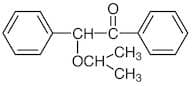
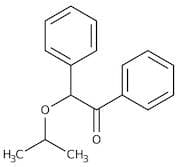
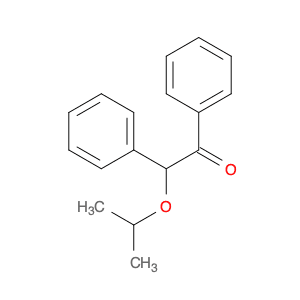
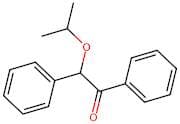
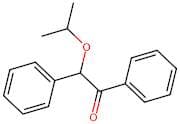
Éter isopropílico de benzoína, con el número CAS 6652-28-4, es un compuesto orgánico que pertenece a la clase de los éteres. Se caracteriza por su estructura, que presenta un grupo de benceno unido a un grupo de éter isopropílico. Este compuesto típicamente aparece como un líquido incoloro a amarillo pálido y es conocido por su agradable olor aromático. Éter isopropílico de benzoína es soluble en disolventes orgánicos como el etanol y el éter, pero tiene una solubilidad limitada en agua. Se utiliza principalmente como fotoiniciador en procesos de polimerización, particularmente en la producción de recubrimientos, adhesivos e tintas, debido a su capacidad para generar radicales libres al exponerse a la luz UV. Además, exhibe estabilidad en condiciones normales, pero debe manejarse con cuidado, ya que puede ser reactivo en ciertas circunstancias. Las precauciones de seguridad son esenciales al trabajar con este compuesto, ya que puede representar riesgos para la salud si se inhala o se ingiere. En general, Éter isopropílico de benzoína es una sustancia valiosa en diversas aplicaciones industriales, particularmente en el campo de la fotopolimerización.
Fórmula:C17H18O2
InChI:InChI=1S/C17H18O2/c1-13(2)19-17(15-11-7-4-8-12-15)16(18)14-9-5-3-6-10-14/h3-13,17H,1-2H3
Clave InChI:InChIKey=MSAHTMIQULFMRG-UHFFFAOYSA-N
SMILES:C(C(=O)C1=CC=CC=C1)(OC(C)C)C2=CC=CC=C2
Sinónimos:- (2R)-1,2-diphenyl-2-(propan-2-yloxy)ethanone
- (2S)-1,2-diphenyl-2-(propan-2-yloxy)ethanone
- 1,2-Diphenyl-2-(Propan-2-Yloxy)Ethanone
- 1,2-Diphenyl-2-propan-2-yloxyethanone
- 2-(1-Methylethoxy)-1,2-diphenylethanone
- 2-Hydroxy-1,2-Diphenylethanone - 2-(Propan-2-Yloxy)Propane (1:1)
- 2-Isopropoxy-1,2-diphenylethan-1-one
- 2-Isopropoxy-1,2-diphenylethanone
- 2-Isopropoxy-2-phenylacetophenone
- Acetophenone, 2-isopropoxy-2-phenyl-
- Ethanone, 2-(1-methylethoxy)-1,2-diphenyl-
- Glocure 31
- Isopropyl benzoin ether
- Nisso Cure IBPO
- Ps 10A
- Seikuol BIP
- Vicure 30
- alpha-Isopropoxy-alpha-phenylacetophenone
- α-Isopropoxydeoxybenzoin
- Ver más sinónimos
Ordenar por
Pureza (%)
0
100
|
0
|
50
|
90
|
95
|
100
Encontrado 8 productos.
Benzoin Isopropyl Ether
CAS:Fórmula:C17H18O2Pureza:>99.0%(GC)Forma y color:White to Almost white powder to crystalPeso molecular:254.33Benzoin isopropyl ether, 98+%
CAS:This Thermo Scientific Chemicals brand product was originally part of the Alfa Aesar product portfolio. Some documentation and label information may refer to the legacy brand. The original Alfa Aesar product / item code or SKU reference has not changed as a part of the brand transition to Thermo Sci
Fórmula:C17H18O2Pureza:98+%Forma y color:White, Crystals or powder or crystalline powderPeso molecular:254.332-Isopropoxy-2-Phenylacetophenone
CAS:2-Isopropoxy-2-PhenylacetophenonePureza:≥98%Peso molecular:254.32g/mol2-Isopropoxy-2-Phenylacetophenone
CAS:2-Isopropoxy-2-Phenylacetophenone is a natural compound, a derivative of benzoin. Benzoin is a naturally occurring benzaldehyde found in many plants.Fórmula:C17H18O2Pureza:98.37%Forma y color:SolidPeso molecular:254.32rac-Benzoin isopropyl ether
CAS:Benzoin is a naturally occurring phenolic compound. Benzoin is used as a fragrance and flavoring agent in foods, beverages, sweets, toothpaste, mouthwash, and cigarettes. Benzoin is also used as a reagent to make other chemicals such as acetophenone. Rac-Benzoin isopropyl ether (BEN) is an organic chemical that has a hydroxyl group on the benzoin molecule. It can be used to detect radiation by initiating polymerization of polycarboxylic acid molecules. BEN has been shown to have kinetic properties that are dependent on the matrix effect and the concentration of cross-linking agent. This chemical has also been shown to be useful for the preparation of boron nitride films with high diphenyl ether content and high surface area with low density. The most common use for BEN is as a cross-linking agent in the production of fatty acid matrices for flow assays.Fórmula:C17H18O2Pureza:Min. 95%Forma y color:PowderPeso molecular:254.32 g/mol