CAS 67-99-2
:Gliotoxina
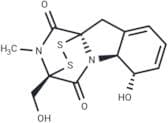
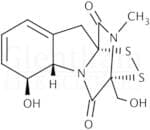
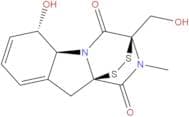
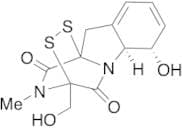
- (3R,5aS,6S,10aR)-2,3,5a,6-Tetrahydro-6-hydroxy-3-(hydroxymethyl)-2-methyl-10H-3,10a-epidithiopyrazino[1,2-a]indole-1,4-dione
- (3R,5aS,6S,10aR)-6-hydroxy-3-(hydroxymethyl)-2-methyl-2,3,6,10-tetrahydro-5aH-3,10a-epidithiopyrazino[1,2-a]indole-1,4-dione
- 10H-3,10a-Epidithiopyrazino[1,2-a]indole-1,4-dione, 2,3,5a,6-tetrahydro-6-hydroxy-3-(hydroxymethyl)-2-methyl-, (3R,5aS,6S,10aR)-
- 10H-3,10a-Epidithiopyrazino[1,2-a]indole-1,4-dione, 2,3,5a,6-tetrahydro-6-hydroxy-3-(hydroxymethyl)-2-methyl-, [3R-(3α,5aβ,6β,10aα)]-
- Aspergillin
- Gliotoxin
- Gliotoxin, Gladiocladium fimbriatum
- S. N. 12870
Gliotoxin
CAS:Gliotoxin, a mycotoxin, inhibits Wnt pathway, causing apoptosis in mutated colorectal cancer cells and blocks NF-κB by preserving IκB.Fórmula:C13H14N2O4S2Pureza:98%Forma y color:SolidPeso molecular:326.39Gliotoxin from Gliocladium fimbriatum
CAS:Gliotoxin from Gliocladium fimbriatumFórmula:C13H14N2O4S2Pureza:By hplc: 99.42% (Typical Value in Batch COA)Forma y color: white powderPeso molecular:326.39g/molGliotoxin
CAS:Applications Gliotoxin is a sulfur-containing mycotoxin produced by species of fungi and pathogens of humans. Gliotoxin exhibits inhibitory activities against histone H3K9 methyltransferase, a key enzyme in the regulation of transcriptional activity by writing epigenetic marks. Gliotoxin also exhibits immunosuppressive properties by causing apoptosis of cells of the immune system. In addition, various studies suggests Gliotoxin may also be a potential anti-inflammatory, antibiotic, antifungal and antiviral agent.
Not a dangerous good if item is equal to or less than 1g/ml and there is less than 100g/ml in the package
References Takahashi, M., et al.: J. Antibiotics., 65, 263 (2012); Li., Y.G., et al.: Biochem. Biophy. Rsch. Commun., 422, 85 (2012); Zhang, H.C., et al.: Applied, Mech. Mater., 178, 783 (2012); Scharf, D.H., et al.: Appl. Microbiol. Biotechnol., 93, 467 (2012);Fórmula:C13H14N2O4S2Forma y color:NeatPeso molecular:326.39Gliotoxin
CAS:Gliotoxin is a bioactive mycotoxin and antibiotic compound, which is primarily derived from various species of Aspergillus and Penicillium fungi. This epipolythiodioxopiperazine (ETP) toxin possesses a unique disulfide bridge that plays a pivotal role in its biological activity. Gliotoxin exerts its effects through the induction of oxidative stress by generating reactive oxygen species (ROS) and disrupting cellular redox balance. Additionally, it can inhibit the activation of crucial transcription factors like NF-κB, thereby modulating immune responses.Fórmula:C13H14N2O4S2Pureza:Min. 95%Peso molecular:326.0395