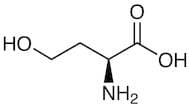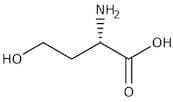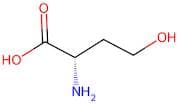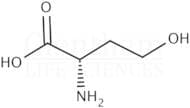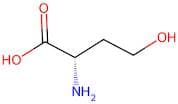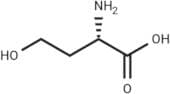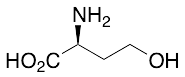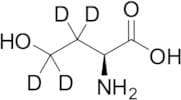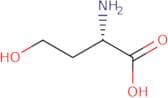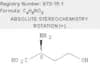
CAS 672-15-1
:L-Homoserina
Descripción:
L-Homoserina es un aminoácido que desempeña un papel crucial en varios procesos biológicos. Se clasifica como un aminoácido no esencial, lo que significa que puede ser sintetizado por el cuerpo. L-Homoserina se caracteriza por sus grupos funcionales hidroxilo y amino, que contribuyen a su solubilidad en agua. Es un sólido cristalino incoloro a temperatura ambiente y tiene un sabor ligeramente dulce. Este compuesto está involucrado en la biosíntesis de otros aminoácidos, como la treonina y la metionina, y también es un precursor en la síntesis de ciertas vitaminas. L-Homoserina se utiliza en diversas aplicaciones, incluyendo como suplemento nutricional y en investigación bioquímica. Su fórmula molecular es C4H9NO3, y tiene un peso molecular que refleja su estructura. Además, L-Homoserina puede participar en diversas vías metabólicas, lo que lo hace significativo tanto en la fisiología de las plantas como en la de los animales. Su estabilidad y reactividad bajo diferentes condiciones son importantes para su papel en los procesos bioquímicos.
Fórmula:C4H9NO3
InChI:InChI=1S/C4H9NO3/c5-3(1-2-6)4(7)8/h3,6H,1-2,5H2,(H,7,8)/t3-/m0/s1
Clave InChI:InChIKey=UKAUYVFTDYCKQA-VKHMYHEASA-N
SMILES:[C@H](CCO)(C(O)=O)N
Sinónimos:- (2S)-2-Amino-4-hydroxybutanoic acid
- (S)-2-Amino-4-hydroxybutanoic acid
- (S)-Homoserine
- 2-Amino-4-hydroxybutanoic acid
- 2-Amino-4-hydroxybutyric acid
- <span class="text-smallcaps">L</span>-Homoserine
- Butanoic Acid, 2-Amino-4-Hydroxy-, L-
- Butanoic acid, 2-amino-4-hydroxy-, (S)-
- Butyric acid, 2-amino-4-hydroxy-
- Butyric acid, 2-amino-4-hydroxy-, <span class="text-smallcaps">L</span>-
- Butyric acid, 2-amino-4-hydroxy-, L-
- Homoserine
- L-Homoserin
- L-homoserina
- Nsc 206251
- L-Beta-Homo-Ser
- Homoserine (VAN)
- H-Homoserine
- L-Homoser
- L-Homoserine
- Ver más sinónimos
Ordenar por
Pureza (%)
0
100
|
0
|
50
|
90
|
95
|
100
Encontrado 13 productos.
L-Homoserine
CAS:Fórmula:C4H9NO3Pureza:>98.0%(T)Forma y color:White to Almost white powder to crystalPeso molecular:119.12L-Homoserine, 99%
CAS:L-Homoserine is used in the biosynthesis of methionine, threonine and isoleucine. This Thermo Scientific Chemicals brand product was originally part of the Alfa Aesar product portfolio. Some documentation and label information may refer to the legacy brand. The original Alfa Aesar product / item codFórmula:C4H9NO3Pureza:99%Forma y color:White to pale cream, Crystals or powder or crystalline powderPeso molecular:119.12(2S)-2-Amino-4-hydroxybutanoic acid
CAS:Fórmula:C4H9NO3Pureza:97%Forma y color:SolidPeso molecular:119.1192Ref: IN-DA00IBOQ
1kgA consultar5kgA consultar100mg20,00€1g22,00€5g26,00€10g28,00€25g52,00€100g121,00€500g562,00€L-Homoserine
CAS:L-HomoserineFórmula:C4H9NO3Pureza:98%Forma y color: pale yellow solidPeso molecular:119.12g/molL-Homoserine
CAS:Fórmula:C4H9NO3Pureza:≥ 98.0%Forma y color:White crystalline powderPeso molecular:119.12L-Homoserine
CAS:L-Homoserine is a reactive serine variant with an extra CH2, forms a 5-membered ring, not in proteins, and is made after cyanogen bromide cleavage.Fórmula:C4H9NO3Pureza:99.77%Forma y color:SolidPeso molecular:119.12L-Homoserine
CAS:Producto controladoApplications L-Homoserine is used in the preparation nucleoside amino acids as histone methyltransferase inhibitors
References Schuele, Roland. et al., PCT Int. Appl. 133pp.(2021);Fórmula:C4H9NO3Forma y color:Light Yellow CrystallinePeso molecular:119.12L-Homoserine
CAS:L-Homoserine is a cyclic dipeptide that inhibits the enzyme homoserine dehydrogenase and its conversion of L-homoserine to L-threonine. L-Homoserine is not an antimicrobial agent, but it has been shown to be a potent antagonist of the bacterial homoserine dehydrogenase. The inhibition of this enzyme prevents the conversion of L-homoserine to L-threonine and leads to a buildup of homoserine in bacteria. This accumulation can lead to bacterial cell death by inhibiting protein synthesis and DNA replication. The use of L-homoserine as an antimicrobial agent is being studied for wastewater treatment because it may be able to degrade hazardous compounds found in wastewater, such as antibiotics and other pharmaceuticals.Fórmula:C4H9NO3Pureza:Min. 98.0 Area-%Forma y color:White PowderPeso molecular:119.12 g/mol