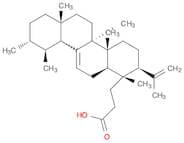
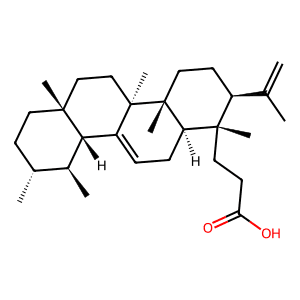
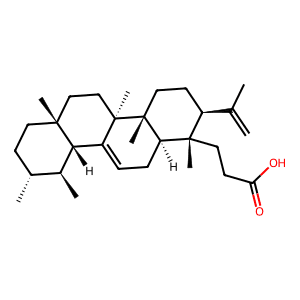
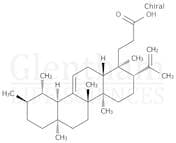
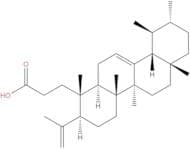
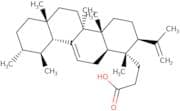
CAS 6812-81-3
:Ácido robúrico
- (1S,2S,4aR,4bS,6aR,9R,10S,10aR,12aR)-1,2,3,4,4a,4b,5,6,6a,7,8,9,10,10a,12,12a-Hexadecahydro-1,4a,4b,6a,9,10-hexamethyl-2-(1-methylethenyl)-1-chrysenepropanoic acid
- 1-Chrysenepropanoic acid, 1,2,3,4,4a,4b,5,6,6a,7,8,9,10,10a,12,12a-hexadecahydro-1,4a,4b,6a,9,10-hexamethyl-2-(1-methylethenyl)-, (1S,2S,4aR,4bS,6aR,9R,10S,10aR,12aR)-
- 1-Chrysenepropanoic acid, 1,2,3,4,4a,4b,5,6,6a,7,8,9,10,10a,12,12a-hexadecahydro-1,4a,4b,6a,9,10-hexamethyl-2-(1-methylethenyl)-, [1S-(1α,2β,4aβ,4bα,6aβ,9α,10β,10aβ,12aα)]-
- 1-Chrysenepropionic acid, 1,2,3,4,4a,4b,5,6,6a,7,8,9,10,10aα,12,12aβ-hexadecahydro-2α-isopropenyl-1α,4aα,4bβ,6aα,9β,10α-hexamethyl-
- 3,4-Secoursa-4(23),12-dien-3-oic acid
- 3-[(1S,2S,4aR,4bS,6aR,9R,10S,10aR,12aR)-2-isopropenyl-1,4a,4b,6a,9,10-hexamethyl-2,3,4,5,6,7,8,9,10,10a,12,12a-dodecahydrochrysen-1-yl]propanoic acid
- Roburic acid
- 3,4-Secours-4(23),12-dien-3-oic acid
- roburicaci
- 3,4-Secoursa-4(23),12-dien-3-oicacid(7CI)
- Roburic acid, 98%, from Gentiana macrophylla Pall.
Roburic Acid
CAS:Roburic acid is a new triterpene 3,4-seco-acid from Section Cruciata of Gentiana.[1,2]Fórmula:C30H48O2Pureza:95%~99%Forma y color:White powderPeso molecular:440.712Roburic acid
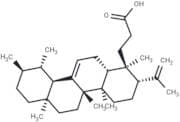
CAS:Roburic acid and phenethyl-trans-ferulate inhibit COX-1 and COX-2.Fórmula:C30H48O2Pureza:98.765% - 99.88%Forma y color:SolidPeso molecular:440.70Roburic acid
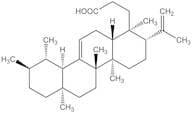
CAS:Alicyclic monobasic carboxylic acidFórmula:C30H48O2Pureza:≥ 98.0 % (HPLC)Forma y color:PowderPeso molecular:440.71Roburic Acid
CAS:Producto controladoApplications Roburic Acid is a natural triterpene used in the treatment of anti-inflammatory preparations. Works through the inhibition of prostaglandin E2 Synthase-1.
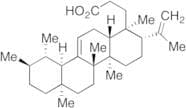
References Verhoff, M. et al.: J. Nat Prod., 77, 1445 (2014); Cao, H. et al.: Pharm. Res., 61, 519 (2010);Fórmula:C30H48O2Forma y color:NeatPeso molecular:440.7Roburic acid
CAS:Roburic acid is a monocarboxylic acid that is found in the Indian spice Curcuma aromatica. It has been shown to inhibit curcuma aromatica-induced inflammation by inhibition of COX-2, as well as other inflammatory diseases. The most common technique used to identify roburic acid is a chromatographic technique with different solvents and detection by UV light. Roburic acid has also been shown to inhibit the synthesis of prostaglandin E2 (PGE2) in cells, which may be due to its ability to cause cell lysis. There are no toxicity profiles for roburic acid because it does not have significant effects on animal models.
Fórmula:C30H48O2Pureza:Min. 98 Area-%Forma y color:PowderPeso molecular:440.7 g/mol