CAS 6982-09-8
:4-Hexadeceno-1,3-diol, 2-amino-, (2S,3R,4E)-
Descripción:
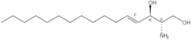
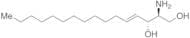
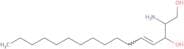
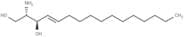
4-Hexadeceno-1,3-diol, 2-amino-, (2S,3R,4E)-, con el número CAS 6982-09-8, es un compuesto orgánico caracterizado por su larga cadena de hidrocarburo y la presencia de grupos funcionales tanto hidroxilo (-OH) como amino (-NH2). Este compuesto presenta un doble enlace en su cadena de carbono, específicamente en la posición 4, lo que contribuye a su insaturación. La estereoquímica indicada por (2S,3R,4E) sugiere disposiciones espaciales específicas de los sustituyentes alrededor de los centros quirales, influyendo en su reactividad e interacciones. La presencia de grupos hidroxilo generalmente mejora la solubilidad en disolventes polares y puede participar en enlaces de hidrógeno, mientras que el grupo amino puede conferir basicidad y reactividad en diversas reacciones químicas. Este compuesto puede encontrar aplicaciones en campos como la bioquímica, la farmacéutica o la ciencia de materiales, donde sus grupos funcionales únicos pueden ser utilizados para la síntesis o como intermediarios en procesos químicos. En general, sus características estructurales sugieren una versatilidad potencial en la reactividad química y aplicaciones.
Fórmula:C16H33NO2
Ordenar por
Pureza (%)
0
100
|
0
|
50
|
90
|
95
|
100
Encontrado 4 productos.
c16-Sphingosine
CAS:Sphingosine is a long-chain fatty acid that is naturally found in the human body. It has been shown to have a role in regulating cellular metabolism and apoptosis, as well as inflammatory responses. Sphingosine is metabolized through the action of hydrochloric acid and hydrogen chloride to form sphinganine, which can then be converted into other metabolites. The metabolism of sphingosine is an important factor for determining its effects on the body. Chronic exposure to sphingosine may result in an accumulation of metabolites in the body, which may lead to metabolic profiles that are similar to those seen in various diseases such as cancer and inflammatory diseases.Fórmula:C16H33NO2Pureza:Min. 95%Peso molecular:271.44 g/molSphingosine (d16:1)
CAS:Sphingosine (d16:1), an unconventional sphingolipid, is synthesized through enzymatic reactions starting with the condensation of myristoyl-CoA and serine by serine palmitoyltransferase long-chain base subunit 3 (SPTLC3), which shows a preference for myristoyl-CoA. This compound is found in minute quantities in its free form in human plasma and as a component of various plasma sphingolipids, such as sphingosine-1-phosphate, ceramides, sphingomyelins, and in brain cerebrosides, albeit at lower concentrations than the more common d18:1 sphingoid base. Sphingosine (d16:1) acts as an inhibitor of PKC in mixed micelle assays and diminishes superoxide production triggered by phorbol 12-myristate 13-acetate in isolated human neutrophils, as well as inhibiting the growth of CHO cells with IC50 values of 1 and 3.2 µM, respectively. Additionally, the concentration of sphingolipids containing sphingosine (d16:1) in the plasma is linked to the dietary consumption of saturated fatty acids and protein among ethnic Chinese populations.Fórmula:C16H33NO2Forma y color:SolidPeso molecular:271.4