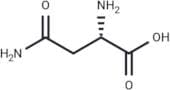
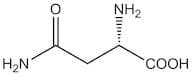
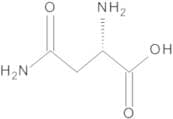
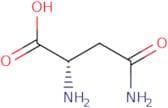
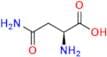
CAS 70-47-3
:(-)-Asparagina
Descripción:
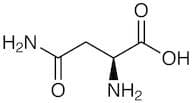
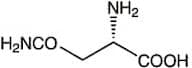
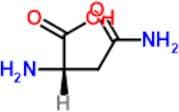
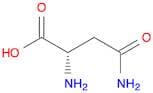
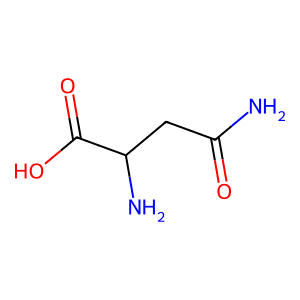
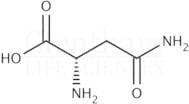
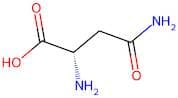
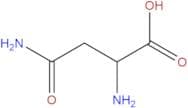
(-)-Asparagina es un aminoácido que juega un papel crucial en la síntesis de proteínas y el metabolismo. Se clasifica como un aminoácido no esencial, lo que significa que el cuerpo puede sintetizarlo a partir de otros compuestos. La fórmula química de (-)-Asparagina es C4H8N2O3, y presenta tanto un grupo amino (-NH2) como un grupo carboxilo (-COOH), característicos de los aminoácidos. Este compuesto existe en dos formas enantioméricas, siendo (-)-Asparagina la forma que ocurre naturalmente. Es soluble en agua, lo que facilita su papel en los sistemas biológicos. (-)-Asparagina está involucrado en varios procesos metabólicos, incluida la síntesis de nucleótidos y la regulación del metabolismo del nitrógeno. Además, puede servir como precursor para la síntesis de otros aminoácidos y neurotransmisores. En términos de seguridad, aunque generalmente se reconoce como seguro para el consumo, una ingesta excesiva puede llevar a desequilibrios metabólicos. En general, (-)-Asparagina es esencial para la función y el crecimiento celular, particularmente en células que se dividen rápidamente.
Fórmula:C4H8N2O3
InChI:InChI=1/C4H10N2O3/c5-2-9-1-3(6)4(7)8/h3H,1-2,5-6H2,(H,7,8)/t3-/m0/s1
Clave InChI:InChIKey=DCXYFEDJOCDNAF-REOHCLBHSA-N
SMILES:[C@H](CC(N)=O)(C(O)=O)N
Sinónimos:- (2S)-2-Amino-3-carbamoylpropanoic acid
- (2S)-2-amino-3-(aminomethoxy)propanoic acid
- (2S)-4-Amino-2-azaniumyl-4-oxobutanoate
- (S)-(+)-2-Aminosuccinamic acid
- (S)-(+)-Asparagine
- (S)-2,4-Diamino-4-oxobutanoic acid
- (S)-2-AMINOSUCCINIC ACID 4-AMIDEl-aspargine
- 4-AMIDE-2-aminosuccinamic acid
- <span class="text-smallcaps">L</span>-2,4-Diamino-4-oxobutanoic acid
- <span class="text-smallcaps">L</span>-Asparagine
- <span class="text-smallcaps">L</span>-Aspartamine
- <span class="text-smallcaps">L</span>-β-Asparagine
- Agedoite
- Altheine
- Asn
- Asparagin
- Asparagine
- Asparagine L-, Anhydrous
- Asparagine acid
- Asparagine, <span class="text-smallcaps">L</span>-
- Asparagine, L-
- Asparaginic Acid
- Asparamide
- Asparraguina
- Aspartamic acid
- Aspartic Acid
- Aspartic acid amide
- Aspartic acid β-amide
- Butanoic acid, 2,4-diamino-4-oxo-, (S)-
- Crystal VI
- H-Asn-OH
- L-2,4-Diamino-4-oxobutanoic acid
- L-2-Aminobutanedioic Acid
- L-2-Aminosuccinamic acid
- L-Aspartamine
- L-β-Asparagine
- Nsc 82391
- α-Aminosuccinamic acid
- L-Asparagine
- L-(+)-Asparagine anhydrous
- ALPHA-AMINOSUCCINAMIC ACID
- (S)-2-AMINOSUCCINIC ACID 4-AMIDE
- L-ASPARTIC ACID 4-AMIDE
- Aspartic acid beta amide
- alpha Amminosuccinamic acid
- L-beta-Asparagine
- Ver más sinónimos
Ordenar por
Pureza (%)
0
100
|
0
|
50
|
90
|
95
|
100
Encontrado 16 productos.
L-Asparagine Anhydrous
CAS:Fórmula:C4H8N2O3Pureza:>98.0%(T)Forma y color:White to Almost white powder to crystalPeso molecular:132.12L-(+)-Asparagine, 99%
CAS:L-(+)-Asparagine acts as a precursor to aspartate. It is also used as a diuretic. It is also employed in the biosynthesis of glycoproteins and proteins. It acts as a food additive. It reacts with reducing sugar to yield acrylamide, which finds application in french fries, potato chips, and toasted bFórmula:C4H8N2O3Pureza:99%Forma y color:White, Powder or crystalline powder or crystalsPeso molecular:132.12Asparagine Anhydrous
CAS:Acyclic amides (including acyclic carbamates) and their derivatives and salts thereof, nesoiFórmula:C4H8N2O3Forma y color:White PowderPeso molecular:132.05349L-Asparagine, anhydrous
CAS:Fórmula:C4H8N2O3Pureza:98.0 - 102.0 % (dried basis)Forma y color:White crystalline powderPeso molecular:132.12L-Asparagine, anhydrous, USP-NF grade
CAS:Fórmula:C4H8N2O3Pureza:98.0 - 101.5 %Forma y color:White crystalline powderPeso molecular:132.12L-Asparagine
CAS:L-AsparagineFórmula:C4H8N2O3Pureza:99%Forma y color: white powderPeso molecular:132.12g/molL-Asparagine
CAS:L-Asparagine, a non-essential amino acid, is made from aspartic acid and ammonia for brain and nerve function.Fórmula:C4H8N2O3Pureza:99.95%Forma y color:Orthorhombic Bisphenoidal Crystals SolidPeso molecular:132.12L-asparagine
CAS:Amino acidFórmula:C4H8N2O3Pureza:≥ 98.0 % (HPLC)Forma y color:PowderPeso molecular:132.12L-Asparagine
CAS:Producto controladoApplications L-Asparagine is one of the precursors for acrylamide formation. Added asparagine dramatically increased the content of acrylamide in crusts dry matter.
References Surdyk, N., et al.: J. Agric. Food Chem., 52, 2047 (2004);Fórmula:C4H8N2O3Forma y color:NeatPeso molecular:132.12L-Asparagine anhydrous
CAS:L-Asparagine anhydrous is a guanine nucleotide-binding protein that binds to the response element of the human serum albumin gene. It has been shown to stimulate liver enzymes and increase the synthesis of low-density lipoprotein (LDL) cholesterol, which may lead to atherosclerosis. L-Asparagine anhydrous has been used in wastewater treatment as a nitrogen source for nitrification and denitrification. The enzyme activity of L-asparagine anhydrous has been shown to be high in tumour cells and is also present in solid tumours. This protein can be used as a model system for studying oligosaccharides because it is able to produce these molecules from glucose. L-Asparagine anhydrous is not active against carcinoma cell lines, but it does have some activity against solid tumours.Fórmula:C4H8N2O3Forma y color:White Off-White PowderPeso molecular:132.12 g/molH-Asn-OH
CAS:M02999 - H-Asn-OH
Fórmula:C4H8N2O3Pureza:98%Forma y color:Crystalline Powder,PowderPeso molecular:132.119