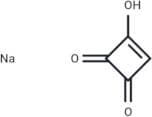
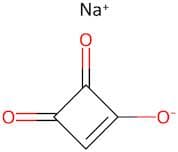
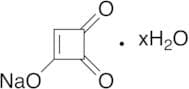
CAS 71376-34-6
:3-Ciclobuteno-1,2-diona, 3-hidroxi-, sal de sodio (1:1)
- 3-Cyclobutene-1,2-dione, 3-hydroxy-, sodium salt
- 3-Cyclobutene-1,2-dione, 3-hydroxy-, sodium salt (1:1)
- 3-Hydroxy-3-cyclobutenedione sodium salt
- 3-Hydroxycyclobut-3-Ene-1,2-Dione
- Moniliformin
- Moniliformin sodium salt
- Sodium 3,4-Dioxocyclobut-1-En-1-Olate
Moniliformin sodium salt
CAS:Moniliformin sodium salt is water-soluble mycotoxin isolate from Fusarium moniliforme.Fórmula:C4HNaO3Pureza:98%Forma y color:SolidPeso molecular:120.04Moniliformin sodium salt from Fusarium moniliforme
CAS:Moniliformin sodium salt from Fusarium moniliformeFórmula:C4HO3·NaPureza:>99% (tlc) (Typical Value in Batch COA)Forma y color: faint yellow to tan powderPeso molecular:120.04g/molMoniliformin Sodium Hydrate
CAS:Applications Moniliformin Sodium is a mycotoxin produced with fungi of the Fusarium genus that act as common pathogens to corn and other agricul
Not a dangerous good if item is equal to or less than 1g/ml and there is less than 100g/ml in the package
References Rabie, C. et al.: Appl. Environ. Microbiol., Duke, S.O. et al.: Toxins., 3, 1038 (2011);Fórmula:C4HO3·Na·x(H2O)Forma y color:NeatPeso molecular:138.054Moniliformin
CAS:Moniliformin is a mycotoxin, which is produced by certain Fusarium species, primarily Fusarium moniliforme and Fusarium proliferatum. This compound is a secondary metabolite, with a unique chemical structure characterized by a low-molecular-weight organic acid, having a cyclobutane ring. Moniliformin's mode of action involves the inhibition of key enzymes in cellular respiration, such as pyruvate dehydrogenase, which disrupts carbohydrate metabolism and affects energy production in cells. The toxin predominantly impacts cardiac muscle cells, leading to cardiotoxic effects, which may cause severe health issues in animals.
Pureza:Min. 95%