CAS 7226-23-5
:1,3-Dimetil-3,4,5,6-tetrahidro-2(1H)-pirimidinona
Descripción:
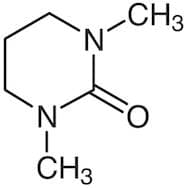
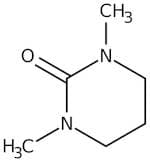
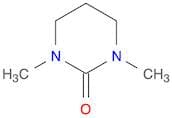
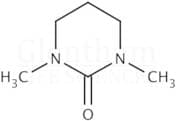
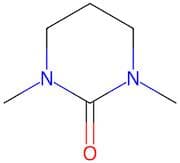
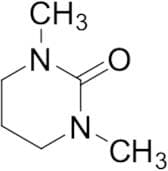
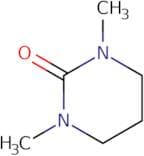
1,3-Dimetil-3,4,5,6-tetrahidro-2(1H)-pirimidinona, con el número CAS 7226-23-5, es un compuesto orgánico heterocíclico caracterizado por su estructura de pirimidinona. Este compuesto presenta un sistema de anillo saturado, lo que contribuye a su estabilidad y reactividad. Contiene dos grupos metilo en las posiciones 1 y 3, lo que mejora su lipofilia y puede influir en su actividad biológica. La presencia del grupo carbonilo en la estructura de pirimidinona permite la formación de enlaces de hidrógeno, lo que puede afectar la solubilidad y la interacción con otras moléculas. Este compuesto es típicamente un líquido o sólido incoloro a amarillo pálido, dependiendo de su pureza y forma. Es soluble en disolventes polares, lo que lo hace útil en diversas aplicaciones químicas, incluyendo como un bloque de construcción en la síntesis orgánica y en la investigación farmacéutica. Su estructura única también puede conferir propiedades farmacológicas específicas, lo que lo hace de interés en la química medicinal. Se deben consultar los datos de seguridad para el manejo y almacenamiento, como con todas las sustancias químicas.
Fórmula:C6H12N2O
InChI:InChI=1S/C6H12N2O/c1-7-4-3-5-8(2)6(7)9/h3-5H2,1-2H3
Clave InChI:InChIKey=GUVUOGQBMYCBQP-UHFFFAOYSA-N
SMILES:O=C1N(C)CCCN1C
Sinónimos:- 1,3-Dimethyl-1,3-Diazinan-2-One
- 1,3-Dimethyl-2-oxohexahydropyrimidine
- 1,3-Dimethyl-3,4,5,6-tetrahydro-2(1H)-pyrimidone
- 1,3-Dimethyl-3,4,5,6-tetrahydro-2-pyrimidinone
- 1,3-Dimethylpropyleneurea
- 1,3-Dimethyltetrahydropyrimidin-2(1H)-one
- 2(1H)-Pyrimidinone, tetrahydro-1,3-dimethyl-
- DMPU (solvent)
- Dmpu
- N,N-Dimethylpropyleneurea
- N,N′-Dimethyl-1,3-propanediamine cyclic urea
- N,N′-Dimethyl-3,4,5,6-tetrahydro-2(1H)-pyrimidinone
- N,N′-Dimethyl-N,N′-propyleneurea
- N,N′-Dimethyltrimethyleneurea
- Ver más sinónimos
Ordenar por
Pureza (%)
0
100
|
0
|
50
|
90
|
95
|
100
Encontrado 9 productos.
1,3-Dimethyl-3,4,5,6-tetrahydro-2(1H)-pyrimidinone
CAS:Fórmula:C6H12N2OPureza:>98.0%(GC)Forma y color:Colorless to Light yellow to Light orange clear liquidPeso molecular:128.181,3-Dimethyl-3,4,5,6-tetrahydro-2(1H)-pyrimidinone, 98%
CAS:1,3-Dimethyl-3,4,5,6-tetrahydro-2(1H)-pyrimidinone is a versatile solvent used in the N-alkylation of chiral and O-alkylation of aldoses. It is involved in the preparation of poly(aryl ethers). It is a cyclic urea and used as a polar aprotic organic solvent. Further, it reacts with trifluoro-methane
Fórmula:C6H12N2OPureza:98%Forma y color:Clear colorless to pale yellow, LiquidPeso molecular:128.181,3-Dimethyltetrahydropyrimidin-2(1H)-one
CAS:Fórmula:C6H12N2OPureza:97%Forma y color:LiquidPeso molecular:128.1723Ref: IN-DA0032M0
10g20,00€25g20,00€50g25,00€100g28,00€250g53,00€500g72,00€100kgA consultar250kgA consultar1,3-Dimethyl-3,4,5,6-tetrahydro-2(1H)-pyrimidinone
CAS:Fórmula:C6H12N2OPureza:≥ 98.0%Forma y color:Colourless to light yellow liquidPeso molecular:128.181,3-Dimethyltetrahydropyrimidin-2(1H)-one
CAS:1,3-Dimethyltetrahydropyrimidin-2(1H)-oneFórmula:C6H12N2OPureza:≥95%Forma y color: clear. almost colourless liquidPeso molecular:128.17228g/mol1,3-Dimethyl-3,4,5,6-tetrahydro-2(1H)-pyrimidinone
CAS:Producto controladoApplications 1,3-Dimethyl-3,4,5,6-tetrahydro-2(1H)-pyrimidinone is used in preparation and structure of alkaline earth iodide phosphine oxide and urea complexes as reactant or reagents.
References Fitts, Lacey S., et al.: New J. of Chem., (2016); Hall, Jessica E., et al.: Angew. Chem. Int. Ed., 55, 11153-11157 (2016)Fórmula:C6H12N2OForma y color:NeatPeso molecular:128.17Tetrahydro-1,3-dimethyl-1H-pyrimidin-2-one
CAS:Tetrahydro-1,3-dimethyl-1H-pyrimidin-2-one is an organic compound that is used in the synthesis of drugs and other organic compounds. It can be synthesized by reacting hydrogen fluoride with nitrogen atoms. Tetrahydro-1,3-dimethyl-1H-pyrimidin-2-one can form stable complexes with iodination reactions and has been used to prepare monoclonal antibodies. This molecule has also been studied using x-ray crystal structures and titration calorimetry to investigate its reaction mechanism. The light emission from this molecule is due to intermolecular hydrogen bonding between a pyrazole ring and a phenyl ring.Fórmula:C6H12N2OPureza:Min. 98%Forma y color:Colorless Slightly Yellow Clear LiquidPeso molecular:128.17 g/mol