CAS 72869-86-4
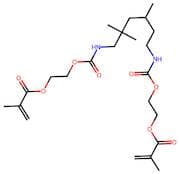
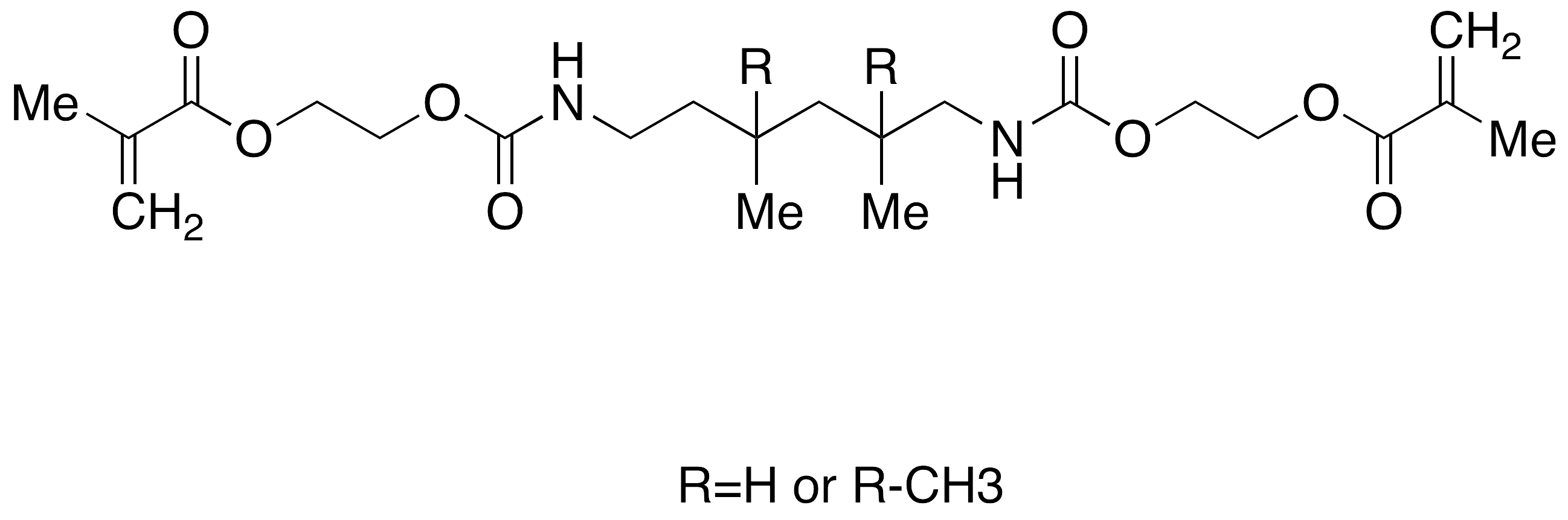
:Ácido 4,4,6,16(o 4,6,6,16)-Tetrametil-10,15-dioxo-11,14-dioxa-2,9-diazaheptadec-16-enoico 2-[(2-metil-1-oxo-2-propen-1-il)oxi]etil éster
Descripción:
El ácido 4,4,6,16-tetrametil-10,15-dioxo-11,14-dioxa-2,9-diazaheptadec-16-enoico 2-[(2-metil-1-oxo-2-propen-1-ilo)oxi]etílico es un compuesto orgánico complejo caracterizado por sus características estructurales únicas, que incluyen múltiples grupos funcionales como ésteres, amidas y grupos dioxo. Este compuesto es parte de una clase más amplia de moléculas que pueden exhibir actividad biológica, sirviendo potencialmente como intermediarios en rutas sintéticas o como ingredientes farmacéuticos activos. Su estructura sugiere que puede poseer propiedades lipofílicas debido a la presencia de múltiples grupos metilo, lo que puede influir en su solubilidad y permeabilidad en sistemas biológicos. La presencia de funcionalidades dioxo y diaza indica una reactividad potencial e interacción con varios objetivos biológicos. Además, el grupo éster puede contribuir a su estabilidad y reactividad, convirtiéndolo en un candidato para un estudio más profundo en química medicinal o ciencia de materiales. En general, la intrincada estructura y diversidad funcional de este compuesto lo convierten en un tema de interés en la investigación química y aplicaciones.
Fórmula:C23H38N2O8
InChI:InChI=1/C23H38N2O8/c1-16(2)19(26)30-10-12-32-21(28)24-9-8-18(5)14-23(6,7)15-25-22(29)33-13-11-31-20(27)17(3)4/h18H,1,3,8-15H2,2,4-7H3,(H,24,28)(H,25,29)
SMILES:C=C(C)C(=O)OCCOC(=NCCC(C)CC(C)(C)CN=C(O)OCCOC(=O)C(=C)C)O
Sinónimos:- 11,14-Dioxa-2,9-diazaheptadec-16-enoic acid, 4,4,6,16(or 4,6,6,16)-tetramethyl-10,15-dioxo-, 2-[(2-methyl-1-oxo-2-propen-1-yl)oxy]ethyl ester
- 11,14-Dioxa-2,9-diazaheptadec-16-enoic acid, 4,4,6,16(or 4,6,6,16)-tetramethyl-10,15-dioxo-, 2-[(2-methyl-1-oxo-2-propenyl)oxy]ethyl ester
- 2,2,4(2,4,4)-Trimethylhexyl-1,6-diisocyanate-2-Hydroxyethyl methacrylate adduct
- 2-Propenoic acid, 2-methyl-, 7,7,9(or 7,9,9)-trimethyl-4,13-dioxo-3,14-dioxa-5,12-diazahexadecane-1,16-diyl ester
- 2-Propenoic acid, 2-methyl-, [2,2,4(or 2,4,4)-trimethyl-1,6-hexanediyl]bis(iminocarbonyloxy-2,1-ethanediyl) ester
- 4,4,6,16(or 4,6,6,16)-Tetramethyl-10,15-dioxo-11,14-dioxa-2,9-diazaheptadec-16-enoic acid 2-[(2-methyl-1-oxo-2-propen-1-yl)oxy]ethyl ester
- 7,7,9,19-Tetramethyl-4,13,18-Trioxo-3,14,17-Trioxa-5,12-Diazaicos-19-En-1-Yl 2-Methylprop-2-Enoate
- Cn 1964Cg
- Di-HEMA trimethylhexyl dicarbamate
- Diurethane dimethacrylate
- Exothane 32
- Genomer 4297
- Nf 501
- Repair bond II
- Seal Rite II
- Sh 500B
- Triad Gel
- Urethane dimethacrylate
- Visiomer HEMATMDI
- Diurethane dimethacrylate,mixture of isomers
- Ver más sinónimos
Ordenar por
Pureza (%)
0
100
|
0
|
50
|
90
|
95
|
100
Encontrado 5 productos.
Diurethane Dimethacrylate
CAS:Diurethane DimethacrylatePureza:97%,mixture of isomersPeso molecular:470.56g/molDiurethane Dimethacrylate(Mixture of Isomers)
CAS:Producto controladoApplications Urethane dimethacrylate (UDMA) is used in dental restorative materials in its polymeric form.
References Schweikl, H., et al.: Mutation Res., 415, 119 (1998), Kleinsasser, N., et al.: Biomaterials, 27, 1762 (2006)Fórmula:C23H38N2O8Forma y color:Colourless To Light YellowPeso molecular:470.56Urethane dimethacrylate
CAS:Urethane dimethacrylate (UDMA) is a polymer that is used in the dental industry. UDMA is a water-insoluble, non-cellular, and biocompatible material that has been shown to induce necrotic cell death in vitro. UDMA has also been shown to have no genotoxic effects on primary cells, but does have long-term toxicity. The mechanism for this toxicity is not yet known, but it may be due to hydrogen bonding interactions with the hydroxyl groups on the material surface.
Fórmula:C23H38N2O8Pureza:Min. 95%Forma y color:Colorless Clear LiquidPeso molecular:470.56 g/molRef: 3D-FU32484
Producto descatalogado