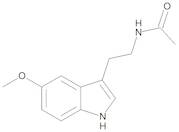
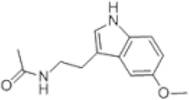
CAS 73-31-4
:Melatonina
- 3-(2-Acetamidoethyl)-5-methoxyindole
- 3-N-Acetyl-5-methoxyl tryptamine
- 5-Methoxy-N-acetyltryptamine
- Acetamide, N-(2-(5-methoxyindol-3-yl)ethyl)-
- Acetamide, N-[2-(5-methoxy-1H-indol-3-yl)ethyl]-
- Circadin
- L-Arabinitol
- Melatol
- Melatonin
- Melaxen
- Melovine
- N-(2-(5-Methoxyindol-3-yl)ethyl)acetamid
- N-(2-(5-methoxyindol-3-yl)ethyl)acetamide
- N-(2-(5-methoxyindole-3-yl)ethyl)acetamide
- N-(2-(5-metoxiindol-3-il)etil)acetamida
- N-Acetyl-5-methoxytryptamine
- N-[2-(5-Methoxy-1H-indol-3-yl)ethyl]acetamide
- Nsc 113928
- Nsc 56423
- Regulin
- Slenyto
- Ver más sinónimos
Melatonin
CAS:Producto controladoApplications Melatonin is a hormone produced by the pineal gland (1). Melatonin is highly conserved and functions as a receptor-independent free radical scavenger and a broad-spectrum antioxidant (2). Melatonin is useful in preventing ischemia-reperfusion damage in the liver, brain, myocardium, gut and kidney (1).
References (1) Muñozâ€Casares, F. C. et al.: J. Pineal. Res. (2006) 40:195-203.(2) Tan, D. X. et al.: J. Pineal. Res. (2007) 42: 28-42.Fórmula:C13H16N2O2Forma y color:NeatPeso molecular:232.28Melatonin
CAS:Melatonin is a neurotransmitter produced by the pineal gland that is involved in the regulation of sleep-wake cycles. It can be used to treat several conditions like shift work disorders, insomnia, jet lag, and alterations of the circadian rhythm. Some authors also proposed the use of melatonin against cognitive disorders. In an interesting research conducted on zebrafish, it was found that memory formation occurs better during daytime compared to nighttime, suggesting a role of melatonin in this process. When melatonin was administered during the daytime it caused reduced memory formation. On the contrary, removing the pineal gland or treating the fish with a melatonin antagonist significantly improves nighttime memory formation.Fórmula:C13H16N2O2Pureza:Min. 98 Area-%Forma y color:White Off-White PowderPeso molecular:232.28 g/molMelatonin - Bio-X ™
CAS:Melatonin is a neurotransmitter produced by the pineal gland that is involved in the regulation of sleep-wake cycles. It can be used to treat several conditions like shift work disorders, insomnia, jet lag, and alterations of the circadian rhythm. Some authors also proposed the use of melatonin against cognitive disorders. In an interesting research conducted on zebrafish, it was found that memory formation occurs better during daytime compared to nighttime, suggesting a role of melatonin in this process. When melatonin was administered during the daytime it caused reduced memory formation. On the contrary, removing the pineal gland or treating the fish with a melatonin antagonist significantly improves nighttime memory formation.
Fórmula:C13H16N2O2Pureza:Min. 95%Forma y color:PowderPeso molecular:232.28 g/molMelatonin
CAS:M02088 - Melatonin
Fórmula:C13H16N2O2Pureza:98%Forma y color:Solid, Crystalline PowderPeso molecular:232.283Melatonin extrapure, 99%
CAS:Fórmula:C13H16N2O2Pureza:min. 99%Forma y color:White to off white, Crystalline powderPeso molecular:232.28