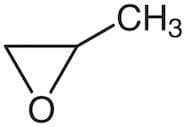
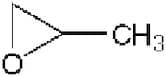
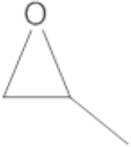
CAS 75-56-9
:(±)-Óxido de propileno
Descripción:
(±)-Óxido de propileno, con el número CAS 75-56-9, es un líquido incoloro y inflamable con un olor característico. Es un epóxido, un éter cíclico de tres miembros, lo que lo hace altamente reactivo, particularmente con nucleófilos. Este compuesto se utiliza principalmente como un intermedio en la producción de polioles de polietileno para espumas de poliuretano, así como en la síntesis de varios productos químicos. Su fórmula molecular es C3H6O, y tiene un punto de ebullición relativamente bajo, lo que contribuye a su volatilidad. El compuesto exhibe características tanto polares como no polares debido a la presencia del oxígeno del éter, lo que le permite disolverse en una variedad de disolventes. Además, (±)-Óxido de propileno es conocido por sus posibles riesgos para la salud, incluyendo irritación de la piel, los ojos y el sistema respiratorio, y está clasificado como un posible carcinógeno humano. El manejo adecuado y las precauciones de seguridad son esenciales al trabajar con esta sustancia en entornos industriales y de laboratorio.
Fórmula:C3H6O
InChI:InChI=1/C3H6O/c1-3-2-4-3/h3H,2H2,1H3
Clave InChI:InChIKey=GOOHAUXETOMSMM-UHFFFAOYSA-N
SMILES:CC1CO1
Sinónimos:- (.+-.)-2-Methyloxirane
- (R,S)-2-Methyl-oxirane
- 1,2-Epossipropano
- 1,2-Epoxipropano
- 1,2-Epoxy-Propan
- 1,2-Epoxypropan
- 1,2-Epoxypropane
- 1,2-Propylene oxide
- 1,2-エポキシプロパン
- 2,3-Epoxypropane
- 2-Methyloxiran
- <span class="text-smallcaps">DL</span>-1,2-Epoxypropane
- AD 6 (suspending agent)
- Ad 6
- Chemogas NV
- DL-1,2-Epoxypropane
- Epihydrin
- Epossipropano, 1,2-
- Epoxipropano, 1,2-
- Epoxypropan, 1,2-
- Epoxypropane
- Époxypropane, 1,2-
- Methyl ethylene oxide
- Methyl oxirane
- Methyloxacyclopropane
- Methyloxiran
- Methyloxirane
- Methyloxiranne
- Metiloxirano
- Ossido di Propilene
- Oxirane, 2-methyl-
- Oxirane, methyl-
- Oxypropylene
- Óxido de propileno
- Propane, 1,2-Epoxy-
- Propene oxide
- Propozone
- Propylene epoxide
- Propyleneoxide
- Propylenoxid
- Propylène, oxyde de
- dl-Propylene oxide
- rac-Propylene oxide
- プロピレンオキシド
- Propylene oxide
- DL-methyloxirane
- caswellno713a
- epoxy-propan
- epapesticidechemicalcode042501
- PO
- ai3-07541
- 3-Methyl-1,2-epoxypropane
- Ver más sinónimos
Ordenar por
Pureza (%)
0
100
|
0
|
50
|
90
|
95
|
100
Encontrado 6 productos.
Propylene Oxide
CAS:Fórmula:C3H6OPureza:>99.0%(GC)Forma y color:Colorless to Almost colorless clear liquidPeso molecular:58.08(±)-Propylene oxide, >99%
CAS:Propylene oxide is used as a precursor in the production of polyether polyols, which is utilized for making polyurethane plastics, polypropylene glycols, propylene glycol ethers and propylene carbonate. It is involved in the preparation of biological samples for electron microscopy. It plays a vitaFórmula:C3H6OPureza:99%Forma y color:Liquid, ColorlessPeso molecular:58.08Propylene Oxide
CAS:Methyloxirane (propylene oxide)Fórmula:C3H6OForma y color:Colorless LiquidPeso molecular:58.04186(±)-Propylene Oxide
CAS:Producto controladoStability Volatile
Applications (±)-Propylene Oxide is a carcinogenic substance to rats and potentially humans (1). (±)-Propylene oxide also has the ability to self-polymerize at room temperature in the presence of powdered potassium hydroxide (2). (±)-Propylene oxide is used in industry for fumigation in the food industry, inducing the formation of persistent toxic chlorohydrins. Drinking water contaminant candidate list 3 (CCL 3) compound as per United States Environmental Protection Agency (EPA), environmental, and food contaminants.
E3
References 1. Dunkelberg, H. et al.: Brit. J. Cancer. 1982 Dec;46(6):924-33.2. St. Pierre, L. et al.: J. Am. Chem. Soc. 1956 78 (14), pp 3432–3436Fórmula:C3H6OForma y color:ColourlessPeso molecular:58.08