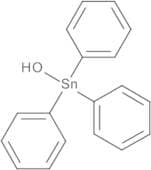
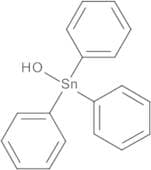
CAS 76-87-9
:Hidróxido de trifenílestaño
- Dowco 186
- Du-Ter
- Ent 28009
- Erithane
- Fenolovo
- Fentin Hydroxide
- Fentin-Hydroxid
- Fentinhydroxid
- Hidroxido De Fentin
- Hydroxyde de fentine
- Hydroxytriphenyl stannane
- Hydroxytriphenylstannane
- Hydroxytriphenyltin
- K 19
- Nsc 113243
- Stannane, hydroxytriphenyl-
- Sunitron H
- SuperTin
- Tenhide
- Tpth
- Triphenyl stannic hydroxide
- Triphenyl(hydroxo)stannane
- Triphenylhydroxystannane
- Triphenylhydroxytin
- Triphenylstannanol
- Triphenylstannanylium Hydroxide
- Triphenylstannyl hydroxide
- Vancide KS
- Triphenyltin hydroxide
- SUPER-TIN
- BRESTAN FLOW
- DU-TER(R)
- TUBOTIN(R)
- brestanh47.5wpfungicide.
- dowco186
- SUZU-H
- SUZU H(R)
- TPTOH
- duter
- TRIPHENYLTIN(IV) HYDROXIDE
- Ashlade flotin
- Ver más sinónimos
Triphenyl-d15-tin Hydroxide(Fentin Hydroxide)
CAS:Fórmula:(C6D5)3SnOHPureza:99 atom % DForma y color:White To Off-White SolidPeso molecular:383.11647Triphenyltin Hydroxide
CAS:Producto controladoApplications Triphenyltin Hydroxide is an organotin compound. Triphenyltin Hydroxide is used as a fungicide and antifeeding compound for insect control (1,2). Recent studies show that Triphenyltin Hydroxide may have adverse effects on the reproductive and immune systems and may disrupt the endocrine system (3). Drinking water contaminant candidate list 3 (CCL 3) compound as per United States Environmental Protection Agency (EPA), environmental, and food contaminants.
Not a dangerous good if item is equal to or less than 1g/ml and there is less than 100g/ml in the package
References 1. Sarpa M. et al.: J. Toxicol. Environ. Health. A. 2010;73(13-14):965-712. Soderquist, J. et al.: J. Agric. Food. Chem. Jan:28(1);111-1173. Golub, M. et al.: J. Toxicol. Environ. Health B. Crit. Rev. 2004 Jul-Aug;7(4):281-95Fórmula:C18H16OSnForma y color:NeatPeso molecular:367.03Triphenyltin Hydroxide-d15
CAS:Producto controladoApplications Isotope Labelled Triphenyltin Hydroxide (T809350), an organotin compound. Triphenyltin Hydroxide is used as a fungicide and antifeeding compound for insect control (1,2). Recent studies show that Triphenyltin Hydroxide may have adverse effects on the reproductive and immune systems and may disrupt the endocrine system (3).Drinking water contaminant candidate list 3 (CCL 3) compound as per United States Environmental Protection Agency (EPA), environmental, and food contaminants.
Not a dangerous good if item is equal to or less than 1g/ml and there is less than 100g/ml in the package
References 1. Sarpa M. et al.: J Toxicol Environ Health A. 2010;73(13-14):965-712. Soderquist, J. et al.: J. Agric. Food. Chem. Jan:28(1);111-1173. 3. Golub, M. et al.: J. Toxicol. Environ. Health B. Crit. Rev. 2004 Jul-Aug;7(4):281-95Fórmula:C18D15HOSnForma y color:White To Off-WhitePeso molecular:382.12