CAS 778-82-5
:Acetato de etilo 1H-indol-3
Descripción:
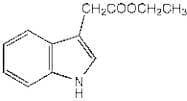
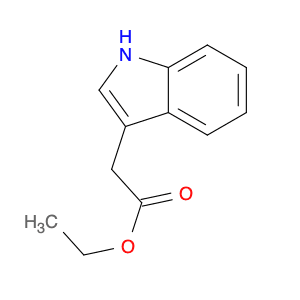
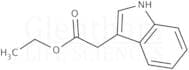
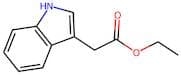
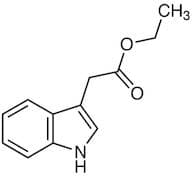
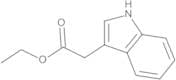
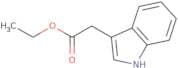
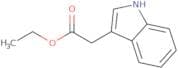
Acetato de etilo 1H-indol-3, con el número CAS 778-82-5, es un compuesto orgánico que pertenece a la clase de los derivados del indol. Presenta un anillo de indol, que es una estructura bicíclica compuesta por un anillo de benceno fusionado a un anillo de pirrol, y un grupo funcional acetato unido al átomo de nitrógeno del indol. Este compuesto es típicamente un líquido incoloro a amarillo pálido con un olor característico. Acetato de etilo 1H-indol-3 es conocido por sus aplicaciones en la síntesis de varios fármacos y agroquímicos, así como por su posible uso en perfumería debido a su fragancia agradable. Es moderadamente soluble en disolventes orgánicos y presenta baja solubilidad en agua. El compuesto es estable en condiciones normales, pero debe manejarse con cuidado, ya que puede representar riesgos para la salud si se ingiere o inhala. Su reactividad puede verse influenciada por la presencia de otros grupos funcionales y condiciones ambientales, lo que lo convierte en un tema de interés en la síntesis orgánica y la química medicinal.
Fórmula:C12H13NO2
InChI:InChI=1S/C12H13NO2/c1-2-15-12(14)7-9-8-13-11-6-4-3-5-10(9)11/h3-6,8,13H,2,7H2,1H3
Clave InChI:InChIKey=HUDBDWIQSIGUDI-UHFFFAOYSA-N
SMILES:C(C(OCC)=O)C=1C=2C(NC1)=CC=CC2
Sinónimos:- (1H-Indol-3-yl)acetic acid ethyl ester
- 1H-indole-3-acetic acid, ethyl ester
- 3-[(Ethoxycarbonyl)methyl]indole
- Ethyl (1H-indol-3-yl)acetate
- Ethyl 1H-indol-3-ylacetate
- Ethyl 1H-indole-3-acetate
- Ethyl 2-(1H-indol-3-yl)acetate
- Ethyl 2-(indol-3-yl)acetate
- Ethyl indole-3-acetate
- Ethyl β-indolylacetate
- IAA ethyl ester
- Indole-3-acetic acid, ethyl ester
- Ver más sinónimos
Ordenar por
Pureza (%)
0
100
|
0
|
50
|
90
|
95
|
100
Encontrado 9 productos.
Ethyl indole-3-acetate, 98+%
CAS:This Thermo Scientific Chemicals brand product was originally part of the Alfa Aesar product portfolio. Some documentation and label information may refer to the legacy brand. The original Alfa Aesar product / item code or SKU reference has not changed as a part of the brand transition to Thermo SciFórmula:C12H13NO2Pureza:98+%Forma y color:White to cream to pale brown or pale yellow, PowderPeso molecular:203.24Ethyl 2-(1H-indol-3-yl)acetate
CAS:Fórmula:C12H13NO2Pureza:98%Forma y color:SolidPeso molecular:203.2371Indole-3-acetic acid ethyl ester
CAS:Fórmula:C12H13NO2Pureza:≥ 98.0%Forma y color:White to light yellow or pale-brown powder to crystalsPeso molecular:203.24Ethyl 2-(1H-indol-3-yl)acetate
CAS:Ethyl 2-(1H-indol-3-yl)acetatePureza:98%Peso molecular:203.24g/molEthyl 3-Indoleacetate
CAS:Fórmula:C12H13NO2Pureza:>98.0%(GC)Forma y color:White to Light yellow to Light orange powder to crystalPeso molecular:203.24Ethyl Indole-3-acetate
CAS:Producto controladoApplications Ethyl Indole-3-acetate is a compound used in the synthesis of 9H-Pyrrolo[1,2-α]Indoles via Michael Addition-Condensation with α,β-Unsaturated Ketimines.
References Zhang, M., et al.: J. Heterocyclic Chem. (2016)Fórmula:C12H13NO2Forma y color:NeatPeso molecular:203.24Indole-3-acetic acid ethyl ester
CAS:Indole-3-acetic acid ethyl ester is a fine chemical that is used as a building block for synthesis of more complex compounds. It is a versatile building block that can be used in reactions to produce useful intermediates and scaffolds. Indole-3-acetic acid ethyl ester has been used to synthesize indole derivatives, which are useful in the research of cancer and Alzheimer's disease. Indole-3-acetic acid ethyl ester can also be used to produce indoles as well as other heterocyclic compounds, such as benzoxazines. The compound has CAS number 778-82-5.Fórmula:C12H13NO2Pureza:Min. 99.0 Area-%Peso molecular:203.24 g/molEthyl indole-3-acetate
CAS:Ethyl indole-3-acetate (EIA) is a compound that inhibits the growth of certain cancer cells. It belongs to the group of acyl halides. EIA inhibits the synthesis of nucleic acids, proteins and other macromolecules by the cancer cells. It has been shown to be effective in reducing the size of tumors in mice with prostate and breast cancer. This compound also inhibits enzymes such as abscisic acid oxidase, which is responsible for converting abscisic acid into reactive oxygen species. EIA has been shown to have hemolytic activity in human lung tissue, but not ovules or human erythrocytes. This may be due to its ability to inhibit hormone production and cause an increase in progesterone levels.Fórmula:C12H13NO2Pureza:Min. 95%Forma y color:PowderPeso molecular:203.24 g/molEthyl 3-indoleacetate
CAS:Fórmula:C12H13NO2Pureza:98%Forma y color:Solid, CrystallinePeso molecular:203.241