CAS 80-05-7
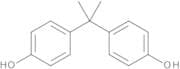
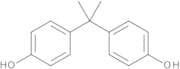
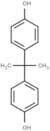
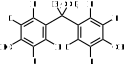
:2,2-Bis(4-hidroxifenil)propano
Descripción:
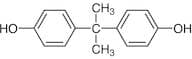
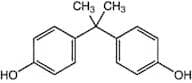
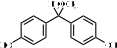
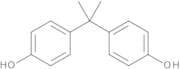
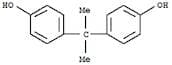
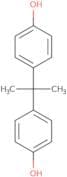
2,2-Bis(4-hidroxifenil)propano, comúnmente conocido como bisfenol A (BPA), es un compuesto orgánico caracterizado por su estructura, que presenta dos grupos hidroxilo fenólicos unidos a una cadena de propano. Este compuesto es un sólido incoloro a temperatura ambiente y es soluble en disolventes orgánicos, pero tiene una solubilidad limitada en agua. El BPA se utiliza principalmente en la producción de plásticos de policarbonato y resinas epóxicas, que se emplean en una amplia gama de aplicaciones, incluidos envases de alimentos, botellas de agua y recubrimientos. Exhibe estabilidad térmica y resistencia a la degradación química, lo que lo hace adecuado para materiales de alto rendimiento. Sin embargo, el BPA también es conocido por sus propiedades disruptoras endocrinas, lo que genera preocupaciones sobre sus posibles efectos en la salud humana y el medio ambiente. Las agencias reguladoras han examinado su uso, lo que ha llevado a restricciones en ciertas aplicaciones, particularmente aquellas que implican contacto con alimentos. En general, aunque el BPA es un valioso producto químico industrial, su perfil de seguridad sigue siendo un tema de investigación y debate significativo.
Fórmula:C15H16O2
InChI:InChI=1S/C15H16O2/c1-15(2,11-3-7-13(16)8-4-11)12-5-9-14(17)10-6-12/h3-10,16-17H,1-2H3
Clave InChI:InChIKey=IISBACLAFKSPIT-UHFFFAOYSA-N
SMILES:C(C)(C)(C1=CC=C(O)C=C1)C2=CC=C(O)C=C2
Sinónimos:- (4,4'-Dihydroxydiphenyl)dimethylmethane
- 2,2-Bis(4-hydroxyphenyl)propane
- 2,2-Bis(p-hydroxyphenyl)propane
- 2,2-Bis-(4-Hydroxy-Phenyl)-Propane
- 2,2-Di(4-Hydroxyphenyl) Propane
- 2,2-Di(4-phenylol)propane
- 4,4'-(1-Methylethylidene)bisphenol
- 4,4'-Bisphenol A
- 4,4'-Dihydroxyphenyl-2,2-Propane
- 4,4'-Isopropilidendifenol
- 4,4'-Isopropylidendiphenol
- 4,4'-Isopropylidene bisphenol
- 4,4'-Isopropylidenebis[phenol]
- 4,4'-Methylethylidenebisphenol
- 4,4-Isopropylidene Diphenyl
- 4,4′-(1-Methylethylidene)bis[phenol]
- 4,4′-(Propane-2,2-diyl)diphenol
- B 0494
- BPA
- Bis(4-hydroxyphenyl)dimethylmethane
- Bis(p-hydroxyphenyl)propane
- Bis[Phenol], 4,4'-(1-Methylethylidene)-
- Bisphenol A
- Bisphenol, 4,4'-(1-Methylethylidene)-
- Bpa 154
- Bpa 157
- Bpa-M
- Dian
- Diano
- Diphenol methylethylidene
- Diphenylolpropane
- Hg 3876
- Hidorin F 285
- Hidorin F 568
- Ht 3082
- Ipognox 88
- Isopropylidenebis(4-hydroxybenzene)
- Nsc 1767
- Nsc 17959
- Nupole BPE-60
- P,P'-Isopropylidene Diphenol
- Parabis
- Parabis A
- Phenol, 4,4'-(1-methylethylidene)bis-
- Phenol, 4,4'-isopropylidenedi-
- Pluracol 245
- Rikabanol
- Tetrabromobisphenol A Allyl Ether
- p,p'-Bisphenol A
- p,p'-Dihydroxydiphenylpropane
- p,p'-Isopropylidenebisphenol
- p,p'-Isopropylidenediphenol
- Ver más sinónimos
Ordenar por
Pureza (%)
0
100
|
0
|
50
|
90
|
95
|
100
Encontrado 15 productos.
2,2-Bis(4-hydroxyphenyl)propane
CAS:Fórmula:C15H16O2Pureza:>99.0%(GC)Forma y color:White powder to lumpPeso molecular:228.29Bisphenol A, 97+%
CAS:Bisphenol A is an important monomer used in the production of polycarbonate plastics which is utilized to make various consumer goods like water bottles, sports equipment, medical devices, eyeglass lenses, house hold electronics, compact discs (CDs) and digital versatile discs (DVDs). Bisphenol A cFórmula:C15H16O2Pureza:97+%Forma y color:Powder or fused solid or granules or prills, WhitePeso molecular:228.29Bisphenol A
CAS:Bisphenol a, diphenylolpropane (4,4'-isopropylidenediphenol) and its saltsFórmula:C15H16O2Forma y color:PowderPeso molecular:228.11503Bisphenol A
CAS:Fórmula:C15H16O2Pureza:(GC) ≥ 97.0%Forma y color:White powder, granules, prills or solidPeso molecular:228.29Bisphenol A 100 µg/mL in Acetonitrile
CAS:Fórmula:C15H16O2Forma y color:Single SolutionPeso molecular:228.29GB 31660.2-2019 Antibiotics Mixture 168 30-100 µg/mL in Methanol
CAS:Producto controladoForma y color:MixtureBisphenol A
CAS:Bisphenol A: used in making polycarbonates/epoxy resins, has estrogen-like effects.Fórmula:C15H16O2Pureza:99.93%Forma y color:White Solid White Crystals Flakes PrillsPeso molecular:228.29Bisphenol A
CAS:Producto controladoApplications Bisphenol A is a monomer used for policarbonate and epoxy resins; exhibits estrogenic activity. BPA is also used as a building block in polycarbonate bottles and in the epoxy-resin liners of metal cans. This compound is a contaminant of emerging concern (CECs)
Not a dangerous good if item is equal to or less than 1g/ml and there is less than 100g/ml in the package
References Krishnan, A.V., et al.: Endocrinology, 132, 2279 (1993); Steinmetz, R., et al.: Trends Endocrinol. Metab., 9, 124 (1998); Petersen, H., et al.: Eur. Food Res. Technol., 216, 355 (2003);Fórmula:C15H16O2Forma y color:NeatPeso molecular:228.29Bisphenol A pure, 97%
CAS:Fórmula:C15H16O2Pureza:min. 97%Forma y color:White, Crystalline powder/ compound/ granules/ flakes/ chips, Clear, ColourlessPeso molecular:228.29Bisphenol A
CAS:Bisphenol A is a chemical compound used to make polycarbonate plastics and epoxy resins. It is also used in the production of some dental sealants and composites. Bisphenol A has been shown to have an adverse effect on human health, as it has been linked to various diseases such as coronary heart disease, type 2 diabetes, and breast cancer. The most sensitive route of exposure is through the maternal blood during pregnancy. This chemical can be found in some common food containers, including baby bottles and food cans. Bisphenol A binds to estrogen receptors and alters their activity levels by mimicking the natural hormone estradiol. The optimum concentration for binding varies depending on the cell type and receptor present. Bisphenol A can also increase or decrease certain enzyme activities in vitro depending on the concentrations used. Bisphenol A is also an analytical reagent that can be used for polymerase chain reactions (PCR) to identify genes from specificFórmula:C15H16O2Pureza:Min. 95%Forma y color:PowderPeso molecular:228.29 g/mol