CAS 81-54-9
:Purpurina
Descripción:
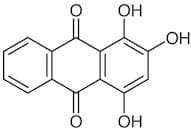
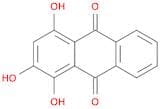
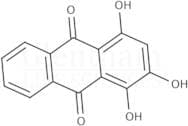
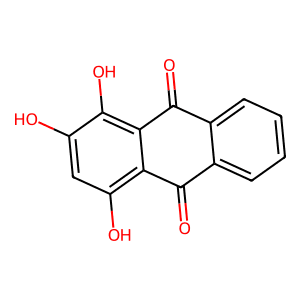
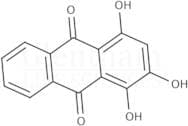
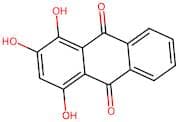
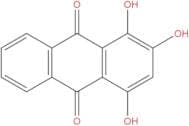
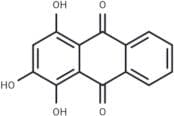
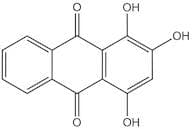
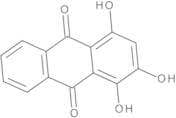
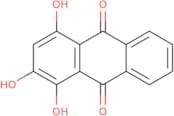
Purpurina, con el número CAS 81-54-9, es un compuesto orgánico que pertenece a la clase de las antraquinonas, que se caracterizan por su estructura aromática y extensa conjugación. Es un tinte rojo que se deriva principalmente de la planta de rubia, utilizada históricamente en textiles. Purpurina exhibe una fuerte absorción en el espectro visible, lo que contribuye a su color vibrante, y es conocido por su capacidad para formar complejos con iones metálicos, lo que puede mejorar su estabilidad de color y aplicación en varios campos. El compuesto es soluble en disolventes orgánicos, pero tiene una solubilidad limitada en agua. Purpurina ha sido estudiado por sus posibles aplicaciones en células solares sensibilizadas por tintes, así como en bioquímica por sus propiedades fluorescentes. Además, ha mostrado cierta actividad biológica, incluidas propiedades antimicrobianas. Sin embargo, al igual que muchos tintes orgánicos, su impacto ambiental y estabilidad bajo la exposición a la luz son consideraciones importantes en su uso. En general, Purpurina es un compuesto significativo tanto en contextos históricos como modernos, particularmente en la química de tintes y la ciencia de materiales.
Fórmula:C14H8O5
InChI:InChI=1S/C14H8O5/c15-8-5-9(16)14(19)11-10(8)12(17)6-3-1-2-4-7(6)13(11)18/h1-5,15-16,19H
Clave InChI:InChIKey=BBNQQADTFFCFGB-UHFFFAOYSA-N
SMILES:O=C1C=2C(C(=O)C=3C1=CC=CC3)=C(O)C=C(O)C2O
Sinónimos:- 1,2,4-Trihydroxy-9,10-anthracenedione
- Purpurin
- Anthraquinone, 1,2,4-trihydroxy-
- C.I. 58205
- 9,10-Anthracenedione, 1,2,4-trihydroxy-
Ordenar por
Pureza (%)
0
100
|
0
|
50
|
90
|
95
|
100
Encontrado 12 productos.
Purpurin
CAS:Fórmula:C14H8O5Pureza:>95.0%(HPLC)Forma y color:Orange to Amber to Dark red powder to crystalPeso molecular:256.211,2,4-Trihydroxyanthracene-9,10-dione
CAS:Fórmula:C14H8O5Pureza:85%Forma y color:SolidPeso molecular:256.2103Purpurin (C.I. 58205)
CAS:Fórmula:C14H8O5Pureza:(HPLC) ≥ 94.0%Forma y color:Dark-red to orange-brown or brown powderPeso molecular:256.21Purpurin (C.I. 58205), 90%
CAS:Fórmula:C14H8O5Pureza:≥ 85.0%Forma y color:Dark-red to orange-brown or brown powderPeso molecular:256.21Purpurin
CAS:Purpurin (Verantin), a MAO-A inhibitor (Ki: 0.422μM), has anti-angiogenic, antifungal, antibiotic, and antioxidative properties.Fórmula:C14H8O5Pureza:97.53% - 98.45%Forma y color:SolidPeso molecular:256.21Purpurin (85%)
CAS:Producto controladoApplications Purpurin is an anthraquinone derivative and is well known as a colour pigment derived from madder plants. Purpurin was extensively utilized in herbal remedies, in food colouring and dyes for cotton printing. Due to the high antioxidant activity exhibited by anthraquinone compounds, purpurin was determined through studies to possess potential radical scavenging effects. Purprin has also been shown to have inhibitory effects towards serine protease. Dyes and metabolites.
References Baghiani, A., et al.: Med. Chem., 7. 639 (2011); Drivas, I., et al.: Dyes. Pigments., 88. 7 (2010); Nishimura, N., et al.: Bio. Pharm. Bull., 33. 1430 (2010);Fórmula:C14H8O5Pureza:85%Forma y color:Dark RedPeso molecular:256.21Purpurin
CAS:Purpurin is a natural compound that belongs to the group of sodium salts. It has been shown to have antimicrobial activity against many Gram-positive and Gram-negative bacteria, including methicillin-resistant Staphylococcus aureus (MRSA). Purpurin also has antioxidant properties and can be used for the treatment of infectious diseases. The photochemical properties of purpurin have been studied extensively. The matrix effect of purpurin on the cytochrome P450 enzyme system in human serum is well established. Purpurin has been shown to inhibit mitochondrial membrane potential and increase electron transfer resistance in mitochondria from rat liver cells. Purpurin has not been found to be toxic to humans after oral administration, but toxicity studies are still ongoing.Fórmula:C14H8O5Pureza:Min. 95%Forma y color:Red PowderPeso molecular:256.21 g/mol1,2,4-Trihydroxy-9,10-anthracenedione
CAS:Fórmula:C14H8O5Pureza:≥85%(HPLC)Forma y color:SolidPeso molecular:256.213