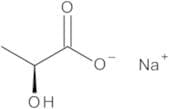
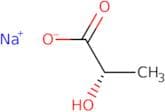
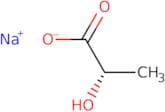
CAS 867-56-1
:L-lactato de sodio
Descripción:
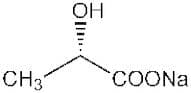
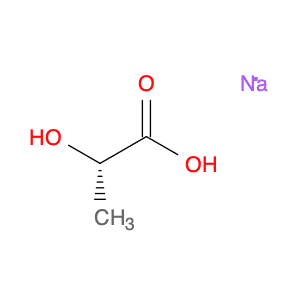
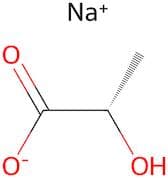
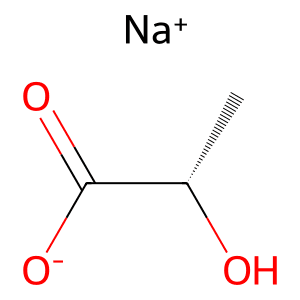
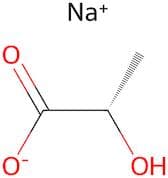
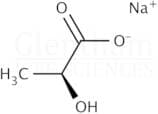
L-lactato de sodio, con el número CAS 867-56-1, es la sal sódica del ácido L-láctico, un compuesto que juega un papel significativo en varios procesos bioquímicos. Aparece como un polvo blanco, higroscópico y soluble en agua, lo que lo hace útil en diversas aplicaciones. L-lactato de sodio se utiliza a menudo en la industria alimentaria como conservante y agente saborizante debido a su capacidad para mejorar la vida útil de los productos e impartir una acidez suave. En las industrias farmacéutica y cosmética, actúa como humectante y regulador de pH. Bioquímicamente, está involucrado en procesos metabólicos y puede actuar como un reponedor de electrolitos. El compuesto es generalmente reconocido como seguro (GRAS) cuando se utiliza en cantidades apropiadas. Sus propiedades incluyen un sabor ligeramente dulce y un perfil de baja toxicidad, lo que lo hace adecuado para diversas aplicaciones en alimentos, medicina y productos de cuidado personal. Además, puede ser utilizado en entornos de laboratorio para cultivo celular y como agente amortiguador.
Fórmula:C3H6O3·Na
InChI:InChI=1S/C3H6O3.Na/c1-2(4)3(5)6;/h2,4H,1H3,(H,5,6);/t2-;/m0./s1
Clave InChI:InChIKey=ZZUUMCMLIPRDPI-DKWTVANSSA-N
SMILES:[C@@H](C(O)=O)(C)O.[Na]
Sinónimos:- (+)-Lactate sodium
- (+)-Sodium lactate
- (S)-2-Hydroxypropanoic acid monosodium salt
- (S)-2-Hydroxypropionic acid sodium salt
- L-Lactic acid sodium salt
- Lactic acid, monosodium salt, <span class="text-smallcaps">L</span>-
- Propanoic acid, 2-hydroxy-, monosodium salt, (2S)-
- Propanoic acid, 2-hydroxy-, monosodium salt, (S)-
- Propanoic acid, 2-hydroxy-, sodium salt (1:1), (2S)-
- Purasal S 98
- Sodium <span class="text-smallcaps">L</span>-(+)-lactate
- Ver más sinónimos
Ordenar por
Pureza (%)
0
100
|
0
|
50
|
90
|
95
|
100
Encontrado 16 productos.
Sodium L-lactate, 98+%
CAS:This Thermo Scientific Chemicals brand product was originally part of the Alfa Aesar product portfolio. Some documentation and label information may refer to the legacy brand. The original Alfa Aesar product / item code or SKU reference has not changed as a part of the brand transition to Thermo SciFórmula:C3H5NaO3Pureza:98+%Forma y color:White, Crystals or powder or crystalline powder or lumpsPeso molecular:112.06Sodium Lactate
CAS:Lactic acid, its salts and estersFórmula:C3H5NaO3Forma y color:White Light Yellow PowderPeso molecular:112.01364Sodium (S)-2-hydroxypropanoate
CAS:Fórmula:C3H5NaO3Pureza:98%Forma y color:SolidPeso molecular:112.0598Sodium L-lactate, 98%
CAS:Fórmula:C3H5NaO3Pureza:≥ 98.0%Forma y color:White powderPeso molecular:112.06(L)-Sodium lactate
CAS:L-Sodium lactate, produced from pyruvate by Lactate Dehydrogenase, increases in muscles and blood post-exercise, and is found in various organs and fluids.Fórmula:C3H5NaO3Pureza:99.17% - 99.84%Forma y color:LiquidPeso molecular:112.06L-(+)-Lactic Acid Sodium Salt
CAS:Producto controladoFórmula:C3H5O3·NaForma y color:NeatPeso molecular:112.06Sodium L-lactate - 60% aqueous solution
CAS:Lactate is a monocarboxylic acid that is produced by the liver and kidneys. It is also produced as a result of anaerobic metabolism. Lactate can be converted back to glucose in the liver, thereby contributing to blood sugar levels. Lactate has been shown to have inhibitory effects on bacterial growth and may work by binding to calcium ions. The uptake of lactate by bacteria is catalyzed by the enzyme L-lactate dehydrogenase, which converts lactate into pyruvate with concomitant release of a hydrogen ion (H+). The H+ may serve as an electron donor for the reduction of ferric iron, which leads to its oxidation state becoming ferrous iron (Fe2+) and thus prevents it from catalyzing the production of hydroxyl radicals. Magnetic particles are used to study the effect of lactate on bacterial cells. These studies show that lactate has low energy requirements and acts as a carbon source for bacteriaFórmula:C3H5NaO3Pureza:Min. 95%Forma y color:Colorless Clear LiquidPeso molecular:112.06 g/molSodium (S)-2-hydroxypropanoate 60% solution in water
CAS:Pureza:60% solution in waterPeso molecular:112.01Sodium (S)-2-hydroxypropanoate
CAS:Fórmula:C3H5NaO3Pureza:95.0%Forma y color:SolidPeso molecular:112.06Sodium L-lactate - powder
CAS:Sodium L-lactate is a sodium salt of L-lactic acid, which is metabolized in the body to produce energy. It is used as a nutritional supplement and has been shown to have an inhibitory effect on Staphylococcus. The uptake of sodium L-lactate was found to be greater than that of glucose, which may be due to its ability to bind fatty acids. Sodium L-lactate also regulates mitochondrial biogenesis and increases the production of ATP levels. This increase in ATP levels may be due to its inhibition of fatty acid synthesis for use as an energy source. Sodium L-lactate has been shown to decrease the number of neuronal cells that die during high fat diet consumption, which may make it a potential drug target for preventing obesity.
Fórmula:C3H5NaO3Pureza:Area-% Min. 95 Area-%Forma y color:White Off-White PowderPeso molecular:112.06 g/mol