CAS 881-68-5
:Acetovanilina
Descripción:
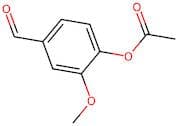
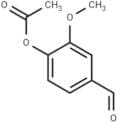
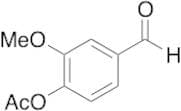
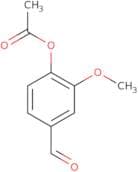
Acetovanilina, también conocido como 4-hidroxi-3-metoxiacetofenona, es un compuesto orgánico con el número CAS 881-68-5. Es un derivado de la vainilla, caracterizado por la presencia de un grupo acetilo unido a la estructura fenólica. Acetovanilina típicamente aparece como un sólido cristalino blanco a amarillo pálido con un aroma dulce, similar a la vainilla, lo que lo hace valioso en las industrias alimentaria y de fragancias. Es soluble en disolventes orgánicos como el etanol y el éter, pero tiene una solubilidad limitada en agua. El compuesto exhibe propiedades antioxidantes y se ha estudiado por sus posibles beneficios para la salud, incluidos efectos antiinflamatorios y antimicrobianos. Acetovanilina se utiliza a menudo como agente saborizante en productos alimenticios y como componente de fragancia en cosméticos y perfumes. Su estructura química incluye un grupo metoxi y un grupo hidroxilo, lo que contribuye a su reactividad e interacciones en varios procesos químicos. En general, Acetovanilina es un compuesto versátil con aplicaciones tanto en contextos culinarios como industriales.
Fórmula:C10H10O4
InChI:InChI=1/C10H10O4/c1-6(12)9-7(5-11)3-4-8(13)10(9)14-2/h3-5,13H,1-2H3
Clave InChI:InChIKey=PZSJOBKRSVRODF-UHFFFAOYSA-N
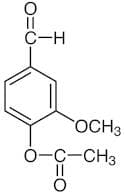
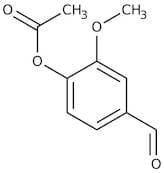
SMILES:O(C(C)=O)C1=C(OC)C=C(C=O)C=C1
Sinónimos:- 4-(Acetyloxy)-3-methoxybenzaldehyde
- 4-Acetoxy-3-methoxybenzaidehyde
- 4-Acetoxy-3-methoxybenzaldehyde
- 4-Acetoxy-5-methoxybenzaldehyde
- 4-Formyl-2-Methoxyphenyl Acetate
- 4-Formyl-2-methoxyphenol acetate
- 4-O-Acetylvanillin
- Acetovanillin
- Acetylvanillin
- Benzaldehyde, 4-(acetyloxy)-3-methoxy-
- NSC 25863
- NSC 8499
- Vanillin acetate
- o-Acetylvanillin
- 3-METHOXY-4-ACETOXYBENZALDEHYDE
- 4-ACETYLVANILLIN
- AKOS 239-07
- AKOS B004358
- Benzaldehyde, 4-acetoxy-3-methoxy
- AKOS BBS-00003243
- FEMA 3108
- 4-(acetyloxy)-3-methoxy-benzaldehyd
- ACETYL VANILLIN
- Ver más sinónimos
Ordenar por
Pureza (%)
0
100
|
0
|
50
|
90
|
95
|
100
Encontrado 10 productos.
Vanillin Acetate
CAS:Fórmula:C10H10O4Pureza:>98.0%(GC)Forma y color:White to Almost white powder to crystalPeso molecular:194.194-Acetoxy-3-methoxybenzaldehyde, 98%
CAS:This Thermo Scientific Chemicals brand product was originally part of the Alfa Aesar product portfolio. Some documentation and label information may refer to the legacy brand. The original Alfa Aesar product / item code or SKU reference has not changed as a part of the brand transition to Thermo SciFórmula:C10H10O4Pureza:98%Forma y color:White to cream, Crystals or powder or crystalline powderPeso molecular:194.194-Formyl-2-methoxyphenyl acetate
CAS:Fórmula:C10H10O4Pureza:97%Forma y color:SolidPeso molecular:194.18404-Acetoxy-3-methoxybenzaldehyde
CAS:4-Acetoxy-3-methoxybenzaldehydeFórmula:C10H10O4Pureza:≥95%Forma y color: white to off white crystalline solidPeso molecular:194.18g/molVanillin acetate
CAS:Acetylvanillin is a derivative of Vanillin, the primary component found in vanilla bean extract.Fórmula:C10H10O4Pureza:98.71%Forma y color:SolidPeso molecular:194.184-Acetoxy-3-methoxybenzaldehyde
CAS:4-Acetoxy-3-methoxybenzaldehyde is an antimicrobial agent that is used specifically for the treatment of lemongrass oil and eugenol. It has been shown to be effective against a wide range of microorganisms, such as Escherichia coli, Pseudomonas aeruginosa, Salmonella enterica, Staphylococcus aureus, and Streptococcus pneumoniae. 4-Acetoxy-3-methoxybenzaldehyde has been shown to inhibit the growth of bacteria by binding to the 50S ribosomal subunit. The molecule also has hydroxyl group which can react with potassium dichromate and sodium carbonate. This reaction results in the formation of 4-acetoxy-3-hydroxybenzaldehyde through an S N 2 substitution mechanism.
Fórmula:C10H10O4Pureza:Min. 95%Forma y color:PowderPeso molecular:194.18 g/mol4-Acetoxy-3-methoxybenzaldehyde
CAS:Fórmula:C10H10O4Pureza:97%Forma y color:SolidPeso molecular:194.186