CAS 9002-18-0
:Agar
Descripción:
Agar, con el número CAS 9002-18-0, es una sustancia gelatinosa derivada de algas rojas, principalmente de los géneros Gelidium y Gracilaria. Se compone principalmente de Agarosa y Agaropectina, polisacáridos que forman un gel cuando se disuelven en agua hirviendo y luego se enfrían. Agar se utiliza ampliamente en microbiología como un agente solidificante para medios de cultivo, permitiendo el crecimiento de varios microorganismos. Sus propiedades gelificantes también se utilizan en productos alimenticios, donde actúa como un espesante, estabilizador y emulsionante. Agar es inodoro, insípido y tiene un alto punto de fusión, lo que lo hace adecuado para aplicaciones que requieren estabilidad térmica. Además, es no tóxico y vegano, lo que lo convierte en una alternativa popular a la gelatina. La capacidad de Agar para formar geles a bajas concentraciones y su textura única lo hacen valioso tanto en campos culinarios como científicos. Su versatilidad se extiende a la industria farmacéutica, donde se utiliza en la formulación de medicamentos y como medio para la liberación controlada de ingredientes activos.
Fórmula:Unspecified
Sinónimos:- Agar-Agar
- Agargel
- Azazoon
- Bacto-agar
- Cs-16A
- Gelose
- Kantenmatsu
- Karikorikan
- Max
- Phytagar
- SDA
- Ultra-Agar
- Bengal isinglass
- Agar
- Bengal gelatin
- Ver más sinónimos
Ordenar por
Pureza (%)
0
100
|
0
|
50
|
90
|
95
|
100
Encontrado 18 productos.
Agar powder
CAS:Agar is the most suited solidifying agent for scientific applications that require incubation temperatures closer to human body temperature. Agar is used as a medium in bacteriology and plant biology, impression material in dentistry, biofertilizer in organic farming, and salt bridges in electrochemFórmula:C14H24O9Forma y color:White to cream or pale yellow to pale brown, PowderPeso molecular:336.34Agar, high gel strength
CAS:Fórmula:(C12H18O9)nForma y color:Off-white to cream, yellowish or light-brown powderPeso molecular:-Agar, low gel strength
CAS:Fórmula:(C12H18O9)nForma y color:Off-white to cream or light-brown powderPeso molecular:-Agar, low gel strength, suitable for microbiology
CAS:Fórmula:(C12H18O9)nForma y color:Off-white to cream or light-brown powderPeso molecular:-Agar, high gel strength, suitable for microbiology
CAS:Fórmula:(C12H18O9)nForma y color:Off-white to cream or light-brown powderAgar
CAS:Agar has a wide range of applications in life science related research.Fórmula:C14H24O9Forma y color:SolidPeso molecular:336.337Agar Powder
CAS:Fórmula:C14H24O9Pureza:BRForma y color:Solid, No data available.Peso molecular:336.337Agar powder Bacto grade
CAS:Forma y color:White to off-white, Powder, Clear, Colourless to pale yellowAgar powder for tissue culture
CAS:Fórmula:(C12H28O9)nForma y color:White to pale yellow, Powder, Almost clear, Pale yellowAgar powder regular grade for bacteriology
CAS:Forma y color:Off - white to pale yellow, Powder, Almost clear to slight hazyAgar powder BactoBio for microbiology
CAS:Forma y color:Off white to light beige, Granular, free flowing powder, Clear to very slightly turbid, Colourless to pale yellowAgar
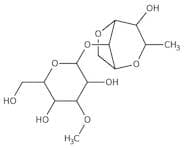
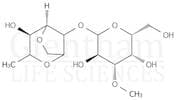
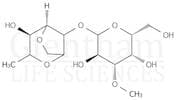
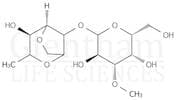
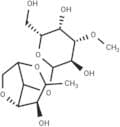
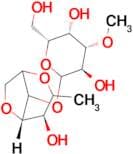
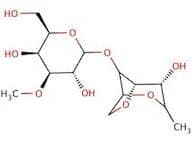
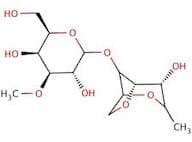
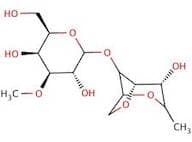
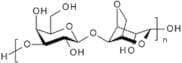
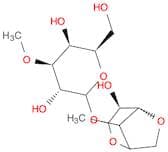
CAS:The major gel forming component in agar, agarose, consists of a linear chain of sequences of 1,3 linked β-D-galactopyranosyl units and 1,4 linkages to 3,6-anhydro-α-L-galactopyranosyl units. Gelation is done via the formation of double helices (Arnott, 1974). Agar's properties are similar to gelatin as it is primarily used as a plating gel for microbial cultures (Lahaye, 1991). However, agar is a good substitute for animal-based gelatin in vegetarian foods and is easy to use in food gels in a similar way to the carrageenans. Common food applications of agar include: puddings, custards, and soft candies. Agar improves the texture of processed cheese and frozen desserts, and is also added to baked goods to inhibit staling. A creative food application uses agar-based gel cubes that are infused with fruit extract or wine to make a vegetable-based aspic (Armisén, 2009). Agar contains two polysaccharides Agarobiose and Agaropectin. Both Gelidium latifolium and Gelidium amansii are sources of both Agar and Agarose. The images were kindly provided by Prof Mike Guiry from Cork who runs ‘The Seaweed Site’. Agaropectin Agaropectin is a sulphated non-gelling galactan comprising about 30% of Agar. Half ester sulphate is present in varying amounts plus D-glucuronic acid and small amounts of pyruvic acid. As with Agarose the main chain has alternating residues of D-galactose and L-galactose heavily modified with acidic side-groups which are usually sulfate, glucuronate, and pyruvate. Pyruvic acid is possibly attached in an acetal form to the D-galactose residues of the agarobiose skeleton. No formal structure of Agaropectin appears to have been published. Agarose Agarose is a linear gelling polysaccharide of (1-3) linked β-D-galactopyranose residues linked to 3,6-anhydro-α-L-galactopyranose via 1-4 bonds. Agar contains about 60% Agarose.Pureza:Min. 95%Forma y color:Powder