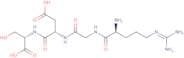
CAS 91037-65-9
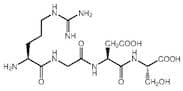
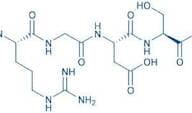
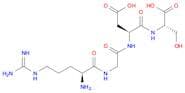
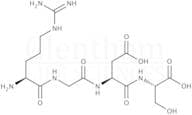
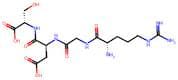
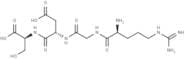
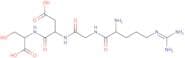
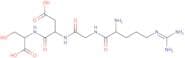
:arg-gly-asp-ser
- H-Arg-Gly-Asp-Ser-OH
- N~5~-(diaminomethylidene)-L-ornithylglycyl-L-alpha-aspartyl-L-serine
- N~5~-(diaminomethylidene)ornithylglycyl-alpha-aspartylserine
H-Arg-Gly-Asp-Ser-OH
CAS:RGDS, a tetrapeptide which supports fibroblast attachment and inhibits fibronectin binding to platelets. RGDS is a target sequence for syphilis spirochete cytadherence.Fórmula:C15H27N7O8Pureza:97.6%Forma y color:White PowderPeso molecular:433.42Arg-Gly-Asp-Ser
CAS:Arg-Gly-Asp-Ser (RGDS peptide) is a conserved tetrapeptide sequence found in fibronectin, and the von Willebrand factor.Fórmula:C15H27N7O8Pureza:98.29%Forma y color:SolidPeso molecular:433.42Fibronectin Active Fragment (RGDS)
CAS:Fibronectin is an extracellular matrix protein that plays a critical role in cell adhesion, migration, and differentiation. Fibronectin subunits are composed of repeating units of three types of modules: type I, type II, and type III. The active fragment of fibronectin refers to a small peptide sequence within the type III modules of fibronectin that has been shown to have potent biological activity. The fibronectin active fragment, also known as the cell-binding domain or RGD domain, is a short peptide sequence consisting of the amino acid sequence Arg-Gly-Asp (RGD). This peptide sequence interacts with cell surface receptors known as integrins, which are important for mediating cell adhesion, migration, and signaling. The fibronectin active fragment has been extensively studied as a research tool to investigate the mechanisms of cell adhesion and migration. It has also been used in tissue engineering applications to promote cell attachment and proliferation on synthetic biomaterials. This product is available as a 0.5mg vial.Fórmula:C15H27N7O8Pureza:Min. 95%Peso molecular:433.42 g/molFibronectin Active Fragment (RGDS)
CAS:Fibronectin is an extracellular matrix protein that plays a critical role in cell adhesion, migration, and differentiation. Fibronectin subunits are composed of repeating units of three types of modules: type I, type II, and type III. The active fragment of fibronectin refers to a small peptide sequence within the type III modules of fibronectin that has been shown to have potent biological activity.
The fibronectin active fragment, also known as the cell-binding domain or RGD domain, is a short peptide sequence consisting of the amino acid sequence Arg-Gly-Asp (RGD). This peptide sequence interacts with cell surface receptors known as integrins, which are important for mediating cell adhesion, migration, and signaling.
The fibronectin active fragment has been extensively studied as a research tool to investigate the mechanisms of cell adhesion and migration. It has also been used in tissue engineering applications to promote cell attachment and proliferation on synthetic biomaterials.Fórmula:C15H27N7O8CH3COOH•2H2OPureza:Min. 95%Peso molecular:499.48 g/molRGDS
CAS:Please enquire for more information about RGDS including the price, delivery time and more detailed product information at the technical inquiry form on this pageFórmula:C15H27N7O8Pureza:Min. 95%Peso molecular:433.42 g/mol