CAS 922-67-8
:Metil propiolato
Descripción:
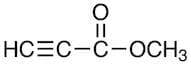
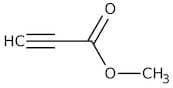
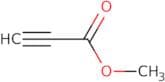
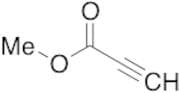
Metil propiolato es un compuesto orgánico con la fórmula molecular C4H6O2, clasificado como un éster. Se caracteriza por un distintivo olor afrutado y típicamente es un líquido incoloro a temperatura ambiente. El compuesto presenta un grupo de ácido propiónico, donde el grupo ácido carboxílico está esterificado con metanol. Metil propiolato es conocido por su reactividad, particularmente en la realización de varias reacciones químicas como adiciones nucleofílicas y polimerizaciones, lo que lo hace útil en la síntesis orgánica y como un intermedio en la producción de otros productos químicos. Tiene un punto de ebullición relativamente bajo y es soluble en disolventes orgánicos, pero es menos soluble en agua. Debido a su reactividad, debe manejarse con cuidado, ya que puede ser un irritante para la piel y el sistema respiratorio. Además, es importante señalar que Metil propiolato puede presentar riesgos ambientales, lo que requiere una eliminación adecuada y medidas de seguridad durante su manipulación. En general, sus propiedades únicas lo convierten en un compuesto valioso en el campo de la química orgánica.
Fórmula:C4H4O2
InChI:InChI=1S/C4H4O2/c1-3-4(5)6-2/h1H,2H3
Clave InChI:InChIKey=IMAKHNTVDGLIRY-UHFFFAOYSA-N
SMILES:C(C#C)(OC)=O
Sinónimos:- (Carbomethoxy)acetylene
- (Methoxycarbonyl)acetylene
- Methyl 2-propynoate
- Methyl Propiolate
- Methyl acetylenecarboxylate
- Methyl acetylenemonocarboxylate
- Methyl ethynecarboxylate
- Methyl propargylate
- Methyl propynoate
- Methylpropiolat
- Nsc 154164
- Propiolate De Methyle
- Propiolato De Metilo
- Propiolic acid, methyl ester
- Propynoic acid methyl ester
- Methyl propiolate,(Propiolic acid methyl ester)
- Methypropiolate
- methyl prop-2-ynoate
- Ver más sinónimos
Ordenar por
Pureza (%)
0
100
|
0
|
50
|
90
|
95
|
100
Encontrado 9 productos.
Methyl Propiolate
CAS:Fórmula:C4H4O2Pureza:>98.0%(GC)Forma y color:Colorless to Yellow clear liquidPeso molecular:84.07Methyl propiolate, 99%
CAS:Methyl propiolate was used in the synthesis of polysubstituted 3-arylaminoacrylate and tetrahydropyrimidin-2-one derivatives. It was also used as a thiol derivatizing agent for capillary electrophoresis. This Thermo Scientific Chemicals brand product was originally part of the Alfa Aesar product porFórmula:C4H4O2Pureza:99%Forma y color:Clear colorless to pale yellow, LiquidPeso molecular:84.07Methyl propiolate
CAS:Fórmula:HCCCO2CH3Pureza:≥ 97.0%Forma y color:Clear, colourless liquidPeso molecular:84.07Methyl prop-2-ynoate
CAS:Methyl prop-2-ynoateFórmula:C4H4O2Pureza:≥95%Forma y color: clear. almost colourless liquidPeso molecular:84.07336g/molMethyl propiolate
CAS:Methyl propiolate is a pharmacological agent that is an enzyme inhibitor. It has been shown to inhibit the reaction mechanism of trifluoroacetic acid (TFA) and phosphoric acid, which are used in the synthesis of pharmaceuticals and agrochemicals. Methyl propiolate also inhibits papillary muscle contractions and prevents the development of kidney fibrosis. This drug has been shown to have anticancer and antimicrobial effects, as well as being useful for treating infectious diseases such as tuberculosis. Methyl propiolate binds to the pyrazole ring of bacterial enzymes, preventing them from binding to their substrates or altering their shape, thus inhibiting their catalytic activity. The nitrogen atoms on methyl propiolate coordinate with zinc ions in the active site of bacterial DNA gyrase, forming a covalent bond that blocks access by ATP. Methyl propiolate also binds to bacterial 16S ribosomal RNA and inhibits protein synthesis, leading to cellFórmula:C4H4O2Pureza:Min. 95%Forma y color:Colorless Clear LiquidPeso molecular:84.07 g/molMethyl Propiolate
CAS:Producto controladoApplications Methyl Propiolate is used as a reagent in the synthesis of a novel class of salicylic acid derivatives for inhibiting the protein tyrosine phosphatase YopH from Yersinia pestis.
Not a dangerous good if item is equal to or less than 1g/ml and there is less than 100g/ml in the package
References Paudyal, M.P., et al.: Bioorg. Med. Chem., 22, 6781 (2014)Fórmula:C4H4O2Forma y color:NeatPeso molecular:84.07