CAS 95-44-3
:L-Treosa
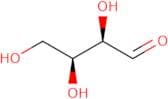
- (2R,3S)-2,3,4-Trihydroxybutanal
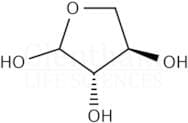
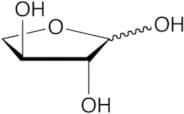
- (2S)-tetrahydrofuran-2,3,4-triol
- <span class="text-smallcaps">L</span>-Threofuranose
- <span class="text-smallcaps">L</span>-Threose
- Butanal, 2,3,4-trihydroxy-, (2R,3S)-
- Butanal, 2,3,4-trihydroxy-, [R-(R*,S*)]-
- Threose, <span class="text-smallcaps">L</span>-
- L(+)-Threose
- L-Threose
- Threose, L-
L-(+)-Threose
CAS:Fórmula:C4H8O4Pureza:≥ 60.0%Forma y color:Clear, colourless to faint yellow liquidPeso molecular:120.10L-Threose (~0.2 M in Water)
CAS:Producto controladoApplications L-Threose is a significant degredation product of ascorbic acid, with high potential to glycate and crosslink lens proteins in vitro forming a stable lens tissue.
References Ortwerth, B. et al.: Exp. Eye. Res., 58, 665 (1994);Fórmula:C4H8O4Forma y color:Single SolutionPeso molecular:120.1L-Threose - aqueous solution
CAS:L-Threose is a sugar molecule that is used as a structural component of DNA and RNA. It is also an important part of the energy metabolism in cells. L-Threose can be enzymatically inactivated by glycosidases, which are enzymes that hydrolyze glycosidic bonds. The inhibition of glycosidases by L-threose may be useful for the prevention or treatment of diseases associated with enzyme activity, such as diabetes mellitus type II. L-Threose has been shown to have inhibitory properties against sephadex G-100, a membrane protein found in bacteria. L-Threose may be useful as a control agent for research into the response element of polymerase chain reaction (PCR).
Fórmula:C4H8O4Pureza:Min. 60 Area-%Forma y color:Clear LiquidPeso molecular:120.1 g/mol