CAS 97-72-3
:Anhídrido isobutírico
Descripción:
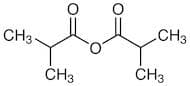
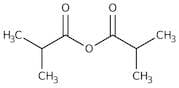
Anhídrido isobutírico, con el número CAS 97-72-3, es un compuesto orgánico que sirve como un derivado del ácido isobutírico. Se caracteriza por su grupo funcional anhidro, que se forma por la condensación de dos moléculas de ácido isobutírico, resultando en la pérdida de agua. Este compuesto típicamente aparece como un líquido incoloro a amarillo pálido con un olor penetrante. Anhídrido isobutírico es conocido por su reactividad, particularmente en reacciones de acilación, donde puede introducir grupos acilo isobutíricos en varios sustratos. Es soluble en disolventes orgánicos, pero tiene una solubilidad limitada en agua. Debido a sus propiedades químicas, se utiliza en la síntesis de ésteres, amidas y otros derivados en química orgánica. Las precauciones de seguridad son esenciales al manipular este compuesto, ya que puede ser irritante para la piel, los ojos y el sistema respiratorio. También se recomienda un almacenamiento adecuado en un lugar fresco y seco, alejado de materiales incompatibles, para garantizar la estabilidad y la seguridad.
Fórmula:C8H14O3
InChI:InChI=1/C8H14O3/c1-5(2)7(9)11-8(10)6(3)4/h5-6H,1-4H3
Clave InChI:InChIKey=LSACYLWPPQLVSM-UHFFFAOYSA-N
SMILES:C(OC(C(C)C)=O)(C(C)C)=O
Sinónimos:- 2-Methylpropanoic acid anhydride
- 2-Methylpropanoic anhydride
- 2-Methylpropanoyl-2-methylpropanoate
- 2-Methylpropionic acid anhydride
- 2-Methylpropionic anhydride
- Anhidrido Isobutirico
- Anhydride isobutyrique
- Isobutanoic anhydride
- Isobuttersaeureanhydrid
- Isobuttersaureanhydrid
- Isobutyric Anhydride
- Isobutyric acid anhydride
- Isobutyryl anhydride
- Propanoic acid, 2-methyl-, 1,1'-anhydride
- ANIB
- Propanoic acid, 2-methyl-, anhydride
- A-METHYLPROPIONIC ANHYDRIDE
- Isobutryic anhydride
- anhydrideisobutyrique
- 2-methylpropanoicacidanhydride
- isobutyryloxide
- Propanoicacid,2-methyl-,anhydride
- (iso-C3H7CO)2O
- isobutyrylanhydride
- BIS(2-METHYLPROPIONIC ACID) ANHYDRIDE
- 1-Methylpropanoic anhydride
- DIMETHYLACETIC ANHYDRIDE
- 2-methyl-propanoicacianhydride
- isobutyricacidanhydride
- Ver más sinónimos
Ordenar por
Pureza (%)
0
100
|
0
|
50
|
90
|
95
|
100
Encontrado 6 productos.
Isobutyric Anhydride
CAS:Fórmula:C8H14O3Pureza:>95.0%(GC)(T)Forma y color:Colorless to Light yellow to Light orange clear liquidPeso molecular:158.20Isobutyric anhydride, 97%
CAS:Isobutyric anhydride is used in the preparation of 4-O-isobutyryl derivative by reacting with octyl beta-D-glucopyranoside using C2-symmetric chiral 4-pyrrolidinopyridine as a catalyst. It acts as a starting material for esters like sucrose acetate isobutyrate, dyes and agrochemicals. It finds appli
Fórmula:C8H14O3Pureza:97%Forma y color:Liquid, Clear colorlessPeso molecular:158.20Isobutyric anhydride
CAS:Isobutyric anhydrideFórmula:C8H14O3Pureza:95%Forma y color: clear. colourless liquidPeso molecular:158.19g/molIsobutyric Anhydride
CAS:Producto controladoApplications Isobutyric Anhydride is used as a highly reactive and non-water producing acyl donor for hydrolase-catalyzed enantioselective esterification.
Not a dangerous good if item is equal to or less than 1g/ml and there is less than 100g/ml in the package
References Xu, J.-H., et al.: Appl. Microbiol. Biot., 43, 402 (1995)Fórmula:C8H14O3Forma y color:NeatPeso molecular:158.19Isobutyric anhydride
CAS:Isobutyric anhydride is a crystalline cellulose-derived chemical that is used as a solvent in pharmaceutical preparations. It is also used as a reactive agent in the production of antibiotics. Isobutyric anhydride reacts with the hydroxyl group on the antibiotic to form an ester, which in turn reacts with trifluoroacetic acid to form the final product. The mechanism of this reaction is kinetic and hydrochloric acid can be used as a catalyst. Isobutyric anhydride has been shown to have high reactivity with antibiotic-resistant strains of bacteria. This compound has high bioavailability when administered orally and exhibits high kinetic constants for both hydrolysis and esterification reactions, making it a useful drug for preventing bacterial growth in vivo.Fórmula:C8H14O3Pureza:Min. 95%Forma y color:Clear LiquidPeso molecular:158.19 g/mol