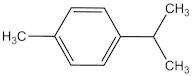
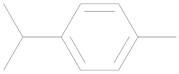
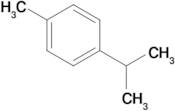
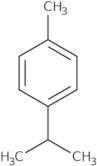
CAS 99-87-6
:p-Cimeno
- 1-Isopropyl-4-methylbenzene
- 1-Methyl-4-(1-methylethyl)benzene
- 1-Methyl-4-(propan-2-yl)benzene
- 1-Methyl-4-isopropylbenzene
- 2-p-Tolylpropane
- 4-Cymene
- 4-Isopropyl-1-methylbenzene
- 4-Isopropyltoluene
- 4-Methylisopropylbenzene
- Benzene, 1-methyl-4-(1-methylethyl)-
- Camphogen
- Dolcymene
- Nsc 4162
- P-Cimeno
- Para-Cymene
- Toluene, 4-(1-Methylethyl)-
- p-Cymol
- p-Isopropyltoluene
- p-Methylcumene
- p-Methylisopropylbenzene
- p-Cymene
- METHYL(1-METHYLETHYL)BENZENE
- Methyl isopropyl benzene
- PARA-CYMENE 97
- CYMENE PARA
- 1-methyl-4-(1-methylethyl)-benzen
- FEMA 2356
- P-METHYLPROPYLBENZENE
- 1-(1-methylethyl)-4-methylbenzene
- CYMENE, 4-
- Ver más sinónimos
p-Cymene
CAS:Aromatic hydrocarbonFórmula:C10H14Pureza:≥ 95.0 % (GC)Forma y color:LiquidPeso molecular:134.22p-Cymene
CAS:Applications p-Cymene is a naturally occurring organic compound that is known as an essential oil and is found in many plants. p-Cymene is also used in the synthesis of ruthenium and osmium complexes as a ligand.
Not a dangerous good if item is equal to or less than 1g/ml and there is less than 100g/ml in the package
References Bennet, M.A., et al.: Inorganic Syntheses, 21, 74-78 (1982)Fórmula:C10H14Forma y color:NeatPeso molecular:134.22p-Cymene
CAS:p-Cymene is a natural product that has been shown to be active against a number of human pathogens, including bacteria and fungi. It is a metabolite of cymene, which is a naturally occurring hydrocarbon found in the essential oils of many plants. p-Cymene inhibits bacterial growth by interfering with signal pathways that are important for bacterial cell division. This inhibition leads to an increase in the mitochondrial membrane potential and mitochondrial functions, which are vital for energy metabolism. The antimicrobial properties of p-cymene have been shown through its ability to inhibit the growth of bacteria at low concentrations and kill them at high concentrations. It also demonstrates anti-inflammatory properties due to its ability to inhibit prostaglandin synthesis.
Fórmula:C10H14Pureza:Min. 95%Forma y color:Clear LiquidPeso molecular:134.22 g/mol