Sustratos fluorogénicos
Se han encontrado 297 productos de "Sustratos fluorogénicos"
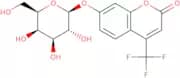
4-Trifluoromethylumbelliferyl β-D-galactopyranoside
CAS:4-Trifluoromethylumbelliferyl β-D-galactopyranoside is a fluorogenic substrate for beta-galactosidase . Upon hydrolysis, the fluorogenic moiety (blueish) 4-trifluoromethylumbelliferone (also known as TFMU) is released. 4-Trifluoromethylumbelliferyl β-D-galactopyranoside is commonly used in bacterial detection and in LacZ gene expression assays.
Fórmula:C16H15F3O8Pureza:Min. 95%Forma y color:PowderPeso molecular:392.28 g/molRef: 3D-ET06963
Producto descatalogadoEthyl umbelliferone-3-carboxylate-α-D-glucopyranoside
Ethyl umbelliferone-3-carboxylate-a-D-glucopyranoside is a fluorogenic substrate used for detecting alpha-glucosidase activity in enzymatic assays. When alpha-glucosidase cleaves , the glycosidic bond, umbelliferone-3-carboxylate is released, which exhibits strong fluorescence. This substrate is commonly utilized in glycobiology research, diagnostic tests, and high-throughput screening of enzyme inhibitors.
Fórmula:C18H20O10Pureza:Min. 95%Forma y color:Off-white to yellow solid.Peso molecular:396.35 g/molRef: 3D-EE45724
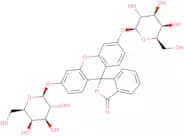
Producto descatalogadoFluorescein di-beta-D-galactopyranoside
CAS:Fluorogenic substrate for beta-galactosidase
Fórmula:C32H32O15Pureza:Min. 98 Area-%Forma y color:Slightly Yellow PowderPeso molecular:656.59 g/mol4-Methylumbelliferyl-β-D-xylopyranoside
CAS:4-Methylumbelliferyl-β-D-xylopyranoside is a fluorescent probe that has been used to visualize the enzyme activities of glycosidases, such as endoglycosidase H and α-amylase. It is also used as a tool in structural analysis of oligosaccharides. 4-Methylumbelliferyl-β-D-xylopyranoside has been shown to inhibit collagenase activity in mice, which may be due to its ability to inhibit protein synthesis and cell division.
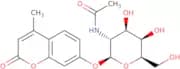
Fórmula:C15H16O7Pureza:Min. 99.0 Area-%Peso molecular:308.29 g/mol4-Methylumbelliferyl 2-acetamido-2-deoxy-b-D-galactopyranoside
CAS:Please enquire for more information about 4-Methylumbelliferyl 2-acetamido-2-deoxy-b-D-galactopyranoside including the price, delivery time and more detailed product information at the technical inquiry form on this page
Fórmula:C18H21NO8Pureza:Min. 98 Area-%Forma y color:White PowderPeso molecular:379.36 g/molRef: 3D-EM06390
Producto descatalogado4-Methylumbelliferyl-beta-D-glucuronic acid methyl ester, Biosynth Patent: EP 2718458 and US 9127303
4-Methylumbelliferyl-beta-D-glucuronic acid methyl ester is a chromogenic substrate for β-glucuronidase. It is used in diagnostic applications and as a substrate in enzyme kinetics experiments. 4-Methylumbelliferyl-beta-D-glucuronic acid methyl ester has fluorescence properties that allow it to be detected by chemiluminescence and bioluminescence.
Pureza:Min. 95%Ref: 3D-EM175451
Producto descatalogado4-Methylumbelliferyl α-L-idopyranosiduronic acid 2-sulfate disodium salt
CAS:4-Methylumbelliferyl alpha-L-idopyranosiduronic acid 2-sulfate disodium salt is a chromogenic substrate that is used in the detection of glycosidases. It reacts with enzymes such as alpha-amylase, beta-galactosidase, and beta-glucosidase to produce a fluorescent product. This product can be detected using a fluorometer or spectrophotometer. The CAS number for 4-methylumbelliferyl alpha-L-idopyranosiduronic acid 2-sulfate disodium salt is 1045020-74-3.
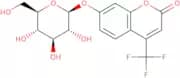
Fórmula:C16H14Na2O12SPureza:Min. 99.0 Area-%Peso molecular:476.32 g/mol4-Trifluoromethylumbelliferyl b-D-glucopyranoside
CAS:4-Trifluoromethylumbelliferyl b-D-glucopyranoside is a fluorogenic substrate for beta-glucosidase. Upon hydrolysis, the fluorogenic moiety (blueish) 4-trifluoromethylumbelliferone (also known as TFMU) is released. 4-Trifluoromethylumbelliferyl b-D-glucopyranoside is commonly used in bacterial detection and in Gaucher disease diagnosis.
Pureza:Min. 95%Forma y color:White To Off-White SolidPeso molecular:392.28 g/molRef: 3D-ET04970
Producto descatalogado4-Methylumbelliferyl 2-acetamido-2-deoxy-a-D-glucopyranoside-6-sulfate sodium salt - Moscerdam™ biochemical purity
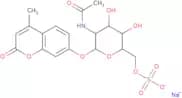
CAS:A substrate used for the diagnosis of Sanfilippo disease type D (MPS IIID).
Fórmula:C18H20NNaO11SPureza:Min. 95%Forma y color:White PowderPeso molecular:481.41 g/molRef: 3D-EM31027
Producto descatalogado4-Methylumbelliferyl-2-O-(a-L-fucopyranosyl)-a-L-fucopyranoside
4-Methylumbelliferyl-2-O-(alpha-L-fucopyranosyl)-alpha-L-fucopyranoside is a fluorogenic substrate for alpha-L-fucosidase. After enzymatic cleaveage, free 4-methylumbelliferone (also known as hymecromone) is released, exhibiting blue fluorescence upon excitation with UV light. The strongest fluorescence of 4-methylumbelliferone requires deprotonation of the hydroxyl group (thus requires alkaline pH), with a maximal fluorescence intensity obtained with excitation at 350 to 370 nm and emission at 440 to 470 nm. The use of 4-methylumbelliferyl-2-O-(alpha-L-fucopyranosyl)-alpha-L-fucopyranosideas a substrate for measuring the alpha-L-fucosidase activity is used for fucosidosis diagnosis.
Pureza:Min. 95%Forma y color:White PowderPeso molecular:468.45 g/mol4-Methylumbelliferyl b-D-galactopyranoside
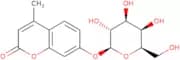
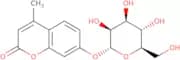
CAS:Fluorogenic substrate for β-galactosidase
Fórmula:C16H18O8Pureza:Min. 95%Forma y color:White PowderPeso molecular:338.31 g/molFluorescein di-β-D-glucopyranoside
CAS:Fluorogenic substrate targeting beta-glucosidase
Fórmula:C32H32O15Pureza:Min. 95%Forma y color:PowderPeso molecular:656.59 g/molRef: 3D-EF04417
Producto descatalogado4-Methylumbelliferyl 2-acetamido-2-deoxy-b-D-glucopyranoside
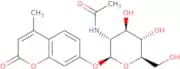
CAS:Fluorogenic substrate for chitinaseFórmula:C18H21NO8Pureza:Min. 99 Area-%Forma y color:White Off-White PowderPeso molecular:379.36 g/molRef: 3D-EM03177
Producto descatalogadoRhodamine 110 chloride
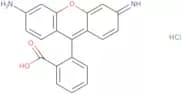
CAS:Fluorescent dye substrate for flow cytometric measurements
Fórmula:C20H15O3N2ClPureza:Min. 95 Area-%Forma y color:Red PowderPeso molecular:366.8 g/molBis(4-methylumbelliferyl)phosphate
CAS:Bis(4-methylumbelliferyl)phosphate is a fluorescent probe that can be used for the diagnosis of β-glucosidase. It has a phosphate group and can be used to study phosphodiesterases and phosphodiesters. Bis(4-methylumbelliferyl)phosphate is also a liposomal probe that can be used in kinetic studies. This compound has been shown to inhibit β-glucosidase, which is an enzyme found in human saliva and pancreatic juice, at high concentrations. The inhibition of this enzyme leads to the accumulation of glucose and galactose in the blood, which can lead to diabetes mellitus or cancer.
Fórmula:C20H15O8PPeso molecular:414.31 g/mol4-Methylumbelliferyl elaidate
CAS:4-Methylumbelliferone is a fluorescent probe that can be used to study the metabolism of fatty acids in plants. It is also used as a marker for radiation and significant cytotoxicity. 4-Methylumbelliferone binds to the DNA termini, specifically at the 5' phosphate group, and inhibits phosphatase activity. This process increases levels of p-nitrophenyl phosphate (a substrate), which produces protocatechuic acid (an intermediate). The disulfide bond is then broken by hydrogen peroxide, leading to an increase in fluorescence. The optimum pH for this process is 7.5.
Fórmula:C28H40O4Pureza:Min. 95 Area-%Peso molecular:440.63 g/mol4-Methylumbelliferyl a-D-mannopyranoside
CAS:4-Methylumbelliferyl alpha-D-mannopyranoside (4-MU-a-D-Man) is a fluorogenic substrate used in activity assays for alpha-mannosidase. When it is hydrolyzed by alpha-mannosidase, it produces a fluorescent compound, 4-methylumbelliferone (4-MU). 4-MU-a-D-Man is often used in medical research to monitor the activity of alpha-mannosidase, which is important in lysosomal storage diseases. In addition, 4-Methylumbelliferyl alpha-D-mannopyranoside has been used to study the the activity of concanavalin A, a lectin that specifically binds to alpha-D-mannopyranosyl and alpha-D-glucopyranosyl residues on various glycoproteins. The use of this fluorogenic enzyme substrate permits study the degree of alpha-D-mannosidic linkage cleavage by the enzyme.Fórmula:C16H18O8Pureza:Min. 98 Area-%Forma y color:White Off-White PowderPeso molecular:338.31 g/molRef: 3D-EM03179
Producto descatalogado4-Methylumbelliferyl b-D-glucuronide hydrate
CAS:4-Methylumbelliferyl beta;-D-glucuronide (MUG) is commonly used as a substrate for detecting beta;-glucuronidase. MUG is used for identifying E. coli contamination in food, drinkingwater, clinical samples and for rapid bacterial identification in blood cultures. It is recommended in international normatives (ISO, DIN) as a fluorogenic substrate for detection of E. coli. MUG is also a tool assaying the glucuronidase gene in plants.
Fórmula:C16H18O10Pureza:(%) Min. 99%Forma y color:White PowderPeso molecular:352.29 g/mol4-Methylumbelliferyl sulfate potassium salt
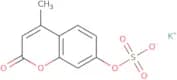
CAS:4-Methylumbelliferyl sulfate potassium salt serves as a superior fluorogenic substrate in enzyme detection assays. Upon enzymatic hydrolysis, it releases a highly fluorescent 4-methylumbelliferone moiety, enabling real-time analysis and quantification of enzyme activities. This product is ideal for a variety of biological assay applications, including in vitro diagnostics, drug discovery, and research purposes. Its excellent sensitivity, specificity, and performance ensure accurate and consistent results every time.Fórmula:C10H7KO6SPureza:Min. 98 Area-%Forma y color:White PowderPeso molecular:294.32 g/mol4-Methylumbelliferyl 6-thio-palmitate-b-D-glucopyranoside - Moscerdam™ biochemical purity
CAS:4-Methylumbelliferyl 6-thio-palmitate-b-D-glucopyranoside (Mu-6S-Palm-β-Glc) is a fluorogenic substrate of palmitoyl-protein thioesterase 1 (PPT1), used in the diagnosis of infantile neuronal ceroid lipofuscinosis (INCL). INCL, also known as infantile CLN1 disease, is a rapidly progressing lysosomal storage disorder (LSD), caused by a deficiency of PPT1. Mu-6S-Palm-β-Glc is also used as the substrate in the PPT assay to investigate the retention of lysosomal enzyme activity of bi-functional IgG-PPT1 fusion protein in the delivery across blood-brain barrier.
Fórmula:C32H48O8SPureza:Min. 95%Forma y color:White PowderPeso molecular:592.78 g/molRef: 3D-EM06650
Producto descatalogado