Sustratos fluorogénicos
Se han encontrado 297 productos de "Sustratos fluorogénicos"
Resorufin-7-O-phosphate
CAS:Resorufin-7-O-phosphate is a fluorogenic substrate for alkaline phosphatase that exhibits a red color after cleavage that can be measured at ~ 585nm.
Fórmula:C12H6NO6P·2H4NPureza:Min. 95%Peso molecular:327.23 g/molL-Lysyl-L-alanine 7-amido-4-methylcoumarin dihydrochloride
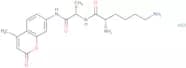
CAS:L-Lysyl-L-alanine 7-amido-4-methylcoumarin dihydrochloride is a fluorogenic peptide substrate for aminopeptidase. This AMC peptide substrate is normally used to rapidly profile the N-terminal specificity of proteases.Pureza:Min. 98.0 Area-%Forma y color:Powder4-Methylumbelliferyl propionate
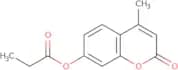
CAS:4-Methylumbelliferyl propionate is a fluorogenic substrate for esterase. After enzymatic cleaveage, free 4-methylumbelliferone (also known as hymecromone) is released, exhibiting blue fluorescence upon excitation with UV light. The strongest fluorescence of 4-methylumbelliferone requires deprotonation of the hydroxyl group (thus requires alkaline pH), with a maximal fluorescence intensity obtained with excitation at 350 to 370 nm and emission at 440 to 470 nm. The use of 4-methylumbelliferyl propionateas a substrate for measuring the esterase activity is used for esterase deficiency screening assays.
Fórmula:C13H12O4Pureza:Min. 95 Area-%Forma y color:PowderPeso molecular:232.23 g/molResorufin N-acetyl-b-D-glucosamine
CAS:Resorufin N-acetyl-b-D-glucosamine is fluorogenic substrate for N-acetyl-beta-D-glucosaminidase (NAG).
Fórmula:C20H20N2O8Pureza:Min. 98 Area-%Forma y color:Orange PowderPeso molecular:416.38 g/mol4-(Trifluoromethyl)umbelliferyl-β-D-cellotrioside
CAS:4-(Trifluoromethyl)umbelliferyl-beta-D-cellotrioside is a fluorogenic substrate for cellulase. After cleavage, the fluorophore 4-(trifluoromethyl)umbelliferone, commonly referred as TFMU, is released, exhibiting a blueish color. 4-(Trifluoromethyl)umbelliferyl-beta-D-cellotrioside is used to study the enzyme kinetics in bacterial cellulose degradation assays as well as in biomass conversion research studies.Fórmula:C28H35F3O18Pureza:Min. 95%Forma y color:White to off-white solid.Peso molecular:716.56 g/molL-Leucine 7-amido-4-methylcoumarin hydrochloride salt
CAS:L-Leucine 7-amido-4-methylcoumarin hydrochloride salt is a synthetic peptide substrate used as a fluorogenic substrate for leucine aminopeptidase.Fórmula:C16H21ClN2O3Pureza:Min. 98 Area-%Forma y color:White PowderPeso molecular:324.8 g/mol4-Methylumbelliferyl caprylate
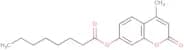
CAS:Used for identification of Salmonella spp. by detection of caprylate esteraseFórmula:C18H22O4Pureza:Min. 95%Forma y color:White PowderPeso molecular:302.36 g/molL-Alanine-7-amido-4-methylcoumarin hydrochloride
CAS:L-Alanine-7-amido-4-methylcoumarin hydrochloride is a synthetic peptide substrate used as a fluorogenic substrate for alanine aminopeptidase.Fórmula:C13H14N2O3·HClPureza:Min. 90%Forma y color:PowderPeso molecular:282.72 g/mol4-Methylumbelliferyl 2-deoxy-2-sulfamino-b-D-glucopyranoside sodium salt
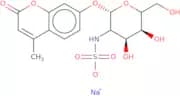
4-Methylumbelliferyl 2-deoxy-2-sulfamino-beta-D-glucopyranoside sodium salt is a fluorogenic substrate for N-sulfoglucosamine sulfohydrolase. After enzymatic cleaveage, free 4-methylumbelliferone (also known as hymecromone) is released, exhibiting blue fluorescence upon excitation with UV light. The strongest fluorescence of 4-methylumbelliferone requires deprotonation of the hydroxyl group (thus requires alkaline pH), with a maximal fluorescence intensity obtained with excitation at 350 to 370 nm and emission at 440 to 470 nm. The use of 4-methylumbelliferyl 2-deoxy-2-sulfamino-beta-D-glucopyranoside sodium saltas a substrate for measuring the N-sulfoglucosamine sulfohydrolase activity is used for screening of Mucopolysaccharidosis IIIA (MPS IIIA) and diagnosis of Sanfilippo A syndrome.Fórmula:C16H19NO10SNaPureza:Min. 95%Forma y color:PowderPeso molecular:439.37 g/mol3-(4,4-Difluoro-5,7-dimethyl-4-bora-3a,4a-diaza-s-indacene-3-propionamido)propyl b-D-lactoside
3-(4,4-Difluoro-5,7-dimethyl-4-bora-3a,4a-diaza-s-indacene-3-propionamido)propyl b -D -lactoside (FDPBP) is a substrate for alkaline phosphatase. It reacts with the enzyme to produce a blue color. FDPBP is used in diagnostic applications such as food testing and bioluminescence.Pureza:Min. 95%Forma y color:PowderPeso molecular:675.48 g/mol4-Methylumbelliferyl 2-acetamido-2-deoxy-a-D-glucopyranoside
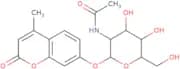
CAS:4-Methylumbelliferyl 2-acetamido-2-deoxy-alpha-D-glucopyranoside is a fluorogenic substrate for alpha-N-acetylglucosaminidase. After enzymatic cleaveage, free 4-methylumbelliferone (also known as hymecromone) is released, exhibiting blue fluorescence upon excitation with UV light. The strongest fluorescence of 4-methylumbelliferone requires deprotonation of the hydroxyl group (thus requires alkaline pH), with a maximal fluorescence intensity obtained with excitation at 350 to 370 nm and emission at 440 to 470 nm. The use of 4-methylumbelliferyl 2-acetamido-2-deoxy-alpha-D-glucopyranosideas a substrate for measuring the alpha-N-acetylglucosaminidase activity is used for Sanfilippo syndrome B screening and mucopolysaccharidosis diagnosis.Fórmula:C18H21NO8Pureza:Min. 98 Area-%Forma y color:PowderPeso molecular:379.36 g/mol4-Methylumbelliferyl-N-acetyl-β-D-glucosaminide-6-sulfate, sodium salt
CAS:4-Methylumbelliferyl 2-acetamido-2-deoxy-beta-D-glucopyranoside-6-sulfate sodium salt is a high-quality fluorogenic substrate specifically designed for the detection and quantification of various enzymes, including beta-glucosidases and sulfatases. Upon hydrolysis by the target enzyme, this substrate releases the highly fluorescent 4-methylumbelliferone, allowing for real-time monitoring and accurate measurement of enzyme activities in biochemical assays, diagnostic tests, and research applications. 4-Methylumbelliferyl 2-acetamido-2-deoxy-beta-D-glucopyranoside-6-sulfate sodium salt has excellent solubility in water, ensuring a consistent and reliable performance in different experimental conditions. This versatile substrate is an essential tool for researchers and industry professionals who require a sensitive and reproducible detection method for enzymes of interest.Fórmula:C18H20NNaO11SPureza:Min. 98.0 Area-%Peso molecular:481.41 g/molRef: 3D-M-5505
5mgA consultar25mgA consultar50mgA consultar100mgA consultar250mgA consultar-Unit-ggA consultar5-Dodecanoylaminofluorescein di-b-D-galactopyranoside
CAS:5-Dodecanoylaminofluorescein di-b-D-galactopyranoside, commonly known as C12FDG, is a fluorogenic substrate for β-galactosidase. Fluorescein is released upon enzymatic cleavage by β-galactosidase. The intensity of its fluorescence is utilised to quantify β-galactosidase activity. C12FDG has been shown to be useful in identifying senescent cells that are associated with aging and cancer. It has also been used as a model system in some studies for studying disease activity, intracellular targets, and biological sample storage. It is also used to identify cancer tissues and radiation damage in the form of senescent cells. The chemical structure of 5DAFG is similar to that of the natural sugar galactose. 5DAFG binds to the plasma membrane of cells due to its lipophilic properties and then enters the cell through transport proteins on the cell surface called ATP binding cassette transporters.Fórmula:C44H55NO16Pureza:Min. 95 Area-%Forma y color:White PowderPeso molecular:853.9 g/molFLsharp™ - Phosphate, disodium salt
FLsharp™ - Phosphate, disodium salt is a fluorogenic water-soluble substrate for phosphatase enzymes. Its chemical name is 6-Chloro-2-[5-chloro-2-(phosphonooxy)phenyl]-4(1H)-quinazolinone disodium salt and was developed by Molecular Probes in the 1990s. After cleavage of the substrate by phosphatase activity, an insoluble product is formed that is highly fluorescent in the solid state. Upon UV irradiation this very stable fluorophore emits green light in the 530 nm range for an extended period of time. FLsharp™ is a unique substrate - optimized for the detection of phosphatase activity in solid matrices such as agar media, tissue sections or microscopic preparations. FLsharp™ - Phosphate, disodium salt is used in microbiology as a substrate for bacterial phosphatases.
Pureza:Min. 95%Fluorescein mono-b-D-galactopyranoside
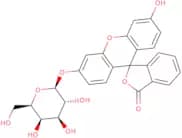
CAS:Fluorescein mono-b-D-galactopyranoside or FMG is a fluorogenic substrate for beta-galactosidase. The fluorophore fluorescein is released after enzymatic cleavage, exhibiting a greenish fluorescent. This substrate is particularly valuable in gene expression studies (e.g., lacZ reporter assays) and as a probe for cell-based assays for real-time monitoring.Pureza:Min. 95%Forma y color:PowderPeso molecular:494.45 g/mol4-Methylumbelliferyl 2-acetamido-3-O-(b-D-galactopyranosyl)-a-D-galactopyranoside
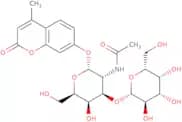
CAS:4-Methylumbelliferyl 2-acetamido-3-O-(beta-D-galactopyranosyl)-alpha-D-galactopyranoside is a fluorogenic substrate for alpha-N-acetylgalactosaminidase. After enzymatic cleaveage, free 4-methylumbelliferone (also known as hymecromone) is released, exhibiting blue fluorescence upon excitation with UV light. The strongest fluorescence of 4-methylumbelliferone requires deprotonation of the hydroxyl group (thus requires alkaline pH), with a maximal fluorescence intensity obtained with excitation at 350 to 370 nm and emission at 440 to 470 nm. The use of 4-methylumbelliferyl 2-acetamido-3-O-(beta-D-galactopyranosyl)-alpha-D-galactopyranosideas a substrate for measuring the alpha-N-acetylgalactosaminidase activity is used for Fabry disease diagnosis and Schindler disease screening.Fórmula:C24H31NO13Pureza:Min. 95%Forma y color:White PowderPeso molecular:541.5 g/molFluorescein diacetate
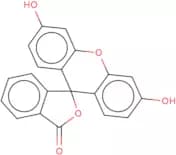
CAS:Fluorogenic substrate targeting esterases , hGSTP1-1
Fórmula:C24H16O7Forma y color:PowderPeso molecular:416.38 g/mol4-Methylumbelliferyl β-D-glucuronide
CAS:Fluorogenic substrate for b-glucuronidase GUSFórmula:C16H16O9Pureza:Min. 95%Peso molecular:352.29 g/molAcetyl-L-alanine 7-amido-4-methylcoumarin
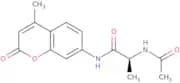
CAS:Acetyl-L-alanine 7-amido-4-methylcoumarin is a fluorogenic substrate for aminopeptidase. The enzyme cleaves the N-terminal amino acids, yielding a blue fluorescent solution.
Fórmula:C15H16N2O4Pureza:Min. 98 Area-%Forma y color:PowderPeso molecular:288.3 g/mol4-Methylumbelliferyl-beta-D-cellobioside
CAS:Fluorogenic substrate for β-D-Cellobiosidase yielding a blue fluorescent solution upon cleavage.Fórmula:C22H28O13Pureza:Min. 98.0 Area-%Peso molecular:500.46 g/mol