Sustratos fluorogénicos
Se han encontrado 297 productos de "Sustratos fluorogénicos"
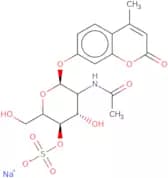
4-Methylumbelliferyl 2-acetamido-2-deoxy-b-D-galactopyranoside-4-sulfate sodium salt
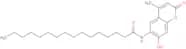
4-Methylumbelliferyl 2-acetamido-2-deoxy-beta-D-galactopyranoside-4-sulfate sodium salt is a fluorogenic substrate for N-acetylgalactosamine-4-sulfatase. After enzymatic cleaveage, free 4-methylumbelliferone (also known as hymecromone) is released, exhibiting blue fluorescence upon excitation with UV light. The strongest fluorescence of 4-methylumbelliferone requires deprotonation of the hydroxyl group (thus requires alkaline pH), with a maximal fluorescence intensity obtained with excitation at 350 to 370 nm and emission at 440 to 470 nm. The use of 4-methylumbelliferyl 2-acetamido-2-deoxy-beta-D-galactopyranoside-4-sulfate sodium saltas a substrate for measuring the N-acetylgalactosamine-4-sulfatase activity is used for diagnosis of Mucopolysaccharidosis VI (MPS VI) (a rare lysosomal storage disorder) and Maroteaux-Lamy syndrome screening.Pureza:Min. 95%Forma y color:White PowderPeso molecular:481.41 g/mol6-Hexadecanoylamino-4-methylumbelliferone
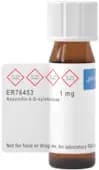
CAS:Fluorochrome for calibration of fluorimeters. Used with corresponding fluorogenic substrates for the diagnosis of Krabbe - and Niemann-Pick A/B disease.Fórmula:C26H39NO4Pureza:Min. 95%Forma y color:White PowderPeso molecular:429.59 g/molResorufin b-D-xylobioside
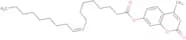
Resorufin b-D-xylobioside is a fluorogenic substrate for xylanases useful for xylanase activity assays.Pureza:Min. 95%Forma y color:PowderPeso molecular:477.42 g/mol4-Methylumbelliferyl oleate
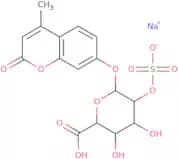
CAS:Methylumbelliferyl oleate is a MOSCERDAM® substrate targeting the lipase enzymeFórmula:C28H40O4Pureza:Min. 90 Area-%Forma y color:White PowderPeso molecular:440.61 g/mol4-Methylumbelliferyl a-L-idopyranosiduronic acid 2-sulphate disodium salt - Moscerdam™ biochemical purity
CAS:PAIRED PRODUCT AVAILABLE: alpha-L-iduronidase Enzyme, FI1793834MU-alpha-L-iduronide-2-sulphate (M2) is a fluorogenic substrate of iduronate-2-sulphatase (IDS), used in a 2-step assay coupled with alpha-L-iduronidase. The assay is used in biochemical testing for Hunter syndrome (mucopolysaccharidosis II / MPS II). In a first step, IDS from biological samples cleaves the sulphate group from M2. In a second step, exogeneous alpha-L-iduronidase which cleaves the 4-MU moiety is added to the reaction, resulting in release of a fluorescent signal (Ex 360 nm / Em 455 nm). The reaction is stopped by the addition of sodium carbonate.Fórmula:C16H14Na2O12SPureza:Min. 99 Area-%Forma y color:White PowderPeso molecular:476.32 g/mol4-Methylumbelliferyl pyrophosphate diester disodium salt
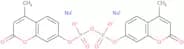
CAS:4-Methylumbelliferyl pyrophosphate diester disodium salt is a fluorogenic substrate for pyrophosphatases or diphosphatases. After enzymatic cleaveage, free 4-methylumbelliferone (also known as hymecromone) is released, exhibiting blue fluorescence upon excitation with UV light. The strongest fluorescence of 4-methylumbelliferone requires deprotonation of the hydroxyl group (thus requires alkaline pH), with a maximal fluorescence intensity obtained with excitation at 350 to 370 nm and emission at 440 to 470 nm. The use of 4-methylumbelliferyl pyrophosphate diester disodium saltas a substrate for measuring the pyrophosphatases or diphosphatases activity is used for monitoring and diagnosis of pyrophosphatase deficiency and bone metabolism disorder.Fórmula:C20H14Na2O11P2Pureza:Min. 95%Forma y color:White PowderPeso molecular:538.25 g/mol4-Methylumbelliferyl beta-D-lactoside
CAS:Fluorogenic substrate for beta-galactosidaseFórmula:C22H28O13Pureza:Min. 98 Area-%Forma y color:White PowderPeso molecular:500.45 g/molFLsharp™ - Phosphate, disodium salt
FLsharp™ - Phosphate, disodium salt is a fluorogenic water-soluble substrate for phosphatase enzymes. Its chemical name is 6-Chloro-2-[5-chloro-2-(phosphonooxy)phenyl]-4(1H)-quinazolinone disodium salt and was developed by Molecular Probes in the 1990s. After cleavage of the substrate by phosphatase activity, an insoluble product is formed that is highly fluorescent in the solid state. Upon UV irradiation this very stable fluorophore emits green light in the 530 nm range for an extended period of time. FLsharp™ is a unique substrate - optimized for the detection of phosphatase activity in solid matrices such as agar media, tissue sections or microscopic preparations. FLsharp™ - Phosphate, disodium salt is used in microbiology as a substrate for bacterial phosphatases.
Pureza:Min. 95%3-Carboxyumbelliferyl b-D-glucuronide
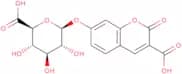
CAS:3-Carboxyumbelliferyl b-D-glucuronide serves as a highly sensitive fluorogenic substrate for detecting b-glucuronidase activity. Upon enzymatic cleavage, it generates a fluorescent product enabling easy and accurate monitoring of enzyme activity in various applications, such as diagnostics, drug discovery, and research.
Pureza:Min. 95%Forma y color:White to off-white solid.Peso molecular:382.28 g/mol4-Methylumbelliferyl b-D-celloheptaoside
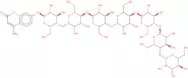
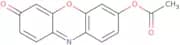
CAS:A fluorogenic MOSCERDAM® substrate targeting cellulasesPureza:Min. 95%Peso molecular:1,311.15 g/molResorufin acetate
CAS:Resorufin acetate is a fluorogenic substrate for esterase activity measurments in lipid metabolism studies. It is also used as a substrate for chymotrypsin, a digestive enzyme produced by the pancreas that aids in protein digestion in the small intestine.
Fórmula:C14H9NO4Pureza:Min. 95%Forma y color:PowderPeso molecular:255.23 g/mol4-Methylumbelliferyl a-D-arabinopyranoside
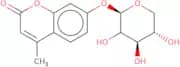
A fluorogenic MOSCERDAM® substrate targeting alpha-arabinofuranosidasePureza:Min. 95%Peso molecular:308.28 g/molAcetyl coenzyme A trilithium salt trihydrate
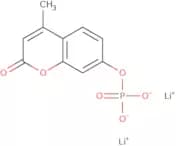
CAS:Acetyl coenzyme A trilithium salt trihydrate (ATC) is a glutathione-dependent enzyme that catalyzes the acetylation of compounds with a thiol group. Acetyl coenzyme A trilithium salt trihydrate has been shown to acetylate recombinant human and hek293 cells as well as xenobiotic compounds such as acetaminophen, chlorzoxazone, and phenacetin. The rate of acetylation depends on the concentration of glutathione and the availability of the substrate. There is no evidence that ATC conjugates or transfers acetyllysine to other proteins. It is excreted in the urine after being expressed by recombinant human and hek293 cells.END>Fórmula:C23H35N7O17P3S·3Li·3H2OPureza:Min. 95%Forma y color:White PowderPeso molecular:881.42 g/mol4-Methylumbelliferyl phosphate dilithium
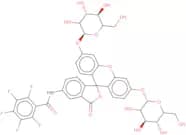
CAS:4-Methylumbelliferyl phosphate dilithium is a fluorogenic substrate for alkaline phosphatase. After enzymatic cleaveage, free 4-methylumbelliferone (also known as hymecromone) is released, exhibiting blue fluorescence upon excitation with UV light. The strongest fluorescence of 4-methylumbelliferone requires deprotonation of the hydroxyl group (thus requires alkaline pH), with a maximal fluorescence intensity obtained with excitation at 350 to 370 nm and emission at 440 to 470 nm. The use of 4-methylumbelliferyl phosphate dilithiumas a substrate for measuring the alkaline phosphatase activity is used for bone metabolism disorder studies and hypophosphatasia diagnosis.Fórmula:C10H7O6P•Li2Pureza:Min. 95%Forma y color:PowderPeso molecular:268.01 g/mol5-(Pentafluorobenzoylamino)fluoroscein di-b-D-galactopyranoside
CAS:5-(Pentafluorobenzoylamino)fluoroscein di-b-D-galactopyranoside, commonly referred as PFB-FDG or PFB-FDGal, is a cell-permeable enzyme substrate for β-galactosidase used in live cell imaging assays. After cleavage, 5-(pentafluorobenzoylamino)fluorescein (PFB-F) is released, generating a green fluorescence (Em ~520 nm)) of a higher intensity than fluorescein. Its main use is for bacterial detection (e.g. E. coli LacZ assays), but also for flow cytometry analytical assays.
Fórmula:C39H32F2NO16Pureza:Min. 95%Forma y color:PowderPeso molecular:865.67 g/molResorufin phosphate disodium
Resorufin phosphate disodium is a fluorogenic substrate for phosphatase exhibiting a red color after cleavage that can be measured at ~ 585nm.Fórmula:C12H6NNa2O6PPureza:Max. 75 Area-%Forma y color:Brown PowderPeso molecular:337.14 g/molCaspase substrate
CAS:Caspase substrates are a class of pharmacological agents that regulate apoptosis. Caspases are proteases that cleave specific proteins in the cell, leading to apoptosis. Pro-apoptotic proteins activate caspases, while anti-apoptotic proteins inhibit them. Caspase substrates can be either pro-caspase or anti-caspase, depending on the desired effect. They may also be used to regulate caspases without affecting their activity. The caspase substrate is cleaved by caspases and releases a polypeptide fragment that triggers apoptosis in some cells, but not others. For example, the Hl-60 cell line is resistant to the pro-apoptotic effects of the substrate because it contains an anti-apoptotic protein called Bcl-2. In contrast, myocardial cells contain pro-apoptotic proteins and are sensitive to the pro-apoptotic effects of the substrate. In
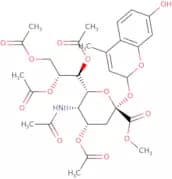
Pureza:Min. 95%Peso molecular:821.75 g/mol4-Methylumbelliferyl N-acetyl-4,7,8,9-tetra-O-acetyl-a-D-neuraminic acid methyl ester
CAS:4-Methylumbelliferyl N-acetyl-4,7,8,9-tetra-O-acetyl-a-D-neuraminic acid methyl ester (4MU) is a chemiluminescence substrate. It is used in the detection of an enzyme involved in the synthesis of glycoproteins and glycolipids. The enzyme conjugates 4MU with a sugar molecule to form a fluorescent product. This product can be detected by its emission of light at 560 nm when illuminated with light at 450 nm.Pureza:Min. 95%Peso molecular:649.6 g/mol4-Methylumbelliferyl 3,4,6-tri-O-acetyl-b-D-galactopyranoside
4-Methylumbelliferyl 3,4,6-tri-O-acetyl-b-D-galactopyranoside is a fluorescent compound that can be used as a substrate for the following enzymes: β-galactosidase, α-galactosidase, and β-glucuronidase. This product is used in diagnostics to measure the activity of these enzymes. It can also be used to detect bacteria in culture media and food testing. 4MUF3,4,6TABG is a high quality product that has been shown to have a high purity level by liquid chromatography. CAS number: 61440-03-2Pureza:Min. 95%Peso molecular:464.42 g/mol4-Methylumbelliferyl b-L-arabinopyranoside
4-Methylumbelliferyl b-L-arabinopyranoside is a chemiluminescent substrate that is used in the detection of various enzymes and other proteins. It can be used as a fluorogenic substrate, chromogenic substrate, or enzyme substrate. 4-Methylumbelliferyl b-L-arabinopyranoside has been shown to be an effective probe for detecting catalase, cytochrome c oxidase, and peroxidase activity. This product also has applications in diagnostics and food testing.Pureza:Min. 95%Peso molecular:308.28 g/mol6,8-Difluoro-4-methylumbelliferyl b-D-cellotrioside
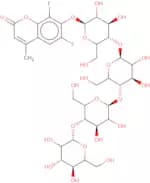
6,8-Difluoro-4-methylumbelliferyl b-D-cellotrioside is a ligand that binds to active sites of enzymes such as beta-glucuronidase and beta-glucosidase. It is used in diagnostics for the detection of bacteria in culture media and food testing where it can be used as a chromogenic or fluorogenic substrate. 6,8-Difluoro-4-methylumbelliferyl b-D-cellotrioside is also used to detect the presence of bacteria and fungi in environmental samples. It has a high purity and conjugate with other molecules for use in fluorescence microscopy.Pureza:Min. 95%Forma y color:White to off-white powder.Peso molecular:698.57 g/mol6,8-Difluoro-4-methylumbelliferyl b-D-cellotetraoside
6,8-Difluoro-4-methylumbelliferyl b-D-cellotetraoside is a chemiluminescent substrate for the detection of esterases. It is also used as an enzyme substrate in diagnostic applications and as a fluorogenic substrate in food testing. 6,8-Difluoro-4-methylumbelliferyl b-D-cellotetraoside has been shown to be an excellent ligand for use in immunoassays and can be conjugated to antibodies or antigens. 6,8-Difluoro-4-methylumbelliferyl b-D-cellotetraoside is chemically stable and has high purity and high quality.Pureza:Min. 95%Peso molecular:860.71 g/molColchicine fluorescein
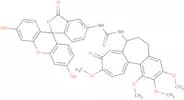
CAS:Colchicine fluorescein is the fluorogenic form of colchicine. It is used for staining assembly of tubulin. Colchicine-site inhibitors (abbrevated as CBSIs) disrupt tubulin polymerization. Colchicine fluorescein serves as a probe to study the binding of colchicine to tubulin, as the colchicine binding site is a promising target for discovering novel antitumour agents.
Fórmula:C41H34N2O10SPureza:Min. 90 Area-%Forma y color:Orange PowderPeso molecular:746.78 g/mol6-Chloro-4-trifluoromethylumbelliferyl b-D-galactopyranoside
6-Chloro-4-trifluoromethylumbelliferyl b-D-galactopyranoside is a chromogenic substrate that can be used in enzyme assays to measure the activity of beta-glucuronidase. This compound is sold as a conjugate with an enzyme, which will not interfere with the assay. The compound has been tested to have high purity and quality.Pureza:Min. 95%Resorufin maltotriose
Resorufin maltotriose is an alpha-amylase substrate that releases the dye resorufin with red emission (lmax=585 nm) after enzyme reaction.Fórmula:C30H47NO18Pureza:Min. 95%Peso molecular:709.69 g/mol7-((4'-L-Alaninamido)-rac-(3'-octanoyloxy)butyloxy) coumarin trifluoroacetate salt
CAS:This Clips-O substrate 7-(4'-L-Alaninamido)-rac-(3'-octanoyloxy)butyloxy) coumarin allows the detection of three enzymatic activities (L-alanine aminopeptidase, C8-esterase and oxidation of 4-amino-3-hydroxybutyloxy either enzymatically or by exposure to sodium periodate) with one single substrate and give a positive fluorescent signal only in presence of all activities. The main virtues of Clips-O substrates are an increased stability towards non-enzymatic hydrolysis that results in a reduced background and high sensitivity.
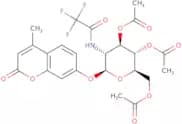
Fórmula:C26H35F3N2O8Pureza:Min. 95.0 Area-%Peso molecular:560.56 g/mol4-Methylumbelliferyl 3,4,6-tri-O-acetyl-2-deoxy-2-trifluoroacetamido-b-D-glucopyranoside
CAS:4-Methylumbelliferyl 3,4,6-tri-O-acetyl-2-deoxy-2-trifluoroacetamido-b-D-glucopyranoside is a fluorogenic substrate specifically designed for the detection and quantification of hexosaminidase enzymes. Upon cleavage by the target enzyme, it generates a bright fluorescent signal facilitating the investigation of enzyme activity, screening of inhibitors, and diagnostics.
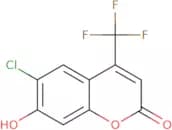
Pureza:Min. 95%Peso molecular:559.44 g/mol6-Chloro-7-hydroxy-4-(trifluoromethyl)coumarin
CAS:6-Chloro-7-hydroxy-4-(trifluoromethyl)coumarin is a fungicide that inhibits the growth of fungi by interfering with their DNA synthesis. It does this by inhibiting the activity of two enzymes: the fungal enzyme oxime and the enzyme cinerea, which is found in many fungi. 6-Chloro-7-hydroxy-4-(trifluoromethyl)coumarin has been shown to be effective against Alternaria and Botrytis cinerea. The compound also has an antifungal effect against other types of fungi, such as Penicillium roqueforti, when used in combination with a solvent such as ether.
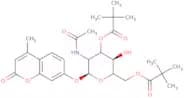
Pureza:Min. 95%Peso molecular:264.58 g/mol4-Methylumbelliferyl 2-acetamido-2-deoxy-3,6-di-O-pivaloyl-b-D-galactopyranoside
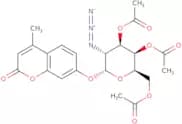
CAS:4-Methylumbelliferyl 2-acetamido-2-deoxy-3,6-di-O-pivaloyl-b-D-galactopyranoside is a chemiluminescent substrate that reacts with an enzyme to produce light. It is used in the detection of ATPase activity and in the diagnosis of diseases. This product has been tested for quality and environmental safety, and it does not contain any hazardous substances. It is highly pure and can be used for testing food, diagnosing diseases, or staining cells.Pureza:Min. 95%Peso molecular:547.59 g/mol4-Methylumbelliferyl 3,4,6-tri-O-acetyl-2-azido-2-deoxy-a-D-galactopyranoside
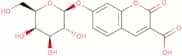
CAS:4-Methylumbelliferyl 3,4,6-tri-O-acetyl-2-azido-2-deoxy-a-D-galactopyranoside is a fluorogenic substrate for the enzyme beta galactosidase. It is used in food testing, environmental testing, and diagnostics. 4MUF3A2DGAL is an enzyme substrate that provides high quality chemiluminescence and bioluminescence signals. This product has a CAS number of 124167-43-7 and is available in both high purity and conjugate forms.Pureza:Min. 95%Peso molecular:489.43 g/mol3-Carboxyumbelliferyl b-D-galactopyranoside
CAS:3-Carboxyumbelliferyl b-D-galactopyranoside is a fluorescent probe that can be used to study protein synthesis in live cells. It binds to the active site of the enzyme peptidyl transferase, which catalyzes the covalent linkage of amino acids to form a polypeptide chain. 3CMBG is specific for the amino acid proline and is a substrate for peptidyl transferase. The fluorescence of 3CMBG increases when it is bound to peptidyl transferase, making it useful as a marker for protein synthesis.
Pureza:Min. 95%Peso molecular:368.28 g/mol4-Methylumbelliferyl N-acetyl-a-D-neuraminic acid ammonium
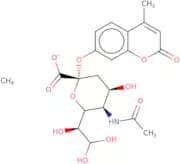
CAS:4-Methylumbelliferyl N-acetyl-alpha-D-neuraminic acid ammonium is a fluorogenic substrate for neuraminidase. After enzymatic cleaveage, free 4-methylumbelliferone (also known as hymecromone) is released, exhibiting blue fluorescence upon excitation with UV light. The strongest fluorescence of 4-methylumbelliferone requires deprotonation of the hydroxyl group (thus requires alkaline pH), with a maximal fluorescence intensity obtained with excitation at 350 to 370 nm and emission at 440 to 470 nm. The use of 4-methylumbelliferyl N-acetyl-alpha-D-neuraminic acid ammoniumas a substrate for measuring the neuraminidase activity is used for detecting the glycoproteins on the surface of influenza A and B viruses, as well as for sialidosis diagnosis.Fórmula:C21H28N2O11Pureza:Min. 95%Forma y color:PowderPeso molecular:471.44 g/molD-Alanine 7-amido-4-methylcoumarin trifluoroacetate salt
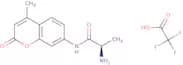
CAS:D-Alanine 7-amido-4-methylcoumarin trifluoroacetate salt is a chromogenic substrate for the enzyme Beta-galactosidase. It is used as a diagnostic tool in the detection of certain bacteria, such as Enterobacteriaceae and Clostridium perfringens. It can also be used to detect the presence of beta galactosidase in food products and environmental samples. D-Alanine 7-amido-4-methylcoumarin trifluoroacetate salt has an applications in chemiluminescence, bioluminescence, and fluorescence. This product is not intended for use as a drug or food additive.Fórmula:C15H15F3N2O5Pureza:Min. 95%Forma y color:White/Off-White SolidPeso molecular:360.29 g/mol4-Methylumbelliferyl-b-D-xylotrioside
CAS:4-Methylumbelliferyl-b-D-xylotrioside is a fluorogenic substrate that reacts with an enzyme in the presence of oxygen to produce light. It is used in diagnostic applications, such as detecting the presence of a specific enzyme or protein. 4-Methylumbelliferyl-b-D-xylotrioside can also be used as a chromogenic substrate for the detection of DNA and RNA. This compound can be conjugated with other molecules for use in immunoassays and other diagnostic applications. 4-Methylumbelliferyl-b-D-xylotrioside has been shown to bind to bacterial cells and activate them, which leads to the production of light through bioluminescence.
Pureza:Min. 95%Peso molecular:572.51 g/mol6-Chloro-4-methylumbelliferyl b-D glucuronide
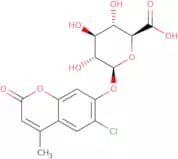
CAS:6-Chloro-4-methylumbelliferyl b-D glucuronide is a fluorogenic substrate for beta-glucuronidase that exhibits longer absorption/emission maxima (~385/500 nm) than typical 4MU-derived substrates.Fórmula:C16H15ClO9Pureza:Min. 97 Area-%Forma y color:White PowderPeso molecular:386.74 g/mol4-Methylumbelliferyl 2-acetamido-3,4,6-tri-O-acetyl-2-deoxy-a-D-glucopyranoside
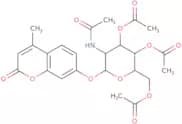
CAS:4-Methylumbelliferyl 2-acetamido-3,4,6-tri-O-acetyl-2-deoxy-a-D-glucopyranoside is a chromogenic substrate for enzymes that catalyze the hydrolysis of glycosidic bonds. It can be used in diagnostic tests to identify antibodies against certain bacteria and fungi. The fluorogenic form of 4-methylumbelliferyl 2-acetamido-3,4,6-triO acetyl -2 deoxy a D glucopyranoside can be used as a chemiluminescent substrate for detecting bacterial activity. 4 methylumbelliferyl 2 acetamido 3,4,6 triO acetyl -2 deoxy a D glucopyranoside is also useful in bioluminescent assays to detect ATP production in bacteria and other microorganisms. CAS No: 1174287–76–3
Pureza:Min. 95%Peso molecular:505.48 g/mol4-Methylumbelliferyl-a-D-mannopyranoside-2-phosphoethanolamine
4-Methylumbelliferyl-a-D-mannopyranoside-2-phosphoethanolamine is a fluorescent substrate used in enzyme assays. It is an analog of the natural substrate, 4-methylumbelliferyl-alpha-D-mannopyranoside, which is a phosphoethanolamine linked to alpha-D-mannose. This product can be used as a chromogenic or fluorogenic substrate for various enzymes, including beta glucosidase, beta galactosidase, and beta lactonase. 4MUMPE can also be used for bioluminescent studies and has been shown to have high purity and quality.Pureza:Min. 95%2'-(4-Methylumbelliferyl)-a-D-N-glycolylneuraminic acid
CAS:2'-(4-Methylumbelliferyl)-a-D-N-glycolylneuraminic acid is a fluorogenic substrate that is used for enzymatic labeling of glycolipids. It can be used as a diagnostic or food testing agent, and also has applications in environmental testing. The CAS number for this product is 1434265-32-3.Pureza:Min. 95%Peso molecular:483.42 g/mol4-Methylumbelliferyl 3,4,6-tri-O-acetyl-2-O-(2,3,4-tri-O-benzoyl-a-L-fucopyranosyl)-b-D-galactopyranoside
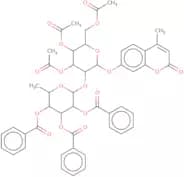
4-Methylumbelliferyl 3,4,6-tri-O-acetyl-2-O-(2,3,4-tri-O-benzoyl-a-L-fucopyranosyl)-b-D-galactopyranoside is a fluorogenic substrate that is used for the detection of β D -galactosidase. β D -Galactosidase is an enzyme that breaks down lactose in milk and is used as a diagnostic tool for identifying lactose intolerance. This substrate can be used as a conjugate in immunoassays to detect antibodies against the enzyme or it can be used to measure the activity of the enzyme in food samples. It also can be used to measure α1,3 galactosyltransferase activity in colorectal cancer cells or bacteria.Pureza:Min. 95%Peso molecular:922.9 g/mol3-HTC
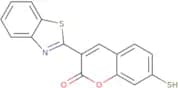
CAS:3-HTC reacts reversibly with thiols and disulfides, and can be used to measure dynamic GSH/GSSH ratios in vitro as well as to monitor the reversible redox status of whole cell lysates.(λmax: 448 nm in its reduced thiolate form, and a λmax 370-410 nm for the oxidized mixed disulfide).Fórmula:C16H9NO2S2Pureza:Min. 95%Peso molecular:311.38 g/mol4-Trifluoromethylumbelliferyl a-D-N-acetylneuraminic acid
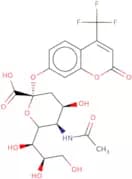
CAS:4-Trifluoromethylumbelliferyl a-D-N-acetylneuraminic acid is a fluorescent chemiluminescent substrate that is used in the detection of beta-galactosidase activity. Beta-galactosidase catalyzes the hydrolysis of 4-trifluoromethylumbelliferyl a-D-N-acetylneuraminic acid to form 4-trifluoromethylumbelliferone and D-galactose, which emits light at approximately 480 nm. This reaction can be detected by fluorescence spectrophotometry using a fluorometer or photometer. 4TFUNA is not toxic, does not inhibit enzymes, and has been tested for toxicity and mutagenicity using bacteria and mammalian cells.
Pureza:Min. 95%Peso molecular:521.39 g/molL-Citrulline-p-nitroanilide hydrobromide
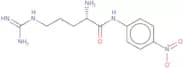
CAS:L-Citrulline-p-nitroanilide hydrobromide is a substrate for enzymes such as beta-galactosidase, beta-glucuronidase, and alkaline phosphatase. It is used in biochemical assays for the detection of microorganisms and in medical diagnostics. This compound has been shown to be useful in fluorescence microscopy and bioluminescence. It also has applications in food testing, environmental testing, and high purity research.
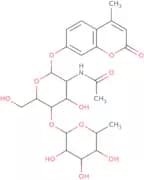
Fórmula:C12H20Br2N6O3Pureza:Min. 95%Peso molecular:453.996364-Methylumbelliferyl 2-acetamido-2-deoxy-4-O-(a-L-fucopyranosyl)-b-D-glucopyranoside
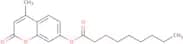
CAS:4-Methylumbelliferyl 2-acetamido-2-deoxy-4-O-(alpha-L-fucopyranosyl)-beta-D-glucopyranoside is a fluorogenic substrate for alpha-L-fucosidase. After enzymatic cleaveage, free 4-methylumbelliferone (also known as hymecromone) is released, exhibiting blue fluorescence upon excitation with UV light. The strongest fluorescence of 4-methylumbelliferone requires deprotonation of the hydroxyl group (thus requires alkaline pH), with a maximal fluorescence intensity obtained with excitation at 350 to 370 nm and emission at 440 to 470 nm. The use of 4-methylumbelliferyl 2-acetamido-2-deoxy-4-O-(alpha-L-fucopyranosyl)-beta-D-glucopyranosideas a substrate for measuring the alpha-L-fucosidase activity is used for fucosidosis diagnosis (deficiency of the enzyme alpha-L-fucosidase) and glycoprotein metabolism disorder detection.Fórmula:C24H31NO12Pureza:Min. 95 Area-%Forma y color:PowderPeso molecular:525.5 g/mol4-Methylumbelliferyl nonanoate
CAS:4-Methylumbelliferyl nonanoate is a synthetic fluorogenic substrate for lipase. It is used to measure the activity of lipases in vitro. 4-Methylumbelliferyl nonanoate reacts with a lipid substrate, such as sodium taurocholate, to produce 4-methylumbelliferone and dodecanol. The fluorescent product can be detected by fluorimetric or spectrophotometric methods. This compound is activated by an enzyme preparation, such as proteolytic enzymes, and can be used to measure the activity of these enzymes in vitro.Fórmula:C19H24O4Pureza:Min. 99 Area-%Peso molecular:316.40 g/molRef: 3D-M-5744
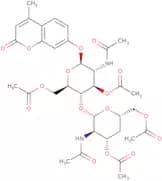
5gA consultar10gA consultar25gA consultar50gA consultar100gA consultar-Unit-ggA consultar4-Methylumbelliferyl 4-deoxy-b-D-chitobiose peracetate
CAS:4-Methylumbelliferyl 4-deoxy-b-D-chitobiose peracetate is a chromogenic substrate used for the detection of β-galactosidase activity. It is an analog of 4-methylumbelliferone that can be hydrolyzed by β-galactosidase to produce fluorescence. This product is supplied as a white crystalline solid and can be stored at room temperature. This substrate has been shown to work well in culture media, food testing, and environmental testing.
Pureza:Min. 95%Forma y color:Off-White PowderPeso molecular:734.7 g/molD-Alanine 7-amido-4-methylcoumarin free base
CAS:D-Alanine 7-amido-4-methylcoumarin free base is a chromogenic substrate that is used in diagnostic testing. It is used to identify the presence of beta-lactamase, which catalyzes the hydrolysis of penicillin and cephalosporin antibiotics, by turning the substrate into a bright blue color. D-Alanine 7-amido-4-methylcoumarin free base can also be used as a fluorescent substrate for bioluminescence or chemiluminescence reactions. This product is high quality and has CAS number 201847-51-0.
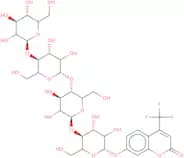
Fórmula:C13H14N2O3Pureza:Min. 95%Peso molecular:246.26 g/mol4-(Trifluoromethyl)umbelliferyl-b-D-cellotetraoside
CAS:4-(Trifluoromethyl)umbelliferyl-b-D-cellotetraoside is a chemiluminescent substrate that can be used in the detection of peroxidase, horseradish peroxidase, and other enzymes. It is a fluorescent product that emits light upon reaction with hydrogen peroxide. This product has been tested for purity and quality and has shown to have no detectable levels of heavy metals or other contaminants. 4-(Trifluoromethyl)umbelliferyl-b-D-cellotetraoside is not cytotoxic and can be used for the detection of enzyme activity in living cells. 4-(Trifluoromethyl)umbelliferyl-b-D-cellotetraoside is also known as TMBECFDA, which stands for Trifluoromethyl)umbelliferone (Cellobiose) (BiotPureza:Min. 95%Peso molecular:878.7 g/mol4-Methylumbelliferyl phosphate, free acid
CAS:A sensitive fluorogenic substrate for fluorometric and UV-spectrophotometric assays of phosphatases. It is used for the detection of C. perfringens because acid phosphatase is a highly specific indicator for C. perfringens.Fórmula:C10H9O6PPeso molecular:256.15 g/mol4-Methylumbelliferyl 2-O-(a-L-fucopyranosyl)-b-D-galactopyranoside
CAS:4-Methylumbelliferyl 2-O-(a-L-fucopyranosyl)-b-D-galactopyranoside is an enzyme substrate used in chromogenic assays of alpha-fucosidases. It is also used for glycoprocessing enzymes in synthesis.Pureza:Min. 95%Peso molecular:484.45 g/mol