Sustratos fluorogénicos
Se han encontrado 284 productos para "Sustratos fluorogénicos".
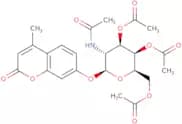
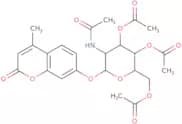
4-Methylumbelliferyl 2-acetamido-3,4,6-tri-O-acetyl-2-deoxy-b-D-galactopyranoside
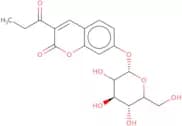
CAS:4-Methylumbelliferyl 2-acetamido-3,4,6-tri-O-acetyl-2-deoxy-b-D-galactopyranoside is a fluorescent marker that is used to measure the enzymatic activity of corynebacterium glutamicum. The enzyme catalyzes the conversion of 4-methylumbelliferyl glucopyranoside to 4-methylumbelliferone glucuronide. The production of 4 methylumbelliferone glucuronide can be quantified using fluorescence spectroscopy. This product can be used in research involving chronic inflammatory diseases and cancer.Pureza:Min. 95%Peso molecular:505.47 g/mol3-Carboxyumbelliferyl b-D-galactoside BSA conjugate
3-Carboxyumbelliferyl b-D-galactoside BSA conjugate is a fluorogenic substrate that is used in chemiluminescent enzyme assays. The reaction of this compound with the enzyme β-galactosidase leads to an increase in the intensity of light emitted by the compound, which can be measured using a luminometer. This product is often used in diagnostics, such as food testing and environmental testing, as well as high quality research.Pureza:Min. 95%Rhodamine 110 bis-(L-aspartic acid amide) trifluoroacetic acid salt
CAS:Fluorogenic substrate targeting caspases 3 and 7
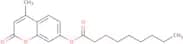
Pureza:Min. 95%Peso molecular:788.56 g/mol4-Methylumbelliferyl nonanoate
CAS:4-Methylumbelliferyl nonanoate is a synthetic fluorogenic substrate for lipase. It is used to measure the activity of lipases in vitro. 4-Methylumbelliferyl nonanoate reacts with a lipid substrate, such as sodium taurocholate, to produce 4-methylumbelliferone and dodecanol. The fluorescent product can be detected by fluorimetric or spectrophotometric methods. This compound is activated by an enzyme preparation, such as proteolytic enzymes, and can be used to measure the activity of these enzymes in vitro.Fórmula:C19H24O4Pureza:Min. 99 Area-%Peso molecular:316.40 g/molRef: 3D-M-5744
-Unit-ggA consultar5gA consultar10gA consultar25gA consultar50gA consultar100gA consultarCaspase substrate
CAS:Caspase substrates are a class of pharmacological agents that regulate apoptosis. Caspases are proteases that cleave specific proteins in the cell, leading to apoptosis. Pro-apoptotic proteins activate caspases, while anti-apoptotic proteins inhibit them. Caspase substrates can be either pro-caspase or anti-caspase, depending on the desired effect. They may also be used to regulate caspases without affecting their activity. The caspase substrate is cleaved by caspases and releases a polypeptide fragment that triggers apoptosis in some cells, but not others. For example, the Hl-60 cell line is resistant to the pro-apoptotic effects of the substrate because it contains an anti-apoptotic protein called Bcl-2. In contrast, myocardial cells contain pro-apoptotic proteins and are sensitive to the pro-apoptotic effects of the substrate. In
Pureza:Min. 95%Peso molecular:821.75 g/mol6,8-Difluoro-4-methylumbelliferyl b-D-cellotrioside
6,8-Difluoro-4-methylumbelliferyl b-D-cellotrioside is a ligand that binds to active sites of enzymes such as beta-glucuronidase and beta-glucosidase. It is used in diagnostics for the detection of bacteria in culture media and food testing where it can be used as a chromogenic or fluorogenic substrate. 6,8-Difluoro-4-methylumbelliferyl b-D-cellotrioside is also used to detect the presence of bacteria and fungi in environmental samples. It has a high purity and conjugate with other molecules for use in fluorescence microscopy.Pureza:Min. 95%Forma y color:White to off-white powder.Peso molecular:698.57 g/molResorufin methyl ether
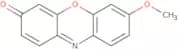
CAS:Fluorogenic substrate used to differentiate cytochrome P450 monooxygenases
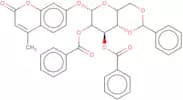
Fórmula:C13H9NO3Pureza:Min. 95%Forma y color:PowderPeso molecular:227.22 g/mol4-Methylumbelliferyl 2,3-di-O-benzoyl-4,6-O-benzylidene-b-D-galactopyranoside
4-Methylumbelliferyl 2,3-di-O-benzoyl-4,6-O-benzylidene-b-D-galactopyranoside is a fluorogenic substrate that is used in the detection of β-galactosidase activity. This product is a white to off white powder that has a purity of 99.2%. It has been given CAS number 53654–95–1 and it can be found in the Diagnostics section of Acros Organics.
Pureza:Min. 95%Peso molecular:634.63 g/mol7-((4'-L-Alaninamido)-rac-(3'-octanoyloxy)butyloxy) coumarin trifluoroacetate salt
CAS:This Clips-O substrate 7-(4'-L-Alaninamido)-rac-(3'-octanoyloxy)butyloxy) coumarin allows the detection of three enzymatic activities (L-alanine aminopeptidase, C8-esterase and oxidation of 4-amino-3-hydroxybutyloxy either enzymatically or by exposure to sodium periodate) with one single substrate and give a positive fluorescent signal only in presence of all activities. The main virtues of Clips-O substrates are an increased stability towards non-enzymatic hydrolysis that results in a reduced background and high sensitivity.
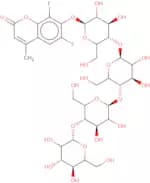
Fórmula:C26H35F3N2O8Pureza:Min. 95.0 Area-%Peso molecular:560.56 g/mol6,8-Difluoro-4-methylumbelliferyl b-D-cellotetraoside
6,8-Difluoro-4-methylumbelliferyl b-D-cellotetraoside is a chemiluminescent substrate for the detection of esterases. It is also used as an enzyme substrate in diagnostic applications and as a fluorogenic substrate in food testing. 6,8-Difluoro-4-methylumbelliferyl b-D-cellotetraoside has been shown to be an excellent ligand for use in immunoassays and can be conjugated to antibodies or antigens. 6,8-Difluoro-4-methylumbelliferyl b-D-cellotetraoside is chemically stable and has high purity and high quality.Pureza:Min. 95%Peso molecular:860.71 g/mol6,8-Difluoro-4-methylumbelliferyl b-D-glucopyranoside
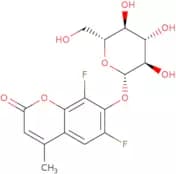
CAS:6,8-Difluoro-4-methylumbelliferyl b-D-glucopyranoside is a versatile fluorogenic substrate suitable for the measurement of various glycosidase enzymes. Its unique structure allows for enhanced sensitivity and selectivity in enzyme assays, making it ideal for studying enzyme kinetics and screening of potential enzyme inhibitors.
Pureza:Min. 95%Peso molecular:374.29 g/mol6-Chloro-4-trifluoromethylumbelliferyl b-D-galactopyranoside
6-Chloro-4-trifluoromethylumbelliferyl b-D-galactopyranoside is a chromogenic substrate that can be used in enzyme assays to measure the activity of beta-glucuronidase. This compound is sold as a conjugate with an enzyme, which will not interfere with the assay. The compound has been tested to have high purity and quality.Pureza:Min. 95%Resorufin maltotriose
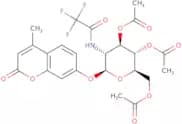
Resorufin maltotriose is an alpha-amylase substrate that releases the dye resorufin with red emission (lmax=585 nm) after enzyme reaction.Fórmula:C30H47NO18Pureza:Min. 95%Peso molecular:709.69 g/mol4-Methylumbelliferyl 3,4,6-tri-O-acetyl-2-deoxy-2-trifluoroacetamido-b-D-glucopyranoside
CAS:4-Methylumbelliferyl 3,4,6-tri-O-acetyl-2-deoxy-2-trifluoroacetamido-b-D-glucopyranoside is a fluorogenic substrate specifically designed for the detection and quantification of hexosaminidase enzymes. Upon cleavage by the target enzyme, it generates a bright fluorescent signal facilitating the investigation of enzyme activity, screening of inhibitors, and diagnostics.
Pureza:Min. 95%Peso molecular:559.44 g/molResorufin pentyl ether
CAS:Resorufin pentyl ether is a drug transporter that can be used as an experimental model for studying the effects of chemical pesticides on humans. Resorufin pentyl ether inhibits energy metabolism and inhibits hepatic p450 activity and polymerase chain reaction in hepatocyte-like cells in vitro. It has been shown to inhibit the enzyme activities of rat liver p450s and human cytochrome P450 3A4 (CYP3A4) at physiological levels. Resorufin pentyl ether has also been shown to be toxic in mice, with toxicity studies showing an LD50 of 4.5 mg/kg after oral administration. This drug is not active against bacteria or fungi, but it is able to inhibit protein synthesis in model systems containing mouse monoclonal antibodies or calf thymus DNA.Pureza:Min. 95%Peso molecular:283.32 g/mol4-Methylumbelliferyl 2-acetamido-2-deoxy-3,6-di-O-pivaloyl-b-D-galactopyranoside
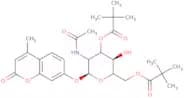
CAS:4-Methylumbelliferyl 2-acetamido-2-deoxy-3,6-di-O-pivaloyl-b-D-galactopyranoside is a chemiluminescent substrate that reacts with an enzyme to produce light. It is used in the detection of ATPase activity and in the diagnosis of diseases. This product has been tested for quality and environmental safety, and it does not contain any hazardous substances. It is highly pure and can be used for testing food, diagnosing diseases, or staining cells.Pureza:Min. 95%Peso molecular:547.59 g/mol4-Methylumbelliferyl N-acetyl-a-D-neuraminic acid ammonium
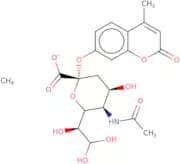
CAS:4-Methylumbelliferyl N-acetyl-alpha-D-neuraminic acid ammonium is a fluorogenic substrate for neuraminidase. After enzymatic cleaveage, free 4-methylumbelliferone (also known as hymecromone) is released, exhibiting blue fluorescence upon excitation with UV light. The strongest fluorescence of 4-methylumbelliferone requires deprotonation of the hydroxyl group (thus requires alkaline pH), with a maximal fluorescence intensity obtained with excitation at 350 to 370 nm and emission at 440 to 470 nm. The use of 4-methylumbelliferyl N-acetyl-alpha-D-neuraminic acid ammoniumas a substrate for measuring the neuraminidase activity is used for detecting the glycoproteins on the surface of influenza A and B viruses, as well as for sialidosis diagnosis.Fórmula:C21H28N2O11Pureza:Min. 95%Forma y color:PowderPeso molecular:471.44 g/mol4-Methylumbelliferyl b-D-chitobiose heptaacetate
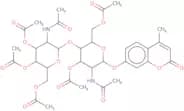
CAS:4-Methylumbelliferyl b-D-chitobiose heptaacetate is a fluorogenic substrate that is widely used in diagnostic and research applications. It can be used as a substrate for enzymes such as alkaline phosphatase, β-glucuronidase, β-galactosidase, β-glucosidase, α-amylase, α-glucosidase, α-mannosidase, and α-fucosidase. 4MUBH can also be used in the detection of bacterial growth. 4MUBH reacts with NADPH to produce light through chemiluminescence. This product has been shown to have a high purity and quality and should not be stored in UV light or strong acids. CAS No. 55900-34-0Pureza:Min. 95%Peso molecular:792.74 g/mol4-Methylumbelliferyl-phosphoethanolamine
4-Methylumbelliferyl-phosphoethanolamine is a phosphorylated substrate that can be used in the detection of enzymes such as alkaline phosphatase, esterase, and lipase. This compound has been shown to be a fluorescent and chromogenic substrate for many diagnostic purposes. 4-Methylumbelliferyl-phosphoethanolamine is also used as a fluorogenic substrate for chemiluminescent reactions that are found in culture media and environmental testing.
Pureza:Min. 95%4-Methylumbelliferyl b-D-gentiotrioside
CAS:4-Methylumbelliferyl beta-D-gentiotrioside is a fluorogenic substrate for beta-glucosidase. After enzymatic cleaveage, free 4-methylumbelliferone (also known as hymecromone) is released, exhibiting blue fluorescence upon excitation with UV light. The strongest fluorescence of 4-methylumbelliferone requires deprotonation of the hydroxyl group (thus requires alkaline pH), with a maximal fluorescence intensity obtained with excitation at 350 to 370 nm and emission at 440 to 470 nm. The use of 4-methylumbelliferyl beta-D-gentiotriosideas a substrate for measuring the beta-glucosidase activity is used for Gaucher disease screening.Fórmula:C28H38O18Pureza:Min. 98 Area-%Forma y color:PowderPeso molecular:662.59 g/molL-Glutamic acid γ-(7-amido-4-methylcoumarin)
CAS:Substrate for aminopeptidase a or the assay of γ-glutamyl transferase yielding a blue fluorescent solution upon cleavage.Fórmula:C15H16N2O5Pureza:Min. 99 Area-%Peso molecular:304.31 g/molRef: 3D-G-3850
-Unit-ggA consultar1gA consultar50mgA consultar250mgA consultar500mgA consultar2500mgA consultar4-Methylumbelliferyl 3,4,6-tri-O-acetyl-2-azido-2-deoxy-a-D-galactopyranoside
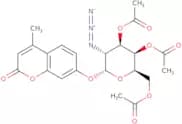
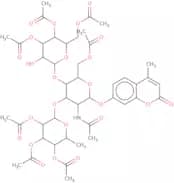
CAS:4-Methylumbelliferyl 3,4,6-tri-O-acetyl-2-azido-2-deoxy-a-D-galactopyranoside is a fluorogenic substrate for the enzyme beta galactosidase. It is used in food testing, environmental testing, and diagnostics. 4MUF3A2DGAL is an enzyme substrate that provides high quality chemiluminescence and bioluminescence signals. This product has a CAS number of 124167-43-7 and is available in both high purity and conjugate forms.Pureza:Min. 95%Peso molecular:489.43 g/mol4-Methylumbelliferyl 2-acetamido-3-O-(2,3,4-tri-O-acetyl-a-L-fucopyranosyl)-4-O-(2,3,4,6-tetra-O-acetyl-b-D-galactopyranosyl)-6-O-ac etyl-2-deoxy-b-D-glucopyranoside
4-Methylumbelliferyl 2-acetamido-3-O-(2,3,4-tri-O-acetyl-a-L-fucopyranosyl)-4-O-(2,3,4,6 -tetra-O-acetylbDgalactopyranosyl)-6-O-acetyldEoxybDglucopyranoside is a chemiluminescent substrate that has been used in the detection of beta galactosidase activity. It is a ligand for beta galactosidases and can be used for the study of enzyme kinetics. This compound also exhibits high purity and is available in CAS number: 916071. 4MUFAGAALF is suitable for use in culture media and environmental testing as well as diagnostics (e.g., bioluminescence), staining (fluorogenic substrate), and chromogenic substrates
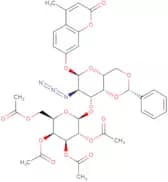
Pureza:Min. 95%Peso molecular:1,023.94 g/mol4-Methylumbelliferyl 2-azido-2-deoxy-3-O-(tetra-O-acetyl-b-D-galactopyranosyl)-4,6-O-benzylidene-a-D-galactopyranoside
CAS:4-Methylumbelliferyl 2-azido-2-deoxy-3-O-(tetra-O-acetyl-b-D-galactopyranosyl)-4,6-O-benzylidene a D galactopyranoside is a chemiluminescent substrate for detecting ligands. It has been used to detect the presence of bacteria, fungi, and parasites in food samples and as an indicator for enzymatic activity. This product is an excellent fluorescent substrate for the detection of nucleic acids such as DNA. This product is a conjugate with high purity, which makes it suitable for use in various types of applications.Fórmula:C37H39N3O16Pureza:Min. 95%Peso molecular:781.72 g/mol4-Methylumbelliferyl 2-acetamido-3,4,6-tri-O-acetyl-2-deoxy-a-D-glucopyranoside
CAS:4-Methylumbelliferyl 2-acetamido-3,4,6-tri-O-acetyl-2-deoxy-a-D-glucopyranoside is a chromogenic substrate for enzymes that catalyze the hydrolysis of glycosidic bonds. It can be used in diagnostic tests to identify antibodies against certain bacteria and fungi. The fluorogenic form of 4-methylumbelliferyl 2-acetamido-3,4,6-triO acetyl -2 deoxy a D glucopyranoside can be used as a chemiluminescent substrate for detecting bacterial activity. 4 methylumbelliferyl 2 acetamido 3,4,6 triO acetyl -2 deoxy a D glucopyranoside is also useful in bioluminescent assays to detect ATP production in bacteria and other microorganisms. CAS No: 1174287–76–3
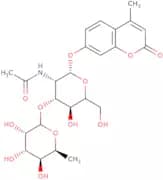
Pureza:Min. 95%Peso molecular:505.48 g/mol4-Methylumbelliferyl 2-acetamido-2-deoxy-3-O-(a-L-fucopyranosyl)-b-D-glucopyranoside
CAS:4-Methylumbelliferyl 2-acetamido-2-deoxy-3-O-(alpha-L-fucopyranosyl)-beta-D-glucopyranoside is a fluorogenic substrate for alpha-L-fucosidase. After enzymatic cleaveage, free 4-methylumbelliferone (also known as hymecromone) is released, exhibiting blue fluorescence upon excitation with UV light. The strongest fluorescence of 4-methylumbelliferone requires deprotonation of the hydroxyl group (thus requires alkaline pH), with a maximal fluorescence intensity obtained with excitation at 350 to 370 nm and emission at 440 to 470 nm. The use of 4-methylumbelliferyl 2-acetamido-2-deoxy-3-O-(alpha-L-fucopyranosyl)-beta-D-glucopyranosideas a substrate for measuring the alpha-L-fucosidase activity is used for fucosidosis diagnosis (deficiency of the enzyme alpha-L-fucosidase) and lysosomal storage disorder screening.Fórmula:C24H31NO12Pureza:Min. 95 Area-%Forma y color:White PowderPeso molecular:525.5 g/mol3-Carboxyumbelliferyl b-D-galactopyranoside
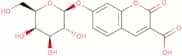
CAS:3-Carboxyumbelliferyl b-D-galactopyranoside is a fluorescent probe that can be used to study protein synthesis in live cells. It binds to the active site of the enzyme peptidyl transferase, which catalyzes the covalent linkage of amino acids to form a polypeptide chain. 3CMBG is specific for the amino acid proline and is a substrate for peptidyl transferase. The fluorescence of 3CMBG increases when it is bound to peptidyl transferase, making it useful as a marker for protein synthesis.
Pureza:Min. 95%Peso molecular:368.28 g/mol4-Methylumbelliferyl-a-D-mannopyranoside-2-phosphoethanolamine
4-Methylumbelliferyl-a-D-mannopyranoside-2-phosphoethanolamine is a fluorescent substrate used in enzyme assays. It is an analog of the natural substrate, 4-methylumbelliferyl-alpha-D-mannopyranoside, which is a phosphoethanolamine linked to alpha-D-mannose. This product can be used as a chromogenic or fluorogenic substrate for various enzymes, including beta glucosidase, beta galactosidase, and beta lactonase. 4MUMPE can also be used for bioluminescent studies and has been shown to have high purity and quality.Pureza:Min. 95%Fluorescein diphosphate tetraammonium salt
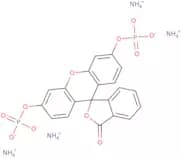
CAS:Fluorogenic substrate targeting phosphataseFórmula:C20H14O11P2•(NH3)4Pureza:Min. 90 Area-%Forma y color:Yellow PowderPeso molecular:560.39 g/molResorufin a-D-mannopyranoside
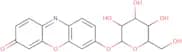
CAS:Resorufin alpha-D-glucopyranoside is a sensitive fluorogenic substrate that generates a red fluorescent product (resorufin) upon interaction with alpha-glucosidase.Pureza:Min. 95%Forma y color:Brown PowderPeso molecular:375.33 g/molResorufin phosphate disodium
Resorufin phosphate disodium is a fluorogenic substrate for phosphatase exhibiting a red color after cleavage that can be measured at ~ 585nm.Fórmula:C12H6NNa2O6PPureza:Max. 75 Area-%Forma y color:Brown PowderPeso molecular:337.14 g/mol6,8-Difluoro-4-methylumbelliferyl β-D-galactopyranoside
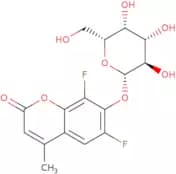
CAS:6,8-Difluoro-4-methylumbelliferyl b-D-galactopyranoside, commonly known as DiFMUG, is a fluorogenic substrate to detect beta-galactosidase. It has higher sensitivity than the common MUG (4-methylumbelliferyl beta-D-galactopyranoside) subtrate.Fórmula:C16H16F2O8Pureza:Min. 95%Forma y color:PowderPeso molecular:374.29 g/mol6-Hexanoylamino-4-methylumbelliferyl b-D-galactopyranoside
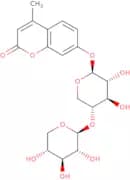
6-Hexanoylamino-4-methylumbelliferyl b-D-galactopyranoside is a chromogenic substrate for beta-galactosidase.Pureza:Min. 95%4-Methylumbelliferyl b-D-xylobioside
CAS:4-Methylumbelliferyl beta-D-xylobioside is a fluorogenic substrate for xylanase. After enzymatic cleaveage, free 4-methylumbelliferone (also known as hymecromone) is released, exhibiting blue fluorescence upon excitation with UV light. The strongest fluorescence of 4-methylumbelliferone requires deprotonation of the hydroxyl group (thus requires alkaline pH), with a maximal fluorescence intensity obtained with excitation at 350 to 370 nm and emission at 440 to 470 nm. The use of 4-methylumbelliferyl beta-D-xylobiosideas a substrate for measuring the xylanase activity is used for detecting bacterial infection and gut microbiome analysis.Fórmula:C20H24O11Pureza:Min. 95 Area-%Forma y color:White PowderPeso molecular:440.4 g/mol