


Siliconas
Los silicones son una familia versátil de polímeros sintéticos compuestos por unidades repetitivas de enlaces siloxano (silicio-oxígeno), a menudo combinados con carbono e hidrógeno. Estos materiales son conocidos por su excepcional estabilidad térmica, flexibilidad, repelencia al agua y biocompatibilidad, lo que los hace indispensables en diversas industrias como la salud, automotriz, electrónica, construcción y cuidado personal. En CymitQuimica, ofrecemos una amplia gama de silicones de alta calidad, incluyendo fluidos, elastómeros, resinas y geles, todos rigurosamente probados para garantizar pureza y rendimiento. Nuestros productos de silicona están diseñados para satisfacer las estrictas demandas de aplicaciones tanto de investigación como industriales, proporcionando excelentes propiedades mecánicas y químicas. Al suministrar silicones de primera calidad, apoyamos a los investigadores y profesionales de la industria en el desarrollo de soluciones innovadoras y materiales avanzados, impulsando el progreso y la eficiencia en numerosos campos tecnológicos e industriales.
Subcategorías de "Siliconas"
Se han encontrado 172 productos de "Siliconas"
Ordenar por
Pureza (%)
0
100
|
0
|
50
|
90
|
95
|
100
AMINOPROPYL TERMINATED POLYDIMETHYLSILOXANE, Reduced Volatility, 1,900-2,300 cSt
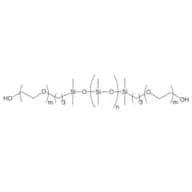
CAS:Forma y color:LiquidPeso molecular:30000.0CARBINOL (HYDROXYL) TERMINATED POLYDIMETHYLSILOXANE, 30-50 cSt
CAS:Forma y color:LiquidPeso molecular:1000.0[13-17% (MERCAPTOPROPYL)METHYLSILOXANE] - DIMETHYLSILOXANE COPOLYMER, 100-200 cSt
CAS:Forma y color:Straw LiquidPeso molecular:3000-4000(0.5-1.5% AMINOETHYLAMINOPROPYLMETHOXYSILOXANE) - DIMETHYLSILOXANE COPOLYMER WITH BRANCH STRUCTURE, 100-200 cSt
CAS:Forma y color:LiquidPeso molecular:5000-6500(45-55% HEXYLMETHYLSILOXANE)-(45-55% 2-PHENYLPROPYLMETHYLSILOXANE) COPOLYMER, 1,500-2,000 cSt
CAS:Forma y color:Light Amber LiquidPOLYDIMETHYLSILOXANE, TRIMETHYLSILOXY TERMINATED, 1,000,000 cSt
CAS:Forma y color:LiquidPeso molecular:308000.0CARBINOL (HYDROXYL) TERMINATED POLYDIMETHYLSILOXANE, 110-140 cSt
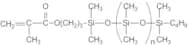
CAS:Forma y color:LiquidPeso molecular:4500-5500monoMETHACRYLOXYPROPYL TERMINATED POLYDIMETHYLSILOXANE, asymmetric, 10 cSt
CAS:Forma y color:Deep Straw LiquidPeso molecular:1000.0POLYDIMETHYLSILOXANE, TRIMETHYLSILOXY TERMINATED, 100,000 cSt
CAS:Forma y color:LiquidPeso molecular:139000.0POLYDIMETHYLSILOXANE, TRIMETHYLSILOXY TERMINATED, 2,500,000 cSt
CAS:Forma y color:LiquidPeso molecular:423000.0AMINOPROPYL TERMINATED POLYDIMETHYLSILOXANE, 100-120 cSt
CAS:Forma y color:Straw LiquidPeso molecular:5000.0POLY(PHENYL-PROPYLSILSESQUIOXANE), 70% PHENYL, 30% PROPYL
CAS:Forma y color:Clear White SolidPeso molecular:1500-1800POLYDIMETHYLSILOXANE, TRIMETHYLSILOXY TERMINATED, 10,000 cSt
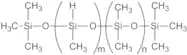
CAS:Forma y color:LiquidPeso molecular:62700.0POLYMETHYLHYDROSILOXANE, TRIMETHYLSILYL TERMINATED, 15-25 cSt
CAS:<p>Siloxane-Based Silane Reducing Agent<br>Organosilanes are hydrocarbon-like and possess the ability to serve as both ionic and free-radical reducing agents. These reagents and their reaction by-products are safer and more easily handled and disposed than many other reducing agents. The metallic nature of silicon and its low electronegativity relative to hydrogen lead to polarization of the Si-H bond yielding a hydridic hydrogen and a milder reducing agent compared to aluminum-, boron-, and other metal-based hydrides. A summary of some key silane reductions are presented in Table 1 of the Silicon-Based Reducing Agents brochure.<br>Pendant Functional Fluid; polyMethylHydrosiloxanes, TMS Terminated<br>MethylHydrosiloxane homopolymers are used as water-proofing agents, reducing agents and as components in some foamed silicone systems.<br>Poly(methylhydrosiloxane); Methyl hydrogen siloxane; Polysiloxanes, methyl hydrogen; Siloxanes and silicones, methyl hydrogen<br>Viscosity: 15-25 cStMolecular Weight: 1,400-1,800 g/molMol% Hydride: 100Reduces lactones to lactolsReduces aldehydes, ketones, esters, lactones, triglycerides and epoxides to alcohols with zinc hydride catalysisWith titanium tetraisopropoxide catalysis carries out reductive amination of ketones and aldehydes and the reduction of acids or esters to 1° alcoholsWith TBAF catalysis selectively reduces aldehydes over ketonesUsed to generate tri-n-butyltin hydride ‘in-situ’ and in a one-pot hydrostannylation/Stille coupling sequenceReduces esters to alcoholsExtensive review of silicon based reducing agents: Larson, G.; Fry, J. L. "Ionic and Organometallic-Catalyzed Organosilane Reductions", Wipf, P., Ed.; Wiley, 2007<br></p>Forma y color:LiquidPeso molecular:1400-1800monoCARBINOL TERMINATED POLYDIMETHYLSILOXANE, asymmetric, 180-280 cSt
CAS:Forma y color:LiquidPeso molecular:10000.0monoMETHACRYLOXYPROPYL TERMINATED POLYDIMETHYLSILOXANE, asymmetric, 6-9 cSt
CAS:Forma y color:Deep Straw LiquidPeso molecular:600-800HYDRIDE TERMINATED POLYDIMETHYLSILOXANE, 100 cSt
CAS:<p>DMS-H21: Hydride Terminated PDMS, 100 cSt (Telechelic Functional Fluid)<br>Hydride terminated silicones are chain extenders for vinyl-addition silicones, enabling low-viscosity, high elongation formulations. They are also intermediates for functionally terminated silicones.<br>DMS-H21 Properties<br>Viscosity: 100 cStMolecular Weight: 4,000-5,000 g/molWt.% Hydride: 0.04<br></p>Forma y color:LiquidPeso molecular:4000-5000CARBINOL (HYDROXYL) TERMINATED POLYDIMETHYLSILOXANE, 400-800 cSt
CAS:Forma y color:Straw Amber LiquidPeso molecular:3500-4500(20-25% AMINOPROPYLMETHYLSILOXANE) - DIMETHYLSILOXANE COPOLYMER, 900-1,100 cSt
CAS:Forma y color:Colorless To Pale Yellow LiquidPeso molecular:20000.0VINYL TERMINATED POLYDIMETHYLSILOXANE, 60,000 cSt
CAS:<p>DMS-V46: Vinyl Terminated PDMS, 60,000 cSt (Telechelic Functional Fluid)<br>Vinyl terminated polymers are most often employed in 2-part addition cure silicone elastomers.<br>DMS-V46 Properties<br>Viscosity: 60,000 cStMolecular Weight: 117,000 g/molWt.% Vinyl: 0.04-0.06Vinyl (eq/kg): 0.018-0.020<br></p>Forma y color:LiquidPeso molecular:117000.0DIMETHYLSILOXANE-(80-85% ETHYLENE OXIDE) BLOCK COPOLYMER, 100-120 cSt
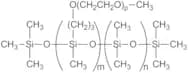
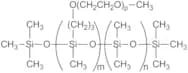
CAS:Fórmula:CH3O(CH2CH2O)6-9(CH2)3(CH3)[OSi(CH3)3]2SiForma y color:Pale Yellow LiquidPeso molecular:4400.0monoMETHACRYLOXYPROPYL TERMINATED POLYDIMETHYLSILOXANE, asymmetric, 70-80 cSt
CAS:Forma y color:LiquidPeso molecular:5000.0monoCARBINOL TERMINATED POLYDIMETHYLSILOXANE, asymmetric, 15-20 cSt
CAS:Forma y color:LiquidPeso molecular:1000.0POLYDIMETHYLSILOXANE, TRIMETHYLSILOXY TERMINATED, 30,000 cSt
CAS:Forma y color:LiquidPeso molecular:91700.0monoCARBINOL TERMINATED POLYDIMETHYLSILOXANE, asymmetric,60-120 cSt
CAS:Forma y color:LiquidPeso molecular:5000.0VINYL TERMINATED POLYDIMETHYLSILOXANE, 100 cSt
CAS:<p>DMS-V21: Vinyl Terminated PDMS, 100 cSt (Telechelic Functional Fluid)<br>Vinyl terminated polymers are most often employed in 2-part addition cure silicone elastomers.<br>DMS-V21 Properties<br>Viscosity: 100 cStMolecular Weight: 6,000 g/molWt.% Vinyl: 0.8-1.2 Vinyl (eq/kg): 0.33-0.37<br></p>Forma y color:LiquidPeso molecular:6000.0MERCAPTOPROPYL TERMINATED POLYDIMETHYLSILOXANE, 80-120 cSt
CAS:Forma y color:Straw To Yellow LiquidPeso molecular:10000.0SILANOL TERMINATED POLYDIMETHYLSILOXANE, 45-85 cSt
CAS:<p>DMS-S15: Silanol Terminated PDMS, 45-85 cSt (Telechelic Functional Fluid)<br>Terminal silanol groups render polydimethylsiloxanes susceptible to condensation under both mild acid and base conditions. They are intermediates for most room temperature vulcanizeable (RTV) condensation cure silicones. The reactivity of silanol fluids is utilized in applications other than RTVs. Low viscosity silanol fluids are employed as filler treatments and structure control additives in silicone rubber compounding. Intermediate viscosity (1,000-10,000 cSt) fluids can be applied to textiles as durable fabric softeners. High viscosity silanol terminated fluids form the matrix component in tackifiers and pressure sensitive adhesives.<br>DMS-S15 Properties<br>Viscosity: 45-85 cStMolecular Weight: 2,000-3,500 g/molWt.% OH: 0.9-1.2OH (eq/kg): 0.53-0.70<br></p>Forma y color:LiquidPeso molecular:2000-3500[4-6% (METHACRYLOXYPROPYL)METHYLSILOXANE] - DIMETHYLSILOXANE COPOLYMER, 8,000-10,000 cSt
CAS:Forma y color:LiquidPOLYMETHYLHYDROSILOXANE, TRIMETHYLSILYL TERMINATED, 30-45 cSt
CAS:<p>Siloxane-Based Silane Reducing Agent<br>Organosilanes are hydrocarbon-like and possess the ability to serve as both ionic and free-radical reducing agents. These reagents and their reaction by-products are safer and more easily handled and disposed than many other reducing agents. The metallic nature of silicon and its low electronegativity relative to hydrogen lead to polarization of the Si-H bond yielding a hydridic hydrogen and a milder reducing agent compared to aluminum-, boron-, and other metal-based hydrides. A summary of some key silane reductions are presented in Table 1 of the Silicon-Based Reducing Agents brochure.<br>Pendant Functional Fluid; polyMethylHydrosiloxanes, TMS Terminated<br>MethylHydrosiloxane homopolymers are used as water-proofing agents, reducing agents and as components in some foamed silicone systems.<br>Poly(methylhydrosiloxane); Methyl hydrogen siloxane; Polysiloxanes, methyl hydrogen; Siloxanes and silicones, methyl hydrogen<br>Viscosity: 30-45 cStMolecular Weight: 2,100-2,400 g/molMol% Hydride: 100Reduces lactones to lactolsReduces aldehydes, ketones, esters, lactones, triglycerides and epoxides to alcohols with zinc hydride catalysisWith titanium tetraisopropoxide catalysis carries out reductive amination of ketones and aldehydes and the reduction of acids or esters to 1° alcoholsWith TBAF catalysis selectively reduces aldehydes over ketonesUsed to generate tri-n-butyltin hydride ‘in-situ’ and in a one-pot hydrostannylation/Stille coupling sequenceReduces esters to alcoholsExtensive review of silicon based reducing agents: Larson, G.; Fry, J. L. "Ionic and Organometallic-Catalyzed Organosilane Reductions", Wipf, P., Ed.; Wiley, 2007<br></p>Forma y color:LiquidPeso molecular:2100-2400ACRYLOXY TERMINATED ETHYLENEOXIDE DIMETHYLSILOXANE-ETHYLENEOXIDE ABA BLOCK COPOLYMER, 80-120 cSt
CAS:Forma y color:Amber LiquidPeso molecular:1500-1600DIPHENYLSILOXANE-DIMETHYLSILOXANE COPOLYMER, 100-125 cSt
CAS:Forma y color:LiquidPeso molecular:2800-3200(N-PYRROLIDONEPROPYL)METHYLSILOXANE - DIMETHYLSILOXANE COPOLYMER, 400-600 cSt
CAS:Forma y color:LiquidPOLYDIMETHYLSILOXANE, TRIMETHYLSILOXY TERMINATED, 50 cSt
CAS:Forma y color:LiquidPeso molecular:3780.0POLYDIMETHYLSILOXANE, TRIMETHYLSILOXY TERMINATED, 5,000 cSt
CAS:Forma y color:LiquidPeso molecular:49350.0HYDRIDE TERMINATED POLYDIMETHYLSILOXANE, 4-6 cSt
CAS:<p>DMS-H05: Hydride Terminated PDMS, 4-6 cSt (Telechelic Functional Fluid)<br>Hydride terminated silicones are chain extenders for vinyl-addition silicones, enabling low-viscosity, high elongation formulations. They are also intermediates for functionally terminated silicones.<br>DMS-H05 Properties<br>Viscosity: 4-6 cStMolecular Weight: 600-700 g/molWt.% Hydride: 0.3<br></p>Forma y color:LiquidPeso molecular:600-700POLYDIMETHYLSILOXANE, TRIMETHYLSILOXY TERMINATED, 100 cSt
CAS:Forma y color:LiquidPeso molecular:5970.0DIMETHYLSILOXANE-[65-70%(60% PROPYLENE OXIDE/40% ETHYLENE OXIDE)] BLOCK COPOLYMER, 1,800 cSt
CAS:Forma y color:Pale Yellow LiquidPeso molecular:20000.0AMINOPROPYL TERMINATED POLYDIMETHYLSILOXANE, 10-15 cSt
CAS:Forma y color:Straw LiquidPeso molecular:850-900POLY(3,3,3-TRIFLUOROPROPYLMETHYLSILOXANE), 80-120 cSt
CAS:Forma y color:LiquidPeso molecular:900-1000(10-20% METHOXYMETHYLSILOXANE)-DIMETHYLSILOXANE COPOLYMER, 2-5 cSt, 20-25% in isopropanol
CAS:Forma y color:LiquidMETHACRYLOXYPROPYL TERMINATED POLYDIMETHYLSILOXANE, 8-14 cSt
CAS:<p>DMS-R11: Methacryloxypropyl Terminated PDMS, 8-14 cSt (Telechelic Functional Fluid)<br>Methacrylate and Acrylate functional siloxanes undergo the same reactions generally associated with methacrylates and acrylates, the most conspicuous being radical induced polymerization. Unlike vinylsiloxanes which are sluggish compared to their organic counterparts, methacrylate and acrylate siloxanes have similar reactivity to their organic counterparts. The principal applications of methacrylate functional siloxanes are as modifiers to organic systems. Upon radical induced polymerization, methacryloxypropyl terminated siloxanes by themselves only increase in viscosity. Copolymers with greater than 5 mole % methacrylate substitution crosslink to give non-flowable resins. Acrylate functional siloxanes cure greater than ten times as fast methacrylate functional siloxanes on exposure to UV in the presence of a photoinitiator such as ethylbenzoin. <br>Oxygen is an inhibitor for methacrylate polymerization in general. The high oxygen permeability of siloxanes usually makes it necessary to blanket these materials with nitrogen or argon in order to obtain reasonable cures.<br>DMS-R11 Properties<br>Viscosity: 8-14 cStMolecular Weight: 900-1,200 g/molRefractive Index: 1.422<br></p>Forma y color:LiquidPeso molecular:900-1200[4-6% (3-ACRLOXY-2-HYDROXYPROPOXYPROPYL)METHYLSILOXANE]-DIMETHYLSILOXANE COPOLYMER, 500-1,500 cSt
Forma y color:Amber Green Brown LiquidPeso molecular:7500-8500monoHYDRIDE TERMINATED POLYDIMETHYLSILOXANE, asymmetric, 5-8 cSt
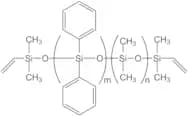
CAS:Forma y color:LiquidPeso molecular:800-900VINYL TERMINATED (15-17% DIPHENYLSILOXANE)-DIMETHYLSILOXANE COPOLYMER, 10,000 cSt
CAS:<p>PDV-1641: Vinyl Terminated Diphenylsiloxane-Dimethylsiloxane Copolymer (Telechelic Functional Fluid)<br>These fluids are most often employed in 2-part addition cure silicone elastomers where special thermal or optical properties are required.<br>PDV-1641 Properties<br>Viscosity: 10,000 cStMolecular Weight: 55,000 g/molVinyl (eq/kg): 0.033-0.040Refractive Index: 1.465<br></p>Forma y color:LiquidPeso molecular:55000.0SILANOL TERMINATED POLYDIMETHYLSILOXANE, 50,000 cSt
CAS:<p>DMS-S45: Silanol Terminated PDMS, 50,000 cSt (Telechelic Functional Fluid)<br>Terminal silanol groups render polydimethylsiloxanes susceptible to condensation under both mild acid and base conditions. They are intermediates for most room temperature vulcanizeable (RTV) condensation cure silicones. The reactivity of silanol fluids is utilized in applications other than RTVs. Low viscosity silanol fluids are employed as filler treatments and structure control additives in silicone rubber compounding. Intermediate viscosity (1,000-10,000 cSt) fluids can be applied to textiles as durable fabric softeners. High viscosity silanol terminated fluids form the matrix component in tackifiers and pressure sensitive adhesives.<br>DMS-S45 Properties<br>Viscosity: 50,000 cStMolecular Weight: 110,000 g/molWt.% OH: 0.03OH (eq/kg): 0.015-0.017<br></p>Forma y color:LiquidPeso molecular:110000.0(25-35% METHYLHYDROSILOXANE) - DIMETHYLSILOXANE COPOLYMER, TRIMETHYLSILOXANE TERMINATED, 25-35 cSt
CAS:<p>Siloxane-Based Silane Reducing Agent<br>Organosilanes are hydrocarbon-like and possess the ability to serve as both ionic and free-radical reducing agents. These reagents and their reaction by-products are safer and more easily handled and disposed than many other reducing agents. The metallic nature of silicon and its low electronegativity relative to hydrogen lead to polarization of the Si-H bond yielding a hydridic hydrogen and a milder reducing agent compared to aluminum-, boron-, and other metal-based hydrides. A summary of some key silane reductions are presented in Table 1 of the Silicon-Based Reducing Agents brochure.<br>Pendant Functional Fluid; MethylHydrosiloxane-Dimethylsiloxane Copolymer, TMS Terminated<br>MethylHydrosiloxane copolymers are the primary cross linkers for 2-part vinyl-addition silicones and intermediates for functional copolymers.<br>Hydrogen dimethicone; Dimethylhydropolysiloxane; Dimethicone/methicone copolymer; Polysiloxanes dimethyl methyl hydrogen, Hydride functional polydimethylsiloxane; Siloxanes and silicones, dimethyl, methyl hydrogen<br>Viscosity: 25-35 cStMolecular Weight: 1,900-2,000 g/molMol% Hydride: 25-35Reduced volatility grade available, HMS-301Potential reducing agents in the mode of HMS-991 or HMS-999Extensive review of silicon based reducing agents: Larson, G.; Fry, J. L. "Ionic and Organometallic-Catalyzed Organosilane Reductions", Wipf, P., Ed.; Wiley, 2007<br></p>Forma y color:LiquidPeso molecular:1900-2000POLYDIMETHYLSILOXANE, TRIMETHYLSILOXY TERMINATED, 1.0 cSt
CAS:Forma y color:LiquidPeso molecular:237.0(0.5-1.5% METHYLHYDROSILOXANE) - DIMETHYLSILOXANE COPOLYMER, TRIMETHYLSILOXANE TERMINATED, 5,000-8,000 cSt
CAS:<p>Pendant Functional Fluid; Methyl Hydrosiloxane-Dimethylsiloxane Copolymer<br>MethylHydrosiloxane copolymers are the primary cross linkers for 2-part vinyl-addition silicones and intermediates for functional copolymers.<br>Siloxane-Based Silane Reducing Agent<br>Organosilanes are hydrocarbon-like and possess the ability to serve as both ionic and free-radical reducing agents. These reagents and their reaction by-products are safer and more easily handled and disposed than many other reducing agents. The metallic nature of silicon and its low electronegativity relative to hydrogen lead to polarization of the Si-H bond yielding a hydridic hydrogen and a milder reducing agent compared to aluminum-, boron-, and other metal-based hydrides. A summary of some key silane reductions are presented in Table 1 of the Silicon-Based Reducing Agents brochure.<br>Hydrogen dimethicone; Dimethylhydropolysiloxane; Dimethicone/methicone copolymer; Polysiloxanes dimethyl methyl hydrogen; Hydride functional polydimethylsiloxane; Siloxanes and silicones, dimethyl, methyl hydrogen<br>Viscosity: 5,000-8,000 cStMolecular Weight: 45,000-60,000 g/molMol% Hydride: 0.5-1.5High molecular weight silane reducing agentReduced volatility grade available, HMS-013RExtensive review of silicon based reducing agents: Larson, G.; Fry, J. L. "Ionic and Organometallic-Catalyzed Organosilane Reductions", Wipf, P., Ed.; Wiley, 2007<br></p>Forma y color:LiquidPeso molecular:45000-60000EPOXYPROPOXYPROPYL TERMINATED POLYDIMETHYLSILOXANE, 8-11 cSt
CAS:Pureza:90%Forma y color:Straw LiquidPeso molecular:363.0VINYL TERMINATED POLYDIMETHYLSILOXANE, 20,000 cSt
CAS:<p>DMS-V42: Vinyl Terminated PDMS, 20,000 cSt (Telechelic Functional Fluid)<br>Vinyl terminated polymers are most often employed in 2-part addition cure silicone elastomers.<br>DMS-V42 Properties<br>Viscosity: 20,000 cStMolecular Weight: 72,000 g/molWt.% Vinyl:0.07-0.09Vinyl (eq/kg): 0.025-0.030<br></p>Forma y color:LiquidPeso molecular:72000.0CARBINOL (HYDROXYL) TERMINATED POLYDIMETHYLSILOXANE, 50-65 cSt
CAS:Forma y color:LiquidPeso molecular:600-850DIMETHYLSILOXANE-(60-70% ETHYLENE OXIDE) BLOCK COPOLYMER, 20 cSt
CAS:Forma y color:Pale Yellow LiquidPeso molecular:600.0(30-35% DODECYLMETHYLSILOXANE)-[7-10% HYDROXY(POLYETHYLENEOXY(6-9)PROPYL)METHYLSILOXANE]-(55-65% DIMETHYLSILOXANE) TERPOLYMER, 400-800 cSt
CAS:Forma y color:LiquidPeso molecular:3000-6000POLYDIMETHYLSILOXANE, TRIMETHYLSILOXY TERMINATED, 1,000 cSt
CAS:Forma y color:LiquidPeso molecular:28000.0POLYDIMETHYLSILOXANE, TRIMETHYLSILOXY TERMINATED, 20 cSt
CAS:Forma y color:LiquidPeso molecular:2000.0METHACRYLOXYPROPYL TERMINATED POLYDIMETHYLSILOXANE, 4-6 cSt
CAS:<p>DMS-R05: Methacryloxypropyl Terminated PDMS, 4-6 cSt (Telechelic Functional Fluid)<br>Methacrylate and Acrylate functional siloxanes undergo the same reactions generally associated with methacrylates and acrylates, the most conspicuous being radical induced polymerization. Unlike vinylsiloxanes which are sluggish compared to their organic counterparts, methacrylate and acrylate siloxanes have similar reactivity to their organic counterparts. The principal applications of methacrylate functional siloxanes are as modifiers to organic systems. Upon radical induced polymerization, methacryloxypropyl terminated siloxanes by themselves only increase in viscosity. Copolymers with greater than 5 mole % methacrylate substitution crosslink to give non-flowable resins. Acrylate functional siloxanes cure greater than ten times as fast methacrylate functional siloxanes on exposure to UV in the presence of a photoinitiator such as ethylbenzoin. <br>Oxygen is an inhibitor for methacrylate polymerization in general. The high oxygen permeability of siloxanes usually makes it necessary to blanket these materials with nitrogen or argon in order to obtain reasonable cures.<br>DMS-R05 Properties<br>Viscosity: 4-6 cStMolecular Weight: 380-550 g/molRefractive Index: 1.448<br></p>Forma y color:Pale Yellow LiquidPeso molecular:380-550N-ETHYLAMINOISOBUTYL TERMINATED POLYDIMETHYLSILOXANE, 32-40 cSt
CAS:Forma y color:LiquidPeso molecular:2500-3000PHENYLMETHYLSILOXANE-DIMETHYLSILOXANE COPOLYMER, 50 cSt
CAS:Forma y color:LiquidPeso molecular:1500-1600VINYL TERMINATED POLYDIMETHYLSILOXANE, 5,000 cSt
CAS:<p>DMS-V35: Vinyl Terminated PDMS, 5,000 cSt (Telechelic Functional Fluid)<br>Vinyl terminated polymers are most often employed in 2-part addition cure silicone elastomers.<br>DMS-V35 Properties<br>Viscosity: 5,000 cStMolecular Weight: 49,500 g/molWt.% Vinyl: 0.10-0.13Vinyl (eq/kg): 0.04-0.05<br></p>Forma y color:LiquidPeso molecular:49500.0SILANOL TERMINATED POLYDIMETHYLSILOXANE, 90,000-150,000 cSt
CAS:<p>DMS-S51: Silanol Terminated PDMS, 90,000-150,000 cSt (Telechelic Functional Fluid)<br>Terminal silanol groups render polydimethylsiloxanes susceptible to condensation under both mild acid and base conditions. They are intermediates for most room temperature vulcanizeable (RTV) condensation cure silicones. The reactivity of silanol fluids is utilized in applications other than RTVs. Low viscosity silanol fluids are employed as filler treatments and structure control additives in silicone rubber compounding. Intermediate viscosity (1,000-10,000 cSt) fluids can be applied to textiles as durable fabric softeners. High viscosity silanol terminated fluids form the matrix component in tackifiers and pressure sensitive adhesives.<br>DMS-S51 Properties<br>Viscosity: 90,000-150,000 cStMolecular Weight: 139,000 g/molWt.% OH: 0.02OH (eq/kg): 0.010-0.015<br></p>Forma y color:LiquidPeso molecular:139000.0(75-85% ETHYLMETHYLSILOXANE)-(15-25% 2-PHENYLPROPYLMETHYLSILOXANE) COPOLYMER, 1,200-1,600 cSt
CAS:Forma y color:Light Amber LiquidPOLYDIMETHYLSILOXANE, TRIMETHYLSILOXY TERMINATED, 1.5 cSt
CAS:Forma y color:Colourless LiquidPeso molecular:340.0(45-50% METHYLHYDROSILOXANE) - PHENYLMETHYLSILOXANE COPOLYMER, HYDRIDE TERMINATED, 75-110 cSt
CAS:Forma y color:LiquidVINYL TERMINATED POLYDIMETHYLSILOXANE, 1,000 cSt
CAS:<p>DMS-V31: Vinyl Terminated PDMS, 1,000 cSt (Telechelic Functional Fluid)<br>Vinyl terminated polymers are most often employed in 2-part addition cure silicone elastomers.<br>DMS-V31 Properties<br>Viscosity: 1,000 cStMolecular Weight: 28,000 g/molWt.% Vinyl: 0.18-0.26Vinyl (eq/kg): 0.07-0.10<br></p>Forma y color:LiquidPeso molecular:28000.0PHENYLMETHYLSILOXANE-DIMETHYLSILOXANE COPOLYMER, 125 cSt
CAS:Forma y color:LiquidPeso molecular:2200-2200SILANOL TERMINATED POLYDIMETHYLSILOXANE, 700-800 cSt
CAS:<p>DMS-S27: Silanol Terminated PDMS, 700-800 cSt (Telechelic Functional Fluid)<br>Terminal silanol groups render polydimethylsiloxanes susceptible to condensation under both mild acid and base conditions. They are intermediates for most room temperature vulcanizeable (RTV) condensation cure silicones. The reactivity of silanol fluids is utilized in applications other than RTVs. Low viscosity silanol fluids are employed as filler treatments and structure control additives in silicone rubber compounding. Intermediate viscosity (1,000-10,000 cSt) fluids can be applied to textiles as durable fabric softeners. High viscosity silanol terminated fluids form the matrix component in tackifiers and pressure sensitive adhesives.<br>DMS-S27 Properties<br>Viscosity: 700-800 StMolecular Weight: 18,000 g/molWt.% OH: 0.2OH (eq/kg): 0.11-0.13<br></p>Forma y color:LiquidPeso molecular:18000.0VINYL TERMINATED (3.0-3.5% DIPHENYLSILOXANE)-DIMETHYLSILOXANE COPOLYMER, 500 cSt
CAS:<p>PDV-0325: Vinyl Terminated Diphenylsiloxane-Dimethylsiloxane Copolymer (Telechelic Functional Fluid)<br>These fluids are most often employed in 2-part addition cure silicone elastomers where special thermal or optical properties are required.<br>PDV-0325 Properties<br>Viscosity: 500cStMolecular Weight: 15,500 g/molVinyl (eq/kg): 0.10-0.16Refractive Index: 1.420<br></p>Forma y color:LiquidPeso molecular:15500.0POLYDIMETHYLSILOXANE, TRIMETHYLSILOXY TERMINATED, 20,000,000 cSt
CAS:Forma y color:LiquidPeso molecular:>500000(15-18% METHYLHYDROSILOXANE) - DIMETHYLSILOXANE COPOLYMER, TRIMETHYLSILOXANE TERMINATED, 25-35 cSt
CAS:<p>Siloxane-Based Silane Reducing Agent<br>Organosilanes are hydrocarbon-like and possess the ability to serve as both ionic and free-radical reducing agents. These reagents and their reaction by-products are safer and more easily handled and disposed than many other reducing agents. The metallic nature of silicon and its low electronegativity relative to hydrogen lead to polarization of the Si-H bond yielding a hydridic hydrogen and a milder reducing agent compared to aluminum-, boron-, and other metal-based hydrides. A summary of some key silane reductions are presented in Table 1 of the Silicon-Based Reducing Agents brochure.<br>Pendant Functional Fluid; MethylHydrosiloxane-Dimethylsiloxane Copolymer, TMS Terminated<br>MethylHydrosiloxane copolymers are the primary cross linkers for 2-part vinyl-addition silicones and intermediates for functional copolymers.<br>Hydrogen dimethicone; Dimethylhydropolysiloxane; Dimethicone/methicone copolymer; Polysiloxanes dimethyl methyl hydrogen, Hydride functional polydimethylsiloxane; Siloxanes and silicones, dimethyl, methyl hydrogen<br>Viscosity: 25-35 cStMolecular Weight: 1,900-2,000 g/molMol% Hydride: 15-18Potential reducing agents in the mode of HMS-991 or HMS-998Extensive review of silicon based reducing agents: Larson, G.; Fry, J. L. "Ionic and Organometallic-Catalyzed Organosilane Reductions", Wipf, P., Ed.; Wiley, 2007<br></p>Forma y color:LiquidPeso molecular:1900-2000HYDROXYALKYL TERMINATED POLY(PROPYLENEOXY)-POLYDIMETHYLSILOXANE BLOCK COPOLYMER, 200-300 cSt
CAS:Forma y color:Straw Amber LiquidPeso molecular:2500-3200SILANOL TERMINATED POLYDIMETHYLSILOXANE, 5,000c cSt
CAS:<p>DMS-S35: Silanol Terminated PDMS, 5,000 cSt (Telechelic Functional Fluid)<br>Terminal silanol groups render polydimethylsiloxanes susceptible to condensation under both mild acid and base conditions. They are intermediates for most room temperature vulcanizeable (RTV) condensation cure silicones. The reactivity of silanol fluids is utilized in applications other than RTVs. Low viscosity silanol fluids are employed as filler treatments and structure control additives in silicone rubber compounding. Intermediate viscosity (1,000-10,000 cSt) fluids can be applied to textiles as durable fabric softeners. High viscosity silanol terminated fluids form the matrix component in tackifiers and pressure sensitive adhesives.<br>DMS-S35 Properties<br>Viscosity: 5,000 cStMolecular Weight: 49,000 g/molWt.% OH: 0.07OH (eq/kg): 0.039-0.043<br></p>Forma y color:LiquidPeso molecular:49000.0VINYL TERMINATED POLYDIMETHYLSILOXANE, Reduced Volatility, 500 cSt
CAS:<p>DMS-V25R: Vinyl Terminated PDMS, Reduced Volatility, 500 cSt (Telechelic Functional Fluid)<br>Vinyl terminated polymers are most often employed in 2-part addition cure silicone elastomers.<br>DMS-V25R Properties<br>Viscosity: 500 cStMolecular Weight: 17,200 g/molWt.% Vinyl: 0.37-0.43Vinyl (eq/kg): 0.11-0.13Total Volatiles, 4 hrs@ 150°C: 0.2% maximum<br></p>Forma y color:LiquidPeso molecular:17200.0monoVINYL TERMINATED POLYDIMETHYLSILOXANE, asymmetric, 80-120 cSt
CAS:<p>MCR-V21: monoVinyl Terminated Polydimethylsiloxane (Monofunctional Fluid)<br>Mono-vinyl functional PDMS macromers are monodisperse (low PDI) fluids that can be used as components in silicone gels and modifiers in release coatings.<br>MCR-V21 Properties<br>Viscosity: 80-120 cStMolecular Weight: 5,500-6,500 g/molRefractive Index: 1.403<br></p>Forma y color:LiquidPeso molecular:5500-6500[4-6% (MERCAPTOPROPYL)METHYLSILOXANE] - DIMETHYLSILOXANE COPOLYMER, 120-170 cSt
CAS:Forma y color:Straw LiquidPeso molecular:6000-8000METHACRYLOXYPROPYL TERMINATED POLYDIMETHYLSILOXANE, 1,000 cSt
CAS:<p>DMS-R31: Methacryloxypropyl Terminated PDMS, 1,000 cSt (Telechelic Functional Fluid)<br>Methacrylate and Acrylate functional siloxanes undergo the same reactions generally associated with methacrylates and acrylates, the most conspicuous being radical induced polymerization. Unlike vinylsiloxanes which are sluggish compared to their organic counterparts, methacrylate and acrylate siloxanes have similar reactivity to their organic counterparts. The principal applications of methacrylate functional siloxanes are as modifiers to organic systems. Upon radical induced polymerization, methacryloxypropyl terminated siloxanes by themselves only increase in viscosity. Copolymers with greater than 5 mole % methacrylate substitution crosslink to give non-flowable resins. Acrylate functional siloxanes cure greater than ten times as fast methacrylate functional siloxanes on exposure to UV in the presence of a photoinitiator such as ethylbenzoin. <br>Oxygen is an inhibitor for methacrylate polymerization in general. The high oxygen permeability of siloxanes usually makes it necessary to blanket these materials with nitrogen or argon in order to obtain reasonable cures.<br>DMS-R31 Properties<br>Viscosity: 1,000 cStMolecular Weight: 25,000 g/molRefractive Index: 1.404<br></p>Forma y color:LiquidPeso molecular:25000.0VINYL TERMINATED POLYDIMETHYLSILOXANE, 500 cSt
CAS:<p>DMS-V25: Vinyl Terminated PDMS, 500 cSt (Telechelic Functional Fluid)<br>Vinyl terminated polymers are most often employed in 2-part addition cure silicone elastomers.<br>DMS-V25 Properties<br>Viscosity: 500 cStMolecular Weight: 17,200 g/molWt.% Vinyl: 0.37-0.43Vinyl (eq/kg): 0.11-0.13<br></p>Forma y color:LiquidPeso molecular:17200.0(4-6% METHYLHYDROSILOXANE) - DIMETHYLSILOXANE COPOLYMER, TRIMETHYLSILOXANE TERMINATED, 750-1,000 cSt
CAS:<p>Siloxane-Based Silane Reducing Agent<br>Organosilanes are hydrocarbon-like and possess the ability to serve as both ionic and free-radical reducing agents. These reagents and their reaction by-products are safer and more easily handled and disposed than many other reducing agents. The metallic nature of silicon and its low electronegativity relative to hydrogen lead to polarization of the Si-H bond yielding a hydridic hydrogen and a milder reducing agent compared to aluminum-, boron-, and other metal-based hydrides. A summary of some key silane reductions are presented in Table 1 of the Silicon-Based Reducing Agents brochure.<br>Pendant Functional Fluid; MethylHydrosiloxane-Dimethylsiloxane Copolymer, TMS Terminated<br>MethylHydrosiloxane copolymers are the primary cross linkers for 2-part vinyl-addition silicones and intermediates for functional copolymers.<br>Hydrogen dimethicone; Dimethylhydropolysiloxane; Dimethicone/methicone copolymer; Polysiloxanes dimethyl methyl hydrogen, Hydride functional polydimethylsiloxane; Siloxanes and silicones, dimethyl, methyl hydrogen<br>Viscosity: 750-1,000 cStMolecular Weight: 20,000-25,000 g/molMol% Hydride: 4-6Potential reducing agents in the mode of HMS-991 or HMS-994Extensive review of silicon based reducing agents: Larson, G.; Fry, J. L. "Ionic and Organometallic-Catalyzed Organosilane Reductions", Wipf, P., Ed.; Wiley, 2007<br></p>Forma y color:LiquidPeso molecular:20000-25000(7.0-8.0% VINYLMETHYLSILOXANE) - DIMETHYLSILOXANE COPOLYMER, TRIMETHYLSILOXY TERMINATED, 800-1,200 cSt
CAS:<p>VDT-731: Vinylmethylsiloxane-Dimethylsiloxane Copolymer, TMS Terminated (Pendant Functional Fluid)<br>Vinyl containing copolymers are used as crosslinkers in Pt and peroxide 2-part addition cure elastomers.<br>VDT-731 Properties<br>Viscosity: 800-1,200 cStMolecular Weight: 28,000 g/molVinyl (eq/kg): 0.9-1.1<br></p>Forma y color:LiquidPeso molecular:28000.0(6-7% METHYLHYDROSILOXANE) - DIMETHYLSILOXANE COPOLYMER, TRIMETHYLSILOXANE TERMINATED, 25-35 cSt
CAS:<p>Siloxane-Based Silane Reducing Agent<br>Organosilanes are hydrocarbon-like and possess the ability to serve as both ionic and free-radical reducing agents. These reagents and their reaction by-products are safer and more easily handled and disposed than many other reducing agents. The metallic nature of silicon and its low electronegativity relative to hydrogen lead to polarization of the Si-H bond yielding a hydridic hydrogen and a milder reducing agent compared to aluminum-, boron-, and other metal-based hydrides. A summary of some key silane reductions are presented in Table 1 of the Silicon-Based Reducing Agents brochure.<br>Pendant Functional Fluid; MethylHydrosiloxane-Dimethylsiloxane Copolymer, TMS Terminated<br>MethylHydrosiloxane copolymers are the primary cross linkers for 2-part vinyl-addition silicones and intermediates for functional copolymers.<br>Hydrogen dimethicone; Dimethylhydropolysiloxane; Dimethicone/methicone copolymer; Polysiloxanes dimethyl methyl hydrogen, Hydride functional polydimethylsiloxane; Siloxanes and silicones, dimethyl, methyl hydrogen<br>Viscosity: 25-35 cStMolecular Weight: 1,900-2,000 g/molMol% Hydride: 6-7Potential reducing agents in the mode of HMS-991 or HMS-996Extensive review of silicon based reducing agents: Larson, G.; Fry, J. L. "Ionic and Organometallic-Catalyzed Organosilane Reductions", Wipf, P., Ed.; Wiley, 2007<br></p>Forma y color:LiquidPeso molecular:1900-2000VINYL TERMINATED POLYDIMETHYLSILOXANE, 4-8 cSt
CAS:<p>DMS-V05: Vinyl Terminated PDMS, 4-8 cSt (Telechelic Functional Fluid)<br>Vinyl terminated polymers are most often employed in 2-part addition cure silicone elastomers.<br>DMS-V05 Properties<br>Viscosity: 4-8 cStMolecular Weight: 800 g/molWt.% Vinyl: 7-9Vinyl (eq/kg): 2.4-2.9<br></p>Forma y color:LiquidPeso molecular:800.0(11.0-13.0% VINYLMETHYLSILOXANE) - DIMETHYLSILOXANE COPOLYMER, TRIMETHYLSILOXY TERMINATED, 300,000-500,000 cSt
CAS:<p>VDT-954: Vinylmethylsiloxane-Dimethylsiloxane Copolymer, TMS Terminated (Pendant Functional Fluid)<br>Vinyl containing copolymers are used as crosslinkers in Pt and peroxide 2-part addition cure elastomers.<br>VDT-954 Properties<br>Viscosity: 300,000-500,000 cStMolecular Weight: 225,000 g/molVinyl (eq/kg): 1.1-1.4<br></p>Forma y color:LiquidHYDRIDE TERMINATED POLYDIMETHYLSILOXANE, 1,000 cSt
CAS:<p>DMS-H31: Hydride Terminated PDMS, 1,000 cSt (Telechelic Functional Fluid)<br>Hydride terminated silicones are chain extenders for vinyl-addition silicones, enabling low-viscosity, high elongation formulations. They are also intermediates for functionally terminated silicones.<br>DMS-H31 Properties<br>Viscosity: 1,000 cStMolecular Weight: 28,000 g/molWt.% Hydride: 0.007<br></p>Forma y color:LiquidPeso molecular:28000.0(35% HYDROXYETHYLENEOXYPROPYLMETHYLSILOXANE)-(DIMETHYLSILOXANE) COPOLYMER, 550-650 cSt
CAS:Forma y color:Straw LiquidPeso molecular:4500-5500[7-9% (METHACRYLOXYPROPYL)METHYLSILOXANE] - DIMETHYLSILOXANE COPOLYMER, 2,000-3,000 cSt
CAS:Forma y color:LiquidHYDRIDE TERMINATED POLYDIMETHYLSILOXANE, 2-3 cSt
CAS:<p>DMS-H03: Hydride Terminated PDMS, 2-3 cSt (Telechelic Functional Fluid)<br>Hydride terminated silicones are chain extenders for vinyl-addition silicones, enabling low-viscosity, high elongation formulations. They are also intermediates for functionally terminated silicones.<br>DMS-H03 Properties<br>Viscosity: 2-3 cStMolecular Weight: 400-500 g/molWt.% Hydride: 0.5<br></p>Forma y color:LiquidPeso molecular:400-500(MERCAPTOPROPYL)METHYLSILOXANE HOMOPOLYMER, 75-150 cSt
CAS:Forma y color:Yellow Amber LiquidPeso molecular:4000-7000SILANOL TERMINATED POLYDIMETHYLSILOXANE, 16-32 cSt
CAS:<p>DMS-S12: Silanol Terminated PDMS, 16-32 cSt (Telechelic Functional Fluid)<br>Terminal silanol groups render polydimethylsiloxanes susceptible to condensation under both mild acid and base conditions. They are intermediates for most room temperature vulcanizeable (RTV) condensation cure silicones. The reactivity of silanol fluids is utilized in applications other than RTVs. Low viscosity silanol fluids are employed as filler treatments and structure control additives in silicone rubber compounding. Intermediate viscosity (1,000-10,000 cSt) fluids can be applied to textiles as durable fabric softeners. High viscosity silanol terminated fluids form the matrix component in tackifiers and pressure sensitive adhesives.<br>DMS-S12 Porperties<br>Viscosity: 16-32 cStMolecular Weight: 400-700 g/molWt.% OH: 4.5-7.5OH (eq/kg): 2.3-3.5<br></p>Forma y color:Colourless LiquidPeso molecular:400-700(45-55% METHYLHYDROSILOXANE) - DIMETHYLSILOXANE COPOLYMER, TRIMETHYLSILOXANE TERMINATED, 10-15 cSt
CAS:<p>Siloxane-Based Silane Reducing Agent<br>Organosilanes are hydrocarbon-like and possess the ability to serve as both ionic and free-radical reducing agents. These reagents and their reaction by-products are safer and more easily handled and disposed than many other reducing agents. The metallic nature of silicon and its low electronegativity relative to hydrogen lead to polarization of the Si-H bond yielding a hydridic hydrogen and a milder reducing agent compared to aluminum-, boron-, and other metal-based hydrides. A summary of some key silane reductions are presented in Table 1 of the Silicon-Based Reducing Agents brochure.<br>Pendant Functional Fluid; MethylHydrosiloxane-Dimethylsiloxane Copolymer, TMS Terminated<br>MethylHydrosiloxane copolymers are the primary cross linkers for 2-part vinyl-addition silicones and intermediates for functional copolymers.<br>Hydrogen dimethicone; Dimethylhydropolysiloxane; Dimethicone/methicone copolymer; Polysiloxanes dimethyl methyl hydrogen; Hydride functional polydimethylsiloxane; Siloxanes and silicones, dimethyl, methyl hydrogen<br>Viscosity: 10-15 cStMolecular Weight: 900-1,200 g/molMol% Hydride: 45-55Potential reducing agents in the mode of HMS-991 or HMS-992Extensive review of silicon based reducing agents: Larson, G.; Fry, J. L. "Ionic and Organometallic-Catalyzed Organosilane Reductions", Wipf, P., Ed.; Wiley, 2007<br></p>Forma y color:LiquidPeso molecular:900-1200(PHENYLSILSESQUIOXANE)-(DIMETHYLSILOXANE) COPOLYMER, 70% PHENYL, 30% DIMETHYL
CAS:Forma y color:Clear White SolidPOLYMETHYLHYDROSILOXANE, TRIMETHYLSILYL TERMINATED, 20-35 cSt
CAS:<p>Siloxane-Based Silane Reducing Agent<br>Organosilanes are hydrocarbon-like and possess the ability to serve as both ionic and free-radical reducing agents. These reagents and their reaction by-products are safer and more easily handled and disposed than many other reducing agents. The metallic nature of silicon and its low electronegativity relative to hydrogen lead to polarization of the Si-H bond yielding a hydridic hydrogen and a milder reducing agent compared to aluminum-, boron-, and other metal-based hydrides. A summary of some key silane reductions are presented in Table 1 of the Silicon-Based Reducing Agents brochure.<br>Pendant Functional Fluid; polyMethylHydrosiloxanes, TMS Terminated<br>MethylHydrosiloxane homopolymers are used as water-proofing agents, reducing agents and as components in some foamed silicone systems.<br>Poly(methylhydrosiloxane); Methyl hydrogen siloxane; Polysiloxanes, methyl hydrogen; Siloxanes and silicones, methyl hydrogen<br>Viscosity: 20-35 cStMolecular Weight: 1,800-2,100 g/molMol% Hydride: 100Reduces lactones to lactolsReduces aldehydes, ketones, esters, lactones, triglycerides and epoxides to alcohols with zinc hydride catalysisWith titanium tetraisopropoxide catalysis carries out reductive amination of ketones and aldehydes and the reduction of acids or esters to 1° alcoholsWith TBAF catalysis selectively reduces aldehydes over ketonesUsed to generate tri-n-butyltin hydride ‘in-situ’ and in a one-pot hydrostannylation/Stille coupling sequenceReduces esters to alcoholsExtensive review of silicon based reducing agents: Larson, G.; Fry, J. L. "Ionic and Organometallic-Catalyzed Organosilane Reductions", Wipf, P., Ed.; Wiley, 2007<br></p>Forma y color:LiquidPeso molecular:1800-2100(4-8% METHYLHYDROSILOXANE) - DIMETHYLSILOXANE COPOLYMER, TRIMETHYLSILOXANE TERMINATED, 6,000-9,000 cSt
CAS:<p>Siloxane-Based Silane Reducing Agent<br>Organosilanes are hydrocarbon-like and possess the ability to serve as both ionic and free-radical reducing agents. These reagents and their reaction by-products are safer and more easily handled and disposed than many other reducing agents. The metallic nature of silicon and its low electronegativity relative to hydrogen lead to polarization of the Si-H bond yielding a hydridic hydrogen and a milder reducing agent compared to aluminum-, boron-, and other metal-based hydrides. A summary of some key silane reductions are presented in Table 1 of the Silicon-Based Reducing Agents brochure.<br>Pendant Functional Fluid; MethylHydrosiloxane-Dimethylsiloxane Copolymer, TMS Terminated<br>MethylHydrosiloxane copolymers are the primary cross linkers for 2-part vinyl-addition silicones and intermediates for functional copolymers.<br>Hydrogen dimethicone; Dimethylhydropolysiloxane; Dimethicone/methicone copolymer; Polysiloxanes dimethyl methyl hydrogen, Hydride functional polydimethylsiloxane; Siloxanes and silicones, dimethyl, methyl hydrogen<br>Viscosity: 6,000-9,000 cStMolecular Weight: 50,000-60,000 g/molMol% Hydride: 4-8Potential reducing agents in the mode of HMS-991 or HMS-995Extensive review of silicon based reducing agents: Larson, G.; Fry, J. L. "Ionic and Organometallic-Catalyzed Organosilane Reductions", Wipf, P., Ed.; Wiley, 2007<br></p>Forma y color:LiquidPeso molecular:50000-60000monoDICARBINOL TERMINATED POLYDIMETHYLSILOXANE, asymmetric, 50-60 cSt
CAS:Forma y color:LiquidPeso molecular:1000.0(0.3-0.7% VINYLMETHYLSILOXANE) - DIMETHYLSILOXANE COPOLYMER, TRIMETHYLSILOXY TERMINATED, 2,000,000-4,000,000 cSt
CAS:<p>VDT-163: Vinylmethylsiloxane-Dimethylsiloxane Copolymer, TMS Terminated (Pendant Functional Fluid)<br>Vinyl containing copolymers are used as crosslinkers in Pt and peroxide 2-part addition cure elastomers.<br>VDT-163 Properties<br>Viscosity: 2,000,000-4,000,000 cStMolecular Weight: 425,000 g/molVinyl (eq/kg): 0.04-0.08<br></p>Forma y color:LiquidPeso molecular:425000.0METHACRYLOXYPROPYL TERMINATED POLYDIMETHYLSILOXANE, 125-250 cSt
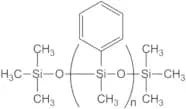
CAS:Forma y color:LiquidPeso molecular:10000.0PHENYLMETHYLSILOXANE OLIGOMER
CAS:<p>Thermal Silicone Fluid<br>High phenyl content fluids are utilized as heat-exchange fluids, dielectric coolants, impregnants for sintered metal bearing, and base oils for high temperature fluids. Low phenyl content fluids are utilized at lower temperatures than high phenylsilicones and find extended temperature service applications as lubricating oils for critical devices such as timers and systems involving rubber, plastic and aluminum<br>mating surfaces.<br>1,1,5,5-Tetraphenyl-1,3,3,5-tetramethyltrisiloxane<br>PhenylMethylsiloxane Oligomers - Diffusion FluidsViscosity, 25 °C: 35-40 cStViscosity, 99 °C:Pour-point, °C: -35Specific gravity: 1.07Refractive index: 1.556Surface tension: 37.3Molecular Weight: 485 g/mol<br></p>Forma y color:LiquidPeso molecular:485.0(25-30% METHYLHYDROSILOXANE) - DIMETHYLSILOXANE COPOLYMER, HYDRIDE TERMINATED, 24-60 cSt
CAS:Forma y color:LiquidPeso molecular:2000-2600SILANOL TERMINATED (14-18% DIPHENYLSILOXANE) - DIMETHYLSILOXANE COPOLYMER, 50-60 cSt
CAS:Forma y color:LiquidPeso molecular:900-1000VINYL TERMINATED (15-17% DIPHENYLSILOXANE)-DIMETHYLSILOXANE COPOLYMER, 1,000 cSt
CAS:<p>PDV-1631: Vinyl Terminated Diphenylsiloxane-Dimethylsiloxane Copolymer (Telechelic Functional Fluid)<br>These fluids are most often employed in 2-part addition cure silicone elastomers where special thermal or optical properties are required.<br>PDV-1631 Properties<br>Viscosity: 1,000 cStMolecular Weight: 19,000 g/molVinyl (eq/kg): 0.09-0.12Refractive Index: 1.465<br></p>Forma y color:LiquidPeso molecular:19000.0SILANOL TERMINATED POLYDIMETHYLSILOXANE, 1,000 cSt
CAS:<p>DMS-S31: Silanol Terminated PDMS, 1,000 cSt (Telechelic Functional Fluid)<br>Terminal silanol groups render polydimethylsiloxanes susceptible to condensation under both mild acid and base conditions. They are intermediates for most room temperature vulcanizeable (RTV) condensation cure silicones. The reactivity of silanol fluids is utilized in applications other than RTVs. Low viscosity silanol fluids are employed as filler treatments and structure control additives in silicone rubber compounding. Intermediate viscosity (1,000-10,000 cSt) fluids can be applied to textiles as durable fabric softeners. High viscosity silanol terminated fluids form the matrix component in tackifiers and pressure sensitive adhesives.<br>DMS-S31 Properties<br>Viscosity: 1,000 cStMolecular Weight: 26,000 g/molWt.% OH: 0.1OH (eq/kg): 0.055-0.060<br></p>Forma y color:LiquidPeso molecular:26000.0VINYL TERMINATED (4-6% DIPHENYLSILOXANE)-DIMETHYLSILOXANE COPOLYMER, 10,000 cSt
CAS:<p>PDV-0541: Vinyl Terminated Diphenylsiloxane-Dimethylsiloxane Copolymer (Telechelic Functional Fluid)<br>These fluids are most often employed in 2-part addition cure silicone elastomers where special thermal or optical properties are required.<br>PDV-0541 Properties<br>Viscosity: 10,000 cStMolecular Weight: 60,000 g/molVinyl (eq/kg): 0.027-0.038Refractive Index: 1.430<br></p>Forma y color:LiquidPeso molecular:60000.0SILANOL TERMINATED POLYDIMETHYLSILOXANE, 35-45 cSt
CAS:<p>DMS-S14: Silanol Terminated PDMS, 35-45 cSt (Telechelic Functional Fluid)<br>Terminal silanol groups render polydimethylsiloxanes susceptible to condensation under both mild acid and base conditions. They are intermediates for most room temperature vulcanizeable (RTV) condensation cure silicones. The reactivity of silanol fluids is utilized in applications other than RTVs. Low viscosity silanol fluids are employed as filler treatments and structure control additives in silicone rubber compounding. Intermediate viscosity (1,000-10,000 cSt) fluids can be applied to textiles as durable fabric softeners. High viscosity silanol terminated fluids form the matrix component in tackifiers and pressure sensitive adhesives.<br>DMS-S14 Properties<br>Viscosity: 35-45 cStMolecular Weight: 700-1,500 g/molWt.% OH: 30.-4.0OH (eq/kg): 1.7-2.3<br></p>Forma y color:Colourless LiquidPeso molecular:700-1500AMINOPROPYL TERMINATED POLYDIMETHYLSILOXANE, 1,800-2,200 cSt
CAS:Forma y color:LiquidPeso molecular:30000.0(7-9% METHYLHYDROSILOXANE) - DIMETHYLSILOXANE COPOLYMER, TRIMETHYLSILOXANE TERMINATED, 110-150 cSt
CAS:<p>Siloxane-Based Silane Reducing Agent<br>Organosilanes are hydrocarbon-like and possess the ability to serve as both ionic and free-radical reducing agents. These reagents and their reaction by-products are safer and more easily handled and disposed than many other reducing agents. The metallic nature of silicon and its low electronegativity relative to hydrogen lead to polarization of the Si-H bond yielding a hydridic hydrogen and a milder reducing agent compared to aluminum-, boron-, and other metal-based hydrides. A summary of some key silane reductions are presented in Table 1 of the Silicon-Based Reducing Agents brochure.<br>Pendant Functional Fluid; MethylHydrosiloxane-Dimethylsiloxane Copolymer, TMS Terminated<br>MethylHydrosiloxane copolymers are the primary cross linkers for 2-part vinyl-addition silicones and intermediates for functional copolymers.<br>Hydrogen dimethicone; Dimethylhydropolysiloxane; Dimethicone/methicone copolymer; Polysiloxanes dimethyl methyl hydrogen, Hydride functional polydimethylsiloxane; Siloxanes and silicones, dimethyl, methyl hydrogen<br>Viscosity: 110-150 cStMolecular Weight: 5,500-6,500 g/molMol% Hydride: 7-9Potential reducing agents in the mode of HMS-991 or HMS-997Extensive review of silicon based reducing agents: Larson, G.; Fry, J. L. "Ionic and Organometallic-Catalyzed Organosilane Reductions", Wipf, P., Ed.; Wiley, 2007<br></p>Forma y color:LiquidPeso molecular:5500 - 6500POLYDIMETHYLSILOXANE, TRIMETHYLSILOXY TERMINATED, 5 cSt
CAS:Forma y color:Colourless LiquidPeso molecular:770.0POLYDIMETHYLSILOXANE, TRIMETHYLSILOXY TERMINATED, 10 cSt
CAS:Forma y color:LiquidPeso molecular:1250.0DIMETHYLSILOXANE-(30-35% ETHYLENE OXIDE) BLOCK COPOLYMER, 10 cSt
CAS:Forma y color:Pale Yellow LiquidPeso molecular:800-1200HYDRIDE TERMINATED POLYDIMETHYLSILOXANE, 7-10 cSt
CAS:<p>DMS-H11: Hydride Terminated PDMS, 7-10 cSt (Telechelic Functional Fluid)<br>Hydride terminated silicones are chain extenders for vinyl-addition silicones, enabling low-viscosity, high elongation formulations. They are also intermediates for functionally terminated silicones.<br>DMS-H11 Properties<br>Viscosity: 7-10 cStMolecular Weight: 1,000-1,100 g/molWt.% Hydride: 0.2<br></p>Forma y color:LiquidPeso molecular:1000 - 1100SILANOL TERMINATED POLYDIMETHYLSILOXANE,18,000 cSt
CAS:<p>DMS-S42: Silanol Terminated PDMS, 18,000 cSt (Telechelic Functional Fluid)<br>Terminal silanol groups render polydimethylsiloxanes susceptible to condensation under both mild acid and base conditions. They are intermediates for most room temperature vulcanizeable (RTV) condensation cure silicones. The reactivity of silanol fluids is utilized in applications other than RTVs. Low viscosity silanol fluids are employed as filler treatments and structure control additives in silicone rubber compounding. Intermediate viscosity (1,000-10,000 cSt) fluids can be applied to textiles as durable fabric softeners. High viscosity silanol terminated fluids form the matrix component in tackifiers and pressure sensitive adhesives.<br>DMS-S42 Properties<br>Viscosity: 18,000 cStMolecular Weight: 77,000 g/molWt.% OH: 0.4OH (eq/kg): 0.023-0.025<br></p>Forma y color:LiquidPeso molecular:77000.0Ref: 3H-DMS-S42
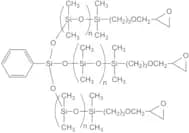
Producto descatalogadomonoPHENYL FUNCTIONAL TRIS(EPOXY TERMINATED POLYDIMETHYLSILOXANE), 30-35 cSt
CAS:Forma y color:Straw LiquidPeso molecular:500-750PHENYLMETHYLSILOXANE-DIMETHYLSILOXANE COPOLYMER, 30,000 cSt
CAS:Forma y color:LiquidPeso molecular:40000-50000monoMETHACRYLOXYPROPYL FUNCTIONAL POLYDIMETHYLSILOXANE, symmetric, 7-9 cSt
CAS:Forma y color:Deep Straw LiquidPeso molecular:800-1000(6-7% AMINOPROPYLMETHYLSILOXANE) - DIMETHYLSILOXANE COPOLYMER, 80-120 cSt
CAS:Forma y color:Colorless To Pale Yellow LiquidPeso molecular:4000-5000Ref: 3H-AMS-162
Producto descatalogadoPOLYDIMETHYLSILOXANE, TRIMETHYLSILOXY TERMINATED, Reduced Volatility, 100 cSt
CAS:Forma y color:LiquidPeso molecular:5970.0[8-10% (EPOXYCYCLOHEXYLETHYL)METHYLSILOXANE] - DIMETHYLSILOXANE COPOLYMER, 300-450 cSt
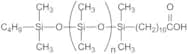
CAS:Forma y color:LiquidPeso molecular:10000-12000monoCARBOXYDECYL TERMINATED POLYDIMETHYLSILOXANE, asymmetric, 20 cSt
Forma y color:LiquidPeso molecular:1500.0[2-3% (EPOXYCYCLOHEXYLETHYL)METHYLSILOXANE] (10-15% METHOXYPOLYALKYLENEOXYMETHYLSILOXANE) DIMETHYLSILOXANE TERPOLYMER, 4,000-5,000 cSt
CAS:Forma y color:Straw Amber LiquidPeso molecular:25000-36000VINYL TERMINATED (4-6% DIPHENYLSILOXANE)-DIMETHYLSILOXANE COPOLYMER, 500 cSt
CAS:<p>PDV-0525: Vinyl Terminated Diphenylsiloxane-Dimethylsiloxane Copolymer (Telechelic Functional Fluid)<br>These fluids are most often employed in 2-part addition cure silicone elastomers where special thermal or optical properties are required.<br>PDV-0525 Properties<br>Viscosity: 500 cStMolecular Weight: 14,000 g/molVinyl (eq/kg): 0.12-0.16Refractive Index: 1.430<br></p>Forma y color:LiquidPeso molecular:14000.0Ref: 3H-PDV-0525
Producto descatalogadomonoCARBINOL TERMINATED FUNCTIONAL POLYDIMETHYLSILOXANE, symmetric, 35-40 cSt
CAS:Forma y color:LiquidPeso molecular:550-650monoAMINOPROPYL TERMINATED POLYDIMETHYLSILOXANE, asymmetric, 18-25 cSt
Forma y color:LiquidPeso molecular:2000.0VINYL TERMINATED (35-45% TRIFLUOROPROPYLMETHYLSILOXANE) - DIMETHYLSILOXANE COPOLYMER, 4,000-6,000 cSt
CAS:<p>FMV-4035: Vinyl Terminated TrifluoropropylMethylsiloxane-Dimethylsiloxane Copolymer (Telechelic Functional Fluid)<br>Vinyl functional fluorosilicones offer greater solvent resistance (lower hydrocarbon solubility) and lower refractive index than analogous dimethylsiloxane homopolymers.<br>FMV-4035 Properties<br>Viscosity: 4,000-6,000 cStMolecular Weight: 6,000-9,000 g/molRefractive Index: 1.388<br></p>Forma y color:Translucent LiquidPeso molecular:6000-9000monoMETHACRYLOXYPROPYL FUNCTIONAL TRIS(POLYDIMETHYLSILOXANE), 10 cSt
Forma y color:Light Yellow LiquidRef: 3H-DMS-T07
Producto descatalogado(2-3% AMINOPROPYLMETHYLSILOXANE) - DIMETHYLSILOXANE COPOLYMER, 80-120 cSt
CAS:Forma y color:Colorless To Pale Yellow LiquidPeso molecular:4500-6000polyTRIFLUOROPROPYLMETHYLSILOXANE, HYDRIDE TERMINATED
CAS:Forma y color:LiquidPeso molecular:3500-5000MONODISPERSE HYDRIDE TERMINATED POLYDIMETHYLSILOXANE, 100 cSt
CAS:Forma y color:LiquidPeso molecular:5500.0VINYL TERMINATED (15-17% DIPHENYLSILOXANE)-DIMETHYLSILOXANE COPOLYMER, 500 cSt
CAS:<p>PDV-1625: Vinyl Terminated Diphenylsiloxane-Dimethylsiloxane Copolymer (Telechelic Functional Fluid)<br>These fluids are most often employed in 2-part addition cure silicone elastomers where special thermal or optical properties are required.<br>PDV-1625 Properties<br>Viscosity: 500 cStMolecular Weight: 9,500 g/molVinyl (eq/kg): 0.19-0.23Refractive Index: 1.465<br></p>Forma y color:LiquidPeso molecular:9500.0Ref: 3H-PDV-1625
Producto descatalogadoVINYL TERMINATED (35-45% TRIFLUOROPROPYLMETHYLSILOXANE) - DIMETHYLSILOXANE COPOLYMER, 14,000-18,000 cSt
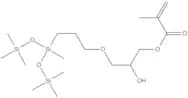
CAS:<p>FMV-4042: Vinyl Terminated TrifluoropropylMethylsiloxane-Dimethylsiloxane Copolymer (Telechelic Functional Fluid)<br>Vinyl functional fluorosilicones offer greater solvent resistance (lower hydrocarbon solubility) and lower refractive index than analogous dimethylsiloxane homopolymers.<br>FMV-4042 Properties<br>Viscosity: 14,000-18,000 cStMolecular Weight: 25,000-25,000 g/molRefractive Index: 1.388<br></p>Forma y color:Translucent LiquidPeso molecular:25000-35000(3-METHACRYLOXY-2-HYDROXYPROPOXYPROPYL)METHYL BIS(TRIMETHYLSILOXY)SILANE, 96%
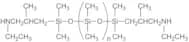
CAS:Fórmula:C17H38O6Si3Pureza:96%Forma y color:Colourless LiquidPeso molecular:422.74N-ETHYLAMINOISOBUTYL TERMINATED POLYDIMETHYLSILOXANE, 8-12 cSt
CAS:Forma y color:LiquidPeso molecular:800-1000HYDRIDE TERMINATED POLYDIMETHYLSILOXANE, 500 cSt
CAS:<p>DMS-H25: Hydride Terminated PDMS, 500 cSt (Telechelic Functional Fluid)<br>Hydride terminated silicones are chain extenders for vinyl-addition silicones, enabling low-viscosity, high elongation formulations. They are also intermediates for functionally terminated silicones.<br>DMS-H25 Properties<br>Viscosity: 500 cStMolecular Weight: 17,200 g/molWt.% Hydride: 0.01<br></p>Forma y color:LiquidPeso molecular:17200.0Ref: 3H-DMS-H25
Producto descatalogadoEPOXYCYCLOHEXYLETHYL TERMINATED POLYDIMETHYLSILOXANE, 25-35 cSt
CAS:Forma y color:LiquidPeso molecular:900-1100EPOXYPROPOXYPROPYL TERMINATED POLYDIMETHYLSILOXANE, 12-18 cSt
CAS:Forma y color:LiquidPeso molecular:500-600POLYOCTYLMETHYLSILOXANE, 600-1,000 cSt
CAS:Fórmula:C21H46OSiPureza:95%Forma y color:LiquidPeso molecular:342.68Ref: 3H-ALT-143
Producto descatalogadomonoMETHACRYLOXYPROPYL FUNCTIONAL POLYDIMETHYLSILOXANE, METHOXYPROPYL TERMINATED, symmetric, 8-12 cSt
Forma y color:Deep Straw LiquidPeso molecular:1000.0(CARBOXYDECYL) TERMINATED POLYDIMETHYLSILOXANE, 15-30 cSt
CAS:Forma y color:Straw Amber LiquidPeso molecular:1000.0EPOXYPROPOXYPROPYL TERMINATED POLYDIMETHYLSILOXANE, 20-35 cSt
CAS:Forma y color:LiquidPeso molecular:1000-1400(CARBINOL FUNCTIONAL)METHYLSILOXANE DIMETHYLSILOXANE COPOLYMER, 125-150 cSt
CAS:Forma y color:LiquidPeso molecular:4000.0VINYL TERMINATED POLYDIMETHYLSILOXANE, 100,000 cSt
CAS:<p>DMS-V51: Vinyl Terminated PDMS, 100,000 cSt (Telechelic Functional Fluid)<br>Vinyl terminated polymers are most often employed in 2-part addition cure silicone elastomers.<br>DMS-V51 Properties<br>Viscosity: 100,000 cStMolecular Weight: 140,000 g/molWt.% Vinyl: 0.03-0.05Vinyl (eq/kg): 0.016-0.018<br></p>Forma y color:LiquidPeso molecular:140000.0DIMETHYLSILOXANE-VINYLMETHYLSILOXANE - (PROPYLENE OXIDE-ETHYLENE OXIDE) BLOCK COPOLYMER, 500-600 cSt
Forma y color:Pale Yellow LiquidPeso molecular:8000-10000monoCARBINOL TERMINATED FUNCTIONAL POLYDIMETHYLSILOXANE, symmetric, 5-15 cSt
CAS:Forma y color:LiquidPeso molecular:280-380METHACRYLOXYPROPYL TERMINATED POLYDIMETHYLSILOXANE, 50-90 cSt
CAS:<p>DMS-R18: Methacryloxypropyl Terminated PDMS, 50-90 cSt (Telechelic Functional Fluid)<br>Methacrylate and Acrylate functional siloxanes undergo the same reactions generally associated with methacrylates and acrylates, the most conspicuous being radical induced polymerization. Unlike vinylsiloxanes which are sluggish compared to their organic counterparts, methacrylate and acrylate siloxanes have similar reactivity to their organic counterparts. The principal applications of methacrylate functional siloxanes are as modifiers to organic systems. Upon radical induced polymerization, methacryloxypropyl terminated siloxanes by themselves only increase in viscosity. Copolymers with greater than 5 mole % methacrylate substitution crosslink to give non-flowable resins. Acrylate functional siloxanes cure greater than ten times as fast methacrylate functional siloxanes on exposure to UV in the presence of a photoinitiator such as ethylbenzoin. <br>Oxygen is an inhibitor for methacrylate polymerization in general. The high oxygen permeability of siloxanes usually makes it necessary to blanket these materials with nitrogen or argon in order to obtain reasonable cures.<br>DMS-R18 Properties<br>Viscosity: 50-90 cStMolecular Weight: 4,500-5,500 g/molRefractive Index: 1.409<br></p>Forma y color:LiquidPeso molecular:4500-5500[(EPOXYPROPOXYPROPYL)DIMETHOXYSILYL TERMINATED POLYDIMETHYLSILOXANE, 80-120 cSt
CAS:Forma y color:LiquidPeso molecular:3500-4000monoMETHACRYLOXYPROPYL FUNCTIONAL POLYTRIFLUOROPROPYLMETHYLSILOXANE, symmetric, 50-70 cSt
CAS:Forma y color:Deep Straw LiquidPeso molecular:800-1000SUCCINIC ANHYDRIDE TERMINATED POLYDIMETHYLSILOXANE, 75-100 cSt
CAS:Forma y color:LiquidPeso molecular:600-800SILANOL TERMINATED POLYDIMETHYLSILOXANE, 90-120 cSt
CAS:<p>DMS-S21: Silanol Terminated PDMS, 90-120 cSt (Telechelic Functional Fluid)<br>Terminal silanol groups render polydimethylsiloxanes susceptible to condensation under both mild acid and base conditions. They are intermediates for most room temperature vulcanizeable (RTV) condensation cure silicones. The reactivity of silanol fluids is utilized in applications other than RTVs. Low viscosity silanol fluids are employed as filler treatments and structure control additives in silicone rubber compounding. Intermediate viscosity (1,000-10,000 cSt) fluids can be applied to textiles as durable fabric softeners. High viscosity silanol terminated fluids form the matrix component in tackifiers and pressure sensitive adhesives.<br>DMS-S21 Properties<br>Viscosity: 90-120 cStMolecular Weight: 4,200 g/molWt.% OH: 0.8-0.9OH (eq/kg): 0.47-0.53<br></p>Forma y color:LiquidPeso molecular:4200.0Ref: 3H-DMS-S21
Producto descatalogadoMONODISPERSE HYDRIDE TERMINATED POLYDIMETHYLSILOXANE, 500 cSt
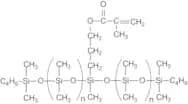
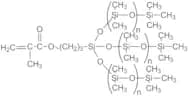
CAS:Forma y color:LiquidPeso molecular:17200.0METHACRYLOXYPROPYL T-STRUCTURE SILOXANE, 10-20 cSt
CAS:Forma y color:Pale Yellow LiquidPeso molecular:570-620EPOXYPROPOXYPROPYL TERMINATED POLYDIMETHYLSILOXANE, 100-140 cSt
CAS:Forma y color:LiquidPeso molecular:4500-5500AMINOPROPYL TERMINATED POLYDIMETHYLSILOXANE, 20-30 cSt
CAS:Forma y color:LiquidPeso molecular:900-1000Ref: 3H-DMS-A12
Producto descatalogadomonoAMINOPROPYL TERMINATED POLYDIMETHYLSILOXANE, asymmetric, 8-12 cSt
Forma y color:LiquidPeso molecular:800-1200AMINOPROPYL TERMINATED POLYDIMETHYLSILOXANE, 900-1,100 cSt
CAS:Forma y color:LiquidPeso molecular:25000.0[3-4% (EPOXYCYCLOHEXYLETHYL)METHYLSILOXANE] - DIMETHYLSILOXANE COPOLYMER, 650-850 cSt
CAS:Forma y color:LiquidPeso molecular:18000-20000SILANOL TERMINATED POLYDIMETHYLSILOXANE, 3,500 cSt
CAS:<p>DMS-S33: Silanol Terminated PDMS, 3,500 cSt (Telechelic Functional Fluid)<br>Terminal silanol groups render polydimethylsiloxanes susceptible to condensation under both mild acid and base conditions. They are intermediates for most room temperature vulcanizeable (RTV) condensation cure silicones. The reactivity of silanol fluids is utilized in applications other than RTVs. Low viscosity silanol fluids are employed as filler treatments and structure control additives in silicone rubber compounding. Intermediate viscosity (1,000-10,000 cSt) fluids can be applied to textiles as durable fabric softeners. High viscosity silanol terminated fluids form the matrix component in tackifiers and pressure sensitive adhesives.<br>DMS-S33 Properties<br>Viscosity: 3,500 cStMolecular Weight: 43,500 g/molWt.% OH: 0.8OH (eq/kg): 0.045-0.050<br></p>Forma y color:LiquidPeso molecular:43500.0Ref: 3H-DMS-S33
Producto descatalogadoVINYL TERMINATED (3.0-3.5% DIPHENYLSILOXANE)-DIMETHYLSILOXANE COPOLYMER, 1,000 cSt
CAS:<p>PDV-0331: Vinyl Terminated Diphenylsiloxane-Dimethylsiloxane Copolymer (Telechelic Functional Fluid)<br>These fluids are most often employed in 2-part addition cure silicone elastomers where special thermal or optical properties are required.<br>PDV-0331 Properties<br>Viscosity: 1,000 cStMolecular Weight: 27,000 g/molVinyl (eq/kg): 0.065-0.011Refractive Index: 1.420<br></p>Forma y color:LiquidPeso molecular:27000.0Ref: 3H-PDV-0331
Producto descatalogado


![[13-17% (MERCAPTOPROPYL)METHYLSILOXANE] - DIMETHYLSILOXANE COPOLYMER, 100-200 cSt](/_next/image/?url=https%3A%2Fstatic.cymitquimica.com%2Fproducts%2F3H%2Fthumb-webp%2FSMS-142.webp&w=3840&q=75)


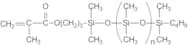


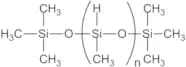
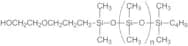
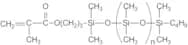







![[4-6% (METHACRYLOXYPROPYL)METHYLSILOXANE] - DIMETHYLSILOXANE COPOLYMER, 8,000-10,000 cSt](/_next/image/?url=https%3A%2Fstatic.cymitquimica.com%2Fproducts%2F3H%2Fthumb-webp%2FRMS-044.webp&w=3840&q=75)



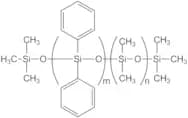


![DIMETHYLSILOXANE-[65-70%(60% PROPYLENE OXIDE/40% ETHYLENE OXIDE)] BLOCK COPOLYMER, 1,800 cSt](/_next/image/?url=https%3A%2Fstatic.cymitquimica.com%2Fproducts%2F3H%2Fthumb-webp%2FDBP-732.webp&w=3840&q=75)


![[4-6% (3-ACRLOXY-2-HYDROXYPROPOXYPROPYL)METHYLSILOXANE]-DIMETHYLSILOXANE COPOLYMER, 500-1,500 cSt](/_next/image/?url=https%3A%2Fstatic.cymitquimica.com%2Fproducts%2F3H%2Fthumb-webp%2FUCS-052.webp&w=3840&q=75)
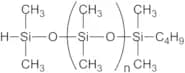

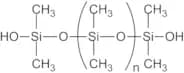


![(30-35% DODECYLMETHYLSILOXANE)-[7-10% HYDROXY(POLYETHYLENEOXY(6-9)PROPYL)METHYLSILOXANE]-(55-65% D…](/_next/image/?url=https%3A%2Fstatic.cymitquimica.com%2Fproducts%2F3H%2Fthumb-webp%2FABE-3642.webp&w=3840&q=75)
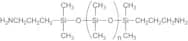


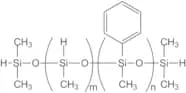


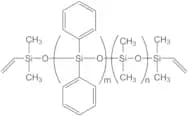


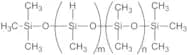
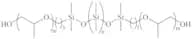


![[4-6% (MERCAPTOPROPYL)METHYLSILOXANE] - DIMETHYLSILOXANE COPOLYMER, 120-170 cSt](/_next/image/?url=https%3A%2Fstatic.cymitquimica.com%2Fproducts%2F3H%2Fthumb-webp%2FSMS-042.webp&w=3840&q=75)




![[7-9% (METHACRYLOXYPROPYL)METHYLSILOXANE] - DIMETHYLSILOXANE COPOLYMER, 2,000-3,000 cSt](/_next/image/?url=https%3A%2Fstatic.cymitquimica.com%2Fproducts%2F3H%2Fthumb-webp%2FRMS-083.webp&w=3840&q=75)















![[8-10% (EPOXYCYCLOHEXYLETHYL)METHYLSILOXANE] - DIMETHYLSILOXANE COPOLYMER, 300-450 cSt](/_next/image/?url=https%3A%2Fstatic.cymitquimica.com%2Fproducts%2F3H%2Fthumb-webp%2FECMS-924.webp&w=3840&q=75)
![[2-3% (EPOXYCYCLOHEXYLETHYL)METHYLSILOXANE] (10-15% METHOXYPOLYALKYLENEOXYMETHYLSILOXANE) DIMETHYL…](/_next/image/?url=https%3A%2Fstatic.cymitquimica.com%2Fproducts%2F3H%2Fthumb-webp%2FEBP-234.webp&w=3840&q=75)






![[3-4% (EPOXYCYCLOHEXYLETHYL)METHYLSILOXANE] - DIMETHYLSILOXANE COPOLYMER, 650-850 cSt](/_next/image/?url=https%3A%2Fstatic.cymitquimica.com%2Fproducts%2F3H%2Fthumb-webp%2FECMS-327.webp&w=3840&q=75)

