Ferroptosis
La ferroptosis es una forma de muerte celular regulada caracterizada por la acumulación de peróxidos lipídicos y el estrés oxidativo dependiente de hierro. A diferencia de la apoptosis, la ferroptosis no está impulsada por caspasas, sino por el fallo de las defensas antioxidantes celulares, lo que conduce a la muerte celular. Los inhibidores e inductores de la ferroptosis son fundamentales para estudiar esta vía única de muerte celular, que está implicada en diversas enfermedades, como el cáncer, la neurodegeneración y el daño por isquemia-reperfusión. En CymitQuimica, ofrecemos una amplia gama de moduladores de la ferroptosis de alta calidad para apoyar su investigación en mecanismos de muerte celular, estrés oxidativo y patología de enfermedades.
Se han encontrado 225 productos de "Ferroptosis"
Ordenar por
Pureza (%)
0
100
|
0
|
50
|
90
|
95
|
100
TOFA-Plasmalogen
TOFA-Plasmalogen (compound 1), a derivative of glyceraldehyde, exhibits ferroptosis-inducing properties. This compound promotes lipid peroxidation in cell membranes, leading to cytotoxic effects with an inhibition concentration (IC 50 = 32.87 μM).Fórmula:C33H62NO7PForma y color:SolidPeso molecular:615.82Pro-GA
CAS:Pro-GA is a cell-permeable γ-glutamylcyclotransferase (γ-GGCT) inhibitor that inhibit proliferation in multiple bladder cancer cell lines. antitumour.Fórmula:C12H19NO7Forma y color:SolidPeso molecular:289.28DTUN
<p>DTUN: lipophilic radical initiator, starts STY-BODIPY liposome co-autoxidization at 0.2 mM, useful in FENIX assays.</p>Forma y color:Solid84-B10
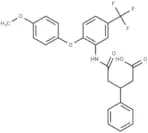
CAS:84-B10 provides protection in cisplatin-induced acute kidney injury, reversing lipid peroxidation accumulation and downregulation of key ferroptosis inhibitors.Fórmula:C25H22F3NO5Pureza:99.76%Forma y color:SolidPeso molecular:473.44GPX4-IN-14
GPX4-IN-14 (compound 2c) acts as a GPX4 inhibitor, exhibiting both free radical scavenging activity (with a maximum scavenging rate of 72.52%) and anti-tumor proliferation activity in vitro. This compound targets GPX4 protein, elevating lipid peroxide and intracellular Reactive Oxygen Species (ROS) levels, which induces ferroptosis and contributes to its anti-tumor proliferation effects.Fórmula:C26H39NO8SeForma y color:SolidPeso molecular:572.55Fluorescein-diisobutyrate-6-amide
CAS:Fluorescein-diisobutyrate-6-amide, a powerful inducer of ferroptosis, shows promise for cancer research applications [1].Fórmula:C62H61ClN6O16Forma y color:SolidPeso molecular:1181.63VK-28
CAS:VK-28 is a brain permeable iron chelator with neuroprotection. VK-28 inhibits basal as well as iron-induced mitochondrial lipid peroxidation.Fórmula:C16H21N3O2Pureza:99.87%Forma y color:SolidPeso molecular:287.36PROTAC GPX4 degrader-1
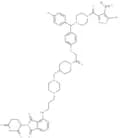
CAS:PROTAC GPX4 Degrader-1 (DC-2) is a PROTAC-based compound that efficiently degrades GPX4, demonstrating a degradation concentration (DC 50) of 0.03 μM in HT1080Fórmula:C50H57ClN10O10Forma y color:SolidPeso molecular:993.52-Acetamidophenol
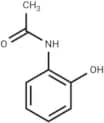
CAS:<p>2-Acetamidophenol (Orthocetamol) has analgesic and antipyretic effects. 2-Acetamidophenol is an isomer of Paracetamol (4-acetamidophenol).</p>Fórmula:C8H9NO2Pureza:>99.99%Forma y color:Light Brown PowderPeso molecular:151.16GPX4-IN-5
CAS:GPX4-IN-5 is a GPX4 inhibitor with antitumor activity.GPX4-IN-5 induces iron death and may be used for the treatment of triple negative breast cancer.Fórmula:C18H17ClFNO5Pureza:99.58%Forma y color:SoildPeso molecular:381.78ZX782
ZX782 acts as a GPX4 protein degrader and an inducer of ferroptosis (Ferroptosis), targeting GPX4 for destruction via both the ubiquitin-proteasome system and the autophagy-lysosome pathway. Following the degradation of GPX4 induced by ZX782, there is a significant increase in the accumulation of lipid reactive oxygen species (ROS) in HT1080 cells.Fórmula:C39H48ClN5O8Forma y color:SolidPeso molecular:750.28NYY-6a
NYY-6a is a ferroptosis (Ferroptosis) inhibitor, demonstrating significant suppression of RSL3-induced ferroptosis in 786-O and HT-1080 cells, with EC50 values of 52 nM and 50 nM, respectively. As a radical-trapping antioxidant (RTA), NYY-6a effectively reduces lipid peroxidation, comparable to ferrostatin-1 and liproxstatin-1, making it useful for research into ferroptosis-related pathologies.Fórmula:C23H22N2O3Forma y color:SolidPeso molecular:374.43UAMC-4821
UAMC-4821 is a ferroptosis inhibitor with an IC50 of 5.2 nM. It effectively scavenges free radicals, inhibits lipid peroxidation, and prevents ML162-induced ferroptosis, providing protective effects on HT-1080 cells. With favorable pharmacokinetic properties in mice, UAMC-4821 presents an oral bioavailability of 63% and demonstrates blood-brain barrier permeability.Fórmula:C15H19N3OForma y color:SolidPeso molecular:257.33Chalcones A-N-5
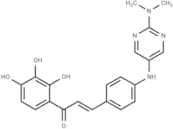
CAS:Chalcones A-N-5, a non-cytotoxic trihydroxy chalcone, aids cell growth & neuroprotection, inhibits ferroptosis, and targets AD research.Fórmula:C21H20N4O4Forma y color:SolidPeso molecular:392.41PROTAC GPX4 degrader-2
PROTACGPX4 degrader-2 (compound 18a) is a proteolysis-targeting chimera (PROTAC) that targets the degradation of glutathione peroxidase 4 (GPX4), with a DC50, 48h value of 1.68 μM. It induces the accumulation of lipid peroxides and mitochondrial depolarization, subsequently triggering ferroptosis. Additionally, PROTACGPX4 degrader-2 exhibits antiproliferative activity.Fórmula:C50H61ClN8O9Peso molecular:952.425Anticancer agent 178
Anticanceragent 178 (compound C2) is a potent anticancer compound. It effectively inhibits the proliferation and metabolic activity of MDA-MB 231 cells, with IC50 values of 1.1 and 4.2 μM, respectively. Additionally, Anticanceragent 178 induces ferroptosis and necroptosis in cells.Fórmula:C32H30ClFeN2O6Peso molecular:629.11418Ferroptosis inducer-4
Ferroptosisinducer-4 (Compound 5) is a phospholipid-based ferroptosis inducer featuring a terminal double bond at the sn-2 position. It exhibits significant cytotoxicity towards HT-1080 cells with an IC50 value of 18 μM. The toxicity mechanism involves the generation of lipid peroxides and oxidative damage to the cell membrane induced by the terminal double bond. Ferroptosisinducer-4 can be utilized in studies pertaining to the regulation of ferroptosis.Fórmula:C33H64NO7PForma y color:SolidPeso molecular:617.84Photosensitizer-5
Photosensitizer-5, a photodynamic agent, exhibits cytotoxicity towards HeLa and HepG2 cells, with IC50 values of 10.4 nM and 6.9 nM, respectively. It induces cell death through lipid peroxidation via an iron-independent ferroptosis pathway. Additionally, Photosensitizer-5 displays antitumor activity in HeLa-tumor-bearing mice.Fórmula:C35H26BF2IN4O2Forma y color:SolidPeso molecular:710.32Ferroptosis-IN-17
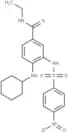
Ferroptosis-IN-17 (Compound 18) is an inhibitor of ferroptosis with an EC50 value of 0.57 μM. It effectively reduces the accumulation of intracellular ferrous ions and lipid peroxidation while restoring levels of glutathione (GSH) and glutathione peroxidase 4 (GPX4). In rat plasma, Ferroptosis-IN-17 demonstrates good solubility and notable metabolic stability. This compound holds potential for research in tumor suppression, neurodegenerative diseases, and cardiovascular disorders.Fórmula:C21H26N4O5SForma y color:SolidPeso molecular:446.52VEGFR-2-IN-68
<p>VEGFR-2-IN-68 (13b) is an inhibitor of VEGFR-2 with an IC50 value of 41.51 nM. It can induce apoptosis and cause G2/M cell cycle arrest, as well as exhibit anti-cancer metastasis properties.</p>Fórmula:C27H25N5O2SForma y color:SolidPeso molecular:483.1729