Asociado a microtúbulos
Los inhibidores de proteínas asociadas a microtúbulos se dirigen a proteínas que interactúan con los microtúbulos, los componentes estructurales del citoesqueleto de la célula, esenciales para la división celular. Estas proteínas regulan la estabilidad y la dinámica de los microtúbulos durante la mitosis. Inhibir las proteínas asociadas a microtúbulos puede interrumpir la función de los microtúbulos, lo que lleva al arresto del ciclo celular y la apoptosis, particularmente en células cancerosas de rápida división. Estos inhibidores se utilizan ampliamente en la investigación del cáncer y el desarrollo de fármacos. En CymitQuimica, ofrecemos una amplia gama de inhibidores de proteínas asociadas a microtúbulos de alta calidad para apoyar su investigación en división celular, dinámica del citoesqueleto y terapia contra el cáncer.
Se han encontrado 297 productos para "Asociado a microtúbulos".
Filtrar por
Porcentaje de pureza
0
100
|
0
|
50
|
90
|
95
|
100
- Precio más bajo
- Precio más alto
- Pureza más baja
- Pureza más alta
- Entrega estimada más rápida
(2S,3R)-Dap-NE hydrochloride
(2S,3R)-Dap-NE hydrochloride is an amino acid residue of the pentapeptide Dolastatin 10. Dolastatin 10 inhibits tubulin polymerization and mitosis, exhibiting anticancer properties.Fórmula:C18H29ClN2O3Forma y color:SolidPeso molecular:356.18667Tubulin polymerization-IN-62
Tubulin polymerization-IN-62 (Compound 14b) is a microtubule polymerization inhibitor (IC50 of 7.5 μM) that also functions as a degradation agent for α-/β-tubulin. This compound suppresses the proliferation of cancer cells MCF-7, A549, and HCT-116 with IC50 values of 32, 60, and 29 nM, respectively. It induces G2/M phase cell cycle arrest and inhibits the migration of MCF-7 cells. In a 4T1 syngeneic mouse model, Tubulin polymerization-IN-62 demonstrates antitumor efficacy with a tumor growth inhibition rate (TGI) of 74.27%.Fórmula:C37H44N4O4Forma y color:SolidPeso molecular:608.33626Nab-Paclitaxel
Nab-Paclitaxel is an albumin-bound paclitaxel nanoformulation with improved efficacy and tolerability.Forma y color:Odour SolidEpothilone F
CAS:Epothilone F, an active metabolite of Epothilone D with a hydroxymethyl on thiazole, disrupts cell division, shows promise over taxanes, and is water-soluble.Fórmula:C27H41NO7SForma y color:SolidPeso molecular:523.68Monomethyl auristatin E intermediate-8
MonomethylauristatinE intermediate-8 is an intermediate compound in the synthesis of MonomethylauristatinE. MonomethylauristatinE (MMAE) acts as a microtubule/tubulin inhibitor with anticancer properties. It is widely utilized as the cytotoxic component in antibody-drug conjugates (ADCs).Fórmula:C20H31NO5Forma y color:SolidPeso molecular:365.22022Sudocetaxel
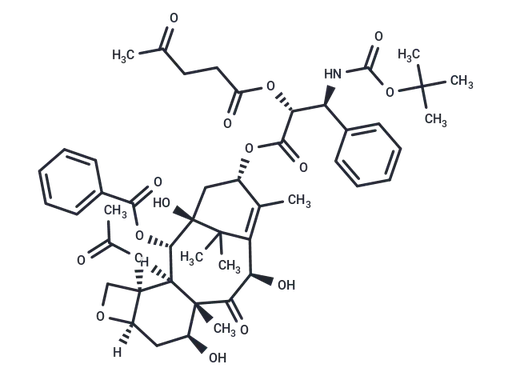
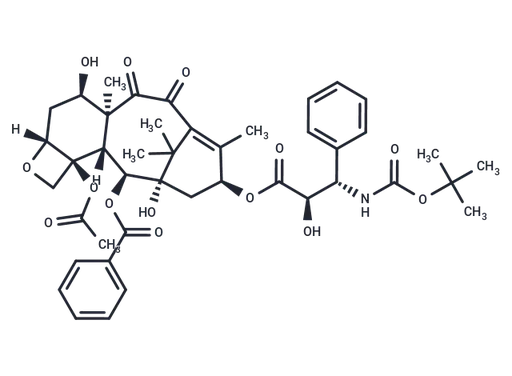
CAS:Sudocetaxel is a compound that serves as a microtubule depolymerization inhibitor, specifically designed for the pH-sensitive delivery of docetaxel.Fórmula:C48H59NO16Forma y color:SolidPeso molecular:905.98Vinflunine Tartrate
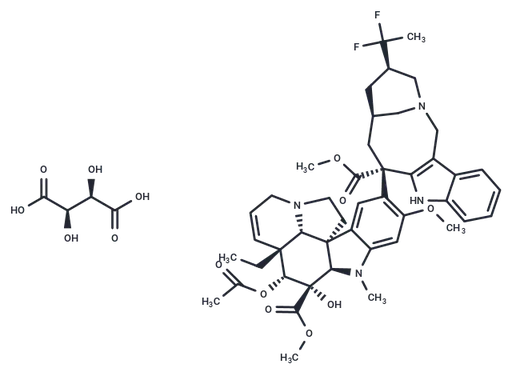
CAS:Vinflunine Tartrate, a uniquely fluorinated vinca alkaloid, exhibits mitotic-arresting and tubulin-interacting properties.Fórmula:C45H54F2N4O8·xC4H6O6Pureza:98%Forma y color:SolidPeso molecular:967.02Ref: TM-T6722
2mgA consultar5mgA consultar10mgA consultar25mgA consultar50mgA consultar1mL*10mM (DMSO)A consultarTubulin polymerization-IN-44
Tubulinpolymer-in-44 (compound 7w) effectively inhibits Tubulin with an IC50 value of 0.21 μM and induces apoptosis by arresting the G2/M phase, making itFórmula:C19H15Cl2N3O3SForma y color:SolidPeso molecular:436.317-Epi-docetaxel
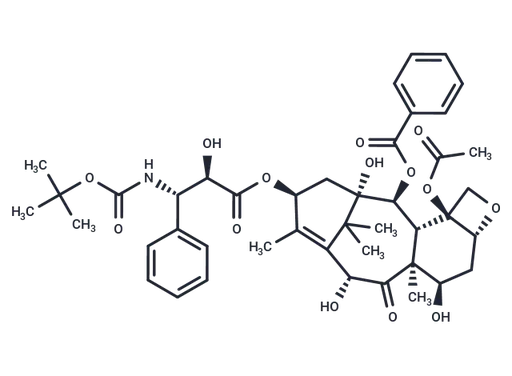
CAS:7-Epi-10-oxo-docetaxel (7-Epitaxotere) is a impurity of docetaxel.Fórmula:C43H53NO14Pureza:98%Forma y color:SolidPeso molecular:807.88T-808
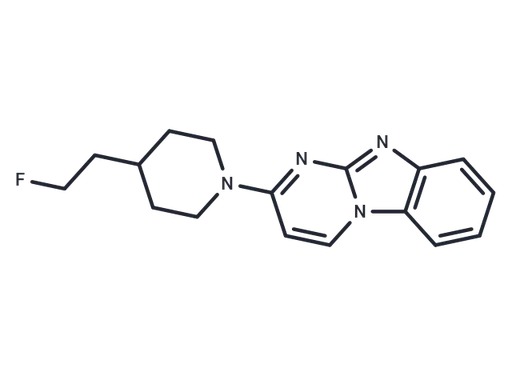
CAS:T-808 is a tau tracer which may be used in radiographic labeling of Tau aggregates during Alzheimer's disease.Fórmula:C17H19FN4Forma y color:SolidPeso molecular:298.36Cys-McMMAF
CAS:Cys-McMMAF, a microtubule-disrupting agent linked to an anti-5T4 antibody, shows antitumor effects in mouse models.Fórmula:C52H83N7O13SForma y color:SolidPeso molecular:1046.32Tubulin polymerization-IN-78
Tubulin polymerization-IN-78 (compound 10a) is an inhibitor of tubulin polymerization, with an IC50 value of 2.69 μM. It exhibits antiproliferative activity.Forma y color:Odour Solid7-Epi-10-oxo-docetaxel
CAS:7-Epi-10-oxo-docetaxel (Docetaxel Impurity 2) is an impurity of docetaxel detected by HPLC.Fórmula:C43H51NO14Pureza:98%Forma y color:SolidPeso molecular:805.86Tubulin inhibitor 24
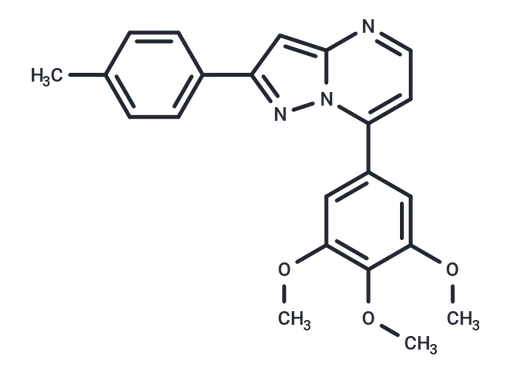
CAS:Tubulin inhibitor 24 is a potent inhibitor that can inhibit tubulin polymerization.Fórmula:C22H21N3O3Pureza:99.99%Forma y color:SolidPeso molecular:375.4204Microtubule-associated protein tau (26-44)
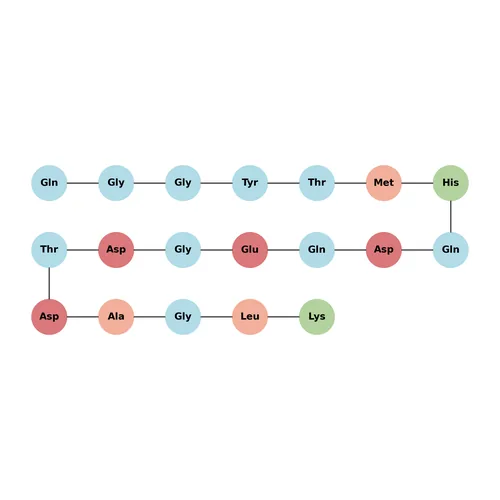
Microtubule-associated protein tau (26-44) is a synthetic peptide with an amino group conjugated to glutamine and a carboxyl group conjugated to lysine.Fórmula:C83H127N25O34SPureza:98%Forma y color:SolidPeso molecular:2051.11Microtubule destabilizing agent-1
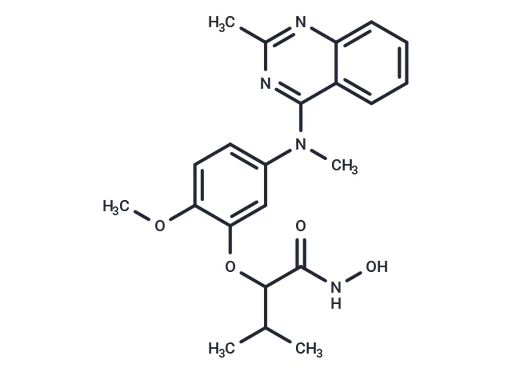
CAS:Compound 12b is a hydroxamic acid-based MDA with stable metabolism, high bioavailability, and strong antitumor properties.Fórmula:C22H26N4O4Forma y color:SolidPeso molecular:410.47Tubulin inhibitor 38
Tubulin Inhibitor 38 (Compound 14), a tetrazole-based agent, demonstrates significant antiproliferative effects by inducing mitotic arrest and blocking the cellFórmula:C17H13ClN6OSForma y color:SolidPeso molecular:384.84Tubulin polymerization-IN-50
Tubulin Polymerization-IN-50 (compound 7n) serves as an inhibitor of tubulin polymerization, exhibiting an IC50 of 5.05 μM in SK-Mel-28 cells and inducing cellFórmula:C24H20FN3O3Forma y color:SolidPeso molecular:417.43Katanin-IN-1
Katanin-IN-1 (122589735) is an effective inhibitor of katanin, and it holds potential for cancer research.Fórmula:C24H33N9O3Forma y color:SolidPeso molecular:495.58Microtubule destabilizing agent-3, negative control
CAS:Microtubule destabilizing agent-3, negative control, is an analog of B32B3 and serves as the negative control for Microtubule destabilizing agent-3. This agent functions as a microtubule destabilizer by disrupting microtubule stability, which promotes mitotic arrest and exhibits an anti-myeloma phenotype, ultimately leading to cell death. It can also induce G2/M phase arrest and caspase-dependent apoptosis.Fórmula:C17H18N4SPeso molecular:310.42