Daño al ADN / Reparación del ADN
Los inhibidores de daño/ reparación del ADN son compuestos que interfieren con los procesos involucrados en la detección y reparación de daños en el ADN. Estos inhibidores son fundamentales para estudiar los mecanismos de estabilidad genómica, mutagénesis y respuesta al daño del ADN. También son importantes en la investigación del cáncer, ya que muchos tumores dependen de vías específicas de reparación del ADN para sobrevivir. Al inhibir estas vías, los inhibidores de daño/reparación del ADN pueden aumentar la eficacia de la quimioterapia y la radioterapia. En CymitQuimica, ofrecemos una amplia gama de inhibidores de daño/reparación del ADN de alta calidad para apoyar su investigación en biología molecular, oncología y farmacología.
Subcategorías de "Daño al ADN / Reparación del ADN"
- ATM / ATR(72 productos)
- Alquilación de ADN(13 productos)
- ADN metiltransferasa(444 productos)
- ADN girasa(11 productos)
- ADN-PK(49 productos)
- MTH1(1 productos)
- Antimetabolito / análogo nucleósido(1.416 productos)
- Transcriptasa inversa(43 productos)
- Sirtuin(88 productos)
- Telomerasa(33 productos)
- Topoisomerasa(140 productos)
Mostrar 3 subcategorías más
Se han encontrado 1006 productos de "Daño al ADN / Reparación del ADN"
Ordenar por
Pureza (%)
0
100
|
0
|
50
|
90
|
95
|
100
FKB04
<p>FKB04 is a telomeric repeat binding factor 2 (TRF2) inhibitor that exerts its antitumor activity by disrupting the telomere maintenance mechanisms in hepatocellular carcinoma cells. This leads to T-loop defects, inducing telomere shortening and cellular senescence. Additionally, FKB04 inhibits tumor growth in a human liver cancer xenograft mouse model (by implanting Huh-7 cells in BALB/c mice). This compound is utilized in research focused on liver cancer.</p>Forma y color:Odour SolidMurrayanol
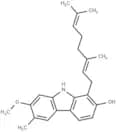
Murrayanol is a useful organic compound for research related to life sciences and the catalog number is T125851.Fórmula:C24H29NO2Forma y color:SolidPeso molecular:363.501PARP/HDAC-IN-1
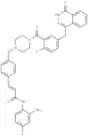
<p>PARP/HDAC-IN-1 is a PARP and HDAC inhibitor that inhibits PARP1, PARP2, and HDAC1, and may be used to study pancreatic cancer.</p>Fórmula:C36H32F2N6O3Pureza:95.00%Forma y color:SolidPeso molecular:634.67TRF1-TIN2 interaction-IN-1
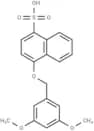
TRF1-TIN2 interaction-IN-1 (Compound 40) is an inhibitor of the TRF1-TIN2 interaction. It binds to the TRFH domain of TRF1 (KD= 29 μM) and competitively inhibits the binding of the TIN2 peptide (IC50= 67 μM). By occupying a hotspot at the TRF1-TIN2 interface, TRF1-TIN2 interaction-IN-1 disrupts the interaction between TRF1 and TIN2. This compound can remove TRF1 from the shelterin complex, making it useful for research on shelterin-related cancers.Fórmula:C19H18O6SForma y color:SolidPeso molecular:374.41Phosphoramide mustard
CAS:Phosphoramide mustard is a toxic metabolite of cyclophosphamide with anticancer activity and ovarian toxicity that induces DNA damage.Fórmula:C4H11Cl2N2O2PPureza:93.00%Forma y color:SolidPeso molecular:221.02Amorfrutin B
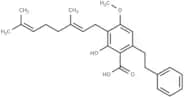
CAS:Amorfrutin B is a useful organic compound for research related to life sciences. The catalog number is T124211 and the CAS number is 78916-42-4.Fórmula:C26H32O4Forma y color:SolidPeso molecular:408.538SpCas9 D10A Nickase
SpCas9 D10A Nickase is a variant of the Cas9 protein. This mutation retains the functionality of one cleavage domain of the Cas9 nuclease, allowing it to specifically nick a target single strand. Additionally, SpCas9 D10A Nickase is effective in reducing off-target effects.PPAR agonist 6
PPAR agonist6 (compound 5a) acts as an agonist for PPAR, exhibiting EC50 values of 3.6 μM and 2.6 μM for PPARα and PPARβ/δ respectively. Additionally, PPAR agonist6 inhibits the transactivation of a TNFα-dependent NF-κB-driven reporter gene in L929 cells [1].Forma y color:Odour SolidDichlorogelignate
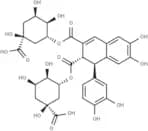
CAS:<p>Dichlorogelignate (compound 4) acts as a selective inhibitor of topoisomerase II (Topo II), achieving 100% inhibition at 50 μM [1].</p>Fórmula:C32H34O18Forma y color:SolidPeso molecular:706.6SIRT-IN-5
SIRT-IN-5, a selective inhibitor of SIRT3 with an IC50 of 2.88 μM, facilitates the differentiation of multiple myeloma cells. This differentiation is associated with increased expression of the differentiation antigens CD49e and human immunoglobulin light chains λ and κ.Forma y color:Odour SolidAnticancer agent 177
<p>Anticanceragent 177 (Compound 11b) is an NAMPT inhibitor and DNA alkylating agent with antitumor activity both in vitro and in vivo.</p>Fórmula:C28H36Cl2N4O2Peso molecular:530.22153Gimatecan HCl
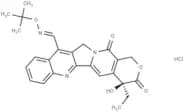
Gimatecan HCl (ST1481 HCL) is a potent topoisomerase I inhibitor. Gimatecan is an orally bioavailable camptothecin analogue with antitumor activity.Fórmula:C25H26ClN3O5Pureza:97.04%Forma y color:SoildPeso molecular:483.94NHC-diphosphate triammonium
<p>NHC-triphosphate triammonium is a phosphorylated metabolite of NHC, incorporated into HCV RNA by viral polymerase.</p>Forma y color:SolidCUDA disodium
<p>CUDA disodium is an effective, soluble epoxide hydrolase (sEH) inhibitor, with IC50 values of 11.1 nM for murine sEH and 112 nM for human sEH. It selectively enhances the activity of peroxisome proliferator-activated receptor PPARalpha. CUDA disodium may be valuable for cardiovascular disease research.</p>Forma y color:Odour SolidHDAC-IN-78
<p>HDAC-IN-78 (compound 66a) is an HDAC inhibitor utilized for cancer research.</p>Forma y color:Odour SolidMacrocalin B
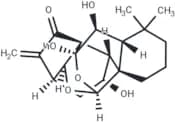
CAS:<p>Macrocalin B is a diterpenoid against tumor cell proliferation and telomerase activity.</p>Fórmula:C20H26O6Forma y color:SolidPeso molecular:362.42Saroglitazar Magnesium
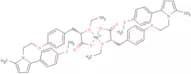
CAS:<p>Saroglitazar Magnesium: a PPAR agonist, strong on PPARα (EC50 0.65pM), moderate on PPARγ (EC50 3nM).</p>Fórmula:C50H56MgN2O8S2Pureza:98.1%Forma y color:SolidPeso molecular:901.431-O-Hexadecyl-Rac-Glycerol
CAS:1-O-Hexadecyl-Rac-Glycerol (1-O-Hexadecylglycerol) is a marine derived natural products found in Tritoniella belli.Fórmula:C19H40O3Pureza:99.38% - 99.94%Forma y color:SolidPeso molecular:316.52GpC Methyltransferase
<p>GpC Methyltransferase (GpC) is an enzyme that methylates DNA, specifically targeting cytosine residues within GpC dinucleotides of non-nucleosomal DNA in vitro.</p>Heliotrine N-oxide
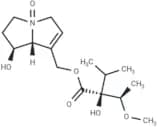
CAS:Heliotrine N-oxide, a PA N-oxide, triggers pyrrolic DNA adducts and may cause liver tumors.Fórmula:C16H27NO6Forma y color:SolidPeso molecular:329.39