Metabolismo
Los inhibidores del metabolismo son compuestos que interfieren con las vías metabólicas, alterando la producción y utilización de energía dentro de las células. Estos inhibidores se utilizan para estudiar la regulación del metabolismo, el papel de las vías metabólicas en enfermedades como el cáncer y la diabetes, y para desarrollar nuevas estrategias terapéuticas. Los inhibidores del metabolismo pueden dirigirse a diversas enzimas y procesos involucrados en la glucólisis, la oxidación de ácidos grasos y otras funciones metabólicas. En CymitQuimica, ofrecemos una amplia gama de inhibidores del metabolismo de alta calidad para apoyar su investigación en bioquímica, trastornos metabólicos y desarrollo de fármacos.
Subcategorías de "Metabolismo"
- AhR(41 productos)
- Aminopeptidasa(67 productos)
- CETP(18 productos)
- Anhídrido carbónico(177 productos)
- Caseína quinasa(130 productos)
- DHFR(32 productos)
- Descarboxilasa(4 productos)
- Deshidrogenasa(267 productos)
- FAAH(63 productos)
- FXR(58 productos)
- Factor Xa(80 productos)
- Ácido graso sintasa(32 productos)
- Ferroptosis(215 productos)
- GR(3 productos)
- GSNOR(3 productos)
- Glucoquinasa(53 productos)
- HIF / HIF Prolilhidroxilasa(142 productos)
- HMG-CoA reductasa(32 productos)
- Hidroxilasa(30 productos)
- IDO(82 productos)
- LDL(8 productos)
- Lipasa(96 productos)
- Lípido(59 productos)
- Lipoxigenasa(124 productos)
- MAO(87 productos)
- MPO(2 productos)
- NAMPT(36 productos)
- P450(6 productos)
- PAI-1(25 productos)
- PDE(165 productos)
- PED(1 productos)
- PKM(15 productos)
- PPAR(164 productos)
- Fosfolipasa(82 productos)
- ROR(42 productos)
- Receptor de retinoides(29 productos)
- SGK(11 productos)
- Tiorredoxina(12 productos)
- Transferasa(30 productos)
- Transportador(42 productos)
- UGT(4 productos)
- Inhibidores de la xantina oxidasa (XO)(9 productos)
Mostrar 34 subcategorías más
Se han encontrado 8597 productos de "Metabolismo"
Ordenar por
Pureza (%)
0
100
|
0
|
50
|
90
|
95
|
100
NU227326
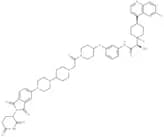
CAS:<p>NU227326 is a PROTAC degrader of indoleamine 2,3-dioxygenase 1 (IDO1) with a DC50 value of 4.5 nM. It effectively degrades IDO1 in U87 and GBM43 cells, with DC50 values of 7.1 nM and 11.8 nM, respectively. NU227326 exhibits favorable pharmacokinetic properties, with a plasma half-life of 5.7 hours and a brain tissue half-life of 11.8 hours. (Pink: ligand for target protein IDO1 ligand-1; Black: linker; Blue: ligand for E3 ligase Cereblon).</p>Fórmula:C53H61FN8O7Forma y color:SolidPeso molecular:941.099Beauverolide Ja
CAS:<p>Beauverolide Ja: cyclotetradepsipeptide, CaM inhibitor; Kd 0.078 μM, Ki 0.39 μM; from Isaria fumosorosea.</p>Fórmula:C35H46N4O5Forma y color:SolidPeso molecular:602.76(2α,3β,4α)-2,3,19-Trihydroxyurs-12-ene-23,28-dioic acid
CAS:<p>'(2α,3β,4α)-2,3,19-Trihydroxyurs-12-ene-23,28-dioic acid, a saponin isolated from Rubus ellipticus var.</p>Fórmula:C30H46O7Forma y color:SolidPeso molecular:518.68Promothiocin A
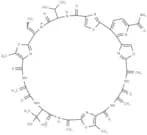
CAS:<p>Promothiocin A is an antibiotic.</p>Fórmula:C36H37N11O8S2Pureza:98%Forma y color:SolidPeso molecular:815.88(±)-Hexanoylcarnitine chloride
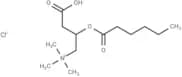
CAS:<p>(±)-Hexanoylcarnitine chloride is a fatty acid metabolite that breaks down fatty acids into small compounds that can be utilized by the body.</p>Fórmula:C13H26ClNO4Pureza:99.45%Forma y color:SolidPeso molecular:295.8VDR agonist 3
<p>VDR agonist 3 (Compound E15) is a potent activator of the vitamin D receptor (VDR). It effectively inhibits the activation of hepatic stellate cells (HSC) via VDR. In a model of liver fibrosis induced by CCl4 in mice, VDR agonist 3 significantly alleviates liver fibrosis without causing hypercalcemia.</p>Fórmula:C24H36O7Forma y color:SolidPeso molecular:436.538Dextranase
CAS:<p>Dextranase, a glucan hydrolase, breaks down α-(1,6)-glucosidic bonds in dextran, useful in food, sugar modification, medicine, and more.</p>Forma y color:SolidBerninamycin D
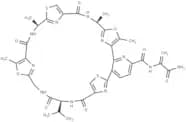
CAS:<p>Berninamycin D, a cyclic peptide derived from Streptomyces bernensis through fermentation, is recognized as a fungal metabolite [1].</p>Fórmula:C45H45N13O13SForma y color:SolidPeso molecular:1007.98Methylcardol triene
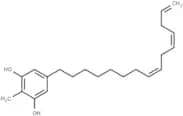
CAS:<p>Methylcardol triene, a phenolic compound present in cashew nut shell liquid, demonstrates α-glucosidase inhibition (IC50= 39.6 µM) and exhibits schistosomicidal properties by eliminating 100% of adult S. mansoni worms within 24 hours at 100 and 200 µM concentrations. Moreover, it serves as a precursor for synthesizing mono- and bis-benzoxazines.</p>Fórmula:C22H32O2Forma y color:SolidPeso molecular:328.496Beauveriolide I
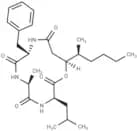
CAS:<p>Beauveriolide I, a cyclodepsipeptide from Beauveria, inhibits lipid droplet and cholesterol synthesis in mouse macrophages; IC50=0.78 μM.</p>Fórmula:C27H41N3O5Forma y color:SolidPeso molecular:487.63Phenolic acid
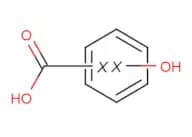
CAS:<p>Phenolic acid is an endogenous metabolite.</p>Fórmula:C7H8D2O3Pureza:98%Forma y color:SolidPeso molecular:144.16OPC18750 HCl
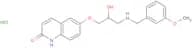
CAS:<p>OPC18750 HCl is a phosphodiesterase inhibitor with positive inotropic effects that can be used to study asthma, cancer, diabetes, and psychiatric disorders.</p>Fórmula:C20H23ClN2O4Pureza:98.92%Forma y color:SoildPeso molecular:390.86Cortisol sulfate sodium
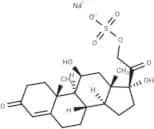
CAS:<p>Cortisol sulfate sodium, a Cortisol metabolite, binds specifically to intracellular transcortin.</p>Fórmula:C21H29NaO8SForma y color:SolidPeso molecular:464.51Xanthine oxidase-IN-8
CAS:<p>Xanthine oxidase-IN-8 (Icarisids J) (Compound 7) serves as an inhibitor of xanthine oxidase, exhibiting an inhibitory concentration (IC50) value of 29.71 μM [1</p>Fórmula:C44H58O23Forma y color:SolidPeso molecular:954.92Irsenontrine maleate
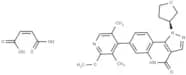
CAS:<p>Irsenontrine (E2027) maleate is a selective and orally active inhibitor of phosphodiesterase 9 (PDE9). It can be utilized in the study of neurological diseases.</p>Fórmula:C26H26N4O7Forma y color:SolidPeso molecular:506.515Glycerol phosphate dehydrogenase
CAS:<p>Glycerol phosphate dehydrogenase catalyzes the conversion of dihydroxyacetone phosphate to α-glycerol phosphate [1] .</p>Forma y color:SolidMyristoyl coenzyme A lithium
CAS:<p>Myristoyl coenzyme A lithium, a compound marked by lithium in its myristoylated form, plays a crucial role in the biochemical mechanism of myristoylation, essential for both viral functionalities and tumor growth in colon epithelial cells. This process is predominantly governed by N-myristoyltransferase (NMT), which exhibits increased activity in colon epithelial tumors compared to normal cells. The activity of NMT is significantly influenced by the reduction of coenzyme A (CoA), a vital regulator that enhances NMT's ability to induce myristoylation, unlike its oxidized form which impedes this process. Consequently, Myristoyl coenzyme A serves as an inhibitor to the demyristoylation activity, showcasing its potential as an anticancer and antiviral agent.</p>Fórmula:C35H63LiN7O17P3SForma y color:SolidPeso molecular:985.33745A2-SC8 TFA
<p>5A2-SC8 TFA is an ionizable amino lipid used in lipid nanoparticles (LNPs), offering high delivery potential and low in vivo toxicity. It effectively delivers small RNAs, such as siRNA and miRNA, to tumor cells. Moreover, 5A2-SC8 TFA LNPs provide unique delivery paths for RNA within the liver, enhancing therapeutic outcomes in cancer models.</p>Forma y color:Odour SolidGS-493
CAS:<p>GS-493: Specific SHP2 inhibitor, very potent (IC50=71 nM), 29x affinity vs. SHP1, 45x vs. PTP1B; hinders cancer cell growth/movement.</p>Fórmula:C21H14N6O8SForma y color:SolidPeso molecular:510.44α-Muricholic acid
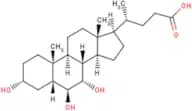
CAS:<p>α-Muricholic acid is the most abundant primary bile acid in rodents.</p>Fórmula:C24H40O5Pureza:98%Forma y color:SolidPeso molecular:408.57