Neurociencia
Los inhibidores en neurociencia son compuestos diseñados para modular la actividad de proteínas, enzimas o receptores específicos dentro del sistema nervioso. Estos inhibidores son cruciales para estudiar los mecanismos moleculares subyacentes a la función neuronal, la transmisión sináptica y las enfermedades neurodegenerativas. Al dirigirse a los receptores de neurotransmisores, canales iónicos y vías de señalización, los inhibidores en neurociencia ayudan en la exploración de la función cerebral y en el desarrollo de estrategias terapéuticas para trastornos neurológicos como el Alzheimer, Parkinson y la epilepsia. En CymitQuimica, ofrecemos una amplia gama de inhibidores de neurociencia de alta calidad para apoyar su investigación en neurobiología, neurofarmacología y ciencias cognitivas.
Subcategorías de "Neurociencia"
- Receptor 5-HT(940 productos)
- ACK(1 productos)
- AChR(574 productos)
- ATP Citrato Liasa(16 productos)
- Receptor adrenérgico(2.942 productos)
- BACE(36 productos)
- Beta amiloide(204 productos)
- CAMK(68 productos)
- Inhibidores de ciclooxigenasa (COX)(562 productos)
- Receptor de dopamina(407 productos)
- Receptor GABA(336 productos)
- Gamma-secretasa(59 productos)
- GluR(255 productos)
- GlyT(24 productos)
- Receptor de histamina(358 productos)
- LRRK2(33 productos)
- Receptor de melatonina(24 productos)
- NMDAR(28 productos)
- Receptor de OX(40 productos)
- Receptor de opioides(296 productos)
Mostrar 12 subcategorías más
Se han encontrado 5400 productos de "Neurociencia"
Ordenar por
Pureza (%)
0
100
|
0
|
50
|
90
|
95
|
100
AChE-IN-8
<p>AChE-IN-8 (Compound 19), potent acetylcholinesterase blocker; IC50 = 1.95 μM; potential Alzheimer's treatment.</p>Fórmula:C20H22N4O2SForma y color:SolidPeso molecular:382.48Cyproflanilide
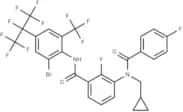
CAS:<p>Cyproflanilide is a GABAR antagonist that exhibits high activity against a variety of pests, including those from the Lepidoptera, Coleoptera, and Thysanoptera orders.</p>Fórmula:C28H17BrF12N2O2Forma y color:SolidPeso molecular:721.33Nedemelteon
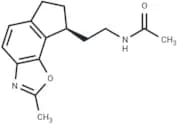
CAS:<p>Nedemelteon is an agonist of the melatonin receptor (melatonin receptor).</p>Fórmula:C15H18N2O2Forma y color:SolidPeso molecular:258.32BGT1-IN-1
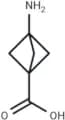
CAS:<p>BGT1-IN-1 (compound 9) is an effective inhibitor of BGT1, demonstrating IC50 values of 13.9 µM for hBGT1 and 58.3 µM for GAT3. It exhibits no cytotoxic effects and possesses neuroprotective activity.</p>Fórmula:C6H9NO2Forma y color:SolidPeso molecular:127.14DL-Thyroxine
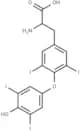
CAS:<p>DL-Thyroxine is a thyroid hormone that acts as a monoamine oxidase (monoamine oxidase) inhibitor.</p>Fórmula:C15H11I4NO4Forma y color:SolidPeso molecular:776.87LY3020371 hydrochloride
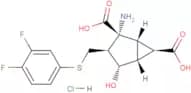
CAS:<p>LY3020371 HCl: potent mGlu2/3 antagonist, antidepressant-like; Ki: 5.3/2.5 nM, IC50: 16.2 nM for cAMP inhibition.</p>Fórmula:C15H16ClF2NO5SForma y color:SolidPeso molecular:395.81Desmethylflunitrazepam
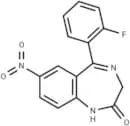
CAS:<p>Desmethylflunitrazepam (Norflunitrazepam) is a benzodiazepine derivative and an active metabolite of Flunitrazepam.</p>Fórmula:C15H10FN3O3Forma y color:SolidPeso molecular:299.26SZ1676
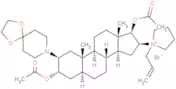
CAS:<p>SZ1676 is a derivative of SZ1677, which is an agent of neuromuscular blocking.</p>Fórmula:C37H59BrN2O6Pureza:98%Forma y color:SolidPeso molecular:707.78CaMKK2-IN-1
CAS:<p>CaMKK2-IN-1 is a selective and potent inhibitor of CaMKK2, exhibiting an IC50 of 7 nM.</p>Fórmula:C22H22N2O3Peso molecular:362.42AChE-IN-47
CAS:<p>AChE-IN-47 (compound g17) is an acetylcholinesterase (AChE) inhibitor with an IC50 of 0.24 μM. It prevents the self-aggregation of β-amyloid peptides and exhibits neuroprotective properties by effectively reducing the accumulation of intracellular reactive oxygen species (ROS).</p>Fórmula:C20H17F3N4O4SPeso molecular:466.43Tipindole
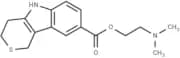
CAS:<p>Tipindole is a serotonin antagonist utilized in research related to depression.</p>Fórmula:C16H20N2O2SForma y color:SolidPeso molecular:304.41DL-AP5 lithium
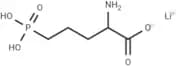
CAS:<p>DL-AP5 (2-APV) lithium is a competitive antagonist of the NMDA (N-Methyl-D-aspartate) receptor. It exhibits notable analgesic activity and specifically blocks channels in the rabbit retina.</p>Fórmula:C5H11LiNO5PForma y color:SolidPeso molecular:203.06GABAA receptor agonist 1
<p>Compound 3e, a potent GABAA agonist, targets GABA sites and has potential anti-depressive effects in mice.</p>Fórmula:C20H30O3Forma y color:SolidPeso molecular:318.45Amyloid-β-IN-2
CAS:<p>Amyloid-β-IN-2 (Compound EX.112) is a selective inhibitor of γ-secretase. In H4 cells, it demonstrates inhibitory activity on Aβ42 secretion, with an EC50 value of 226 nM. Amyloid-β-IN-2 holds potential for research in Alzheimer's disease (AD) and diseases associated with Aβ deposition.</p>Fórmula:C22H21F2N3O2Forma y color:SolidPeso molecular:397.422002-G12
CAS:<p>2002-G12 (compound 5a) is an Aβ42 inhibitor that can reduce Aβ42 toxicity by 76%. It is applicable in Alzheimer's research.</p>Fórmula:C20H16N6Forma y color:SolidPeso molecular:340.381γ-secretase modulator 6
CAS:<p>Gamma-secretase modulator 6 (Example 50) is a gamma-secretase modulator. It inhibits Aβ42 secretion in HEK cell lines stably expressing APP (Aβ amyloid precursor protein) with a pIC50 of 8.1. This compound is applicable in Alzheimer's disease research.</p>Fórmula:C25H26N6O2Forma y color:SolidPeso molecular:442.513AAK1-IN-3 TFA
<p>AAK1-IN-3 TFA, an AAK1 inhibitor with IC50 of 11 nM, crosses the blood-brain barrier, is a quinoline analogue, and may aid neuropathic pain research.</p>Fórmula:C24H22F6N4O4Forma y color:SolidPeso molecular:544.45AChE/Aβ-IN-5
CAS:<p>Compound AV-2, also known as AChE/Aβ-IN-5, is a bifunctional inhibitor that acts on AChE and auto-induced Aβ (Amyloid-β) aggregation. This compound has demonstrated significant efficacy in mitigating cognitive impairment in mice induced by scopolamine and Aβ [1].</p>Fórmula:C25H24N4Forma y color:SolidPeso molecular:380.48AChE-IN-63
CAS:<p>AChE-IN-63 (Compound 5AD) serves as a selective inhibitor of hAChE, exhibiting an IC 50 value of 0.103 μM. Moreover, it inhibits hBChE and hBACE-1 with IC 50 values of 10 μM and 1.342 μM, respectively. AChE-IN-63 is effective in inhibiting Aβ aggregation and preventing the formation and deposition of Aβ1-42. It can effectively penetrate the blood-brain barrier and is orally bioavailable. This compound is primarily utilized in research related to Alzheimer's disease [1].</p>Fórmula:C18H19N5OForma y color:SolidPeso molecular:321.38NB-360
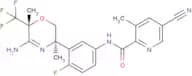
CAS:<p>NB-360: potent, brain-penetrant BACE1/2 inhibitor; IC50s: 5-6 nM; high selectivity vs pepsin, cathepsin E/D.</p>Fórmula:C21H19F4N5O2Pureza:99.72%Forma y color:SolidPeso molecular:449.4