PAFR
El receptor del factor activador de plaquetas (PAFR) es un GPCR que se une al factor activador de plaquetas (PAF), un potente mediador fosfolipídico involucrado en la inflamación, la trombosis y las respuestas alérgicas. La señalización del PAFR juega un papel crucial en las respuestas inmunitarias, la salud cardiovascular y la patogénesis de enfermedades inflamatorias. La modulación de la actividad del PAFR es de interés en el desarrollo de terapias antiinflamatorias y antitrombóticas. En CymitQuimica, ofrecemos una variedad de moduladores de PAFR de alta calidad para apoyar su investigación en inmunología, biología cardiovascular e inflamación.
Se han encontrado 14 productos de "PAFR"
Ordenar por
Pureza (%)
0
100
|
0
|
50
|
90
|
95
|
100
Kadsurenin C
CAS:Kadsurenin C (compound 1), a neolignan isolated from the aerial parts of Piper kadsura, exhibits anti-inflammatory properties and significant PAF (Platelet Activating Factor) antagonistic activity, with an IC50 value of 5.1 μM [1].Fórmula:C21H26O5Peso molecular:358.43Oxopurpureine
CAS:Oxopurpureine, classified as an oxoaporphine compound, functions to inhibit plant pathogens.Fórmula:C21H19NO6Forma y color:SolidPeso molecular:381.38PAF C-18
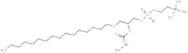
CAS:PAF C-18 is a natural phospholipid molecule belonging to the platelet-activating factor (PAF) family,, involved in hemostasis and thrombosis by binding to PAFR.Fórmula:C28H58NO7PPureza:>99.99%Forma y color:SolidPeso molecular:551.74α-Bulnesene
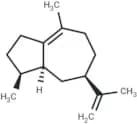
CAS:α-Bulnesene, a novel PAF (platelet-activating factor) receptor antagonist, exhibits an IC50 of 17.62 μM. It can be isolated from patchouli. α-Bulnesene inhibits both PAF and arachidonic acid-induced aggregation of rabbit platelets.Fórmula:C15H24Forma y color:SolidPeso molecular:204.35PAF-AN-1
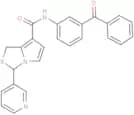
CAS:PAF-AN-1 is a novel potent platelet-activating factor receptor (PAF) antagonist involved in the study of anaphylactic death.Fórmula:C28H28N2O3Pureza:98.06%Forma y color:SolidPeso molecular:440.532-Acetylbenzoic acid
CAS:2-Acetylbenzoic acid outperforms 2-propionyloxybenzoic in hindering platelet function and PG synthesis; both similar in blocking PGI2 creation.Fórmula:C9H8O3Pureza:99.62%Forma y color:Off-White SolidPeso molecular:164.16Tulopafant
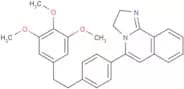
CAS:Tulopafant (RP 59227) is a potent platelet-activating factor (PAF) antagonist that increases capillary patency and prolongs allograft heart survival.Fórmula:C25H19N3O2SPureza:99.38%Forma y color:SolidPeso molecular:425.5Methylcarbamyl PAF C-16
CAS:Methylcarbamyl PAF C-16 (Carbamyl-PAF) is a PAF analog with PAF agonistic properties, activating inflammation in pregnancy tissues and promoting preterm birth.Fórmula:C26H55N2O7PForma y color:SolidPeso molecular:538.7Rocepafant
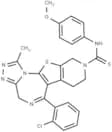
CAS:Rocepafant (LAU8080), a PAF antagonist, reduces neonatal rat brain damage and inhibits TNF-α toxicity in L929 cells.Fórmula:C26H23ClN6OS2Pureza:97.31% - 98.95%Forma y color:SolidPeso molecular:535.08SDZ-62-434
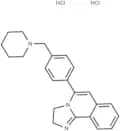
CAS:SDZ-62-434 is a platelet-activating factor inhibitor with antitumor activity and may be used in the study of leukemia.Fórmula:C23H27Cl2N3Pureza:98.38%Forma y color:SolidPeso molecular:416.3948740 RP
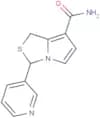
CAS:48740 RP (RP 55779) is an antagonist of platelet-activating factor.Fórmula:C12H11N3OSPureza:99.79%Forma y color:SolidPeso molecular:245.3Ref: TM-T10159
1mg338,00€5mg537,00€1mL*10mM (DMSO)537,00€10mg858,00€25mg1.269,00€50mg1.720,00€100mg2.305,00€Foropafant
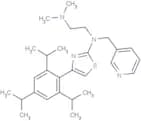
CAS:Foropafant (SR27417) is a highly potent and selective platelet-activating factor (PAF) receptor antagonist (Ki: 57 pM).Fórmula:C28H40N4SPureza:99.67%Forma y color:SolidPeso molecular:464.71Apafant
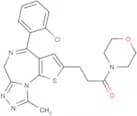
CAS:Apafant (WEB 2086) is a PAF antagonist that blocks eosinophil activation and can be used to study experimental allergic conjunctivitis in guinea pigs.Fórmula:C22H22ClN5O2SPureza:99.56%Forma y color:SolidPeso molecular:455.96ST-899
CAS:ST-899 is an innovative platelet-activating factor (PAF) receptor antagonist. It significantly reduces the mortality rate in mice experiencing shock induced by endotoxins (LPS). The compound markedly inhibits the LPS-induced increase in serum tumor necrosis factor (TNF) levels while leaving interleukin-6 (IL-6) unaffected. The mechanism by which ST-899 operates involves disrupting the positive feedback loop between PAF and TNF, thereby mitigating inflammatory responses. ST-899 is applicable for studies related to inflammatory diseases such as septic shock.Fórmula:C22H29BrClNO6Forma y color:SolidPeso molecular:518.83