Oligosacáridos
Los oligosacáridos son carbohidratos compuestos por un pequeño número de unidades de monosacáridos unidas por enlaces glucosídicos. Estas moléculas juegan roles significativos en varios procesos biológicos, incluyendo el reconocimiento celular, la señalización y las respuestas inmunitarias. En esta sección, encontrará una amplia selección de oligosacáridos esenciales para la investigación en glicociencia, bioquímica y biología molecular. Estos compuestos son vitales para estudiar estructuras complejas de carbohidratos, sus funciones y sus interacciones con otras biomoléculas. En CymitQuimica, proporcionamos oligosacáridos de alta calidad para apoyar sus necesidades de investigación y desarrollo, asegurando resultados precisos y fiables en sus experimentos.
Subcategorías de "Oligosacáridos"
- Glicósidos de aminoetilo, glicósidos de aminopropilo(14 productos)
- Glicanos enlazantes de Asn(33 productos)
- Oligosacáridos biotinados(13 productos)
- Grupos sanguíneos y antígenos de Lewis(11 productos)
- Oligosacáridos de tipo sanguíneo(13 productos)
- Celooligosacáridos(1 productos)
- Ciclodextrinas(183 productos)
- Disacáridos(192 productos)
- Oligosacáridos de epítopo(19 productos)
- Fructooligosacáridos(2 productos)
- Oligosacáridos funcionales(554 productos)
- Oligosacáridos funcionalizados(1 productos)
- Galactosamina(41 productos)
- Galactosa(260 productos)
- Galb (1-3) GalNAc(21 productos)
- Serie Ganglio(11 productos)
- Serie Globo e Isoglobo(17 productos)
- Glucosamina(128 productos)
- Ácidos glucurónicos(51 productos)
- Glicoproteínas, Glicopéptidos(59 productos)
- Glicosaminoglicano(26 productos)
- Oligosacáridos de la leche materna(19 productos)
- O-glicanos marcados(9 productos)
- Oligosacáridos marcados(36 productos)
- LacNAc(53 productos)
- Series Lacto y Neolacto(14 productos)
- Lacto-N-biosa(10 productos)
- Lactooligosacáridos(7 productos)
- Oligosacáridos unidos al linker(19 productos)
- Maltooligosacáridos(6 productos)
- Oligosacáridos de leche(31 productos)
- N-glicanos(149 productos)
- Glucósidos naturales(177 productos)
- Oligosacáridos naturales(103 productos)
- O-glicano(18 productos)
- Building Blocks de Oligosacáridos(7 productos)
- Reemplazo de oligosacáridos(2 productos)
- Oligosacáridos por componente de azúcar(225 productos)
- Oligosis(24 productos)
- Otros Oligosacáridos(14 productos)
- Oligómeros de PEG(33 productos)
- Azúcares fosfatados(17 productos)
- Azúcares protegidos(526 productos)
- Reactivos para la síntesis de oligosacáridos(254 productos)
- Ser, Thr Glucanos de unión(9 productos)
- Oligosacáridos sialilados(3 productos)
- Esfingoglucolípidos(42 productos)
- Aminoácidos de azúcar, péptidos de azúcar(20 productos)
- Antígenos de azúcar(31 productos)
- Building Blocks de Azúcares por Oligosacáridos objetivo(225 productos)
- Conjugados de azúcar(100 productos)
- Azúcares sulfatados(16 productos)
- Tetrasacáridos(34 productos)
- Trisacáridos y superiores(95 productos)
- Xilooligosacáridos(5 productos)
Mostrar 47 subcategorías más
Se han encontrado 2278 productos de "Oligosacáridos"
Ordenar por
Pureza (%)
0
100
|
0
|
50
|
90
|
95
|
100
2-O-(β-D-Galactopyranosyl)-D-glucose
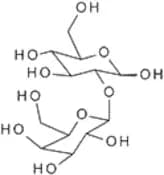
CAS:<p>2-O-(β-D-galactopyranosyl)-D-glucose is a sugar that can be custom synthesized to meet your needs. It is an oligosaccharide, polysaccharide, and carbohydrate that has been modified with methylation, glycosylation, and carbonylation. This product is available in high purity and fluorination.</p>Fórmula:C12H22O11Pureza:Min. 95%Forma y color:PowderPeso molecular:342.3 g/molBlood Group B trisaccharide-(CH2)5COOH derivative
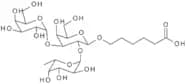
<p>Blood group antigen with spacer arm</p>Fórmula:C24H42O17Pureza:Min. 95%Forma y color:Brown LiquidPeso molecular:602.58 g/molLactosylsphingosine
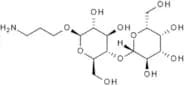
CAS:<p>Intermediate degradation product of lyso-GM3</p>Fórmula:C30H57NO12Pureza:Min. 95%Forma y color:PowderPeso molecular:623.77 g/mol3-Aminopropyl b-D-lactose
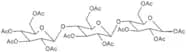
CAS:<p>Synthetic building block for oligosaccharide synthesis</p>Fórmula:C15H29O11NPureza:Min. 95 Area-%Forma y color:White PowderPeso molecular:399.39 g/molD-Cellotriose undecaacetate
CAS:<p>D-Cellotriose undecaacetate is a glycosylation product of cellobiose and erythritol. It is a methylated polysaccharide, which is an oligosaccharide that contains a single sugar unit. This compound can be custom synthesized and has high purity. D-Cellotriose undecaacetate is used in the synthesis of polysaccharides in the food industry and for medical purposes as a drug delivery system.</p>Fórmula:C40H54O27Pureza:Min. 95%Forma y color:White To Off-White SolidPeso molecular:966.84 g/mol3'-Sialyl Lewis A-PAA-biotin
<p>3'-Sialyl Lewis A-PAA-biotin is a carbohydrate that is used as a research tool for investigating the structure and function of glycoproteins, glycolipids, and glycosaminoglycans. It contains 3'-sialic acid linked to the terminal β-D-galactopyranosyl residue of a poly(amino acid) backbone. This product has been synthesized by custom synthesis and contains high purity with a custom synthesis.</p>Pureza:(¹H-Nmr) Min. 95 Area-%Forma y color:PowderNeoagarobiose
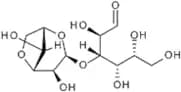
CAS:<p>Agarose is a polysaccharide found in red algae, typically Gelidium and Gracilaria. It is a strictly alternating polysaccharide of α-1,3 linked D-galactose and β-1,4 linked L-3,6 anhydrogalactose, with occasional sulfation at position 6 of the anhydrogalactose residue. Agaro-oligosaccharides result from cleavage at galactose residues and neoagaro-oligosaccharides from cleavage at 3,6-anhydro residues. Neoagarobiose is reported to exhibit skin moisturising and whitening properties.</p>Fórmula:C12H20O10Pureza:Min. 98 Area-%Forma y color:PowderPeso molecular:324.28 g/molSucrose stearate - 70% monostearate
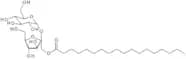
CAS:<p>The "tallowate" esters are probably the best known derivatives of sucrose and many attempts have been made to commercialise them in order to exploit their excellent surfactant functionalities. The most functional products are the mono- and diesters of the tallow acids (stearic, palmitic, oleic) with hydrophile-lipophile balance (HLB) values that lend themselves to surfactant applications in foods and cosmetics. They also have other uses, for example in coating fruits with a semipermeable membrane that acts as a preservative. Manufacturing economics have prevented these products from mass production and they remain in niche applications.</p>Fórmula:C30H56O12Pureza:Min. 90 Area-%Forma y color:White Off-White PowderPeso molecular:608.77 g/molHeparin derived dp10 saccharide ammonium salt
<p>Heparin-derived dp10 saccharide ammonium salt is a glycosylation product of heparin. This compound is synthesized by the treatment of heparin with a fluorinating agent, such as N-fluoro-N'-(2-chloroethyl)peroxycarbonyl chloride or N-fluoro-N'-(2-bromoethyl)peroxycarbonyl chloride, followed by reaction with an amine. The compound can be modified for specific applications through the use of click chemistry, which allows for the selective modification of either the sugar or side chain of the molecule. This product has been characterized and shown to have high purity and a CAS number.</p>Pureza:Min. 95%Forma y color:PowderPeso molecular:~3000 (Average)Lewis X-PAA-biotin
<p>PAA is poly[N-(2-hydroxyethyl)acrylamide], flexible polymer chain serves as an additional spacer. Mr approx. 30 kDa (according to gel-filtration, proteins as Mr markers). Carbohydrate content is 20% mol.</p>Pureza:Min. 95%Forma y color:White PowderPeso molecular:586.6 g/mol[UL-¹³C₁₂]Sucrose
CAS:<p>Sucrose is a sugar that is used as a food additive. It is the disaccharide of glucose and fructose, which are two monosaccharides. Sucrose can be synthesized by the glycosylation of glucose and fructose in an α-1,2 linkage. Sucrose can also be synthesized by the fluorination of sucrose followed by methylation with methylamine. The synthesis of sucrose starts with the reaction of acrylonitrile with formaldehyde to produce acrylonitrile trimer, which is then reacted with methanol to produce methyl 3-hydroxybutyrate. This product undergoes a series of reactions to form sucrose.</p>Fórmula:C12H22O11Pureza:Min. 98 Area-%Forma y color:PowderPeso molecular:354.21 g/molBenzyl 2-acetamido-2-deoxy-6-O-(b-D-galactopyranosyl)-a-D-galactopyranoside
CAS:<p>This compound is a custom synthesis. It is an oligosaccharide, polysaccharide and modification of saccharides. The compound has been modified with methylation, glycosylation, and fluorination. This compound is a high purity product with the CAS number 93496-44-7.</p>Fórmula:C21H31NO11Pureza:Min. 95%Forma y color:PowderPeso molecular:473.47 g/mol1,4-b-D-Mannohexaose
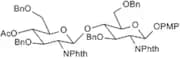
CAS:<p>Isolated from ivory-nut mannan hydrolysates</p>Fórmula:C36H62O31Pureza:Min. 90 Area-%Forma y color:White PowderPeso molecular:990.86 g/mol4-Methoxyphenyl 4-O-(4-O-acetyl-3,6-di-O-benzyl-2-deoxy-2-phthalimido-b-D-glucopyranosyl)-3,6-di-O-benzyl-2-deoxy-2-phthalimido-b-D- glucopyranoside
CAS:<p>4-Methoxyphenyl 4-O-(4-O-acetyl-3,6-di-O-benzyl-2-deoxy-2-phthalimido-b-D-glucopyranosyl)-3,6-di-O-benzyl -2,4,6-(1',4'-dioxan)-tris(2,3,5',6'-tetraethoxy)phenol</p>Fórmula:C65H60N2O15Pureza:Min. 95%Peso molecular:1,109.17 g/molBenzyl 2-acetamido-2-deoxy-3-O-(b-D-galactopyranosyl)-a-D-glucopyranoside
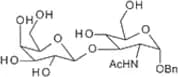
CAS:<p>Benzyl 2-acetamido-2-deoxy-3-O-(b-D-galactopyranosyl)-a-D-glucopyranoside is a synthetic substrate that is used in the synthesis of disaccharides. It is catalytic and has an efficient method for the preparation of acetonitrile, which can be eluted with acetic acid. It is a reagent that reacts with halides to form equimolar acetates. Acetylated benzyl 2-acetamido-2 deoxy 3 O-(b D galactopyranosyl) a D glucopyranoside can be obtained by reacting benzyl 2 acetamido 2 deoxy 3 O-(b D galactopyranosyl) a D glucopyranoside with acetic anhydride.</p>Fórmula:C21H31NO11Pureza:Min. 95%Forma y color:PowderPeso molecular:473.47 g/molLactobionic acid
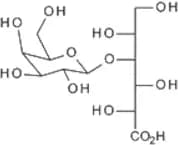
CAS:<p>Lactobionic acid is produced by oxidation of lactose. It is widely used in the food and in pharmaceutical field, due to its excellent biocompatibility, biodegradability, nontoxicity, chelating, amphiphilic and antioxidant properties. Lactobionic acid is produced as a white solid powder, freely soluble in water and slightly soluble in anhydrous ethanol and methanol.</p>Fórmula:C12H22O12Forma y color:White PowderPeso molecular:358.3 g/molTrehalose-6-phosphate dipotassium salt
CAS:<p>Trehalose-6-phosphate dipotassium salt is a natural sugar that is found in plants, animals, and fungi. It functions as a carbohydrate reserve and protects cells against osmotic stress. Trehalose-6-phosphate dipotassium salt can be synthesized by the enzyme trehalase from the sugar trehalose and 6-phosphate. It has been shown to protect cells from weevil infestation, which may be due to its ability to produce abiotic or biotic stress. Trehalose-6-phosphate dipotassium salt can be purified using hydrophilic interaction chromatography on an on-line system.</p>Fórmula:C12H21O14PK2Pureza:Min. 95%Forma y color:White PowderPeso molecular:498.46 g/mol1,2,3,6-Tetra-O-acetyl-4-O-(2,3,4,6-tetra-O-acetyl-b-D-galactopyranosyl)-b-D-thioglucopyranose
CAS:<p>This is a synthetic, high purity and custom-synthesized carbohydrate. The chemical name is 1,2,3,6-Tetra-O-acetyl-4-O-(2,3,4,6-tetra-O-acetyl-b-D-galactopyranosyl)-b-D-thioglucopyranose. It has been modified with the Click reaction to allow for chemical modification. This product is a complex carbohydrate that has been fluorinated to create an organic fluorine compound.</p>Fórmula:C28H38O18SPureza:Min. 95%Peso molecular:694.66 g/mol6-O-(a-D-Mannopyranosyl)-D-mannose
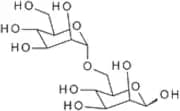
CAS:<p>Produced by the reverse hydrolysis of a mannose substrate. Isolated from the partial hydrolysates of bakers' yeast (Saccharomyces cerevisiae) mannan. This disaccharide also forms the sugar portion of the phospholipid, phosphatidylinositodimannoside, of Mycobacterium tuberculosis.</p>Fórmula:C12H22O11Pureza:Min. 95%Forma y color:White PowderPeso molecular:342.3 g/molNeoagarohexaose
CAS:<p>Agarose is a polysaccharide found in red algae, typically Gelidium and Gracilaria. It is a strictly alternating polysaccharide of α-1,3 linked D-galactose and β-1,4 linked L-3,6 anhydrogalactose with occasional sulfation at position 6 of the anhydrogalactose residue. Agaro-oligosaccharides result from cleavage at galactose residues and neoagaro-oligosaccharides from cleavage at 3,6-anhydro residues. Neoagarohexaose is reported to have potential for novel cosmeceuticals.</p>Fórmula:C36H56O28Pureza:Min. 98 Area-%Forma y color:White PowderPeso molecular:936.81 g/mol



![[UL-¹³C₁₂]Sucrose](/_next/image/?url=https%3A%2Fstatic.cymitquimica.com%2Fproducts%2F3D%2Fthumb-webp%2FOS29120.webp&w=3840&q=75)