Tintes, colorantes y tinciones
Los colorantes, tintes y tinturas son herramientas esenciales en biología molecular, cruciales para visualizar y estudiar el ADN, los cromosomas y los núcleos celulares. Estos compuestos permiten a los investigadores resaltar componentes celulares específicos, facilitando la observación y el análisis detallados bajo el microscopio. En esta categoría, encontrará una amplia gama de colorantes y tintes de alta calidad utilizados en diversas técnicas de tinción, incluyendo colorantes fluorescentes para análisis de ADN y cromosomas, tintes histológicos para muestras de tejido y tintes específicos para estructuras celulares. Estas herramientas son indispensables en la investigación genética, citología, histología y diagnósticos, proporcionando claridad y contraste en las muestras biológicas. En CymitQuimica, ofrecemos una selección completa de colorantes, tintes y tinturas para apoyar su investigación en biología molecular y asegurar resultados precisos y fiables en sus estudios.
Subcategorías de "Tintes, colorantes y tinciones"
- Tintes ácidos(49 productos)
- Azobencenos(270 productos)
- Tintes azoicos(7 productos)
- Tintes básicos(27 productos)
- Tintes de cumarina(71 productos)
- Tintes de cianina, tintes de escuarilio(53 productos)
- Tintes DCM(4 productos)
- Diariolethenes(12 productos)
- Tintes de dipirrometeno(26 productos)
- Tintes Directos(17 productos)
- Tintes dispersos(2 productos)
- Sensibilizadores de colorantes(12 productos)
- Tintes(416 productos)
- Tinturas y colorantes(911 productos)
- Generating Insoluble Dyes(14 productos)
- Generating Soluble Dyes(11 productos)
- Hexaarilbiimidazol(4 productos)
- Indicadores(575 productos)
- Tintes mordantes(10 productos)
- Tintes de infrarrojo cercano (NIR)(28 productos)
- Tintes de aceite(15 productos)
- Otras tinciones y tintes(2 productos)
- Tintes de perileno(17 productos)
- Tintes fotocromáticos(40 productos)
- Tintes de ftalocianina, tintes de porfirina(101 productos)
- Tintes de quinacridona(8 productos)
- Espiropiranos(16 productos)
- Tinciones y tintes(243 productos)
- Tinciones y tintes para microscopía(5 productos)
- Tintes de tina(5 productos)
- Tintes de xanteno(65 productos)
Mostrar 23 subcategorías más
Se han encontrado 755 productos de "Tintes, colorantes y tinciones"
Ordenar por
Pureza (%)
0
100
|
0
|
50
|
90
|
95
|
100
Reactive Blue 19, Technical grade
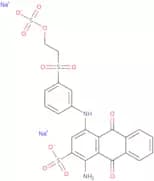
CAS:<p>Reactive Blue 19 is a chemical compound that has been used extensively in biological, biochemical, and clinical research. It is a reactive dye with the chemical formula C20H14N2Na4O8S4. The molecule's structure consists of two benzene rings linked by two amine groups, which are connected to an aromatic ring with four sulfonic acid side chains. Reactive Blue 19 has been shown to inhibit the activity of enzymes such as hydroxylase and nitrite reductase. This compound also reacts with protocatechuic acid to form an intense blue-colored complex that can be detected using electrochemical detection.</p>Fórmula:C22H16N2Na2O11S3Pureza:Min. 95%Forma y color:PowderPeso molecular:626.55 g/molC.I.Reactive Red 250
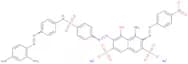
CAS:<p>C.I. Reactive Red 250 is a versatile dye that has been widely used in various experiments. It belongs to the category of Other Dyes, Stains, Indicators & Probes. This dye has shown potential in inhibiting glycogen synthase kinase-3β (GSK-3β), an enzyme involved in various signaling pathways. Additionally, C.I. Reactive Red 250 has been studied for its effects on HIV infection and autoimmune diseases.</p>Pureza:Min. 95%C.I.Direct Red 89
CAS:<p>C.I. Direct Red 89 is a water-soluble dye that belongs to the group of organic compounds called sulfonated naphthol dyes. It has an absorption spectrum in the region of 540-580 nm and is used as a neutral red dye for inkjet and recording applications, as well as for textile printing. C.I. Direct Red 89 can be used with other dyes for pigments, especially blue, green, and violet dyes, to produce a wide range of colors from yellow through green to blue-green. The dye is also used in pharmaceuticals, cosmetics, food coloring agents, and industrial paints.</p>Pureza:Min. 95%Pigment Yellow 127
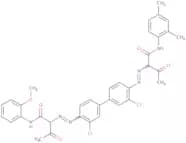
CAS:<p>Please enquire for more information about Pigment Yellow 127 including the price, delivery time and more detailed product information at the technical inquiry form on this page</p>Pureza:Min. 95%Acid Black ATT
CAS:<p>Acid Black ATT is a chemical compound that is used to adjust the pH and remove organic matter in wastewater. It is a mixture of trimethyl, collagen, sodium carbonate, calcium carbonate, and sodium chloride. Acid Black ATT can be used as an additive for the treatment of wastewater because it has been shown to inhibit enzymes. This product should be added slowly to water in order to avoid inhaling the vaporized acid. The use of this chemical must be carefully monitored because it can cause corrosion and damage to pipes.</p>Pureza:Min. 95%C.I.Solvent Yellow 51
CAS:<p>Please enquire for more information about C.I.Solvent Yellow 51 including the price, delivery time and more detailed product information at the technical inquiry form on this page</p>Pureza:Min. 95%Acid black 242
CAS:<p>Acid Black 242 is a chemical dye that is used in the production of photoresists. It is also used as a black pigment in paints and printing inks. The dye is classified as hydrophilic, meaning it dissolves in water. Acid Black 242 has a color index number of PBk 6. It reacts with sulfide to form an acidic compound, which can be used to modulate the reaction time of certain reactions. Acid Black 242 is a benzene derivative that has been shown to depress the central nervous system when inhaled or ingested. It also inhibits the activity of diaminobenzene, which can cause depression when consumed orally or injected intravenously. The fluorescence emission spectrum of Acid Black 242 overlaps with that of other dyes such as acid red 1 and acid violet 7.</p>Pureza:Min. 95%Solvent blue 104
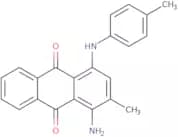
CAS:<p>Solvent Blue 104 is a dye that is used as a cross-linking agent and viscosity regulator in polymers. It is also used to control the reaction rate of organic solvents, such as alcohols, esters, ethers, ketones, and nitriles. Solvent Blue 104 has phoretic properties that allow it to be transported through the environment. This property may be due to its hydroxyl group or carbonyl group. Solvent Blue 104 is not soluble in water but can dissolve in organic solvents such as alcohols and acetone. The compound exhibits low toxicity and adverse effects on the environment because it does not react with oxygen or ozone. Solvent Blue 104 is usually mixed with matrix polymers for optical applications, which are applied in textiles and plastics.</p>Fórmula:C32H30N2O2Forma y color:PowderPeso molecular:474.59 g/mol4-Hydroxyphenethyl alcohol
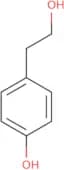
CAS:<p>Produces a fluorogenic signal in the presence of peroxidase</p>Fórmula:C8H10O2Pureza:Min. 98 Area-%Forma y color:PowderPeso molecular:138.16 g/molC.I.Solvent Blue 13
CAS:<p>Please enquire for more information about C.I.Solvent Blue 13 including the price, delivery time and more detailed product information at the technical inquiry form on this page</p>Pureza:Min. 95%Fast blue B salt
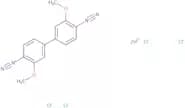
CAS:<p>For visualizing enzymatic activity</p>Fórmula:C14H12N4O2Cl2·ZnCl2Forma y color:PowderPeso molecular:475.46 g/molLight green SF yellowish
CAS:<p>Sodium salts are colloidal gold particles that are dispersed in aqueous solution and have a light green SF yellowish color. This type of salt is used for plant physiology studies, due to their ability to provide an accurate measurement of the surface area of leaves. Sodium salts can be used as biological samples, such as liver lesions or langmuir adsorption isotherm, to investigate kinetic data. They also have been shown to be useful in the study of human serum and particle interactions. The sodium salts form a thin layer on the surface of the particle, which makes it possible to measure the concentration of fatty acids or basic proteins on its surface. Sodium salts are also commonly used in toxicology studies and histological analyses.</p>Fórmula:C37H34N2O9S3Na2Pureza:(%) Min. 80%Forma y color:PowderPeso molecular:792.85 g/molC.I.Basic Yellow 5
CAS:<p>Basic Yellow 5 is a dye that belongs to the group of organic pigments. It is used in textile and leather production, as well as in food coloring. Basic Yellow 5 has been shown to bind to lectins on the surface of bacteria, which is how it exerts its antibacterial effects. This dye inhibits protein synthesis by binding to the ribosome and preventing amino acid incorporation into proteins. Basic Yellow 5 also inhibits bacterial growth by binding to the ribosome, interfering with protein synthesis and cell division.END></p>Pureza:Min. 95%Acid Red 357
CAS:<p>Acid Red 357 is a basic dye, which is used in the treatment of wastewater. It binds to the surface of particles and reacts with sodium carbonate to form a hydroxide precipitate. This reaction leads to removal of colorants from the water. Acid Red 357 is also reactive, nucleophilic, and has high values for both kinetic data and transfer mechanism.</p>Pureza:Min. 95%Disperse blue 60, technical grade dye content
CAS:<p>Disperse Blue 60 is a stilbene-based dye that absorbs ultraviolet light and emits red fluorescent light. It is used in wastewater treatment, biological treatment, and supercritical water oxidation processes. Disperse Blue 60 is activated by fatty acid, alkanoic acid, or polymeric matrix to form an antimicrobial agent that can be used in radiation sterilization of food products. This dye also has the ability to absorb radiation in the range of 200 - 300 nm and emit fluorescence at 590 nm. The oxidation catalyst provides stability for the dye molecule under conditions of high temperature or pressure.</p>Fórmula:C20H17N3O5Pureza:Min. 95%Forma y color:PowderPeso molecular:379.37 g/molBis(5-bromo-6-chloro-3-indoxyl)pyrophosphoric acid, disodium salt
<p>Bis(5-bromo-6-chloro-3-indoxyl)pyrophosphoric acid, disodium salt is a versatile building block that can be used to synthesize complex compounds. This compound is a reagent for research and also has many uses in the pharmaceutical industry as a useful intermediate and scaffold. Bis(5-bromo-6-chloro-3-indoxyl)pyrophosphoric acid, disodium salt is an excellent high quality product that can be used in many reactions.</p>Fórmula:C16H8Br2Cl2N2Na2O7P2Peso molecular:678.90 g/molRef: 3D-B-3370
1gA consultar5gA consultar10gA consultar500mgA consultar2500mgA consultar-Unit-ggA consultarIohexol
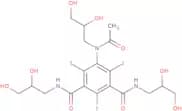
CAS:<p>a contrast agent used in medical imaging such as angiography, CT scans, and MRI.</p>Fórmula:C19H26I3N3O9Pureza:98.0 To 102.0%Forma y color:White PowderPeso molecular:821.14 g/molC.I.Reactive Red 223
CAS:<p>Please enquire for more information about C.I.Reactive Red 223 including the price, delivery time and more detailed product information at the technical inquiry form on this page</p>Pureza:Min. 95%Pigment Red 171
CAS:<p>Pigment Red 171 is a polyester that can be used as an additive to plastics. It has a molecular weight of about 400 and contains a hydroxyl group, which gives it thermal expansion properties. Pigment Red 171 also contains an aluminium skeleton that provides inorganic stability. This pigment has a basic group, which makes it soluble in organic solvents such as sulfides and alcohols. The pigment is resistant to light and radiation, which allows it to be used for protective coatings or sensors. Pigment Red 171 has functional groups for use in organic synthesis reactions.</p>Pureza:Min. 95%Orange G, Technical grade
CAS:<p>Orange G is a quaternary ammonium salt that can be used for the treatment of wastewater. It has been shown to adsorb to the surface of bacterial cells and inhibit their growth by preventing enzyme activity. Orange G has also been shown to have carcinogenic potential in experimental models, although it is less potent than dimethylhydrazine or N-nitrosodiethylamine. Orange G has genotoxic effects on human serum, as seen by increased DNA fragmentation and chromosomal aberrations. The kinetic and redox properties of Orange G are still being investigated.</p>Fórmula:C16H10N2Na2O7S2Pureza:Min. 95 Area-%Forma y color:Orange PowderPeso molecular:452.37 g/mol