Tintes, colorantes y tinciones
Los colorantes, tintes y tinturas son herramientas esenciales en biología molecular, cruciales para visualizar y estudiar el ADN, los cromosomas y los núcleos celulares. Estos compuestos permiten a los investigadores resaltar componentes celulares específicos, facilitando la observación y el análisis detallados bajo el microscopio. En esta categoría, encontrará una amplia gama de colorantes y tintes de alta calidad utilizados en diversas técnicas de tinción, incluyendo colorantes fluorescentes para análisis de ADN y cromosomas, tintes histológicos para muestras de tejido y tintes específicos para estructuras celulares. Estas herramientas son indispensables en la investigación genética, citología, histología y diagnósticos, proporcionando claridad y contraste en las muestras biológicas. En CymitQuimica, ofrecemos una selección completa de colorantes, tintes y tinturas para apoyar su investigación en biología molecular y asegurar resultados precisos y fiables en sus estudios.
Subcategorías de "Tintes, colorantes y tinciones"
- Tintes ácidos(49 productos)
- Azobencenos(270 productos)
- Tintes azoicos(7 productos)
- Tintes básicos(27 productos)
- Tintes de cumarina(71 productos)
- Tintes de cianina, tintes de escuarilio(53 productos)
- Tintes DCM(4 productos)
- Diariolethenes(12 productos)
- Tintes de dipirrometeno(26 productos)
- Tintes Directos(17 productos)
- Tintes dispersos(2 productos)
- Sensibilizadores de colorantes(12 productos)
- Tintes(416 productos)
- Tinturas y colorantes(911 productos)
- Generating Insoluble Dyes(14 productos)
- Generating Soluble Dyes(11 productos)
- Hexaarilbiimidazol(4 productos)
- Indicadores(575 productos)
- Tintes mordantes(10 productos)
- Tintes de infrarrojo cercano (NIR)(28 productos)
- Tintes de aceite(15 productos)
- Otras tinciones y tintes(2 productos)
- Tintes de perileno(17 productos)
- Tintes fotocromáticos(40 productos)
- Tintes de ftalocianina, tintes de porfirina(101 productos)
- Tintes de quinacridona(8 productos)
- Espiropiranos(16 productos)
- Tinciones y tintes(243 productos)
- Tinciones y tintes para microscopía(5 productos)
- Tintes de tina(5 productos)
- Tintes de xanteno(65 productos)
Mostrar 23 subcategorías más
Se han encontrado 755 productos de "Tintes, colorantes y tinciones"
Ordenar por
Pureza (%)
0
100
|
0
|
50
|
90
|
95
|
100
C.I.Reactive Yellow 162
CAS:<p>Please enquire for more information about C.I.Reactive Yellow 162 including the price, delivery time and more detailed product information at the technical inquiry form on this page</p>Pureza:Min. 95%Acid Red 266
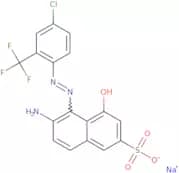
CAS:<p>Acid Red 266 is a hydroxyl-containing polymeric dye that is used in the textile and paper industries as a colorant, pigment, or dye. It has been shown to be an efficient control agent for the polymerization of polyvinyl acetate. Acid Red 266 can also be used to form films with high light stability and good mechanical properties. The hydroxyl group present in this molecule causes it to have a polarizing effect on UV absorption. Acid Red 266 is made of particles that are soluble in water and alcohols, but insoluble in oils. This acid dye is also sensitive to heat, so it should not be exposed to temperatures over 60°C.</p>Fórmula:C17H10ClF3N3O4S•NaPureza:Min. 95%Peso molecular:467.78 g/molAcridine orange base
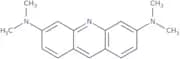
CAS:<p>Acridine orange is a fluorescent dye that can pass through the cell membrane and bind to the cytoplasmic structures of cells. It can be used as a probe for determining the presence of cell nuclei, mitochondria, and other organelles. Acridine orange is also used in experiments to determine mitochondrial membrane potential. In this type of experiment, acridine orange is added to cells and its uptake into mitochondria is observed. The dye changes color from orange to green when it binds with the mitochondria because it emits green fluorescence at higher excitation wavelengths than red fluorescence. Acridine orange has been shown to increase fatty acid synthesis by binding with fatty acid synthase, which is an enzyme involved in fatty acid biosynthesis. Acridine orange also increases ATP levels by inhibiting oxidative phosphorylation in mitochondria.</p>Fórmula:C17H19N3Forma y color:Orange PowderPeso molecular:265.35 g/molBromocresol green
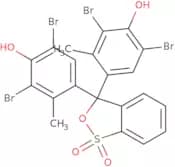
CAS:<p>Bromocresol green is a cationic surfactant that is used as a fluorescent indicator dye. It binds to proteins and can be detected with an optical sensor. Bromocresol green has been shown to react with hydrochloric acid, which may be due to the protonation of the cationic group. This reaction is reversible and depends on pH. The binding of bromocresol green to serum proteins results in a decrease in fluorescence intensity due to quenching by adsorption at the protein-protein interface. The kinetic data for this dye have been found to depend on α1-acid glycoprotein concentration.</p>Fórmula:C21H14Br4O5SForma y color:PowderPeso molecular:698.01 g/molC.I.Acid Yellow 42
CAS:<p>C.I.Acid Yellow 42 is a reactive dye that belongs to the class of chromatic compounds. It is used in photolithography and as a pH indicator, but is also an environmental pollutant. C.I.Acid Yellow 42 is hydrated and has radical mechanism of photodecomposition, which makes it subject to radiation and mineralization. C.I.Acid Yellow 42 can be used in assays for detecting ions such as copper, iron, zinc, or mercury at efficiencies greater than other dyes in the same class. It can also be synthesized from organic materials or biodegradable substances such as dyes from natural sources or phenol-formaldehyde resins with low toxicity to humans and the environment.>>END>></p>Fórmula:C32H26N8O8S2•Na2Pureza:Min. 95%Forma y color:PowderPeso molecular:760.71 g/mol5-Cyano-2,3-di-(p-tolyl)tetrazolium chloride
CAS:<p>5-Cyano-2,3-di-(p-tolyl)tetrazolium chloride is a tetrazolium dye used as an indicator of eukaryotic cells in a range or media including waste water resulting in a cyan color. It is commonly used in microbiology laboratories to measure the viability of cells. The redox potentials of 5-Cyano-2,3-di-(p-tolyl)tetrazolium chloride are reduced by the presence of active respiratory cells, resulting in fluorescent formazan.</p>Fórmula:C16H14ClN5Forma y color:PowderPeso molecular:311.77 g/molC.I.Mordant Orange 6
CAS:<p>C.I. Mordant Orange 6 is an alkanoic acid with a hydroxyl group and a sodium carbonate counter ion in the form of a coordination complex that is chemically stable in the presence of light and heat. The synthesis of this compound involves the reaction of 2-nitrobenzaldehyde with sodium hydroxylsulfonate followed by hydrolysis of the product with sodium carbonate. This synthetic process is used to produce C.I. Mordant Orange 6 in large quantities, which are then purified using chromatography or recrystallization techniques.<br>The biological studies on C.I. Mordant Orange 6 have shown that it has antimicrobial properties, but it does not show cytotoxic effects against human cells in culture at concentrations up to 10 µg/mL, making it a potential candidate for use as an antimicrobial agent for applications such as food packaging materials.br>br>C.I. Mordant Orange 6 also has been shown to</p>Fórmula:C19H14N4O6S·2NaPureza:Min. 95%Peso molecular:472.38 g/molC.I.Solvent Yellow 189
CAS:<p>C.I. Solvent Yellow 189 is a monomer that is used in coatings, paints, and printing inks. It is a polymeric dye with high activity and excellent light resistance. The hydrophobic nature of this dye makes it ideal for use in coatings that require water-repellent or weatherproof properties. C.I. Solvent Yellow 189 has been shown to be reactive with formamide as well as styryl dyes to form copolymers with high crosslinked content for high-performance devices such as light barriers and filters.</p>Pureza:Min. 95%Acid Red 154
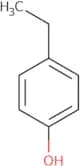
CAS:<p>Acid Red 154 is a pigment that is soluble in organic solvents and has an acidic nature. It is a reddish-brown liquid with a particle diameter of 10-20 nm. This product is used as a dye, and it has been shown to have low toxicity. Acid Red 154 contains hydrogen peroxide, which is the active substance responsible for its color change. The dyestuff can be used in printing inks or as an additive to coatings and plastics.</p>Pureza:Min. 95%4-Ethylphenol
CAS:<p>Produces a fluorogenic signal in the presence of peroxidase</p>Fórmula:C8H10OPureza:Min. 95%Forma y color:PowderPeso molecular:122.16 g/molC.I.Reactive Red 239
CAS:<p>Please enquire for more information about C.I.Reactive Red 239 including the price, delivery time and more detailed product information at the technical inquiry form on this page</p>Pureza:Min. 95%C.I.Vat Orange 4
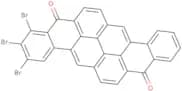
CAS:<p>C.I. Vat Orange 4 is a synthetic organic compound that is used as a pigment and a coating. It is soluble in organic solvents and can be used as an additive to polyethylene glycols, monomers, and coatings. C.I. Vat Orange 4 has been shown to react with radiation and metal hydroxides to form the polymerization inhibitor propionate. This polymerization inhibitor prevents polymerization reactions from occurring at high temperatures or when exposed to thermal energy.</p>Pureza:Min. 95%Acridine orange biological stain
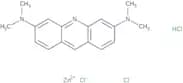
CAS:<p>Acridine orange is a fluorescent dye that is used as a biological stain. It binds to DNA and stains the cells it has bound to, making them more visible under an ultraviolet light. This dye also produces kinetic data on the micronucleus test in mice and rats. Acridine orange can be used to detect genotoxic effects in animals and humans, such as genetic damage or cancer. Kinetic studies have shown statistically significant increases in plasma mass spectrometry, but no significant changes in erythrosine uptake were observed. Acridine orange has been shown to cause genotoxic effects on brain cells and testicular cells.</p>Fórmula:C17H20ClN3ZnCl2Forma y color:PowderPeso molecular:369.96 g/molCoomassie brilliant blue G
CAS:<p>Coomassie Brilliant Blue G is a dye that is used to stain proteins. This dye binds to proteins and can be detected by the use of a fluorescence probe. Coomassie Brilliant Blue G has been shown to have an inhibitory effect on methyltransferase, which is an enzyme that catalyzes the transfer of methyl groups from one molecule to another. It also inhibits ubiquitin ligases, which are enzymes that catalyze the addition of ubiquitin molecules to other proteins. Coomassie Brilliant Blue G has been shown to cause synchronous fluorescence in vivo models and in vitro cell lines.</p>Fórmula:C47H49N3O7S2·NaForma y color:PowderPeso molecular:855.03 g/molAcid Black 234, Technical grade
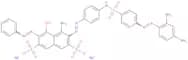
CAS:<p>Acid Black 234 is a reactive dye that is used in the textile industry. It has a hydroxy group and can be used for wastewater treatment. Acid Black 234 is not soluble in water but can be dissolved in organic solutions. It has high penetrant properties and its chemical stability depends on the pH of the solution. Acid Black 234 undergoes an adsorption mechanism, which involves a reaction with chloride ions to form a complex that binds to the surface of the fabric.</p>Pureza:Min. 95%L-Glutathione, reduced, tested to USP spec
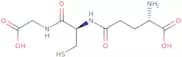
CAS:<p>Glutathione is a tripeptide cysteine-glycine-glutamic acid which exists in cells in the reduced form (this product) or oxidised form. Reduced glutathione (GSH) is an antioxidant protecting cell components from endogenous and exogeneous reactive oxygen and nitrogen species. Reduced glutathione has also been intensely used in the affinity purification of proteins with glutathione S-transferase (GST) tag. In the protein purification process, glutathione is used for the elution of GST-fused recombinant proteins from a glutathione-immobilised resins. In the elution buffers, reduced glutathione is typically used in the 10 â 40 mM concentration range.</p>Fórmula:C10H17N3O6SPureza:(Titration) 98.0 To 101.0%Forma y color:White Off-White Crystalline PowderPeso molecular:307.32 g/molSolvent Blue 97
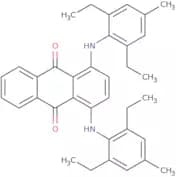
CAS:<p>Solvent Blue 97 is a pigment that has been used in the textile, paper, and paint industries. It has a polymeric matrix that is composed of organic and inorganic compounds. The average particle diameter of Solvent Blue 97 ranges from 0.2 to 3 micrometres with a solubility of less than 1% in water. When irradiated, it emits light at wavelengths ranging from 415 to 455 nm, which is blue-green in color. The structural formula for Solvent Blue 97 is C 19 H 16 N 2 O 5 S.</p>Fórmula:C36H38N2O2Forma y color:PowderPeso molecular:530.7 g/molC.I.Acid Orange 60
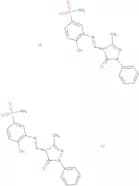
CAS:<p>C.I. Acid Orange 60 is a polyolefin that is used as an additive for ophthalmic lenses to reduce the possibility of fogging by absorbing moisture and oxygen. It is also used in the production of ionizable dyes, nucleophilic substances, reactive substances, and surfactants. This product is typically applied using an organic solvent or chemical ionization mass spectrometry.</p>Pureza:Min. 95%C.I.Basic Yellow 25
CAS:<p>C.I. Basic Yellow 25 is a methoxylated, basic dye that belongs to the class of cationic surfactants. It is used as a cross-linking agent in coatings, adhesives, and inks. The chromophore of this compound is hydroxyl group, which reacts with chloride to form an ion pair with a constant charge ratio of 2:1, which can be stabilized by the cross-linking reaction. This compound is reactive and is able to crosslink with other molecules containing carbonyl groups. C.I. Basic Yellow 25 can also act as a polymerization inhibitor for polyvinyl chloride (PVC) resin and has been shown to be effective in preventing the formation of chlorinated dioxins during PVC production</p>Pureza:Min. 95%Basic yellow 40
CAS:<p>Basic yellow 40 is a basic dye that belongs to the group of dyes. It is an orange-yellow powder that is soluble in water and alcohol. Basic yellow 40 has been used as an additive in food, drugs, and cosmetics. Basic yellow 40 has been shown to inhibit cancer cell growth by binding to the phospholipid membrane and inhibiting the synthesis of fatty acids and cholesterol. The optimum concentration for this compound is 10-4 M.</p>Fórmula:C22H24N3O2·ClForma y color:PowderPeso molecular:397.9 g/mol