Tintes, colorantes y tinciones
Los colorantes, tintes y tinturas son herramientas esenciales en biología molecular, cruciales para visualizar y estudiar el ADN, los cromosomas y los núcleos celulares. Estos compuestos permiten a los investigadores resaltar componentes celulares específicos, facilitando la observación y el análisis detallados bajo el microscopio. En esta categoría, encontrará una amplia gama de colorantes y tintes de alta calidad utilizados en diversas técnicas de tinción, incluyendo colorantes fluorescentes para análisis de ADN y cromosomas, tintes histológicos para muestras de tejido y tintes específicos para estructuras celulares. Estas herramientas son indispensables en la investigación genética, citología, histología y diagnósticos, proporcionando claridad y contraste en las muestras biológicas. En CymitQuimica, ofrecemos una selección completa de colorantes, tintes y tinturas para apoyar su investigación en biología molecular y asegurar resultados precisos y fiables en sus estudios.
Subcategorías de "Tintes, colorantes y tinciones"
- Tintes ácidos(49 productos)
- Azobencenos(270 productos)
- Tintes azoicos(7 productos)
- Tintes básicos(27 productos)
- Tintes de cumarina(71 productos)
- Tintes de cianina, tintes de escuarilio(53 productos)
- Tintes DCM(4 productos)
- Diariolethenes(12 productos)
- Tintes de dipirrometeno(26 productos)
- Tintes Directos(17 productos)
- Tintes dispersos(2 productos)
- Sensibilizadores de colorantes(12 productos)
- Tintes(416 productos)
- Tinturas y colorantes(911 productos)
- Generating Insoluble Dyes(14 productos)
- Generating Soluble Dyes(11 productos)
- Hexaarilbiimidazol(4 productos)
- Indicadores(575 productos)
- Tintes mordantes(10 productos)
- Tintes de infrarrojo cercano (NIR)(28 productos)
- Tintes de aceite(15 productos)
- Otras tinciones y tintes(2 productos)
- Tintes de perileno(17 productos)
- Tintes fotocromáticos(40 productos)
- Tintes de ftalocianina, tintes de porfirina(101 productos)
- Tintes de quinacridona(8 productos)
- Espiropiranos(16 productos)
- Tinciones y tintes(243 productos)
- Tinciones y tintes para microscopía(5 productos)
- Tintes de tina(5 productos)
- Tintes de xanteno(65 productos)
Mostrar 23 subcategorías más
Se han encontrado 755 productos de "Tintes, colorantes y tinciones"
Ordenar por
Pureza (%)
0
100
|
0
|
50
|
90
|
95
|
100
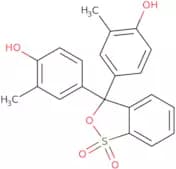
Cresol red
CAS:<p>Cresol red is a weak diacidic molecule and an anionic dye largely used in genetic and biochemical studies. Cresol red is commonly used to measure the pH of aqueous solutions also from environmental samples, e.g. seawater (Byrne, 1989). Cresol red shows an increased protonation in acidic water-based solutions at low temperatures (Heger, 2006). Cresol red can be used to introduce pH-sensing features to sensing materials, such as, optical fibres or nanoparticles (Islam, 2021).</p>Fórmula:C21H18O5SForma y color:Brown Red PowderPeso molecular:382.43 g/molC.I.Acid Red 141
CAS:<p>Please enquire for more information about C.I.Acid Red 141 including the price, delivery time and more detailed product information at the technical inquiry form on this page</p>Pureza:Min. 95%C.I.Food Red 9:1
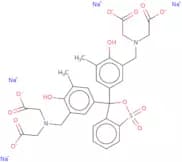
CAS:<p>C.I.Food Red 9:1 is a synthetic red colorant that is used in food and other products such as cosmetics and pharmaceuticals. It is a synthetic pigment that can be prepared by the condensation of anthraquinone with glyoxal or glutaraldehyde followed by acid hydrolysis. The average molecular weight of C.I.Food Red 9:1 is about 1,500 Daltons.</p>Pureza:Min. 95%Xylenol orange tetrasodium salt
CAS:<p>Xylenol orange tetrasodium salt is a fluorescent dye that can be used to measure the degree of mineralization in animal tissue. The dye is composed of xylenol, which is a fatty acid, and sodium chloride. Xylenol orange tetrasodium salt is used for measuring the rate of enzyme reactions by incubating it with the enzyme and measuring the formation rate. It has been shown to have damaging effects on mitochondria and tissues when exposed to an acidic environment. Xylenol orange tetrasodium salt binds to the membrane potential of cells in order to measure reactive oxygen species (ROS) production. This dye can also be used as a marker for autofluorescence of mitochondria and lipase activity.</p>Fórmula:C31H28Na4O13SN2Forma y color:PowderPeso molecular:760.58 g/molAcid blue 62
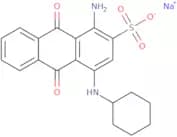
CAS:<p>Acid blue 62 is a reactive dye that is used in the treatment of wastewater. It is used as a chemical intermediate to produce other dyes and as an ingredient in detergent compositions. Acid blue 62 has been shown to have genotoxic effects and may cause cancer. The potential for acid blue 62 to cause cancer is based on its chemical structure and its ability to form reactive metabolites with DNA, which can lead to the formation of DNA adducts. Acid blue 62 also has the ability to bind strongly to surfaces, which can lead to the formation of particulates or aggregates. The surface methodology suggests that the adsorption process follows a Langmuir adsorption isotherm. This means that there are two equilibrium constants, K1 and K2, where K1 > K2. The higher value of K1 indicates that adsorption will occur at low concentrations while high concentrations will cause desorption. This means that the particle size will increase with increasing concentration until it reaches</p>Fórmula:C20H20N2O5S•NaForma y color:PowderPeso molecular:423.44 g/molC.I. Solvent blue 68
CAS:<p>C.I. Solvent blue 68 is a reactive dye that is used in the textile industry, as well as for the preparation of medical and biological samples. It has been used in the identification of human serum proteins and for determining their molecular weights. C.I. Solvent blue 68 reacts with a biphenyl derivative to form a quinoline derivative, which is then converted to an electrochemical product by reaction with hydrochloric acid. The CIE color coordinates are: x=0.27, y=0.93 and z=0.01; λmax (ε)=550 nm; εmax (λ)=1×10⁻⁴ cm-1 M-1cm-1; λmin (ε)=490 nm; εmin (λ)=3×10⁻⁵ cm-1 M-1cm-1</p>Fórmula:C20H14N2O2Forma y color:Blue PowderPeso molecular:314.34 g/molC.I.Acid orange 24
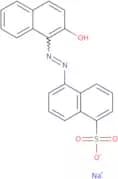
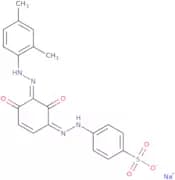
CAS:<p>C.I. Acid Orange 24 is an analytical reagent that when added to a sample, it changes and alters the color of the sample. This color change can be used in analytical methods to determine the concentration of certain substances in the sample. C.I. Acid Orange 24 is a colour additive that has been approved for use in food, drugs, cosmetics, and other consumer products by regulatory agencies such as the European Union or United States Food and Drug Administration (FDA).</p>Fórmula:C20H17N4NaO5SForma y color:PowderPeso molecular:448.43 g/molC.I.Reactive Orange 84
CAS:<p>C.I.Reactive Orange 84 is an amide, which is a molecule containing both an amine and a carboxylic acid functional group. This compound has been used in microscopy as a reactive dye to study surface methodology and the optimum concentration of potassium phosphate, which activated the dye. The compound has also been used to determine the activity test of wastewater, or the removal of metal hydroxides by means of photocatalytic activity. C.I.Reactive Orange 84 has shown efficient kinetic properties with respect to other dyes in that it can be used for kinetic studies at neutral pH and at low concentrations.<br>C.I.Reactive Orange 84 has also been identified as being reactive with intermolecular hydrogen bonding, which gives it the ability to bind to metal ions such as zinc and copper; this property may have implications in the development of new methods for removing metals from wastewater streams using photocatalysis.br>br></p>Pureza:Min. 95%C.I.Reactive Orange 1
CAS:<p>Reactive Orange 1 is a synthetic dye that has been used as a colorant in laundry detergents and other household products. It is also used in wastewater treatment to remove organometallic compounds and metal ions. Reactive Orange 1 reacts with the wastewater, forming soluble complexes with the surfactant, phosphatase, and immobilized metal ions. The fluorescence lifetime of Reactive Orange 1 can be used to determine its interaction with the environment.</p>Pureza:Min. 95%Pigment orange 17
CAS:<p>Pigment Orange 17 is a molecule that belongs to the group of quinoline derivatives. It has a skeleton made up of an inorganic and organic parts. The inorganic part is composed of a ring structure and hydroxyl groups, while the organic part is composed of an electrophotographic skeleton and functional groups. Pigment Orange 17 has been shown to have thermal expansion properties. It has been used in heat transfer fluids for industrial applications as well as in radiation-curable coatings for photoresists in the semiconductor industry.</p>Pureza:Min. 95%Transparent Red Fb
CAS:<p>Transparent Red Fb is a hydrophobic, microsphere with a chloride-containing surface. It is made of a polyvinyl chloride (PVC) matrix containing a cationic dye and an anionic surfactant. The dye provides the color and the surfactant provides the fluorescence property. This product is used in surface active agent formulations, such as in laundry detergents.</p>Pureza:Min. 95%C.I.Basic Yellow 49
CAS:<p>Please enquire for more information about C.I.Basic Yellow 49 including the price, delivery time and more detailed product information at the technical inquiry form on this page</p>Pureza:Min. 95%Pigment orange 46
CAS:<p>Pigment orange 46 is a reactive dye with a chemical formula of C 17 H 12 O 7 that is used in photography and as a colorant. It has a cyclic structure with a hydroxyl group, carbonyl group, and one or more reactive carbon-carbon double bonds. Pigment orange 46 is classified as an aromatic compound and contains the fluorescing group, which makes it highly sensitive to radiation. Pigment orange 46 can be synthesized by reacting phenol with thioacetic acid. This product can be found as an ingredient in various insecticides and organic solvents.</p>Pureza:Min. 95%Direct blue 76
CAS:<p>Direct blue 76 is a dye that is used in textile printing and other applications. Direct blue 76 is an organic solvent-based dye with a hydrocarbon group. It can be activated by acid, alkali, and heat. Direct blue 76 has been shown to be reactive with metal ions such as copper and zinc. The reaction solution for this dye consists of 2-methyl-4-isothiazolin-3-one, silicone, surfactant, and polymerization initiator. This dye has a viscosity of 0.2–0.6 mPa·s at 25 °C and an activation energy of 11–12 kJ/mol.</p>Fórmula:C32H16Cu2N6Na4O16S4Forma y color:PowderPeso molecular:1,087.82 g/molPigment YellOw 75
CAS:<p>Pigment YellOw 75 is a polymerization initiator that has a hydroxyl group and contains functional groups such as an amide, carboxylic acid, or alcohol. The monomers are vinyl acetate, ethylene glycol, and butanediol. Pigment YellOw 75 is used in the production of polyvinyl chloride (PVC). It acts as a radical polymerization initiator by abstracting hydrogen atoms from the vinyl acetate monomer to form radicals that initiate polymerization. This pigment also serves as a particle in radiation-curable coatings. Pigment YellOw 75 is highly reactive and can be used in reactive electrophotography.</p>Pureza:Min. 95%C.I.Direct black 32
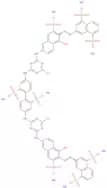
CAS:<p>C.I.Direct Black 32 is a diazonium salt with an average particle diameter of about 10 nm and a dichroic ratio of about 1.5. It is used in the manufacture of organic colorants, such as black, brown, blue, and green pigments. C.I.Direct Black 32 has been used as a model species to study the chemical reaction rate of small particles in solution and the kinetics of thermal decomposition of intramolecular hydrogen bonds in polyphenols at various temperatures. The material can be recycled by dissolving it in an organic solvent and precipitating it out with water or uv irradiation.br><br>C.I.Direct Black 32 has strong absorption properties in the ultraviolet region (UV) and is used for coloring plastics, paper products, textiles, printing ink, leathers, etc.br></p>Fórmula:C48H40N13Na3O13S3Pureza:Min. 95%Peso molecular:1,172.08 g/molC.I.Acid Orange 88
CAS:<p>C.I. Acid Orange 88 is a fine chemical, which can be used as a versatile building block in the synthesis of complex compounds for use as research chemicals and reaction components. It is a useful intermediate for the production of other chemicals. C.I. Acid Orange 88 belongs to the group of speciality chemicals and has high quality properties that make it useful as a reagent in research applications.</p>Fórmula:C32H26CrN10O8S2•NaPureza:Min. 95%Forma y color:Solid.Peso molecular:817.73 g/molPhenol red
CAS:<p>Phenol red is a pH indicator that finds broad applications from chemistry to microbiology. Colour varies from yellow at pH<6.8 (lmax 443nm) through to light red/pink at 6.8<pH<8.2 (lmax 570 nm) to vivid purple/red at pH>8.2. It is widely used in cell culture to monitor pH and for colorimetric titration. For example, phenol red can be used to quantify Br- content in sea or fresh water. It is added to VTM as pH indicator, at the concentration of 10mg/ml, maintaining a pink colour at neutral pH.</p>Fórmula:C19H14O5SForma y color:PowderPeso molecular:354.38 g/molC.I.Vat green 11
CAS:<p>Please enquire for more information about C.I.Vat green 11 including the price, delivery time and more detailed product information at the technical inquiry form on this page</p>Pureza:Min. 95%Disperse Red 60
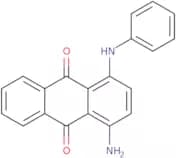
CAS:<p>Disperse Red 60 is a dye that is used in wastewater treatment. It binds to the substrate film, which is the layer of organic matter on the surface of water, and causes it to fluoresce. The optimum concentration for Disperse Red 60 is 0.1% (w/v). Disperse Red 60 has been shown to be reactive with hydroxyl groups in particle activated carbon and uptake by light emission. This product is used in wastewater treatment as it can be adsorbed onto particles in the water and cause them to fluoresce.</p>Fórmula:C20H13NO4Pureza:Min. 95%Forma y color:PowderPeso molecular:331.32 g/mol