Tintes, colorantes y tinciones
Los colorantes, tintes y tinturas son herramientas esenciales en biología molecular, cruciales para visualizar y estudiar el ADN, los cromosomas y los núcleos celulares. Estos compuestos permiten a los investigadores resaltar componentes celulares específicos, facilitando la observación y el análisis detallados bajo el microscopio. En esta categoría, encontrará una amplia gama de colorantes y tintes de alta calidad utilizados en diversas técnicas de tinción, incluyendo colorantes fluorescentes para análisis de ADN y cromosomas, tintes histológicos para muestras de tejido y tintes específicos para estructuras celulares. Estas herramientas son indispensables en la investigación genética, citología, histología y diagnósticos, proporcionando claridad y contraste en las muestras biológicas. En CymitQuimica, ofrecemos una selección completa de colorantes, tintes y tinturas para apoyar su investigación en biología molecular y asegurar resultados precisos y fiables en sus estudios.
Subcategorías de "Tintes, colorantes y tinciones"
- Tintes ácidos(49 productos)
- Azobencenos(270 productos)
- Tintes azoicos(7 productos)
- Tintes básicos(27 productos)
- Tintes de cumarina(71 productos)
- Tintes de cianina, tintes de escuarilio(53 productos)
- Tintes DCM(4 productos)
- Diariolethenes(12 productos)
- Tintes de dipirrometeno(26 productos)
- Tintes Directos(17 productos)
- Tintes dispersos(2 productos)
- Sensibilizadores de colorantes(12 productos)
- Tintes(416 productos)
- Tinturas y colorantes(911 productos)
- Generating Insoluble Dyes(14 productos)
- Generating Soluble Dyes(11 productos)
- Hexaarilbiimidazol(4 productos)
- Indicadores(575 productos)
- Tintes mordantes(10 productos)
- Tintes de infrarrojo cercano (NIR)(28 productos)
- Tintes de aceite(15 productos)
- Otras tinciones y tintes(2 productos)
- Tintes de perileno(17 productos)
- Tintes fotocromáticos(40 productos)
- Tintes de ftalocianina, tintes de porfirina(101 productos)
- Tintes de quinacridona(8 productos)
- Espiropiranos(16 productos)
- Tinciones y tintes(243 productos)
- Tinciones y tintes para microscopía(5 productos)
- Tintes de tina(5 productos)
- Tintes de xanteno(65 productos)
Mostrar 23 subcategorías más
Se han encontrado 755 productos de "Tintes, colorantes y tinciones"
Ordenar por
Pureza (%)
0
100
|
0
|
50
|
90
|
95
|
100
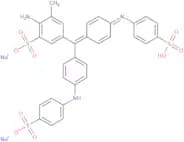
Aniline Blue W/S Certified
CAS:<p>Aniline blue is a dye that is used in microbiological testing. It is used to detect the presence of aromatic and aliphatic hydrocarbons, as well as to diagnose skin conditions. Aniline blue has been shown to have an inhibitory effect on the growth of bacteria and has been used in clinical studies to test for infectious diseases such as tuberculosis. The dye binds with nucleic acids, which prevents further synthesis of DNA, RNA, or protein. Aniline blue also reacts with carbonyl groups in proteins and light exposure can lead to cross-linking between amino acid residues, which can reduce its effectiveness against bacteria.</p>Fórmula:C32H25N3O9S3Na2Pureza:(%) Min. 98%Forma y color:Brown PowderPeso molecular:737.73 g/molBasic red 46, technical grade
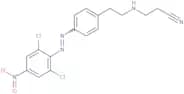
CAS:<p>Basic red 46 is a basic dye that can be used in the treatment of wastewater. It is cationic and has a high affinity for nitrogen atoms, which are often found in organic compounds. It has been shown to exhibit good stability while adsorbing to phosphorus pentoxide at pH > 10. Basic red 46 also has the ability to bind to polymerase chain reaction (PCR) products when present in an experimental model. The mechanism of this binding is still not well understood, but it may occur through adsorption or by chemical reactions with the DNA bases. Basic red 46's adsorption properties have been studied using surface methodology, which revealed that its kinetic energy was greater than that of other dyes.</p>Fórmula:C18H21N6·BrPureza:Min. 95%Forma y color:Red PowderPeso molecular:401.3 g/molC.I.Disperse Orange 76
CAS:<p>C.I.Disperse Orange 76 (CIDO76) is a photostable, fluorescent dye that is used as a particle marker in analytical chemistry and other fields. It has shown to be genotoxic and carcinogenic in animal models, but the clinical relevance of these findings is unclear. CIDO76 can be prepared by reacting amines with diazonium salt, which produces azo dyes. It is also used as an optical sensor for thermally activated reactions and can be detected using chromatographic methods. CIDO76 emits light at 675 nm when irradiated with ultraviolet light, which makes it useful for many applications including wastewater treatment and detection of model systems.</p>Fórmula:C17H15Cl2N5O2Pureza:Min. 95%Forma y color:Orange To Red SolidPeso molecular:392.24 g/molOil blue A - Technical grade
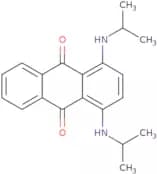
CAS:<p>Oil Blue A is a blue pigment that is used as an initiator for the polymerization of thermoset plastics. It is synthesized by combining copper oxide and methylene blue in a microassay, which then undergoes thermal polymerization. The particle size of Oil Blue A ranges from 10 to 30 μm, with an average diameter of 15 μm. This product has a hydrophilic nature and can be used in the manufacture of paint and ink.</p>Pureza:Min. 95%Forma y color:PowderPeso molecular:322.4Acid Blue 9
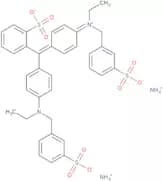
CAS:<p>Acid Blue 9 is a reactive dye that is used in the textile industry. It has been shown to decrease photosynthetic activity and cause long-term toxicity in aquatic organisms, although it has not been found to be toxic to humans. Acid Blue 9 adsorbs onto surfaces of wastewater treatment plants and may be responsible for the degradation of enzyme activities. Acid Blue 9 is often used as an analytical method for electrochemical impedance spectroscopy.</p>Fórmula:C37H36N2O9S3·2NH3Pureza:Min. 95%Forma y color:PowderPeso molecular:782.95 g/molIndoine Blue
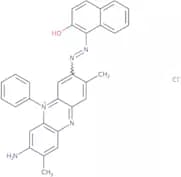
CAS:<p>Indoine blue is a dye that can be used for the staining of cell nuclei in tissue sections. Indoine blue is a molecule with an acidic and basic dye group, which can be titrated with hydrochloric acid and amines to produce different colors. Indoine blue has been shown to have affinity values of 0.06 to 0.1 M in agarose gels and polymer films, respectively. Indoine blue is also an electron-rich molecule with an oxidation potential of -0.36 V (versus SCE).</p>Fórmula:C30H24N5OClPureza:Min. 95%Forma y color:Brown PowderPeso molecular:506 g/molC.I.Direct Blue 6
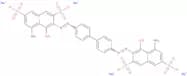
CAS:<p>Direct Blue 6 is a reactive dye that is used in wastewater treatment. It is used for the removal of basic dyes and other contaminants from industrial wastewater. Direct Blue 6 is a reactive dye that has been shown to have carcinogenic potential. Direct Blue 6 has been shown to bind with aminotransferase activity and amines, which may lead to toxicity in mammals. The optimum concentration of Direct Blue 6 is 0.5 parts per million (ppm). This product can be hazardous if inhaled or ingested, and should not be handled without gloves or safety glasses.</p>Fórmula:C32H20N6Na4O14S4Pureza:Min. 75 Area-%Forma y color:Brown PowderPeso molecular:932.76 g/molPigment yellow 95
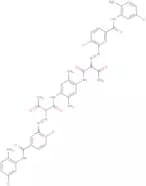
CAS:<p>Pigment Yellow 95 is a yellow colorant that is used in paints and plastics. It has been shown to have a high thermal expansion and good light resistance, which makes it an ideal candidate for coatings. Pigment Yellow 95 can be cross-linked with glycol esters or polycarboxylic acids to form a thermosetting plastic. Pigment Yellow 95 is also used as a radiation absorber in some types of smoke detectors. This pigment has been found to be toxic to aquatic organisms and has been associated with environmental pollution in the past.</p>Fórmula:C44H38Cl4N8O6Forma y color:PowderPeso molecular:916.63 g/molOrange IV
CAS:<p>Orange IV is a surfactant that is used to remove nitrogen from wastewater. It has been shown to be effective in removing nitrogen from wastewater, and can be used as a substitute for sodium dodecyl sulfate (SDS). Orange IV has been shown to have similar properties as SDS, but does not contain any sulfur atoms. This surfactant has been shown to have less of an effect on the ph of the water being treated, and can be considered for use in natural water where the ph is already acidic. The surface methodology for this surfactant includes flow assay, which uses fluorescence spectrometry and synchronous fluorescence. Fluorescence spectrometry involves measuring the amount of light emitted by a substance when irradiated with light of a certain wavelength. Synchronous fluorescence involves using two lasers with different wavelengths to measure how quickly or slowly molecules react with each other. In this case, it measures how quickly or slowly Orange IV reacts with other substances in order to determine</p>Fórmula:C18H14N3O3SNaForma y color:PowderPeso molecular:375.38 g/molPigment orange 13, technical grade
CAS:<p>Pigment orange 13 is a methoxylated, advances, photosensitive pigment. It is used in the manufacture of plastics and paints. Pigment orange 13 has been shown to be resistant to ionization mass spectrometry and laser desorption ionization techniques. This pigment is analyzed using analytical techniques such as ionization mass spectrometry and laser desorption ionization with a macroscopic approach. Pigment orange 13 can be dimerized into other compounds by heat or acid treatment.</p>Fórmula:C32H24Cl2N8O2Forma y color:PowderPeso molecular:623.49 g/molDirect Red 28
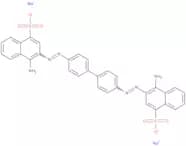
CAS:<p>Direct Red 28 is a dye that can be used in wastewater treatment. It can be adsorbed onto activated sludge, which reduces the amount of sludge needing to be treated. Direct Red 28 reacts with hydrogen peroxide to form a fluorescent derivative that has antimicrobial properties. Direct Red 28 also has been shown to have an effect on the enzyme activities of kidney bean extract and to inhibit the growth of bacteria in model systems. This dye is not toxic for body formation. However, it can react with potassium dichromate and hl-60 cells, which may lead to side effects such as skin irritation.</p>Fórmula:C32H24N6O6S2·2NaPureza:Min. 95%Forma y color:Red PowderPeso molecular:698.68 g/molAcid Orange 74
CAS:<p>Acid Orange 74 is a reactive dye that is used in wastewater treatment. It is a water-soluble dye that can be used to measure the rate of water permeability and hydrogen bond. Acid Orange 74 has been shown to induce apoptosis through its interaction with the survivin protein. The reactivity of Acid Orange 74 to wild-type cells is higher than its reactivity with mutant cells, which may be due to its ability to form hydrogen bonds in wild-type cells more easily than mutant cells. Acid Orange 74 was found to bind monoclonal antibodies and guanine nucleotide-binding proteins, which are involved in DNA replication and repair. This dye also induces reactive oxygen species (ROS) production, leading to oxidative stress in cells.</p>Fórmula:C16H10CrN5NaO8SPureza:Min. 85%Forma y color:PowderPeso molecular:507.34 g/molDisperse yellow 3, dye content 30%
CAS:<p>Disperse Yellow 3 is an organic compound that is used in wastewater treatment. It is a yellow, non-volatile dye with genotoxic activity and can be used as an analytical method for determining the concentration of fatty acids in a sample. Disperse Yellow 3 has been shown to have allergic reactions and is believed to be carcinogenic. The particle size of this substance is 6-8 microns. Disperse Yellow 3 can also be found in basic dyes and chemical analyses.</p>Fórmula:C15H15N3O2Pureza:Min. 95%Forma y color:PowderPeso molecular:269.3 g/molBasic Green 4
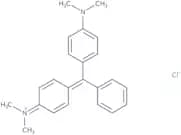
CAS:<p>Malachite green is an ionic dye that is used as an antifungal in aquatic systems and as a colorant, with an absorption maximum of 617nm and a pKa of 6.9. The dye is green as a solid but is partially converted to a colorless nonionic form in neutral-pH solutions. The dye is completely ionised to a blue-green color under acidic conditions (pH<4) and converted to the colorless nonionic form under basic conditions (pH>10.1). Water solubility decreases as pH increases, as the nonionic form of the dye is more lipophilic.</p>Fórmula:C23H25ClN2Pureza:Min. 99%Forma y color:Green PowderPeso molecular:364.91 g/mol6-Carboxytetramethyl rhodamine
CAS:<p>6-Carboxytetramethyl rhodamine is a fluorescent dye that is used to measure the presence of cancer cells in urine samples. It binds to human protein and has been shown to be a useful probe for fluorescence measurements. 6-Carboxytetramethyl rhodamine has also been used as a fluorescence probe for the detection of proliferative diabetic retinopathy and michaelis–menten kinetics in cyclic peptides.</p>Fórmula:C25H22N2O5Pureza:Min. 95%Forma y color:PowderPeso molecular:430.45 g/molSDS PAGE Sample Buffer (5X) (Non-Reducing) w/o DTT w/ BPB
It is the most commonly used sample buffer for SDS-PAGE of non-denatured proteins It is a ready-to-use 5X solution without dithiothreitol (DTT) and Beta-mercaptoethanol (BME) as a reducing agent. This buffer can be used as a loading buffer in all kinds of denaturing gels and are compatible with Coomassie, silver staining and Western blotting. The 5X concentration of this buffer facilitates the loading of larger sample volume per well compared to the traditional 2X loading buffer.Role of reagents: Tris-HCl: as a buffering substance. The pH play an essential role in preserving peptide bonds from breaking apart. SDS: Proteins comes in different sizes and charges. SDS is an anionic detergent that helps in linearizing (by denaturing) the proteins and bringing a net negative charge to the proteins irrespective of the initial charge. Glycerol: The high density (thickening of the solution) of glycerol ensures the sample moves down into the well. Bromophenol Blue: visually indicates the location (tracking dye) of the sample in the gel.Forma y color:Liquid, Dark Blue, ClearRIPA Protein Extraction Reagent
RIPA (Radio-Immuno Precipitation Assay) Buffer is a ready- to-use versatile solution and widely used lysis buffer for preparing cell lysates for a variety of protein-related applications. Radio Immuno Precipitation Assay buffer (RIPA buffer) is used for rapid, efficient cell lysis and solubilization of proteins from both adherent and suspension cultured mammalian cells. RIPA lysis extraction buffer contains non-ionic and ionic detergents which are able to extract protein from wide variety of cell types and membrane structuresProtein lysis can be completed within 45 to 60 minutes.Pureza:Suits BCA assayForma y color:Colourless, Liquid, ClearBiolit SpryBlue Stain for SDS Page
<p>SpryBlue stain is a staining solution used for staining SDS Polyacrylamide gels. It is a ready-to-use stain for proteins that is quick and sensitive. Based on Coomassie blue G-250 dye’s properties, the stain is more sensitive than Coomassie blue R-250. The added advantage is that it requires no destaining procedures. <br><br><br>Quick staining procedure <br>- Bands are seen with good intensity within one hour. <br>- Faint bands seen within 15 minutes of addition of the stain <br>- No destaining procedures, thus reducing time and effort<br>- No shrinkage of gels, no background from overnight staining. <br>- Optional wash with water helps increase sensitivity of fainter bands.</p>Forma y color:Liquid, BlueSDS PAGE Sample Buffer (2X) (Reducing) (Laemmli Buffer 2X)
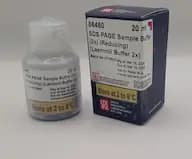
<p>A ready-to-use 2X solution with beta-mercaptoethanol as a reducing agent. Used in SDS-PAGE for loading of conventional proteins. The use of Laemmli sample buffer ensures optimal band resolution when preparing proteins for SDS-PAGE with Tris-glycine-SDS running buffer. <br> Role of 2X SDS PAGE Sample buffer :<br> 1 .Tris-HCl is a buffer and it’s pH plays an essential role in preserving peptide bonds from breaking apart.<br> 2. Sodium dodecyl sulphate is an anionic detergent that helps in linearizing (by denaturing) the proteins and bringing a net negative charge to the proteins irrespective of the initial charge.<br> 3. The high density of glycerol ensures the sample moves down into the well.<br> 4. Beta-mercaptoethanol, along with SDS, ensure the bands are individual polypeptide instead of molecular complexes.<br> 5. The dye visually indicates the location (tracking) of the sample in the gel. </p>Forma y color:Liquid, Dark Blue, ClearSDS PAGE Sample Buffer (5X) (Reducing) (Laemmli Buffer 5X)
<p>A ready-to-use 5X solution with beta-mercaptoethanol as a reducing agent. Used in SDS-PAGE for loading of conventional proteins. The use of Laemmli sample buffer ensures optimal band resolution when preparing proteins for SDS-PAGE with Tris-glycine-SDS running buffer. Role of 5X SDS PAGE Sample buffer :1. Tris is a buffer and it’s pH plays an essential role in preserving peptide bonds from breaking apart.<br> 2. Sodium dodecyl sulphate is an anionic detergent that helps in linearizing (by denaturing) the proteins and bringing a net negative charge to the proteins irrespective of the initial charge.<br> 3. The high density of glycerol ensures the sample moves down into the well.<br> 4. Beta-mercaptoethanol, along with SDS, ensure the bands are individual polypeptide instead of molecular complexes.<br> 5. The dye visually indicates the location (tracking) of the sample in the gel. </p>Forma y color:Liquid, Dark Blue, Clear