Tintes, colorantes y tinciones
Los colorantes, tintes y tinturas son herramientas esenciales en biología molecular, cruciales para visualizar y estudiar el ADN, los cromosomas y los núcleos celulares. Estos compuestos permiten a los investigadores resaltar componentes celulares específicos, facilitando la observación y el análisis detallados bajo el microscopio. En esta categoría, encontrará una amplia gama de colorantes y tintes de alta calidad utilizados en diversas técnicas de tinción, incluyendo colorantes fluorescentes para análisis de ADN y cromosomas, tintes histológicos para muestras de tejido y tintes específicos para estructuras celulares. Estas herramientas son indispensables en la investigación genética, citología, histología y diagnósticos, proporcionando claridad y contraste en las muestras biológicas. En CymitQuimica, ofrecemos una selección completa de colorantes, tintes y tinturas para apoyar su investigación en biología molecular y asegurar resultados precisos y fiables en sus estudios.
Subcategorías de "Tintes, colorantes y tinciones"
- Tintes ácidos(49 productos)
- Azobencenos(270 productos)
- Tintes azoicos(7 productos)
- Tintes básicos(27 productos)
- Tintes de cumarina(71 productos)
- Tintes de cianina, tintes de escuarilio(53 productos)
- Tintes DCM(4 productos)
- Diariolethenes(12 productos)
- Tintes de dipirrometeno(26 productos)
- Tintes Directos(17 productos)
- Tintes dispersos(2 productos)
- Sensibilizadores de colorantes(12 productos)
- Tintes(416 productos)
- Tinturas y colorantes(911 productos)
- Generating Insoluble Dyes(14 productos)
- Generating Soluble Dyes(11 productos)
- Hexaarilbiimidazol(4 productos)
- Indicadores(575 productos)
- Tintes mordantes(10 productos)
- Tintes de infrarrojo cercano (NIR)(28 productos)
- Tintes de aceite(15 productos)
- Otras tinciones y tintes(2 productos)
- Tintes de perileno(17 productos)
- Tintes fotocromáticos(40 productos)
- Tintes de ftalocianina, tintes de porfirina(101 productos)
- Tintes de quinacridona(8 productos)
- Espiropiranos(16 productos)
- Tinciones y tintes(243 productos)
- Tinciones y tintes para microscopía(5 productos)
- Tintes de tina(5 productos)
- Tintes de xanteno(65 productos)
Mostrar 23 subcategorías más
Se han encontrado 755 productos de "Tintes, colorantes y tinciones"
Ordenar por
Pureza (%)
0
100
|
0
|
50
|
90
|
95
|
100
Basic violet 3
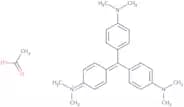
CAS:<p>Basic violet 3 is a light-sensitive dye that can be used for the detection of metals. It is a basic dye with a high resistance to water vapor and other solvents. Basic violet 3 has been shown to be carcinogenic in animal studies, but has not been shown to have any adverse effects on humans. The dye reacts with metal hydroxides such as aluminum hydroxide, iron(III) oxide, and calcium hydroxide by absorbing UV radiation. This reaction produces an increased amount of light that can be detected using a spectrophotometer. Basic violet 3 is used in surface methodology because it is able to react with particles and then bind to them through van der Waals forces. Basic violet 3 is also used for kinetic experiments because it provides data about the rate of chemical reactions or chemical processes. Kinetic data from these experiments can be used to determine the mechanism of the reaction or process being studied.</p>Fórmula:C25H30N3·C2H3O2Forma y color:PowderPeso molecular:431.57 g/molBrooker's merocyanine dye
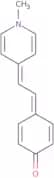
CAS:<p>Brooker's merocyanine dye is a fluorescent dye that has been used in analytical chemistry and fluorescence spectrometry. It is an organic compound that is soluble in water, alcohol, and ether. The complexation of Brooker's merocyanine dye with other molecules or solutes can be determined using fluorescence spectroscopy. This dye binds to the cavity of the molecule and stabilizes the dipole moment, which leads to significant interactions between Brooker's merocyanine dye and molecules or solutes.</p>Fórmula:C14H13NOPureza:Min. 95%Peso molecular:211.26 g/molDisperse yellow 49, technical grade dye content
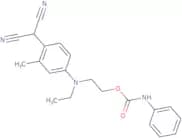
CAS:<p>Disperse yellow 49 is a synthetic dye that is used in the diagnosis of skin cancer. It binds to DNA-binding proteins and is used as a counterstain for H&E staining. Disperse yellow 49 has been shown to inhibit sucrase activity and inhibit kinase signaling pathways, which are involved in cell function, dna replication, and myosin phosphatase regulation. The dye has also been shown to bind to tropomyosin and homologues of the virus SV40. Disperse yellow 49 is not active against viruses or cells without myosin phosphatase activity.</p>Fórmula:C21H22N4O2Pureza:Min. 95 Area-%Forma y color:Yellow PowderPeso molecular:362.43 g/molAlizarin blue S
CAS:<p>Acid-base indicator dye, copper detection, blue color</p>Fórmula:C17H11NNa2O10S2Pureza:Min. 95%Peso molecular:499.4 g/mol11-Deoxy prednisolone
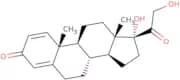
CAS:Producto controlado<p>11-Deoxy prednisolone is a synthetic steroid that is used in the treatment of inflammatory conditions. It is the active form of prednisolone, which is converted to 11-deoxy prednisolone by deuteration. 11-Deoxy prednisolone has been shown to be effective in a clinical setting as a result of its ability to suppress the immune system. The deuterium isotope can be used to calibrate instruments with mass spectrometry and provide more accurate measurements. The use of 11-deoxy prednisolone in pediatric patients has been shown to have fewer side effects than other steroids, such as dexamethasone and methylprednisolone. The use of stable isotopes can be used for biochemical investigations, diagnostic profiles, and monitoring of therapeutic responses.</p>Fórmula:C21H28O4Pureza:Min. 94 Area-%Forma y color:PowderPeso molecular:344.44 g/molAlizarin Yellow R sodium salt
CAS:<p>Acid-base indicator dye; textile dye; yellow color</p>Fórmula:C13H8N3O5NaPureza:Min. 95%Peso molecular:309.21 g/molAcid Alizarin Violet N
CAS:<p>Darkred/purple acid-base indicator dye</p>Fórmula:C16H11N2NaO5SPureza:Min. 95%Peso molecular:366.3 g/molReactive Yellow 3 - Technical
CAS:<p>Reactive Yellow 3 is a synthetic dye that exhibits properties of a reactive dye. It is used in the surface methodology for the detection and quantification of biological activity. Reactive Yellow 3 is activated by hydroxyl groups on surfaces, which can be found in wastewater treatment plants. Reactive Yellow 3 reacts with enzyme activities, such as cyclic nucleotide phosphodiesterase, to form a product with increased fluorescence. This product can be detected using kinetic or structural analysis methods.</p>Fórmula:C21H17ClN8O7S2Pureza:Min. 95%Peso molecular:592.99 g/molResazurin
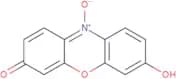
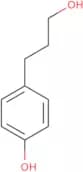
CAS:<p>Weakly fluorescent blue dye; indicator of mitochondrial activity. The reduction of resazurin has been ascribed to a putative reductase or diaphorase-type enzymes from the mitochondria and cytosol but also it might play a role as an intermediate electron acceptor in the electron transport chain between the final reduction of oxygen and cytochrome oxidase.</p>Fórmula:C12H7NO4Pureza:Min. 95%Peso molecular:229.19 g/mol3-(4-Hydroxyphenyl)-1-propanol
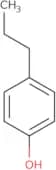
CAS:<p>Produces a fluorogenic signal in the presence of peroxidase</p>Fórmula:C9H12O2Pureza:Min. 95%Peso molecular:152.19 g/molIodophenol blue
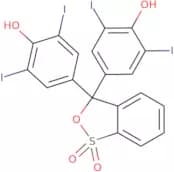
CAS:<p>Iodophenol blue is a dye that has been used in biological research. It is used to stain DNA samples, as it binds to phosphoenolpyruvate (PEP) and sodium carbonate. Iodophenol blue can be used to differentiate tumor cells from the surrounding tissue in biopsy samples. The dye also interacts with amines, resulting in the release of bromophenols and cleavage products. Iodophenol blue can be used as a visual indicator for chemical reactions.</p>Fórmula:C19H10I4O5SPureza:Min. 80 Area-%Forma y color:PowderPeso molecular:857.96 g/molAcid Red 111
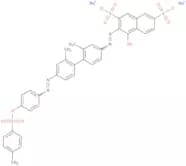
CAS:<p>Acid Red 111 is a basic dye that is soluble in water. It has an acid pH, which can be activated by acid catalysts. Acid Red 111 has been shown to be reactive with functional groups and to polymerize with hydroxyl groups. This dye has been shown to have protease activity and potential use as a colorant for polymers. Acid Red 111 has also been found to inhibit the growth of ganoderma lucidum and fatty acids.</p>Pureza:Min. 95%BP Fluor 488 hydrazide
CAS:<p>Green fluorescent dye used for labelling aldehydes or ketones in polysaccharides or glycoproteins with an excitation peak at 499 nm and an emission peak at 520 nm. Frequently employed in microscopy and flow cytometry.</p>Fórmula:C21H16N4O10S2Peso molecular:548.51 g/molFluorescent Brightener 28
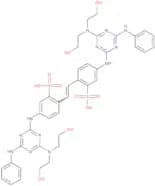
CAS:<p>Fluorescent Brightener 28 is a fluorescent dye that is used for the diagnosis of opportunistic fungal infections. It is also used as a marker for cell proliferation in tissue culture. Fluorescent Brightener 28 binds to the signal-peptide region of RNA polymerase II and can be detected using immunofluorescence microscopy. The fluorescent signal is observed in the nucleus, cytoplasm, or both. Fluorescent Brightener 28 has been shown to bind to human α1-acid glycoprotein (AAG) and α2-macroglobulin, which can affect drug interactions. This dye has no effect on fatty acid metabolism and does not interfere with the test results when testing samples such as blood or urine.</p>Fórmula:C40H44N12O10S2Pureza:Min. 95%Forma y color:PowderPeso molecular:916.99 g/molXylenol orange
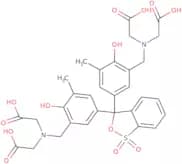
CAS:<p>Xylenol orange is a dye used as a pH indicator. It is typically present as the monosodium salt of xylenol and has an optimum concentration of 0.2-0.5 mg/L. Xylenol orange is highly soluble in water and can be used in aqueous solutions, but it should not be used with strong acids or alkalis, as they will cause the dye to precipitate out of solution. Xylenol orange reacts with acidic substances and changes colour from orange to yellow at pH 7.0 or higher. The mechanism behind this reaction involves the deprotonation of xylenol by acid, followed by protonation of the conjugate base, which then undergoes electrophilic substitution by hydroxide ions (OH−). This reaction is shown below: XO+H+→XO−+H+ XO−+OH−→HO−+X The Langmuir</p>Fórmula:C31H32N2O13SPureza:Min. 95%Peso molecular:672.66 g/molVat green 9
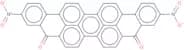
CAS:<p>Vat green 9 is a high-stability pigment that is used in many industries to add highlighting effects. It is also used as a dye for textiles, plastics, and paper. Vat green 9 has been shown to be toxic to daphnia when tested at long-term exposure levels. This chemical belongs to the class of silico compounds, which are chemicals that are ecotoxicological active. The experimental results show that this compound can cause an ecological imbalance in the environment and can lead to changes in the population of aquatic organisms.</p>Fórmula:C34H14N2O6Pureza:Min. 95%Forma y color:PowderPeso molecular:546.48 g/molC.I.Solvent red 197
CAS:<p>C.I.Solvent Red 197 is a dye that is soluble in organic solvents and has a particle size of less than 10 microns. It is used in the textile industry as an extracellular dye and can be used for the production of polyols, uv irradiation, corrosion inhibitor, high concentrations, condensation products, high resistance, organic solvent, volatile oil, substrate film and polymerization initiator. The dye also exhibits affinity ligand properties which are used in microcapsules to bind to substances such as proteins or nucleic acids.</p>Fórmula:C23H19N5OPureza:Min. 85 Area-%Peso molecular:381.43 g/molPatent blue V Calcium salt
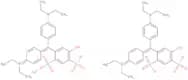
CAS:<p>Patent Blue V calcium salt is a calcium salt of Patent Blue V, which is a light-sensitive dye with an absorption peak at 450 nm. It has been used in analytical chemistry to measure the fatty acid content of oils and fats. Patent Blue V calcium salt has also been used as a reagent in kinetic studies to measure the rate of reactions involving detergent compositions, cationic surfactants, and hydroxyl groups. The lymphatic vessels react to this dye by showing an increase in permeability. The activation energies for these reactions have been determined using kinetic data.</p>Fórmula:C27H31N2O7S2·5CaPureza:Min. 85.0 Area-%Forma y color:PowderPeso molecular:582.7 g/molNew methylene blue NX
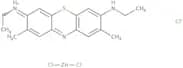
CAS:<p>New methylene blue NX is a versatile building block that can be used in the synthesis of many different compounds. It can be used as a reagent to produce research chemicals or as a reactant for the production of high quality, useful intermediates. The compound is also a useful scaffold for the synthesis of complex compounds. New methylene blue NX has CAS number 6586-05-6 and is registered under the Chemical Abstracts Service (CAS).</p>Fórmula:C18H22N3S•(Cl2Zn)x•ClPureza:Min. 95%Forma y color:Brown SolidPeso molecular:832.1