Tintes, colorantes y tinciones
Los colorantes, tintes y tinturas son herramientas esenciales en biología molecular, cruciales para visualizar y estudiar el ADN, los cromosomas y los núcleos celulares. Estos compuestos permiten a los investigadores resaltar componentes celulares específicos, facilitando la observación y el análisis detallados bajo el microscopio. En esta categoría, encontrará una amplia gama de colorantes y tintes de alta calidad utilizados en diversas técnicas de tinción, incluyendo colorantes fluorescentes para análisis de ADN y cromosomas, tintes histológicos para muestras de tejido y tintes específicos para estructuras celulares. Estas herramientas son indispensables en la investigación genética, citología, histología y diagnósticos, proporcionando claridad y contraste en las muestras biológicas. En CymitQuimica, ofrecemos una selección completa de colorantes, tintes y tinturas para apoyar su investigación en biología molecular y asegurar resultados precisos y fiables en sus estudios.
Subcategorías de "Tintes, colorantes y tinciones"
- Tintes ácidos(49 productos)
- Azobencenos(270 productos)
- Tintes azoicos(7 productos)
- Tintes básicos(27 productos)
- Tintes de cumarina(71 productos)
- Tintes de cianina, tintes de escuarilio(53 productos)
- Tintes DCM(4 productos)
- Diariolethenes(12 productos)
- Tintes de dipirrometeno(26 productos)
- Tintes Directos(17 productos)
- Tintes dispersos(2 productos)
- Sensibilizadores de colorantes(12 productos)
- Tintes(416 productos)
- Tinturas y colorantes(911 productos)
- Generating Insoluble Dyes(14 productos)
- Generating Soluble Dyes(11 productos)
- Hexaarilbiimidazol(4 productos)
- Indicadores(575 productos)
- Tintes mordantes(10 productos)
- Tintes de infrarrojo cercano (NIR)(28 productos)
- Tintes de aceite(15 productos)
- Otras tinciones y tintes(2 productos)
- Tintes de perileno(17 productos)
- Tintes fotocromáticos(40 productos)
- Tintes de ftalocianina, tintes de porfirina(101 productos)
- Tintes de quinacridona(8 productos)
- Espiropiranos(16 productos)
- Tinciones y tintes(243 productos)
- Tinciones y tintes para microscopía(5 productos)
- Tintes de tina(5 productos)
- Tintes de xanteno(65 productos)
Mostrar 23 subcategorías más
Se han encontrado 756 productos de "Tintes, colorantes y tinciones"
Ordenar por
Pureza (%)
0
100
|
0
|
50
|
90
|
95
|
100
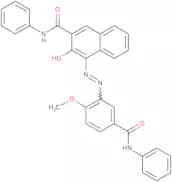
Pigment Red 32
CAS:Pigment Red 32 is an organic pigment that is soluble in propylene glycol and surface-active agents. It has a particle diameter of about 0.1 microns and an average particle size of 0.2 microns, with a maximum of 100% dispersion in water. Pigment Red 32 has been shown to be acidic, fluorescent, thiophosphoric, non-polar, styrene-based, and organic solvent-soluble. This pigment is used in the production of plastics and paints for devices such as TV screens due to its ability to liquefy under radiation or heat. Pigment Red 32 also contains functional groups that impart both hydrophobic and hydrophilic properties to the molecule.br>br> Pigment Red 32 can be found in paint products including acrylics, alkyds, latexes, oil paints, and watercolors.br>br> Pigment Red 32 can be found in plastics products including ABS resPureza:Min. 95%Pigment Orange 64
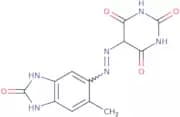
CAS:<p>Pigment Orange 64 is an organic solvent that can be used as a polymerization initiator. Pigment Orange 64 has been extensively used in the production of polyester, polyurethane, and epoxy resins. It is also used as a colorant in paints and textiles. Pigment Orange 64 can be detected using high-performance liquid chromatography (HPLC) with detection sensitivity of 0.01 ppm. The skeleton of Pigment Orange 64 consists of a hydrophobic benzene ring with two hydroxyl groups on either side and two double bonds on each end. It has four functional groups: a carboxylic acid group, an aromatic ring, a phenol group, and an alcohol group. Pigment Orange 64 is soluble in water to form orange solutions and can be detected by its characteristic odor. In addition, it can act as a matrix polymer for metal particles due to its basic properties.</p>Fórmula:C12H10N6O4Pureza:Min. 95%Forma y color:PowderPeso molecular:302.25 g/molC.I.Disperse Red 200
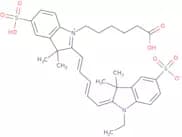
CAS:<p>Please enquire for more information about C.I.Disperse Red 200 including the price, delivery time and more detailed product information at the technical inquiry form on this page</p>Pureza:Min. 95%Cyanine dye 5
CAS:Cyanine dye 5 is a disulfide-linked dye that has been used as a fluorescence probe in the detection of reactive oxygen species. It has been shown to be reactive with mouse monoclonal antibodies and has been used as a model system for studying calcium binding and DNA duplexes. Cyanine dye 5 is also capable of detecting human serum, mitochondrial membrane potential, and clinical pathology.Fórmula:C33H40N2O8S2Pureza:Min. 95%Forma y color:PowderPeso molecular:656.81 g/molDirect Blue 202
CAS:<p>Direct Blue 202 is a reactive dye that is used in the treatment of wastewater. It has been shown to be effective for the removal of color from wastewater, with a high degree of efficiency. Direct Blue 202 has been shown to have low toxicity and does not persist in water. This dye also has dichroic properties and can be used as a polymerization initiator or coagulant.</p>Pureza:Min. 95%C.I.Reactive Yellow 84
CAS:<p>C.I.Reactive Yellow 84 is a sulfate that is used in analytical chemistry to quantify an unknown amount of potassium chloride. This compound can be quantified using anova, which is a statistical method for comparing several different treatments in order to determine which treatments have the largest effect. C.I.Reactive Yellow 84 can also be quantified by electrolysis, which involves passing an electric current through a solution and measuring the electrical charge created by the reaction between hydrogen ions and electrons from the cathode during the process of oxidation-reduction reactions with the electrolyte (solution). The reactive square can also be used to quantify C.I.Reactive Yellow 84, as it provides a comparison between two reactants and allows for optimization of reaction time and spectra over time.</p>Pureza:Min. 95%Reactive blue 220
CAS:Reactive blue 220 is a synthetic, reactive dye with aldehyde groups. It is used in gene analysis and as a stain in electron microscopy. Reactive blue 220 stains the nucleus of cells purple and the cytoplasm red. The color of the nuclei indicates the presence of active substances such as ATP, NADH, or GTP. This dye has been used to identify bacteria by their ability to produce CO2 from glucose when grown on an acidic nutrient solution with deionized water and sodium carbonate. The optical properties of this dye are dependent on pH level, becoming more red at lower pH levels (acidic).Pureza:Min. 95%C.I.Acid Orange 127
CAS:C.I. Acid Orange 127 is a synthetic dyestuff that is used in the textile industry as a reactive dye and as a colorant in paints, plastics, paper, leather, and textiles. It has also been used as an indicator for alkali metals. This compound reacts with an ethyl group to form a quaternary ammonium salt. The dyebath is often made of water and sodium hydroxide or potassium hydroxide at temperatures between 120-140 degrees Celsius. C.I. Acid Orange 127 is characterized by its ability to produce multicolour effects when treated with amines or carboxylates. The reactive properties of this compound make it suitable for use in dyeing wool and other animal fibres where the presence of fatty acids will increase the intensity of the colouration by C.I. Acid Orange 127.br>br>Pureza:Min. 95%C.I.Disperse Red 362
CAS:<p>Disperse Red 362 is a yellow pigment that can be used in inkjet printing. It has an express color and is typically used in the printing of textiles, paper, plastics, and other materials. The color of Disperse Red 362 is similar to that of cadmium yellow.</p>Pureza:Min. 95%Acid red 252
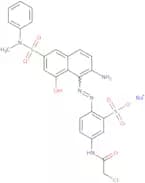
CAS:<p>Acid Red 252 (AR252) is a natural dye that is used as a colorant in textile dyeing and printing. This compound has a molecular weight of 212.2, a melting point of 137°C, and an acid value of 2-5. AR252 is soluble in organic solvents such as acetone, ethanol, ether, and chloroform. It can be polymerized with an initiator to make polymers for use as absorbers in radiation protection items such as goggles and aprons. Acid Red 252 also has hydrophobic properties that are favorable for use as a surfactant to stabilize emulsions or suspensions in water-based paints.</p>Fórmula:C25H22ClN5O7S2·NaPureza:Min. 95%Peso molecular:627.05 g/molBis(5-bromo-4-chloro-3-indoxyl)pyrophosphoric acid, disodium salt
<p>Bis(5-bromo-4-chloro-3-indoxyl)pyrophosphoric acid, disodium salt is a high quality reagent that is used as a useful intermediate or a speciality chemical. It reacts with alcohols and amines to produce substituted indoles. Bis(5-bromo-4-chloro-3-indoxyl)pyrophosphoric acid, disodium salt can be used in the synthesis of complex compounds and has been used as a building block for the synthesis of some pharmaceuticals. This compound is also useful in the production of research chemicals such as amphetamines and MDMA.</p>Fórmula:C16H8Br2Cl2N2Na2O7P2Peso molecular:678.90 g/molRef: 3D-B-3365
1gA consultar5gA consultar10gA consultar25gA consultar2500mgA consultar-Unit-ggA consultarC.I.Sulphur Blue 15
CAS:C.I.Sulphur Blue 15 is a nanocomposite of sulfur and titanium dioxide, which is used in dyeing textiles and other materials. The colorant is soluble in water and can be used as a solution or paste. C.I.Sulphur Blue 15 has been shown to have antimicrobial properties against Gram-positive bacteria, such as Staphylococcus aureus and Clostridium perfringens, but not against Gram-negative bacteria, such as Pseudomonas aeruginosa and Escherichia coli.Pureza:Min. 95%Bromophenol Red Free acid
CAS:Bromophenol Red Free Acid is a synthetic substrate used in microbial infection and wastewater treatment. It has a pH of 2.0-3.0, which is acidic enough to disrupt the integrity of cellular membranes and cause cell lysis. Bromophenol Red Free Acid can be used as a lysing agent for human serum or cells in culture. This product is not soluble in water, so it must be dissolved in an organic solvent before it can be used. Bromophenol Red Free Acid reacts with hydrochloric acid to produce chemiluminescence that can be measured by luminometry, which is a quantitative technique for measuring light emission from chemical reactions. The hydroxyl group on the molecule reacts with the bromophenol group to form a bromohydrin intermediate, which reacts with hydrogen peroxide to produce chemiluminescence.Fórmula:C19H12Br2O5SPureza:Min. 95%Peso molecular:512.17 g/molPigment Yellow 108
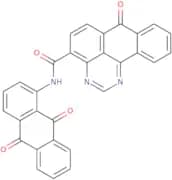
CAS:<p>Pigment Yellow 108 is a polycarboxylic acid that is used in the production of printing ink, paint, and plastic. It has a molecular weight of 284.40 g/mol and a viscosity of 2.00 cps at 20°C. Pigment Yellow 108 contains a hydroxyl group (-OH), carbonyl group (-CO), aromatic hydrocarbon (benzene ring), and hydrogen chloride (HCl). The reaction products are glycol ester, magnesium oxide, primary amino (-NH2), radiation, thermal expansion, and functional groups (-OH).</p>Fórmula:C30H15N3O4Pureza:Min. 95%Peso molecular:481.46 g/molAcid orange 7
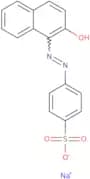
CAS:Acid Orange 7 is a reactive dye that is used in wastewater treatment. It has an orange color and has been shown to adsorb to cell nuclei and human serum. Acid Orange 7 reacts with the reaction solution to form a decolorized product, which can be seen using synchronous fluorescence. The Langmuir adsorption isotherm for this dye shows that the optimum concentration of Acid Orange 7 is 0.5%. Acid Orange 7 has carcinogenic potential due to its ability to bind DNA, which may lead to mutations in cells. Electrochemical impedance spectroscopy studies have shown that this dye binds covalently with proteins, which may also result in mutagenic effects.Fórmula:C16H11N2NaO4SPureza:Min. 95%Forma y color:Red PowderPeso molecular:350.33 g/molDisperse blue 183
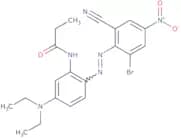
CAS:Disperse Blue 183 is a synthetic dye that is used in industry for the coloration of polymers. It belongs to the class of diazonium salts, which are reactive compounds that have an affinity for fatty acids. Disperse Blue 183 is insoluble in water but soluble in organic solvents. The dye has been shown to be stable under both acidic and alkaline conditions, and it does not undergo chemical reactions with other substances. Disperse Blue 183 is also a nanomaterial that can be used as a film-forming polymer. It can be manufactured using carbon dioxide (CO2) flow and activated through heat treatment. Disperse Blue 183 can be used in environmental pollution and as a reactive agent.Fórmula:C20H21BrN6O3Forma y color:PowderPeso molecular:473.32 g/molMethylthymol blue sodium
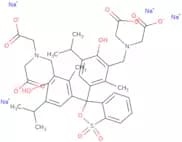
CAS:Methylthymol blue sodium salt (MTBS) is a dye that is used in complexometry. It is typically used for determination of calcium and sulfate. λmax of 438 nm; Solubility of 860g/L.Check application notes for our ACS strontium test procedureFórmula:C37H40N2Na4O13SPureza:Min. 95%Forma y color:PowderPeso molecular:844.74 g/molPigment Yelow 176
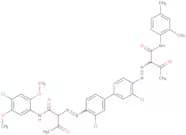
CAS:<p>Pigment Yellow 176 is an inorganic pigment that exhibits a resistance to high temperatures and a high degree of light stability. It has been used as a pharmaceutical preparation, in coatings, and as a polymerization initiator. Pigment Yellow 176 reacts with acid molecules such as nitric acid or hydrochloric acid to form metal ion complexes. These complexes are usually unstable and may undergo reactions with other substances, such as cellulose acetate. This pigment also contains functional groups that can react with hydroxyl groups found on the surface of paper or other organic surfaces.</p>Fórmula:C36H35ClN6O6Pureza:Min. 95%Forma y color:PowderPeso molecular:683.15 g/molC.I.Reactive Yellow 194
CAS:Please enquire for more information about C.I.Reactive Yellow 194 including the price, delivery time and more detailed product information at the technical inquiry form on this pagePureza:Min. 95%Direct Yellow 86, Technical grade Dye content
CAS:<p>Direct Yellow 86 is a dye that is used as a reactive component in chemical synthesis, and as a reagent in research. It has been used as a scaffold for the synthesis of other dyes, as well as being useful in the production of complex compounds. Direct Yellow 86 is soluble in organic solvents and has a high quality dye content. This chemical has been assigned CAS number 50925-42-3.</p>Fórmula:C39H30N10Na4O13S4Pureza:Min. 95%Peso molecular:1,066.93 g/mol