Tintes, colorantes y tinciones
Subcategorías de "Tintes, colorantes y tinciones"
- Tintes ácidos(48 productos)
- Azobencenos(267 productos)
- Tintes azoicos(7 productos)
- Tintes básicos(27 productos)
- Tintes de cumarina(72 productos)
- Tintes de cianina, tintes de escuarilio(51 productos)
- Tintes DCM(4 productos)
- Diariolethenes(12 productos)
- Tintes de dipirrometeno(26 productos)
- Tintes Directos(17 productos)
- Tintes dispersos(2 productos)
- Sensibilizadores de colorantes(10 productos)
- Tintes(418 productos)
- Tinturas y colorantes(908 productos)
- Colorantes y metabolitos(1 productos)
- Generating Insoluble Dyes(13 productos)
- Generating Soluble Dyes(11 productos)
- Hexaarilbiimidazol(4 productos)
- Indicadores(575 productos)
- Tintes mordantes(10 productos)
- Tintes de infrarrojo cercano (NIR)(25 productos)
- Tintes de aceite(15 productos)
- Otras tinciones y tintes(2 productos)
- Tintes de perileno(17 productos)
- Tintes fotocromáticos(40 productos)
- Tintes de ftalocianina, tintes de porfirina(100 productos)
- Tintes de quinacridona(8 productos)
- Espiropiranos(16 productos)
- Tinciones y tintes(241 productos)
- Tinciones y tintes para microscopía(5 productos)
- Tintes de tina(5 productos)
- Tintes de xanteno(66 productos)
Se han encontrado 711 productos para "Tintes, colorantes y tinciones".
Acid Blue 83
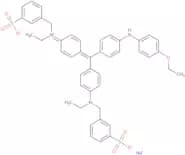
CAS:Acid Blue 83 is a reactive dye that is used in the treatment of wastewater. It has been shown to inhibit metabolic disorders and transcriptional regulation by binding to DNA-dependent RNA polymerase. Acid Blue 83 also inhibits enzyme activities, such as co2 flow, sephadex g-100, and surface methodology. In addition, it binds to basic proteins, such as human serum albumin, and has been shown to have anti-inflammatory properties. Acid Blue 83 is a reactive dye that is used in the treatment of wastewater. It has been shown to inhibit metabolic disorders and transcriptional regulation by binding to DNA-dependent RNA polymerase. Acid Blue 83 also inhibits enzyme activities, such as co2 flow, sephadex g-100, and surface methodology. In addition, it binds to basic proteins, such as human serum albumin, and has been shown to have anti-inflammatory properties.Fórmula:C45H44N3NaO7S2Pureza:Min. 95%Forma y color:Blue PowderPeso molecular:825.97 g/molDisperse orange 45
CAS:Disperse Orange 45 is a greenish-yellow viscous liquid. It is a synthetic, anionic, surfactant and dispersing agent for cellulose acetate and polyester resins. Disperse Orange 45 is also used as a synthetic dye in paint formulations. The molecular structure of Disperse Orange 45 consists of three parts: betaine monohydrate, methacrylate esters, and propylene glycol. This product is not intended for use as a food additive or as a drug.Pureza:Min. 95%C.I.Acid Orange 171
CAS:Please enquire for more information about C.I.Acid Orange 171 including the price, delivery time and more detailed product information at the technical inquiry form on this pagePureza:Min. 95%C.I.Leuco Sulphur Blue 15
CAS:C.I. Leuco Sulphur Blue 15 is a versatile research chemical that can be used as an inhibitor, dye, stain, indicator, or probe. It has a wide range of applications in various industries including chemistry, biology, and pharmaceuticals. This compound contains hydroxyl and dopamine groups which make it highly reactive and suitable for derivatization reactions. C.I. Leuco Sulphur Blue 15 is known for its ability to form stable complexes with chloride and cyanide ions, making it useful in analytical chemistry. It can also be used as a clavulanic acid mimic or an aluminum complexing agent. Additionally, this compound can be employed as an electrode modifier in electrochemical studies. Its acidic nature allows it to interact with fatty acids and methanol, making it valuable for lipid analysis or solvent extraction processes. Whether you need a powerful research tool or a reliable chemical reagent, C.I. Leuco Sulphur Blue 15 is the perfect choice for yourPureza:Min. 95%Pigment Yellow 13
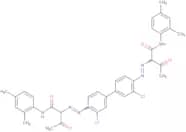
CAS:Pigment Yellow 13 is a yellow pigment that can be used in wastewater treatment. Pigment Yellow 13 is an organic compound that contains the reactive group glycol ether, which reacts with alcohol residue to form glycol esters. This reaction mechanism is similar to the reaction of glycols with water. The structure of Pigment Yellow 13 is a bound form and it has been found to have thermal expansion properties. Pigment Yellow 13 also has intramolecular hydrogen bonding between the carbon and oxygen atoms, which allows it to act as a stabilizer for polymers such as polyester and nylon. Pigment Yellow 13 also exhibits intermolecular hydrogen bonding, causing it to be resistant to radiation and laser ablation.Fórmula:C36H34Cl2N6O4Forma y color:Yellow PowderPeso molecular:685.60 g/molPergascript Red 16
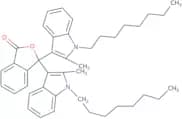
CAS:Pergascript Red 16 is a bright red pigment that has been used in ink, paint, and plastics. It has an optical density of 1.5 at 595 nanometers. Pergascript Red 16 is also used in imaging and recording applications.
Fórmula:C42H52N2O2Pureza:Min. 98.0 Area-%Forma y color:Off-White PowderPeso molecular:616.87 g/molFast Violet B - Dye content 85%
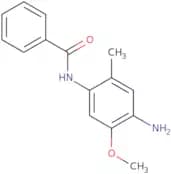
CAS:Fast Violet B is a diazonium salt that reacts with an amine, such as phosphatase, to release hydrogen. This reaction can be used to measure the activity of phosphatases. The emission of light in the visible range depends on the concentration and pH of the solution. Fast Violet B is soluble in water, alcohol, acetone, ether and chloroform. It has a particle size that ranges from 0.1-0.2 microns in diameter and will not dissolve in most solvents. Fast Violet B can be used to detect zearalenone in animal feed samples using a sample preparation technique called thin layer chromatography (TLC). It has shown clinical utility for determining antibody response in humans by measuring fatty acid synthesis activity during the inflammatory response. Fast Violet B also reacts with hydrogen bonds between nucleotides on DNA molecules and it binds to human mitochondrial DNA because it contains many phosphate groups and several intramolecular hydrogen bonds can form between neighboringFórmula:C15H16N2O2Pureza:Min. 95%Forma y color:PowderPeso molecular:256.3 g/molAcid Black 60, Technical grade
CAS:Please enquire for more information about Acid Black 60, Technical grade including the price, delivery time and more detailed product information at the technical inquiry form on this page
Pureza:Min. 95%Solvent green 5
CAS:Solvent green 5 is an acylation reaction product of a polymeric matrix with a hydroxyl group. The polymer film is developed from the cavity, encapsulation, and section of magnesium oxide. It has a skeleton that consists of a polymeric matrix with functional groups. Solvent green 5 emits light in the visible spectrum when subjected to heat or ultraviolet rays. This product can be used as a dye that absorbs ultraviolet radiation and converts it into visible light.Fórmula:C30H28O4Forma y color:PowderPeso molecular:452.54 g/molDirect blue 218
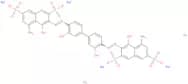
CAS:Direct blue 218 is a glycol ether dye that is used in the textile industry and as a food coloring agent. It has been shown to cause nephrotoxicity and hepatotoxicity as well as cancer in rats. Direct blue 218 is absorbed by the target tissues, which include the ovary cells, liver cells, and kidney cells. This dye has been shown to inhibit catecholamine release from the adrenal gland in vitro assays and increase the number of mitotic figures in rat liver cells chronically exposed to this dye. Direct blue 218 also contains nitrogen atoms that can form a copper complex with an electron-donating group (e.g., hydroxyl groups). The copper complex increases its stability, leading to increased genotoxic effects.Fórmula:C32H16Cu2N6Na4O16S4Forma y color:Blue PowderPeso molecular:1,087.82 g/molC.I.Disperse Yellow 134
CAS:Please enquire for more information about C.I.Disperse Yellow 134 including the price, delivery time and more detailed product information at the technical inquiry form on this pagePureza:Min. 95%Acridine orange base
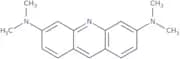
CAS:Acridine orange is a fluorescent dye that can pass through the cell membrane and bind to the cytoplasmic structures of cells. It can be used as a probe for determining the presence of cell nuclei, mitochondria, and other organelles. Acridine orange is also used in experiments to determine mitochondrial membrane potential. In this type of experiment, acridine orange is added to cells and its uptake into mitochondria is observed. The dye changes color from orange to green when it binds with the mitochondria because it emits green fluorescence at higher excitation wavelengths than red fluorescence. Acridine orange has been shown to increase fatty acid synthesis by binding with fatty acid synthase, which is an enzyme involved in fatty acid biosynthesis. Acridine orange also increases ATP levels by inhibiting oxidative phosphorylation in mitochondria.Fórmula:C17H19N3Forma y color:Orange PowderPeso molecular:265.35 g/molC.I.Reactive Orange 13
CAS:C.I.Reactive Orange 13 is a reactive dye that can be used for the detection of bacterial strains, including Legionella pneumophila and Pseudomonas aeruginosa. The dye reacts with metal ions to form a precipitate, which can be detected by measuring the viscosity or turbidity of the solution. C.I.Reactive Orange 13 has been shown to bind to biomass from fungi and bacteria, which is why it is often used for monitoring water quality in wastewater treatment plants and for detecting microbial contamination in food products. C.I.Reactive Orange 13 is also an effective metal chelator that can be used for kinetic studies on borohydride reduction reactions involving iron and other transition metals.
Fórmula:C24H15ClN7O10S3·3NaPureza:Min. 95%Peso molecular:762.04 g/mol4-Ethylphenol
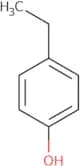
CAS:Produces a fluorogenic signal in the presence of peroxidaseFórmula:C8H10OPureza:Min. 95%Forma y color:PowderPeso molecular:122.16 g/molBis(5-bromo-4-chloro-3-indoxyl)pyrophosphoric acid disodium salt
Please enquire for more information about Bis(5-bromo-4-chloro-3-indoxyl)pyrophosphoric acid disodium salt including the price, delivery time and more detailed product information at the technical inquiry form on this pageFórmula:C16H8Br2Cl2N2Na2O7P2Peso molecular:678.90 g/molBis(5-bromo-6-chloro-3-indoxyl)pyrophosphoric acid, disodium salt
Please enquire for more information about Bis(5-bromo-6-chloro-3-indoxyl)pyrophosphoric acid, disodium salt including the price, delivery time and more detailed product information at the technical inquiry form on this pagePureza:Min. 95%Bis(6-chloro-3-indoxyl)pyrophosphoric acid, disodium salt
Bis(6-chloro-3-indoxyl)pyrophosphoric acid, disodium salt is a fine chemical that can be used as a versatile building block in the synthesis of complex compounds. It is an intermediate in research chemicals and is used as a reagent and speciality chemical. The compound has potential use as a useful scaffold for the synthesis of pharmaceuticals, dyes, and pesticides.
Fórmula:C16H10Cl2N2Na2O7P2Peso molecular:521.10 g/molRef: 3D-B-3390
-Unit-ggA consultar1gA consultar5gA consultar10gA consultar25gA consultar2500mgA consultarPigment Red 63:1, technical grade
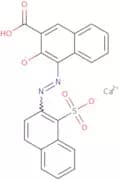
CAS:Pigment Red 63:1 is a synthetic colorant that absorbs ultraviolet light. It is typically used in paints, printing inks, and textile printing. Pigment Red 63:1 can be manufactured with low levels of impurities by following the appropriate manufacturing process. The physical properties of this pigment are best determined using analytical methods such as chromatographic and magnetic resonance spectroscopy. Regulatory bodies may require the use of validated test samples and validation to ensure that the product meets their requirements. Pigment Red 63:1 has a number of isomers that are difficult to distinguish from each other by chromatographic techniques alone. This pigment often has additives such as stabilizers, dispersants, and extenders that affect its performance in different applications. Hplc analysis is used to identify these additives.Fórmula:C21H14N2O6S•CaPureza:Min. 95%Forma y color:PowderPeso molecular:462.49 g/molNile red
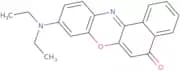
CAS:Fluorescent probe of intracellular lipids and hydrophobic domains of proteins
Fórmula:C20H18N2O2Forma y color:PowderPeso molecular:318.37 g/molVat Orange 3 - Technical
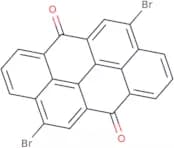
CAS:Vat Orange 3 is a reactive dye used in the production of polyester fibers. It has been classified as a triarylmethane dye and belongs to the group of vat dyes. Vat Orange 3 has three functional groups, an aromatic hydrocarbon, fatty acid, and hydroxyl group. The monomers are ethylene glycols and propionates. The polymerization initiator is sodium methoxide or potassium methoxide. The molecular weight is about 600 g/mol. Vat Orange 3 is an electrophotographic dye that reacts with metal hydroxides such as aluminium hydroxide to produce a bright orange coloration in the presence of light. It also exhibits fluorescence when exposed to ultraviolet light at 350 nm (UV-A).
Fórmula:C22H8Br2O2Pureza:Min. 95%Forma y color:Red PowderPeso molecular:464.11 g/mol