Tintes, colorantes y tinciones
Los colorantes, tintes y tinturas son herramientas esenciales en biología molecular, cruciales para visualizar y estudiar el ADN, los cromosomas y los núcleos celulares. Estos compuestos permiten a los investigadores resaltar componentes celulares específicos, facilitando la observación y el análisis detallados bajo el microscopio. En esta categoría, encontrará una amplia gama de colorantes y tintes de alta calidad utilizados en diversas técnicas de tinción, incluyendo colorantes fluorescentes para análisis de ADN y cromosomas, tintes histológicos para muestras de tejido y tintes específicos para estructuras celulares. Estas herramientas son indispensables en la investigación genética, citología, histología y diagnósticos, proporcionando claridad y contraste en las muestras biológicas. En CymitQuimica, ofrecemos una selección completa de colorantes, tintes y tinturas para apoyar su investigación en biología molecular y asegurar resultados precisos y fiables en sus estudios.
Subcategorías de "Tintes, colorantes y tinciones"
- Tintes ácidos(49 productos)
- Azobencenos(270 productos)
- Tintes azoicos(7 productos)
- Tintes básicos(27 productos)
- Tintes de cumarina(71 productos)
- Tintes de cianina, tintes de escuarilio(53 productos)
- Tintes DCM(4 productos)
- Diariolethenes(12 productos)
- Tintes de dipirrometeno(26 productos)
- Tintes Directos(17 productos)
- Tintes dispersos(2 productos)
- Sensibilizadores de colorantes(12 productos)
- Tintes(416 productos)
- Tinturas y colorantes(911 productos)
- Generating Insoluble Dyes(14 productos)
- Generating Soluble Dyes(11 productos)
- Hexaarilbiimidazol(4 productos)
- Indicadores(575 productos)
- Tintes mordantes(10 productos)
- Tintes de infrarrojo cercano (NIR)(28 productos)
- Tintes de aceite(15 productos)
- Otras tinciones y tintes(2 productos)
- Tintes de perileno(17 productos)
- Tintes fotocromáticos(40 productos)
- Tintes de ftalocianina, tintes de porfirina(101 productos)
- Tintes de quinacridona(8 productos)
- Espiropiranos(16 productos)
- Tinciones y tintes(243 productos)
- Tinciones y tintes para microscopía(5 productos)
- Tintes de tina(5 productos)
- Tintes de xanteno(65 productos)
Mostrar 23 subcategorías más
Se han encontrado 755 productos de "Tintes, colorantes y tinciones"
Ordenar por
Pureza (%)
0
100
|
0
|
50
|
90
|
95
|
100
Pigment yellow 155
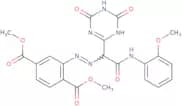
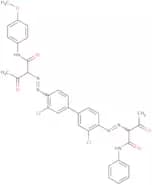
CAS:<p>Pigment yellow 155 is a polycarboxylic acid. It has a hydroxyl group and a polymerization initiator that can polymerize monomers to form polymers. Pigment yellow 155 is soluble in organic solvents, such as alcohols and ketones. It also has functional groups, which are groups of atoms on a molecule that can react with other substances. Pigment yellow 155 is used in the production of paints, plastics, rubber, textiles, and paper. The pigment’s color varies depending on its particle size. Pigment yellow 155 is typically used for coloring objects for use in electrophotography because it produces high-quality images when exposed to light or laser radiation.</p>Fórmula:C34H32N6O12Peso molecular:716.65 g/molPigment yellow 182
CAS:<p>Pigment Yellow 182 is a heat-resistant organic pigment that is used as the yellow in some traffic paints. It can be polymerized by an initiator, such as eugenol, and has a molecular weight of 191. Pigment Yellow 182 has a particle diameter of 2.5 nm and is insoluble in water. Pigment Yellow 182 absorbs light with wavelengths between 580 and 640 nm and therefore appears bright yellow to the human eye.</p>Pureza:Min. 95%C.I.Vat Orange 16
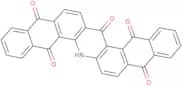
CAS:<p>Please enquire for more information about C.I.Vat Orange 16 including the price, delivery time and more detailed product information at the technical inquiry form on this page</p>Pureza:Min. 95%Pigment Orange24
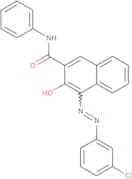
CAS:<p>Pigment Orange 24 is a water-soluble pigment that can be used in inkjet printing, liquid crystal displays, and soluble inks. It has a high yield and index of light fastness. Pigment Orange 24 has an orange hue that is soluble in water and can be used to create colored solutions.</p>Pureza:Min. 95%Solvent Blue 97
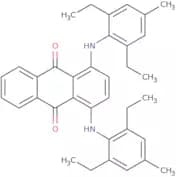
CAS:<p>Solvent Blue 97 is a pigment that has been used in the textile, paper, and paint industries. It has a polymeric matrix that is composed of organic and inorganic compounds. The average particle diameter of Solvent Blue 97 ranges from 0.2 to 3 micrometres with a solubility of less than 1% in water. When irradiated, it emits light at wavelengths ranging from 415 to 455 nm, which is blue-green in color. The structural formula for Solvent Blue 97 is C 19 H 16 N 2 O 5 S.</p>Fórmula:C36H38N2O2Forma y color:PowderPeso molecular:530.7 g/molPigment yellow 126
CAS:<p>Pigment Yellow 126 is a nitro-fatty acid ester, which has an average particle diameter of 3.5 microns and a hydroxyl group at the terminal position of the molecule. This product can be used in coatings, plastics, paper, textiles, and paints. Pigment Yellow 126 is also used as a radiation absorber in x-ray films and fluorescent lamps. This product reacts with deionized water to form fatty acids and aliphatic hydrocarbons.</p>Pureza:Min. 95%Forma y color:PowderAcid red 134
CAS:<p>Acid Red 134 is a dye that belongs to the group of amino acid dyes. It is used in textile manufacturing as a colorant and has been found to be mutagenic for bacteria. Acid Red 134 is also used as a hydrophobic dye, which means it does not dissolve in water and instead dissolves in organic solvents such as alcohol or acetone. Acid Red 134 can be polymerized using UV light, making it an excellent initiator for polymerization reactions. This dye is hydrophobic and can form crystals with a low melting point.</p>Fórmula:C40H34N4Na2O12S2Forma y color:Red PowderPeso molecular:872.83 g/molC.I.Disperse Blue 183:1
CAS:<p>Please enquire for more information about C.I.Disperse Blue 183:1 including the price, delivery time and more detailed product information at the technical inquiry form on this page</p>Pureza:Min. 95%Pigment Red 171
CAS:<p>Pigment Red 171 is a polyester that can be used as an additive to plastics. It has a molecular weight of about 400 and contains a hydroxyl group, which gives it thermal expansion properties. Pigment Red 171 also contains an aluminium skeleton that provides inorganic stability. This pigment has a basic group, which makes it soluble in organic solvents such as sulfides and alcohols. The pigment is resistant to light and radiation, which allows it to be used for protective coatings or sensors. Pigment Red 171 has functional groups for use in organic synthesis reactions.</p>Pureza:Min. 95%Acid black 242
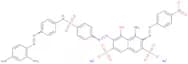
CAS:<p>Acid Black 242 is a chemical dye that is used in the production of photoresists. It is also used as a black pigment in paints and printing inks. The dye is classified as hydrophilic, meaning it dissolves in water. Acid Black 242 has a color index number of PBk 6. It reacts with sulfide to form an acidic compound, which can be used to modulate the reaction time of certain reactions. Acid Black 242 is a benzene derivative that has been shown to depress the central nervous system when inhaled or ingested. It also inhibits the activity of diaminobenzene, which can cause depression when consumed orally or injected intravenously. The fluorescence emission spectrum of Acid Black 242 overlaps with that of other dyes such as acid red 1 and acid violet 7.</p>Pureza:Min. 95%Acid Blue 83
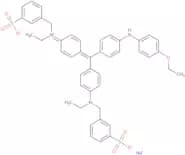
CAS:<p>Acid Blue 83 is a reactive dye that is used in the treatment of wastewater. It has been shown to inhibit metabolic disorders and transcriptional regulation by binding to DNA-dependent RNA polymerase. Acid Blue 83 also inhibits enzyme activities, such as co2 flow, sephadex g-100, and surface methodology. In addition, it binds to basic proteins, such as human serum albumin, and has been shown to have anti-inflammatory properties. Acid Blue 83 is a reactive dye that is used in the treatment of wastewater. It has been shown to inhibit metabolic disorders and transcriptional regulation by binding to DNA-dependent RNA polymerase. Acid Blue 83 also inhibits enzyme activities, such as co2 flow, sephadex g-100, and surface methodology. In addition, it binds to basic proteins, such as human serum albumin, and has been shown to have anti-inflammatory properties.</p>Fórmula:C45H44N3NaO7S2Pureza:Min. 95%Forma y color:Blue PowderPeso molecular:825.97 g/molDisperse orange 45
CAS:<p>Disperse Orange 45 is a greenish-yellow viscous liquid. It is a synthetic, anionic, surfactant and dispersing agent for cellulose acetate and polyester resins. Disperse Orange 45 is also used as a synthetic dye in paint formulations. The molecular structure of Disperse Orange 45 consists of three parts: betaine monohydrate, methacrylate esters, and propylene glycol. This product is not intended for use as a food additive or as a drug.</p>Pureza:Min. 95%C.I.Acid Orange 171
CAS:<p>Please enquire for more information about C.I.Acid Orange 171 including the price, delivery time and more detailed product information at the technical inquiry form on this page</p>Pureza:Min. 95%C.I.Leuco Sulphur Blue 15
CAS:<p>C.I. Leuco Sulphur Blue 15 is a versatile research chemical that can be used as an inhibitor, dye, stain, indicator, or probe. It has a wide range of applications in various industries including chemistry, biology, and pharmaceuticals. This compound contains hydroxyl and dopamine groups which make it highly reactive and suitable for derivatization reactions. C.I. Leuco Sulphur Blue 15 is known for its ability to form stable complexes with chloride and cyanide ions, making it useful in analytical chemistry. It can also be used as a clavulanic acid mimic or an aluminum complexing agent. Additionally, this compound can be employed as an electrode modifier in electrochemical studies. Its acidic nature allows it to interact with fatty acids and methanol, making it valuable for lipid analysis or solvent extraction processes. Whether you need a powerful research tool or a reliable chemical reagent, C.I. Leuco Sulphur Blue 15 is the perfect choice for your</p>Pureza:Min. 95%Pigment Yellow 13
CAS:<p>Pigment Yellow 13 is a yellow pigment that can be used in wastewater treatment. Pigment Yellow 13 is an organic compound that contains the reactive group glycol ether, which reacts with alcohol residue to form glycol esters. This reaction mechanism is similar to the reaction of glycols with water. The structure of Pigment Yellow 13 is a bound form and it has been found to have thermal expansion properties. Pigment Yellow 13 also has intramolecular hydrogen bonding between the carbon and oxygen atoms, which allows it to act as a stabilizer for polymers such as polyester and nylon. Pigment Yellow 13 also exhibits intermolecular hydrogen bonding, causing it to be resistant to radiation and laser ablation.</p>Fórmula:C36H34Cl2N6O4Forma y color:Yellow PowderPeso molecular:685.60 g/molPergascript Red 16
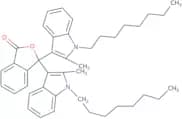
CAS:<p>Pergascript Red 16 is a bright red pigment that has been used in ink, paint, and plastics. It has an optical density of 1.5 at 595 nanometers. Pergascript Red 16 is also used in imaging and recording applications.</p>Fórmula:C42H52N2O2Pureza:Min. 98.0 Area-%Forma y color:Off-White PowderPeso molecular:616.87 g/molFast Violet B - Dye content 85%
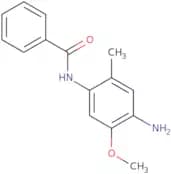
CAS:<p>Fast Violet B is a diazonium salt that reacts with an amine, such as phosphatase, to release hydrogen. This reaction can be used to measure the activity of phosphatases. The emission of light in the visible range depends on the concentration and pH of the solution. Fast Violet B is soluble in water, alcohol, acetone, ether and chloroform. It has a particle size that ranges from 0.1-0.2 microns in diameter and will not dissolve in most solvents. Fast Violet B can be used to detect zearalenone in animal feed samples using a sample preparation technique called thin layer chromatography (TLC). It has shown clinical utility for determining antibody response in humans by measuring fatty acid synthesis activity during the inflammatory response. Fast Violet B also reacts with hydrogen bonds between nucleotides on DNA molecules and it binds to human mitochondrial DNA because it contains many phosphate groups and several intramolecular hydrogen bonds can form between neighboring</p>Fórmula:C15H16N2O2Pureza:Min. 95%Forma y color:PowderPeso molecular:256.3 g/molAcid Black 60, Technical grade
CAS:<p>Please enquire for more information about Acid Black 60, Technical grade including the price, delivery time and more detailed product information at the technical inquiry form on this page</p>Pureza:Min. 95%Solvent green 5
CAS:<p>Solvent green 5 is an acylation reaction product of a polymeric matrix with a hydroxyl group. The polymer film is developed from the cavity, encapsulation, and section of magnesium oxide. It has a skeleton that consists of a polymeric matrix with functional groups. Solvent green 5 emits light in the visible spectrum when subjected to heat or ultraviolet rays. This product can be used as a dye that absorbs ultraviolet radiation and converts it into visible light.</p>Fórmula:C30H28O4Forma y color:PowderPeso molecular:452.54 g/molDirect blue 218
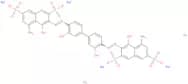
CAS:<p>Direct blue 218 is a glycol ether dye that is used in the textile industry and as a food coloring agent. It has been shown to cause nephrotoxicity and hepatotoxicity as well as cancer in rats. Direct blue 218 is absorbed by the target tissues, which include the ovary cells, liver cells, and kidney cells. This dye has been shown to inhibit catecholamine release from the adrenal gland in vitro assays and increase the number of mitotic figures in rat liver cells chronically exposed to this dye. Direct blue 218 also contains nitrogen atoms that can form a copper complex with an electron-donating group (e.g., hydroxyl groups). The copper complex increases its stability, leading to increased genotoxic effects.</p>Fórmula:C32H16Cu2N6Na4O16S4Forma y color:Blue PowderPeso molecular:1,087.82 g/mol