Tintes, colorantes y tinciones
Los colorantes, tintes y tinturas son herramientas esenciales en biología molecular, cruciales para visualizar y estudiar el ADN, los cromosomas y los núcleos celulares. Estos compuestos permiten a los investigadores resaltar componentes celulares específicos, facilitando la observación y el análisis detallados bajo el microscopio. En esta categoría, encontrará una amplia gama de colorantes y tintes de alta calidad utilizados en diversas técnicas de tinción, incluyendo colorantes fluorescentes para análisis de ADN y cromosomas, tintes histológicos para muestras de tejido y tintes específicos para estructuras celulares. Estas herramientas son indispensables en la investigación genética, citología, histología y diagnósticos, proporcionando claridad y contraste en las muestras biológicas. En CymitQuimica, ofrecemos una selección completa de colorantes, tintes y tinturas para apoyar su investigación en biología molecular y asegurar resultados precisos y fiables en sus estudios.
Subcategorías de "Tintes, colorantes y tinciones"
- Tintes ácidos(49 productos)
- Azobencenos(270 productos)
- Tintes azoicos(7 productos)
- Tintes básicos(27 productos)
- Tintes de cumarina(71 productos)
- Tintes de cianina, tintes de escuarilio(53 productos)
- Tintes DCM(4 productos)
- Diariolethenes(12 productos)
- Tintes de dipirrometeno(26 productos)
- Tintes Directos(17 productos)
- Tintes dispersos(2 productos)
- Sensibilizadores de colorantes(12 productos)
- Tintes(416 productos)
- Tinturas y colorantes(911 productos)
- Generating Insoluble Dyes(14 productos)
- Generating Soluble Dyes(11 productos)
- Hexaarilbiimidazol(4 productos)
- Indicadores(575 productos)
- Tintes mordantes(10 productos)
- Tintes de infrarrojo cercano (NIR)(28 productos)
- Tintes de aceite(15 productos)
- Otras tinciones y tintes(2 productos)
- Tintes de perileno(17 productos)
- Tintes fotocromáticos(40 productos)
- Tintes de ftalocianina, tintes de porfirina(101 productos)
- Tintes de quinacridona(8 productos)
- Espiropiranos(16 productos)
- Tinciones y tintes(243 productos)
- Tinciones y tintes para microscopía(5 productos)
- Tintes de tina(5 productos)
- Tintes de xanteno(65 productos)
Mostrar 23 subcategorías más
Se han encontrado 755 productos de "Tintes, colorantes y tinciones"
Ordenar por
Pureza (%)
0
100
|
0
|
50
|
90
|
95
|
100
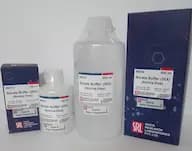
Borate Buffer (20X) (Amine-free)
20X Borate Buffer is a stock solution that is ideal for preparing sodium borate buffer solutions for use in protein modification procedures requiring amine-free buffer at alkaline pH. Simply dilute the stock solution with pure water and proceed with your experiment. The 20X Borate Buffer pH remains 8.5, when diluted to 1X with water.Forma y color:Liquid, Clear, ColourlessSDS PAGE Sample Buffer (5X) (Reducing) w/ DTT w/ BPB
It is the most commonly used sample buffer for SDS-PAGE of denatured proteins. It is a ready-to-use 5X solution with dithiothreitol (DTT) as a reducing agent. It can be used for SDS-PAGE protein loading of conventional proteins. The use of sample buffer ensures optimal band resolution when preparing proteins for SDS-PAGE with Tris-glycine-SDS running buffer. :It is the most commonly used sample buffer for SDS-PAGE of denatured proteins. It is a ready-to-use 5X solution with dithiothreitol (DTT) as a reducing agent. It can be used for SDS-PAGE protein loading of conventional proteins. The use of sample buffer ensures optimal band resolution when preparing proteins for SDS-PAGE with Tris-glycine-SDS running buffer. :It is the most commonly used sample buffer for SDS-PAGE of denatured proteins. It is a ready-to-use 5X solution with dithiothreitol (DTT) as a reducing agent. It can be used for SDS-PAGE protein loading of conventional proteins. The use of sample buffer ensures optimal band resolution when preparing proteins for SDS-PAGE with Tris-glycine-SDS running buffer.Role of reagents: Tris-HCl: as a buffering substance. The pH play an essential role in preserving peptide bonds from breaking apart. SDS: Proteins comes in different sizes and charges. SDS is an anionic detergent that helps in linearizing (by denaturing) the proteins and bringing a net negative charge to the proteins irrespective of the initial charge. Glycerol: The high density (thickening of the solution) of glycerol ensures the sample moves down into the well. DL-Dithiothreitol (DTT): is a strong reducing agent. Its specific role in sample denaturation is to remove the last bit of tertiary and quaternary structure by reducing disulfide bonds. Bromophenol Blue: visually indicates the location (tracking dye) of the sample in the gel.Forma y color:Liquid, Dark Blue, ClearIodophenol blue
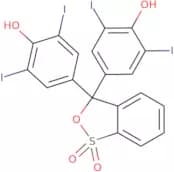
CAS:<p>Iodophenol blue is a dye that has been used in biological research. It is used to stain DNA samples, as it binds to phosphoenolpyruvate (PEP) and sodium carbonate. Iodophenol blue can be used to differentiate tumor cells from the surrounding tissue in biopsy samples. The dye also interacts with amines, resulting in the release of bromophenols and cleavage products. Iodophenol blue can be used as a visual indicator for chemical reactions.</p>Fórmula:C19H10I4O5SPureza:Min. 80 Area-%Forma y color:PowderPeso molecular:857.96 g/molPigment Yellow 111
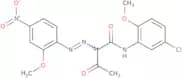
CAS:<p>Pigment Yellow 111 is a hydrophobic, micrometer-sized pigment with a bathochromic color. It has functional groups and additives that impart metal ion tolerance and pH stability. Pigment Yellow 111 also has an acidic surface and is soluble in fatty acids, chlorine, and silicon. Pigment Yellow 111 can be used as a coating or as an additive to produce electrostatic toner in electrophotographic applications.</p>Fórmula:C18H17CIN4O6Pureza:Min. 95%Peso molecular:524.27 g/molMartius Yellow
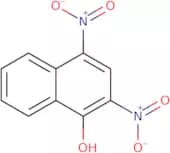
CAS:<p>Martius Yellow is a yellow pigment that is soluble in organic solvents and water. It is a member of the hydroxyl group and has an intramolecular hydrogen. Martius Yellow can polymerize with other molecules to form polymers, which are insoluble in water. This dye is used as a food colouring agent and has been shown to have anti-inflammatory properties when injected into the cell cytoplasm. Martius Yellow has also been shown to protect against ischemia reperfusion injury in cells by preventing the release of nitric oxide. Martius Yellow can be synthesized from nitrobenzene and phenol using the analytical method called Tollens' reagent, which consists of mixing the two compounds together followed by adding concentrated sulfuric acid and then heating the solution until it turns yellow.</p>Fórmula:C10H6N2O5Pureza:(%) Min. 85%Forma y color:Yellow PowderPeso molecular:234.17 g/molPrednisolone 21-Hemisuccinate
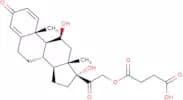
CAS:Producto controlado<p>Prednisolone 21-hemisuccinate is a synthetic glucocorticoid that has antiinflammatory activity. Prednisolone 21-Hemisuccinate is used in the treatment of inflammatory bowel disease, as well as various other types of inflammatory conditions, such as autoimmune diseases and infectious diseases. It is also used to treat myocardial infarcts and various types of cancer (e.g., leukemia). Prednisolone 21-hemisuccinate acts by binding to the glucocorticoid receptor, which alters gene expression and protein synthesis in cells. Prednisolone 21-Hemisuccinate binds to the Toll-like receptor 4 (TLR4), thereby inhibiting inflammation in mouse models of colitis. Prednisolone 21-Hemisuccinate also decreases glucose levels by decreasing insulin secretion from pancreatic beta cells.</p>Pureza:Min. 95%Disperse red 1 methacrylate
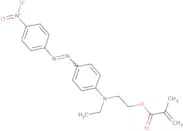
CAS:<p>Disperse Red 1 methacrylate is a gel permeation chromatography agent that has been shown to be useful in regenerative medicine. This compound can be used as a fluorescent label for optical sensors that are designed to detect angiogenic processes. Disperse Red 1 methacrylate can also be used for confocal microscopy imaging and coverslips. It has a vibrational frequency of about 2800 cm-1 and an absorption spectrum with a maximum at 594 nm, which is red in colour. Disperse Red 1 methacrylate has been shown to have anti-cancer properties, which may be due to its ability to interfere with the cellular microenvironment by binding to proteins, affecting their conformation and function.</p>Fórmula:C20H22N4O4Pureza:Min. 95%Forma y color:Red PowderPeso molecular:382.41 g/molC.I.Acid Red 35
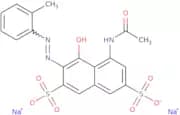
CAS:<p>C.I. Acid Red 35 is a diacid with a hydroxyl group that belongs to the group of dyes. It is used in cosmetics for its color and as a polymerization initiator for polyesters, epoxy resins and silicone elastomers. C.I. Acid Red 35 is also used as a control agent in textile dyeing, papermaking, and leather tanning to prevent the formation of unwanted color reactions or cross-linking reactions with other chemicals. The dye has been shown to react with metal hydroxides to form metal complexes and reactive molecules when exposed to ammonia or acidified sodium nitrite. C.I. Acid Red 35 is soluble in organic solvents, but insoluble in water due to its intramolecular hydrogen bonding and intermolecular hydrogen bonding with fatty acids on the surface of cellulose fibers or unsaturated alkyl chains on the surface of nylon fibers. This dye has been shown to be reactive with carb</p>Pureza:Min. 95%Cloprednol
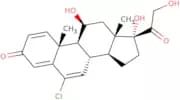
CAS:Producto controlado<p>Cloprednol is an anti-infective agent that belongs to the group of aziridine derivatives. It is a synthetic analog of prednisolone, which has been shown to inhibit the inflammatory response in the intestine. Cloprednol has been shown to be highly biocompatible and its long-term efficacy against microbial infection has been demonstrated by kinetic data. This drug also inhibits choroidal neovascularization, which is a major cause of blindness in patients with age-related macular degeneration. Cloprednol is used for the treatment of bowel diseases such as Crohn’s disease and ulcerative colitis. It also has been shown to be effective in treating autoimmune diseases such as psoriasis, rheumatoid arthritis, and systemic lupus erythematosus.</p>Fórmula:C21H25ClO5Pureza:Min. 95%Peso molecular:392.87 g/molMordant black 11 - Technical
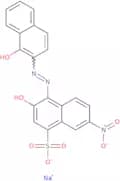
CAS:<p>Mordant Black 11 is a water-soluble dye that is used in the treatment of wastewater. Mordant Black 11 binds to surface particles and enhances the removal of organic matter from wastewater. It has been shown to be effective for the treatment of human serum, which contains high levels of proteins and other macromolecules. Mordant Black 11 efficiently adsorbs onto the surface of these macromolecules, leading to a decrease in the amount of protein adsorbed on the surface. The kinetic data for this process have been obtained by electrochemical impedance spectroscopy (EIS) and by measuring changes in pH due to ionization. A magnesium salt is required for the synthesis of Mordant Black 11, as well as potassium dichromate or other chromium salts and fatty acids.</p>Fórmula:C20H12N3NaO7SPureza:Min. 95%Peso molecular:461.38 g/molC.I.Acid green 41
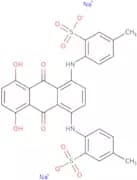
CAS:<p>C.I. Acid Green 41 is a deodorizing agent that contains a hydroxyl group and a functional group. It is used as an anti-viral agent in medical and dental applications, as well as for flow assay control agents in the laboratory. The color of this substance has been shown to be yellowish green by spectroscopic analysis. C.I. Acid Green 41 is activated with radiation, which causes it to form a coordination complex with metal ions such as copper and silver ions. This complex gives the substance its green coloration and also increases its stability against oxidation by air or water. The solubility of this product can be increased by adding deionized water to it.END></p>Fórmula:C28H20N2Na2O10S2Pureza:Min. 95%Peso molecular:654.58 g/mol16a-Methyl prednisolone 21-acetate
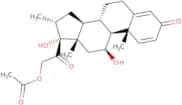
CAS:Producto controlado<p>Please enquire for more information about 16a-Methyl prednisolone 21-acetate including the price, delivery time and more detailed product information at the technical inquiry form on this page</p>Fórmula:C24H32O6Pureza:Min. 95%Peso molecular:416.51 g/molSanodure grey NL
<p>Please enquire for more information about Sanodure grey NL including the price, delivery time and more detailed product information at the technical inquiry form on this page</p>Pureza:Min. 95%Benzo[k]fluoranthene
CAS:Producto controlado<p>Benzo[k]fluoranthene is a polycyclic aromatic hydrocarbon that is used as an optical sensor for transcriptional regulation. It has been shown to activate the transcription factor NF-κB, which induces expression of inflammatory genes in cells. Benzo[k]fluoranthene can be used to measure changes in gene expression and protein levels. The antibody response to benzo[k]fluoranthene was studied using a kinetic data analysis method. Benzo[k]fluoranthene has also been shown to induce genotoxic effects in liver cells and human hepatoma cell line HepG2. This compound also causes light emission when it is excited with light, which can be measured with synchronous fluorescence.</p>Fórmula:C20H12Pureza:Min. 95%Forma y color:SolidPeso molecular:252.31 g/molFluprednisolone
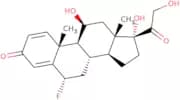
CAS:Producto controlado<p>Fluprednisolone is an anti-inflammatory corticosteroid that has been used for the treatment of a number of conditions, such as autoimmune diseases and eye disorders. This drug is administered topically and can be used to treat eye disorders such as choroidal neovascularization. Fluprednisolone has been shown to inhibit the production of growth factors in animal models, which may be due to its interaction with mineralocorticoid receptors. It also has a detergent effect on proteins, which may help to dissolve protein aggregates that can form in ocular tissues.</p>Fórmula:C21H27FO5Pureza:Min. 95%Forma y color:White PowderPeso molecular:378.43 g/molAcid alizarin blue 2b
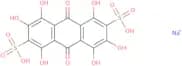
CAS:<p>For the identification of acidophilic cells, blue color</p>Fórmula:C14H8NaO14S2Pureza:Min. 95%Peso molecular:487.3 g/molPigment Yellow 120
CAS:<p>Pigment Yellow 120 is a pigment that belongs to the group of amide colorants. It has a yellow-orange hue and high thermal stability. Pigment Yellow 120 has been shown to be soluble in organic solvents, such as n-propyl ether, but insoluble in water. The molecular weight of pigment yellow 120 ranges from 800 to 1200 g/mol. Pigment Yellow 120 is produced by the polymerization reaction of monomers containing an amide group and a hydroxyl or basic group with a metal ion, such as copper or nickel, as a catalyst. This process also produces polycarboxylic acid groups and particles with diameters ranging from 0.1 micrometers to 2 micrometers.</p>Fórmula:C21H19N5O7Pureza:Min. 95%Forma y color:PowderPeso molecular:453.41 g/molAcid Green 50
CAS:<p>Acid Green 50 is a reactive dye that is used for wastewater treatment and in the pharmaceutical industry. It has been shown to be an effective treatment for infectious diseases, such as herpes simplex virus. Acid Green 50 binds to biological surfaces and forms a film-forming polymer. The adsorption mechanism of Acid Green 50 has been studied using kinetic data and kinetic studies. The acylation reaction of Acid Green 50 with collagen gel has also been investigated. This dye is able to emit light when excited by UV radiation and can be used in a flow system. In addition, this dye can be synthesized using a polymerase chain reaction (PCR).</p>Pureza:Min. 95%Forma y color:PowderPeso molecular:577.63 g/molAcridine orange hydrochloride hydrate
CAS:<p>Acridine orange hydrochloride hydrate is a fine chemical that can be used as a reagent or building block in research and other chemical reactions. It is used as a speciality chemical with CAS number 1704465-79-1. Acridine orange hydrochloride hydrate has versatile applications and is used as a reaction component or intermediate. Acridine orange hydrochloride hydrate is also useful as a scaffold to make complex compounds.</p>Fórmula:C17H19N3·HCl·xH2OPureza:Min. 98 Area-%Forma y color:Orange PowderPeso molecular:301.81Af488-alkyne
CAS:<p>Please enquire for more information about Af488-alkyne including the price, delivery time and more detailed product information at the technical inquiry form on this page</p>Fórmula:C24H17N3O10S2Pureza:Min. 95%Peso molecular:571.5 g/mol



![Benzo[k]fluoranthene](/_next/image/?url=https%3A%2Fstatic.cymitquimica.com%2Fproducts%2F3D%2Fthumb-webp%2FFB157375.webp&w=3840&q=75)