Compuestos policíclicos
Los compuestos policíclicos son moléculas orgánicas que contienen múltiples anillos interconectados. Estos compuestos incluyen hidrocarburos aromáticos policíclicos y otros sistemas de anillos complejos. Son significativos en la ciencia de materiales, productos farmacéuticos y electrónica orgánica. En CymitQuimica, ofrecemos compuestos policíclicos de alta calidad para apoyar sus investigaciones y aplicaciones industriales, asegurando resultados confiables y efectivos en sus proyectos.
Subcategorías de "Compuestos policíclicos"
- Acridinas(97 productos)
- Antraquinonas(533 productos)
- Ácidos antraquinonesulfónicos(16 productos)
- Azobencenos(270 productos)
- Azonaftalenos(98 productos)
- Azoxibencenos(12 productos)
- Azulenos(11 productos)
- Benzimidazoles(1.470 productos)
- Benzodioxanos(27 productos)
- Benzofuranos(923 productos)
- Benzotiofenos(690 productos)
- Benzotriazoles(436 productos)
- Binaftilos(133 productos)
- Carbazoles(462 productos)
- Cromanos, Cromatos(480 productos)
- Cumarinas(1.121 productos)
- Ciclofanos(11 productos)
- Fluorenos y fluorenonas(381 productos)
- Imidazopiridinas(10 productos)
- Indans(118 productos)
- Indazoles(2.029 productos)
- Indenes(22 productos)
- Indoles(3.984 productos)
- Indolines(119 productos)
- Isatinos(231 productos)
- Isobenzofuranos(17 productos)
- Ftalimidas N-sustituidas(153 productos)
- Naftalenos(2.427 productos)
- Naftiridinas(17 productos)
- Naftoquinona(2 productos)
- Perilenos(36 productos)
- Fenazinas(25 productos)
- Ftalazinas(33 productos)
- Ftalimida(153 productos)
- Hidrocarburos aromáticos policíclicos (HAP)(270 productos)
- Polifenol(261 productos)
- Pteridinas(52 productos)
- Pirenos(87 productos)
- Quinuclidina(1 productos)
- Tetracenos(7 productos)
Mostrar 32 subcategorías más
Se han encontrado 4574 productos de "Compuestos policíclicos"
Ordenar por
Pureza (%)
0
100
|
0
|
50
|
90
|
95
|
100
Bergapten
CAS:<p>Bergapten is a naturally occurring furanocoumarin, which is derived from the essential oils of citrus fruits, such as bergamot. It is recognized for its photosensitizing properties due to its ability to interact with DNA upon exposure to ultraviolet (UV) light. The mode of action involves the formation of monoadducts with pyrimidine bases in DNA, which can lead to cross-linking and ultimately disrupt DNA replication and transcription.</p>Fórmula:C12H8O4Peso molecular:216.19 g/molRef: 3D-Q-100536
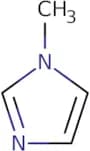
5gA consultar10gA consultar25gA consultar50gA consultar100gA consultar-Unit-ggA consultar1-Methylimidazole
CAS:<p>1-Methylimidazole is a compound with the molecular formula CH3N2H. It is soluble in water, but insoluble in organic solvents. 1-Methylimidazole has been found to bind to human serum and p-nitrophenyl phosphate. The fluorescence of 1-methylimidazole is quenched by hydrogen bonding interactions, which are the same as those that occur in natural compounds such as hemoglobin and chlorophyll. The nitrogen atoms on the surface of 1-methylimidazole can be detected using infrared spectroscopy. This method can also be used to analyze group P2 molecules, such as benzene, phenol, and cyclohexane.</p>Fórmula:C4H6N2Pureza:Min. 98%Forma y color:PowderPeso molecular:82.1 g/mol3-Methyl-7-(5-oxohexyl)-1-propylxanthine
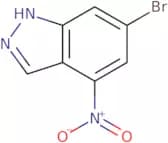
CAS:Producto controlado<p>Please enquire for more information about 3-Methyl-7-(5-oxohexyl)-1-propylxanthine including the price, delivery time and more detailed product information at the technical inquiry form on this page</p>Fórmula:C15H22N4O3Pureza:Min. 95%Peso molecular:306.36 g/mol6-Bromo-4-nitro-1H-indazole
CAS:<p>Please enquire for more information about 6-Bromo-4-nitro-1H-indazole including the price, delivery time and more detailed product information at the technical inquiry form on this page</p>Fórmula:C7H4BrN3O2Pureza:Min. 95%Peso molecular:242.03 g/mol1,3-Dipropyl-7-methylxanthine
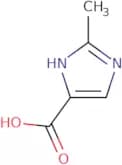
CAS:Producto controlado<p>1,3-Dipropyl-7-methylxanthine is a xanthine compound that is structurally related to caffeine. It has been shown to have an inhibitory effect on the production of reactive oxygen species and cytosolic calcium levels in primary cells, as well as a nonselective adenosine receptor antagonist activity. It has also been shown to antagonize the effects of adenosine receptors, p2 receptors, and p2y receptors. This drug is used for the treatment of basophilic leukemia.</p>Fórmula:C12H18N4O2Pureza:Min. 95%Peso molecular:250.3 g/mol2-Methyl-1H-imidazole-5-carboxylic acid
CAS:<p>2-Methyl-1H-imidazole-5-carboxylic acid is a molecule that belongs to the class of antibiotics. It has been shown to be an effective inhibitor of lipases and other enzymes, which is due to its carboxylate group. The immobilization of this molecule has been studied by X-ray crystallography. The oxygen atoms in the molecule are covalently immobilized on a silica surface via a linker chain, which prevents the loss of these atoms. Dichroism spectroscopy was used to study the effects of different solvents on this molecule's ability to rotate light. 2-Methyl-1H-imidazole-5-carboxylic acid was also successfully immobilized using an enzyme called lipase, with residue carboxylate groups positioned at the bottom of the binding cavity.</p>Fórmula:C5H6N2O2Pureza:Min. 95%Forma y color:PowderPeso molecular:126.11 g/molIndole-3-acetyl-L-glutamic acid
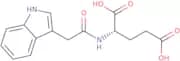
CAS:<p>Indole-3-acetyl-L-glutamic acid is an endogenous substance that is found in plants. It is the conjugated form of indole-3-acetaldehyde and L-glutamic acid. Indole-3-acetylglutamic acid has shown to have antioxidant potential and can be used to regulate plant growth, as well as protect against environmental stresses. Indole-3-acetylglutamic acid also has a role in regulating the production of other hormones, such as ethylene and auxin, which are involved in plant growth regulation.</p>Fórmula:C15H16N2O5Pureza:Min. 98 Area-%Forma y color:PowderPeso molecular:304.3 g/mol2’-Nor thiamine hydrochloride
CAS:<p>Please enquire for more information about 2’-Nor thiamine hydrochloride including the price, delivery time and more detailed product information at the technical inquiry form on this page</p>Fórmula:C11H16Cl2N4OSPureza:Min. 95%Peso molecular:323.24 g/mol5,7-Dichloro-8-hydroxyquinoline
CAS:<p>5,7-Dichloro-8-hydroxyquinoline (5,7-DC8HQ) is a mitochondrial drug that inhibits mitochondrial functions by binding to the ATP synthase. It has been shown to be effective against bacteria resistant to antimicrobial agents in vivo and also showed genotoxic activity in vitro. 5,7-DC8HQ binds to the magnesium site of the ATP synthase protein and prevents the formation of an intramolecular hydrogen bond, which leads to inhibition of ATP synthesis. This drug has also been shown to cause membrane potential depolarization in mitochondria.</p>Fórmula:C9H5Cl2NOPureza:Min. 98.5 Area-%Forma y color:White PowderPeso molecular:214.05 g/mol6-Chloroindole-2-carboxylic acid
CAS:<p>6-Chloroindole-2-carboxylicacid is a potent inhibitor of β-lactamase enzymes. It has been shown to act as a competitive inhibitor with an affinity for the β-lactamase enzyme in the nanomolar range. 6-Chloroindole-2-carboxylicacid is also a potent compound that can be used in experiments and screening. It has been shown to bind to the β-lactamase enzyme, which inhibits its activity, leading to a decrease in fluorescence. 6-Chloroindole-2-carboxylicacid has also been shown to have an inhibitory effect on bacterial cells by inhibiting protein synthesis, DNA replication, and RNA transcription.</p>Fórmula:C9H6ClNO2Pureza:95%NmrPeso molecular:195.6 g/molEthyl 5-chloro-1,3-dimethyl-1H-indole-2-carboxylate
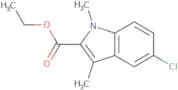
CAS:Producto controlado<p>Please enquire for more information about Ethyl 5-chloro-1,3-dimethyl-1H-indole-2-carboxylate including the price, delivery time and more detailed product information at the technical inquiry form on this page</p>Fórmula:C13H14ClNO2Pureza:Min. 95%Peso molecular:251.71 g/mol1,2,3,4-Tetrahydro-4,8-dihydroxy-2-methyl-isoquinoline
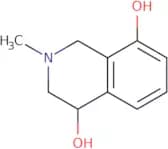
CAS:<p>1,2,3,4-Tetrahydro-4,8-dihydroxy-2-methyl-isoquinoline is a chemical compound that has been used as an intermediate in the synthesis of pharmaceuticals. It is also a useful building block for the production of other chemicals. This compound is soluble in water. 1,2,3,4-Tetrahydro-4,8-dihydroxy-2-methyl-isoquinoline has shown to be a versatile and high quality reagent with many research applications.</p>Fórmula:C10H13NO2Pureza:Min. 95%Forma y color:Yellow PowderPeso molecular:179.22 g/moltert-Butyl 4-hydroxy-1-oxa-9-azaspiro[5.5]undecane-9-carboxylate
CAS:<p>Please enquire for more information about tert-Butyl 4-hydroxy-1-oxa-9-azaspiro[5.5]undecane-9-carboxylate including the price, delivery time and more detailed product information at the technical inquiry form on this page</p>Fórmula:C14H25NO4Pureza:Min. 95%Peso molecular:271.35 g/mol3-Oxabicyclo[3.1.0]hexane-2,4-dione
CAS:<p>3-Oxabicyclo[3.1.0]hexane-2,4-dione is a cocatalyst with a molecular formula of C6H14O3. It is a synthetic compound that is used as an inhibitor in organic synthesis reactions and as a cocatalyst for the ring-opening polymerization of cyclic olefins. 3-Oxabicyclo[3.1.0]hexane-2,4-dione binds to the receptor subtype site on the benzene ring of benzoate, amines, and acid catalysts. This binding prevents the formation of an enzyme/substrate complex at the active site of the enzyme, inhibiting its activity and leading to cell death.</p>Pureza:95%Nmr5-Amino-3,7-dimethylxanthine
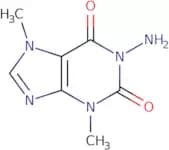
CAS:Producto controlado<p>Please enquire for more information about 5-Amino-3,7-dimethylxanthine including the price, delivery time and more detailed product information at the technical inquiry form on this page</p>Fórmula:C7H9N5O2Pureza:Min. 95%Peso molecular:195.18 g/mol2,4-Dioxo-9-(phenylmethyl)-3,9-diazaspiro[5.5]undecane-1,5-dicarbonitrile
CAS:<p>2,4-Dioxo-9-(phenylmethyl)-3,9-diazaspiro[5.5]undecane-1,5-dicarbonitrile is an aliphatic compound that is used in the synthesis of formaldehyde and amines. It has been shown to react with formaldehyde to produce a mixture of aliphatic amines. This reaction can be used for the production of commercial products such as dyes and pharmaceuticals.</p>Fórmula:C18H18N4O2Pureza:Min. 95%Peso molecular:322.36 g/molBenazeprilat
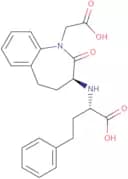
CAS:<p>Benazeprilat is a prodrug that is metabolized to enalaprilat, its active form. It is an inhibitor of angiotensin-converting enzyme (ACE) and has been shown to be effective in the treatment of heart failure. It has also been shown to inhibit ACE activity in vitro and in experimental models of congestive heart failure. Benazeprilat binds to the active site on the ACE molecule and inhibits the conversion of angiotensin I into angiotensin II, which causes vasoconstriction and stimulates aldosterone release from the adrenal cortex. This drug also has effects on energy metabolism by stimulating beta oxidation, which leads to increased levels of ketone bodies in blood plasma.</p>Fórmula:C22H24N2O5Pureza:Min. 98 Area-%Forma y color:White Off-White PowderPeso molecular:396.44 g/mol1,4-Bis[3,4-dihydro-2(1H)-quinolinon-7-oxy]butane
CAS:Producto controlado<p>Please enquire for more information about 1,4-Bis[3,4-dihydro-2(1H)-quinolinon-7-oxy]butane including the price, delivery time and more detailed product information at the technical inquiry form on this page</p>Fórmula:C22H24N2O4Pureza:Min. 95%Peso molecular:380.44 g/molIsobergapten
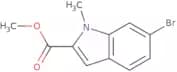
CAS:<p>Isobergapten is a naturally occurring furanocoumarin, which is primarily derived from plants in the Apiaceae family, such as celery and parsley. The compound is structurally characterized by its fused furan and coumarin rings. It exerts its effects through its ability to interact with cellular enzymes and DNA, often influencing photodynamic processes. This interaction can result in modifications to DNA replication and transcription, making it a compound of interest in photochemotherapy and photobiology.</p>Fórmula:C12H8O4Pureza:Min. 95%Forma y color:PowderPeso molecular:216.19 g/molMethyl 6-Bromo-1-Methyl-1H-Indole-2-Carboxylate
CAS:Producto controlado<p>Please enquire for more information about Methyl 6-Bromo-1-Methyl-1H-Indole-2-Carboxylate including the price, delivery time and more detailed product information at the technical inquiry form on this page</p>Fórmula:C11H10BrNO2Pureza:Min. 95%Peso molecular:268.11 g/mol






![tert-Butyl 4-hydroxy-1-oxa-9-azaspiro[5.5]undecane-9-carboxylate](/_next/image/?url=https%3A%2Fstatic.cymitquimica.com%2Fproducts%2F3D%2Fthumb-webp%2FFB125443.webp&w=3840&q=75)
![3-Oxabicyclo[3.1.0]hexane-2,4-dione](/_next/image/?url=https%3A%2Fstatic.cymitquimica.com%2Fproducts%2F3D%2Fthumb-webp%2FFO62778.webp&w=3840&q=75)
![2,4-Dioxo-9-(phenylmethyl)-3,9-diazaspiro[5.5]undecane-1,5-dicarbonitrile](/_next/image/?url=https%3A%2Fstatic.cymitquimica.com%2Fproducts%2F3D%2Fthumb-webp%2FFD152712.webp&w=3840&q=75)
![1,4-Bis[3,4-dihydro-2(1H)-quinolinon-7-oxy]butane](/_next/image/?url=https%3A%2Fstatic.cymitquimica.com%2Fproducts%2F3D%2Fthumb-webp%2FFB18792.webp&w=3840&q=75)