


Compuestos policíclicos
Los compuestos policíclicos son moléculas orgánicas que contienen múltiples anillos interconectados. Estos compuestos incluyen hidrocarburos aromáticos policíclicos y otros sistemas de anillos complejos. Son significativos en la ciencia de materiales, productos farmacéuticos y electrónica orgánica. En CymitQuimica, ofrecemos compuestos policíclicos de alta calidad para apoyar sus investigaciones y aplicaciones industriales, asegurando resultados confiables y efectivos en sus proyectos.
Subcategorías de "Compuestos policíclicos"
- Acridinas(97 productos)
- Antraquinonas(533 productos)
- Ácidos antraquinonesulfónicos(16 productos)
- Azobencenos(270 productos)
- Azonaftalenos(98 productos)
- Azoxibencenos(12 productos)
- Azulenos(11 productos)
- Benzimidazoles(1.470 productos)
- Benzodioxanos(27 productos)
- Benzofuranos(923 productos)
- Benzotiofenos(690 productos)
- Benzotriazoles(436 productos)
- Binaftilos(133 productos)
- Carbazoles(462 productos)
- Cromanos, Cromatos(480 productos)
- Cumarinas(1.121 productos)
- Ciclofanos(11 productos)
- Fluorenos y fluorenonas(381 productos)
- Imidazopiridinas(10 productos)
- Indans(118 productos)
- Indazoles(2.029 productos)
- Indenes(22 productos)
- Indoles(3.984 productos)
- Indolines(119 productos)
- Isatinos(231 productos)
- Isobenzofuranos(17 productos)
- Ftalimidas N-sustituidas(153 productos)
- Naftalenos(2.427 productos)
- Naftiridinas(17 productos)
- Naftoquinona(2 productos)
- Perilenos(36 productos)
- Fenazinas(25 productos)
- Ftalazinas(33 productos)
- Ftalimida(153 productos)
- Hidrocarburos aromáticos policíclicos (HAP)(270 productos)
- Polifenol(261 productos)
- Pteridinas(52 productos)
- Pirenos(87 productos)
- Quinuclidina(1 productos)
- Tetracenos(7 productos)
Mostrar 32 subcategorías más
Se han encontrado 4574 productos de "Compuestos policíclicos"
Ordenar por
Pureza (%)
0
100
|
0
|
50
|
90
|
95
|
100
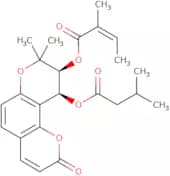
Praeruptorin E
CAS:<p>Praeruptorin E is a natural furanocoumarin, which is derived from the roots of Peucedanum praeruptorum, a plant commonly used in traditional Chinese medicine. As a bioactive compound, Praeruptorin E exhibits significant pharmacological activities, particularly in cardiovascular, anti-inflammatory, and cytoprotective domains.</p>Pureza:Min. 95%5-Hydroxyquinolin-2(1H)-one
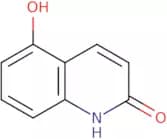
CAS:<p>5-Hydroxyquinolin-2(1H)-one is a chalcone that can be synthesized from 2,5-dihydroxybenzaldehyde and quinoline. It is a bacteriostatic agent that inhibits bacterial growth by binding to the 50S ribosomal subunit, blocking the formation of an antibiotic-substrate complex with the enzyme cell wall synthesis that is required for cell wall biosynthesis, inhibiting protein synthesis and cell division. 5-Hydroxyquinolin-2(1H)-one has shown activity against methicillin resistant Staphylococcus aureus (MRSA) and methicillin resistant Enterococcus faecium. 5-Hydroxyquinolin-2(1H)-one also represses the expression of DNA topoisomerase II genes, which may be associated with its inhibitory effects on bacterial growth.</p>Fórmula:C9H7NO2Pureza:Min. 95%Peso molecular:161.16 g/mol3-{[(3,4-Dichlorophenyl)amino]carbonyl}bicyclo[2.2.1]hept-5-ene-2-carboxylic acid
CAS:<p>Please enquire for more information about 3-{[(3,4-Dichlorophenyl)amino]carbonyl}bicyclo[2.2.1]hept-5-ene-2-carboxylic acid including the price, delivery time and more detailed product information at the technical inquiry form on this page</p>Fórmula:C15H13Cl2NO3Pureza:Min. 95%Peso molecular:326.17 g/mol4-fluoro-1-methyl-1,4-diazoniabicyclo[2.2.2]octane
CAS:<p>4-fluoro-1-methyl-1,4-diazoniabicyclo[2.2.2]octane (ditetrafluor) is a fluorine containing compound that can be used to treat cancer cells. It is a chiral molecule with four stereoisomers, two of which are active against cancer cells and the other two are inactive. Ditetrafluor has been shown to have antiviral activity against influenza A virus by inhibiting viral replication, but it does not have any effect on the common cold virus. This drug is also able to inhibit syncytia formation in cultured cells and has been shown to be effective in treating malaria caused by Plasmodium falciparum.</p>Fórmula:C7H15B2F9N2Pureza:Min. 95%Peso molecular:319.82 g/mol2-Hydroxyquinoline-4-carboxylic acid
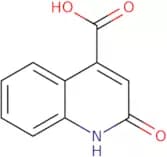
CAS:<p>2-Hydroxyquinoline-4-carboxylic acid is a carboxylate that is structurally classified as a multidrug. It has been shown to inhibit bacterial efflux pumps and target enzymes, such as cancer cells and multidrug resistant bacteria. 2-Hydroxyquinoline-4-carboxylic acid also has potent antibacterial activity against Streptococcus faecalis, an opportunistic pathogen that causes infections in the urinary tract and on skin wounds. The fluorescence properties of this compound can be used for fluorescent labeling of biomolecules or for sensing applications.</p>Fórmula:C10H7NO3Pureza:Min. 95%Forma y color:PowderPeso molecular:189.17 g/mol4-Hydroxy-7-methoxyquinoline
CAS:<p>4-Hydroxy-7-methoxyquinoline is an anti-malarial drug that belongs to the class of trimethyl, trifluoromethyl group. It is a cyclic compound and its synthesis starts with cyclization of the methyl derivative, which forms a ring. This product is used in clinical practice as an inhibitor of malarial protozoa and has been shown to have mechanistic effects on the cytochrome bc1 complex containing red blood cells. 4-Hydroxy-7-methoxyquinoline also inhibits the growth of bacteria by binding to the enzyme methionine synthase, which is involved in the biosynthesis of methionine from homocysteine. The product also has an inhibitory effect on DNA synthesis and protein synthesis.</p>Fórmula:C10H9NO2Pureza:Min. 95%Peso molecular:175.18 g/molNeobyakangelicol
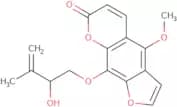
CAS:<p>Neobyakangelicol is a phytochemical compound, which is a natural product derived from various plant species. Its source is predominantly the roots of certain medicinal plants that are known for their array of bioactive constituents. The mode of action of Neobyakangelicol primarily involves interacting with specific biochemical pathways, potentially including modulation of enzyme activity or receptor binding, which could result in diverse pharmacological effects.</p>Fórmula:C17H16O6Pureza:Min. 95%Peso molecular:316.31 g/mol2-Hydroxy-4-methylquinoline
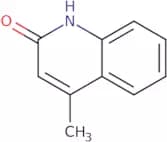
CAS:<p>2-Hydroxy-4-methylquinoline is an organic compound that has a chelate ring. It is soluble in deionized water and reacts with metal ions to form a fluorescent product. The molecule also has antibacterial activity, which may be due to its ability to inhibit the growth of bacteria by acting as a metal ion chelator. 2-Hydroxy-4-methylquinoline can react with halides and ammonium persulfate to form isomeric products, such as 4,5-dihydroxyquinoline, which have been shown to have antimicrobial properties. 2-Hydroxy-4-methylquinoline can also react with phosphorus oxychloride and alkylating agents such as chloroethane or chloroform to form substituted derivatives.</p>Fórmula:C10H9NOPureza:Min. 95%Forma y color:PowderPeso molecular:159.18 g/molEthyl5-acetoxy-6-bromo-2-(bromomethyl)-1-methyl-1H-indole-3-carboxylate
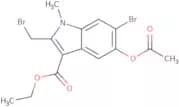
CAS:Producto controlado<p>Ethyl 5-acetoxy-6-bromo-2-(bromomethyl)-1-methyl-1H-indole-3-carboxylate is a chemical compound that has been shown to have anti viral activity in vitro. The structure of the compound suggests that it may inhibit the production of inflammatory cytokines. This drug inhibits the activity of enzymes such as hydroxylases and lipases, which are important for the inflammatory process. Ethyl 5-acetoxy-6-bromo-2-(bromomethyl)-1-methyl-1H-indole-3 carboxylate may be an effective treatment for bowel disease and other inflammatory conditions.</p>Fórmula:C15H15Br2NO4Pureza:Min. 95%Peso molecular:433.09 g/molOstruthin
CAS:<p>Ostruthin is a naturally occurring coumarin derivative, which is isolated from plants such as *Peucedanum ostruthium* and other species within the Apiaceae family. It functions as an enzyme inhibitor, acting primarily through its interference with various cellular processes, including the inhibition of specific enzyme pathways that contribute to its bioactivity. Ostruthin exhibits a range of biological activities, making it of significant interest in pharmacological research.</p>Fórmula:C19H22O3Pureza:Min. 95%Peso molecular:298.38 g/molSelinidin
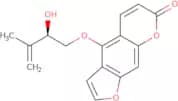
CAS:<p>Selinidin is a phytochemical compound, which is derived from the natural source of the Brunsvigia bosmaniae plant. As a bioactive constituent of this plant, it is characterized by its unique structure and chemical properties, enabling it to interact with a variety of cellular targets, primarily through modulation of inflammatory pathways. The mode of action of Selinidin involves the inhibition of pro-inflammatory cytokines and mediators, thereby reducing inflammation and oxidative stress at the cellular level.</p>Fórmula:C19H20O5Pureza:Min. 95%Peso molecular:328.36 g/molPangelin
CAS:<p>Pangelin is a novel biochemical agent, which is meticulously derived from a unique microbial source with advanced bioconversion techniques. This product functions primarily through a targeted enzymatic mechanism that modulates specific biochemical pathways, ensuring high specificity and efficacy in its action. The enzymatic process engages with targeted substrates to yield predictable and controlled outcomes, making it a potentially valuable tool in biochemical research and applications.</p>Fórmula:C16H14O5Pureza:Min. 95%Peso molecular:286.28 g/mol4-Cinnolinecarboxaldehyde
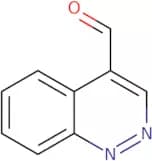
CAS:<p>4-Cinnolinecarboxaldehyde is an organic compound that belongs to the group of cinnoline. It is a colorless liquid that can be used as a precursor in the production of aluminum metal. 4-Cinnolinecarboxaldehyde reacts with lithium aluminum hydride to form a compound that can be used as a reducing agent in organic chemistry. 4-Cinnolinecarboxaldehyde is also used as a precursor for preparing other compounds, such as lithium aluminum hydride and lithium aluminum trihydride.</p>Fórmula:C9H6N2OPureza:Min. 95%Peso molecular:158.16 g/mol1,2,3,4,5,6-Hexahydro-1,5-methano-pyrido-[1,2-a][1,5]diazocin-8-one
CAS:<p>1,2,3,4,5,6-Hexahydro-1,5-methano-pyrido-[1,2-a][1,5]diazocin-8-one is a cholinergic drug that is used as a research tool in vitro. It has been shown to increase the concentration of acetylcholine in the synapse. It is also known as cytisine and varenicline. 1,2,3,4,5,6-Hexahydro-1,5-methano-pyrido-[1,2-a][1,5]diazocin-8-one binds to nicotinic receptors and stimulates them. This increased activity of nicotinic receptors leads to the release of acetylcholine (ACh), which is an important neurotransmitter in the brain. 1,2,3,4 5 6 hexahydro - 1 5</p>Fórmula:C11H14N2OPureza:Min. 95%Peso molecular:190.24 g/mol3-Bromoquinoline
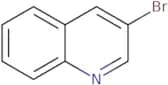
CAS:<p>3-Bromoquinoline is a brominated quinoline derivative that can be synthesized by cross-coupling reactions. The compound's chemical structure is similar to the 3-azidoquinoline, which was studied in quantum theory and molecular modeling. The 3-bromoquinoline molecule has been shown to exist in two different coordination geometries: octahedral and trigonal bipyramidal. In the octahedral geometry, the 3-bromoquinoline molecule is bound to three bromine atoms and one nitrogen atom, with an intramolecular hydrogen bond between the nitrogen atom and the quinoline ring system. The trigonal bipyramidal geometry also features an intramolecular hydrogen bond between the nitrogen atom and quinoline ring system, as well as a halogen bonding interaction with one of the three bromine atoms.</p>Fórmula:C9H6BrNPureza:Min. 95%Forma y color:Yellow PowderPeso molecular:208.05 g/mol1-Methyl-1H-indole-3-carbohydrazide
CAS:Producto controlado<p>1-Methyl-1H-indole-3-carbohydrazide (MZ) is a potential anticancer drug that inhibits the growth of cancer cells. It binds to the colchicine binding site on the DNA, which prevents doxorubicin from binding and causing damage to the DNA. MZ has been shown to be effective against breast cancer and has been shown to inhibit tumor growth in mice by targeting cancer cells lines. MZ also inhibits proliferation of MDA-MB-231 cells in culture, as well as inhibiting cell cycle progression, leading to apoptosis. The molecular docking studies show that 1MZ binds to colchicine site on DNA with high affinity and specificity.</p>Fórmula:C10H11N3OPureza:Min. 95%Peso molecular:189.21 g/molOxypeucedanin methanolate
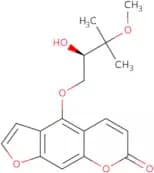
CAS:<p>Oxypeucedanin methanolate is a naturally occurring furanocoumarin, which is a type of organic compound found predominantly in several citrus plants. This compound is derived from the peels and essential oils of these plants, highlighting its botanical source that is rich in phytochemicals.</p>Fórmula:C17H18O6Pureza:Min. 95%Peso molecular:318.32 g/mol8-Bromoisoquinoline
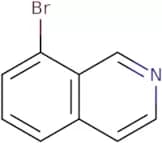
CAS:<p>8-Bromoisoquinoline is a bifunctional alkylating agent that is used to synthesize esters and amides. It is commonly used for the synthesis of amino acids, peptides, and other biologically active molecules. 8-Bromoisoquinoline has been shown to have a synergistic effect with hydroxyalkyl carbamates, which may be due to its ability to form an ionic bond with the carboxylic acid in these compounds. This chemical can also react with nitro groups and serve as a chlorinating agent, as well as react with anions such as phosphate and acetate. 8-Bromoisoquinoline can be synthesized by reacting ethyl bromoacetate with tetrahydroisoquinolinium chloride in hydrochloric acid or isopropyl alcohol.</p>Fórmula:C9H6BrNPureza:Min. 95%Forma y color:PowderPeso molecular:208.05 g/mol1H-Cyclopenta[l]phenanthrene
CAS:<p>1H-Cyclopenta[l]phenanthrene is a five-membered cyclic hydrocarbon that binds to phosphine and is used in the synthesis of ferrocenes. It is also unsymmetrical and anion-forming. 1H-Cyclopenta[l]phenanthrene can be protonated at carbon, which makes it a good ligand. 1H-Cyclopenta[l]phenanthrene has been shown to react with carbonyls, imines, and ethylene to form organometallic complexes.</p>Fórmula:C17H12Pureza:Min. 95%Forma y color:PowderPeso molecular:216.28 g/mol1,1'-Bicyclo[1,1,1]pentane-1,3-dicarboxylic acid monomethyl ester
CAS:<p>1,1'-Bicyclo[1,1,1]pentane-1,3-dicarboxylic acid monomethyl ester is a chemical compound used in research and as a building block for complex compounds. It is a high quality and versatile compound that has a wide range of uses in the production of fine chemicals. This compound is an intermediate for the synthesis of 1,4-benzodioxan. CAS No. 83249-10-9</p>Fórmula:C8H10O4Pureza:Min. 95%Forma y color:White PowderPeso molecular:170.16 g/mol

![3-{[(3,4-Dichlorophenyl)amino]carbonyl}bicyclo[2.2.1]hept-5-ene-2-carboxylic acid](/_next/image/?url=https%3A%2Fstatic.cymitquimica.com%2Fproducts%2F3D%2Fthumb-webp%2FFD136060.webp&w=3840&q=75)
![4-fluoro-1-methyl-1,4-diazoniabicyclo[2.2.2]octane](/_next/image/?url=https%3A%2Fstatic.cymitquimica.com%2Fproducts%2F3D%2Fthumb-webp%2FFF106220.webp&w=3840&q=75)



![1,2,3,4,5,6-Hexahydro-1,5-methano-pyrido-[1,2-a][1,5]diazocin-8-one](/_next/image/?url=https%3A%2Fstatic.cymitquimica.com%2Fproducts%2F3D%2Fthumb-webp%2FFD117142.webp&w=3840&q=75)

![1H-Cyclopenta[l]phenanthrene](/_next/image/?url=https%3A%2Fstatic.cymitquimica.com%2Fproducts%2F3D%2Fthumb-webp%2FFC60818.webp&w=3840&q=75)
![1,1'-Bicyclo[1,1,1]pentane-1,3-dicarboxylic acid monomethyl ester](/_next/image/?url=https%3A%2Fstatic.cymitquimica.com%2Fproducts%2F3D%2Fthumb-webp%2FFB33677.webp&w=3840&q=75)