Compuestos policíclicos
Subcategorías de "Compuestos policíclicos"
- Acridinas(98 productos)
- Antraquinonas(533 productos)
- Ácidos antraquinonesulfónicos(16 productos)
- Azobencenos(270 productos)
- Azonaftalenos(98 productos)
- Azoxibencenos(12 productos)
- Azulenos(11 productos)
- Benzimidazoles(1.476 productos)
- Benzodioxanos(27 productos)
- Benzofuranos(928 productos)
- Benzotiofenos(701 productos)
- Benzotriazoles(438 productos)
- Binaftilos(133 productos)
- Carbazoles(464 productos)
- Cromanos, Cromatos(480 productos)
- Cumarinas(1.124 productos)
- Ciclofanos(11 productos)
- Fluorenos y fluorenonas(384 productos)
- Imidazopiridinas(10 productos)
- Indans(118 productos)
- Indazoles(2.038 productos)
- Indenes(22 productos)
- Indoles(3.986 productos)
- Indolines(119 productos)
- Isatinos(234 productos)
- Isobenzofuranos(17 productos)
- Ftalimidas N-sustituidas(153 productos)
- Naftalenos(2.438 productos)
- Naftiridinas(17 productos)
- Naftoquinona(2 productos)
- Perilenos(36 productos)
- Fenazinas(25 productos)
- Ftalazinas(33 productos)
- Ftalimida(153 productos)
- Hidrocarburos aromáticos policíclicos (HAP)(285 productos)
- Polifenol(270 productos)
- Pteridinas(52 productos)
- Pirenos(87 productos)
- Quinuclidina(1 productos)
- Tetracenos(7 productos)
Se han encontrado 4575 productos de "Compuestos policíclicos"
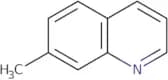
7-Methylquinoline
CAS:7-Methylquinoline is an organic compound that can be used to synthesize antimalarial drugs. It is a quinoline derivative with a methyl group at the 7th position. The structure of 7-methylquinoline contains a nitrogen atom and hydrogen atoms, which are bonded to fluorine, chlorine, and bromine atoms. This molecule has been shown to be stable in the presence of Friedel-Crafts catalysts and chloride ions. The reaction mechanism for 7-methylquinoline is intramolecular hydrogen transfer from the chloroform molecule to the quinoline ring system. The formation rate for this compound is slow because it requires two steps: nucleophilic substitution and electrophilic addition reactions.
Fórmula:C10H9NPureza:Min. 95%Peso molecular:143.19 g/mol7,8-Methylenedioxycoumarin
CAS:7,8-Methylenedioxycoumarin is a furanocoumarin compound, which is a type of organic molecule characterized by a coumarin core with an additional methylenedioxy group. It is primarily sourced from various plant species, particularly those in the Rutaceae family, where it is found in essential oils and extracts. The mode of action of 7,8-Methylenedioxycoumarin involves its natural fluorescing properties, making it highly valuable for use in various biochemical assays where visualization is key. Due to its unique chemical structure, it efficiently absorbs ultraviolet light and emits visible fluorescence, which is exploited in photochemistry and as a biological marker. Its applications extend to the fields of pharmaceuticals and environmental sciences, where it serves in drug development studies and as a tool for tracking organic pollutants in ecosystems. Researchers continue to explore its potential uses due to its distinctive chemical behavior and natural origin.
Fórmula:C10H6O4Pureza:Min. 95%Peso molecular:190.15 g/mol1,2,3,4,5,6-Hexahydro-1,5-methano-pyrido-[1,2-a][1,5]diazocin-8-one
CAS:1,2,3,4,5,6-Hexahydro-1,5-methano-pyrido-[1,2-a][1,5]diazocin-8-one is a cholinergic drug that is used as a research tool in vitro. It has been shown to increase the concentration of acetylcholine in the synapse. It is also known as cytisine and varenicline. 1,2,3,4,5,6-Hexahydro-1,5-methano-pyrido-[1,2-a][1,5]diazocin-8-one binds to nicotinic receptors and stimulates them. This increased activity of nicotinic receptors leads to the release of acetylcholine (ACh), which is an important neurotransmitter in the brain. 1,2,3,4 5 6 hexahydro - 1 5Fórmula:C11H14N2OPureza:Min. 95%Peso molecular:190.24 g/mol3-Bromoquinoline
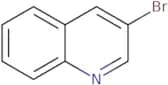
CAS:3-Bromoquinoline is a brominated quinoline derivative that can be synthesized by cross-coupling reactions. The compound's chemical structure is similar to the 3-azidoquinoline, which was studied in quantum theory and molecular modeling. The 3-bromoquinoline molecule has been shown to exist in two different coordination geometries: octahedral and trigonal bipyramidal. In the octahedral geometry, the 3-bromoquinoline molecule is bound to three bromine atoms and one nitrogen atom, with an intramolecular hydrogen bond between the nitrogen atom and the quinoline ring system. The trigonal bipyramidal geometry also features an intramolecular hydrogen bond between the nitrogen atom and quinoline ring system, as well as a halogen bonding interaction with one of the three bromine atoms.
Fórmula:C9H6BrNPureza:Min. 95%Forma y color:Yellow PowderPeso molecular:208.05 g/molRef: 3D-FB15276
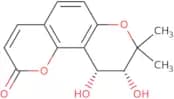
Producto descatalogadocis-Khellactone
CAS:cis-Khellactone is a naturally occurring organic compound, which is a type of coumarin derivative sourced predominantly from the roots of Peucedanum and Angelica species, plants native to various regions. These botanical sources are known for yielding secondary metabolites with diverse biological properties.
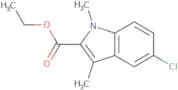
Fórmula:C14H14O5Pureza:Min. 95%Peso molecular:262.26 g/molEthyl 5-chloro-1,3-dimethyl-1H-indole-2-carboxylate
CAS:Producto controladoPlease enquire for more information about Ethyl 5-chloro-1,3-dimethyl-1H-indole-2-carboxylate including the price, delivery time and more detailed product information at the technical inquiry form on this page
Fórmula:C13H14ClNO2Pureza:Min. 95%Peso molecular:251.71 g/molRef: 3D-FE118355
Producto descatalogado1-Methyl-2-(piperazin-1-ylcarbonyl)-1H-indole hydrochloride
CAS:Producto controladoPlease enquire for more information about 1-Methyl-2-(piperazin-1-ylcarbonyl)-1H-indole hydrochloride including the price, delivery time and more detailed product information at the technical inquiry form on this pageFórmula:C14H17N3OPureza:Min. 95%Peso molecular:243.3 g/molRef: 3D-FM125004
Producto descatalogado(1R,4R,5R)-4,7,7-Trimethyl-6-thiabicyclo[3.2.1]octane
CAS:Please enquire for more information about (1R,4R,5R)-4,7,7-Trimethyl-6-thiabicyclo[3.2.1]octane including the price, delivery time and more detailed product information at the technical inquiry form on this pageFórmula:C10H18SPureza:90%MinPeso molecular:170.32 g/molRef: 3D-FT60017
Producto descatalogadoTegerrardin A
CAS:Tegerrardin A is an innovative biopesticide derived from microbial fermentation processes, harnessing the potency of naturally occurring microorganisms. It is formulated to exploit the specific biochemical mechanisms within targeted pest populations, effectively disrupting their vital physiological functions. This selective mode of action is achieved through the inhibition of key enzymes essential for pest survival and proliferation, resulting in decreased pest pressure and improved crop health.
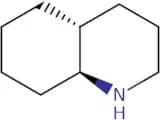
Fórmula:C15H13NO3Pureza:Min. 95%Peso molecular:255.27 g/moltrans-Decahydroquinoline
CAS:Trans-decahydroquinoline is a chiral compound that can be synthesized by an asymmetric synthesis. It is an amide with a carbonyl group and a dialkylamino group. Trans-decahydroquinoline can be used to synthesize different compounds, such as enantiopure drugs, pharmaceuticals, and agrochemicals. The synthesis of trans-decahydroquinoline can be accomplished through the aldol cyclization or the addition of an acid to the carbonyl group. The magnetic resonance spectroscopy (NMR) and molecular modeling techniques have been used to study its structure and properties.
Fórmula:C9H17NPureza:Min. 95%Peso molecular:139.24 g/molRef: 3D-FD76040
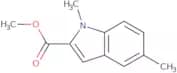
Producto descatalogadoMethyl 1,5-dimethyl-1H-indole-2-carboxylate
CAS:Producto controladoPlease enquire for more information about Methyl 1,5-dimethyl-1H-indole-2-carboxylate including the price, delivery time and more detailed product information at the technical inquiry form on this pageFórmula:C12H13NO2Pureza:Min. 95%Peso molecular:203.24 g/molRef: 3D-FM118276
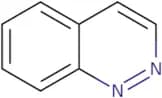
Producto descatalogadoCinnoline
CAS:Cinnoline is a chemical compound that is structurally similar to phenol, containing a hydroxyl group, two nitrogen atoms and a cyclic structure. Cinnoline has been shown to have anti-inflammatory activity in rats with adjuvant-induced arthritis. The mechanism of the anti-inflammatory effect of cinnoline is not fully understood, but it may be due to its stability and ability to bind to biological molecules or its conformational properties. Cinnoline does not react with nitric acid, making it a good candidate for use in infectious diseases such as tuberculosis. It has also been shown to be stable in human serum and has low pharmacokinetic properties. The fluorescence intensity of cinnoline was found to increase when exposed to an electrochemical potential and can be used as a probe molecule for pharmacokinetics studies.
Fórmula:C8H6N2Pureza:Min. 95%Forma y color:PowderPeso molecular:130.15 g/mol(3R)-1-Azabicyclo[2.2.2]oct-3-yl N-[2-(2-benzoylphenyl)ethyl]carbamate
CAS:Please enquire for more information about (3R)-1-Azabicyclo[2.2.2]oct-3-yl N-[2-(2-benzoylphenyl)ethyl]carbamate including the price, delivery time and more detailed product information at the technical inquiry form on this page
Fórmula:C23H26N2O3Pureza:Min. 95%Peso molecular:378.46 g/molRef: 3D-FQ171047
Producto descatalogadoQuinoline-6-sulfonyl chloride
CAS:Please enquire for more information about Quinoline-6-sulfonyl chloride including the price, delivery time and more detailed product information at the technical inquiry form on this page
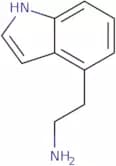
Fórmula:C9H6ClNO2SPureza:Min. 95%Peso molecular:227.67 g/mol1H-Indole-4-ethanamine
CAS:Producto controladoPlease enquire for more information about 1H-Indole-4-ethanamine including the price, delivery time and more detailed product information at the technical inquiry form on this page
Fórmula:C10H12N2Pureza:Min. 95%Peso molecular:160.22 g/molRef: 3D-FI150316
Producto descatalogado4-Bromoisoindoline hydrochloride
CAS:4-Bromoisoindoline hydrochloride (BII) is a chemical compound that can be used as a building block for making other chemicals. It can also be used to make research chemicals or as a reaction component in the synthesis of other compounds. It has been shown to be an effective reagent and is useful for the production of fine chemicals with high purity.
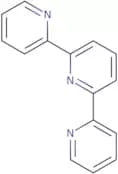
Fórmula:C8H9BrClNPureza:Min. 95%Forma y color:PowderPeso molecular:234.52 g/mol2,2', 2'' -Terpyridine
CAS:2,2', 2'' -Terpyridine is a chelate ligand that is used in wastewater treatment. It can be synthesized by reacting 2-aminopyridine with ethylene diamine and 2,4-dichloro-1,3-dithiolane. The x-ray crystal structures of the ligand show that it has a coordination geometry of octahedral and its reaction mechanism is an oxidation. The chelate ligand binds to the metal ion in the same way as other ligands and stabilizes it by forming hydrogen bonds. This compound has significant cytotoxicity against carcinoma cell lines and also inhibits the mitochondrial membrane potential (MMP). 2,2', 2'' -Terpyridine is classified as group p2 due to its redox potentials and cytotoxicity.
Fórmula:C15H11N3Pureza:Min. 95%Peso molecular:233.27 g/molTricyclohexylphosphine
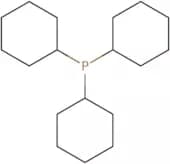
CAS:Tricyclohexylphosphine is a compound that is used in organic synthesis to form stable complexes with reactive functional groups such as trifluoroacetic acid, glycol ethers, and sodium carbonate. The reaction solution of these compounds forms a complex with copper chloride and fluorescence probe, which can be analyzed by x-ray crystallography. The reaction mechanism of this compound involves coordination geometry and hydroxyl group. Its basic structure is a trivalent phosphorus atom coordinated to three ligands. Structural analysis of this compound has been done using kinetic data and the results have indicated that the reaction proceeds through an SN2-like mechanism.
Fórmula:C18H33PPureza:Min. 95%Forma y color:White PowderPeso molecular:280.43 g/mol2-Amino-6-chloropurine
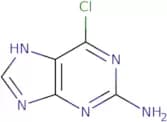
CAS:2-Amino-6-chloropurine is a nucleophilic substituent that is used in the synthesis of 2-amino-6-chloropurine. It reacts with hydroxyl groups to form a palladium-catalyzed coupling reaction solution, which is then treated with hydrochloric acid and trifluoroacetic acid. The product is purified by crystallization and recrystallization. This compound has potent antitumor activity against carcinoma cell lines, but it has not been shown to have any effect against Mycobacterium tuberculosis.
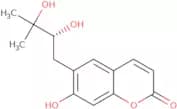
Fórmula:C5H4ClN5Pureza:Min. 95%Forma y color:Off-White PowderPeso molecular:169.57 g/mol(+)-Peucedanol
CAS:(+)-Peucedanol is a sesquiterpene compound, which is a type of natural organic compound composed of three isoprene units resulting in a 15-carbon backbone. It is derived from various species within the plant genus Peucedanum, known for their rich content of bioactive compounds. The stereoisomerism indicated by the "(+)" suggests a specific three-dimensional configuration that may influence its biological activity.
Fórmula:C14H16O5Pureza:Min. 95%Peso molecular:264.27 g/molRef: 3D-FP145196
Producto descatalogado


![1,2,3,4,5,6-Hexahydro-1,5-methano-pyrido-[1,2-a][1,5]diazocin-8-one](/_next/image/?url=https%3A%2Fstatic.cymitquimica.com%2Fproducts%2F3D%2Fthumb-webp%2FFD117142.webp&w=3840&q=75)
![(1R,4R,5R)-4,7,7-Trimethyl-6-thiabicyclo[3.2.1]octane](/_next/image/?url=https%3A%2Fstatic.cymitquimica.com%2Fproducts%2F3D%2Fthumb-webp%2FFT60017.webp&w=3840&q=75)
![(3R)-1-Azabicyclo[2.2.2]oct-3-yl N-[2-(2-benzoylphenyl)ethyl]carbamate](/_next/image/?url=https%3A%2Fstatic.cymitquimica.com%2Fproducts%2F3D%2Fthumb-webp%2FFQ171047.webp&w=3840&q=75)