Cumarinas
Las cumarinas son una clase de compuestos aromáticos policíclicos que consisten en un anillo de benceno fusionado con un anillo de pirona. Estos compuestos son ampliamente utilizados como fragancias, agentes saborizantes y en la síntesis de productos farmacéuticos y agroquímicos. Las cumarinas exhiben varias actividades biológicas, incluidas propiedades anticoagulantes, antiinflamatorias y antimicrobianas. En CymitQuimica, ofrecemos una amplia selección de cumarinas de alta calidad para apoyar sus investigaciones y aplicaciones industriales.
Se han encontrado 1121 productos de "Cumarinas"
Ordenar por
Pureza (%)
0
100
|
0
|
50
|
90
|
95
|
100
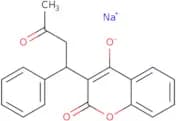
3-(α-Acetonylbenzyl)-4-hydroxycoumarin sodium
CAS:<p>3-(α-Acetonylbenzyl)-4-hydroxycoumarin sodium is an anticoagulant compound, which is a synthetic derivative of coumarin. It is primarily sourced via chemical synthesis in laboratory settings. Its mode of action involves inhibiting the synthesis of vitamin K-dependent clotting factors, specifically factors II, VII, IX, and X. This inhibition impairs blood coagulation, leading to uncontrolled bleeding.</p>Fórmula:C19H15NaO4Pureza:Min. 95%Forma y color:White PowderPeso molecular:330.31 g/molPraeruptorin E
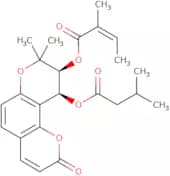
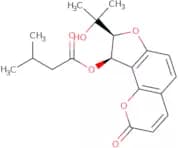
CAS:<p>Praeruptorin E is a natural furanocoumarin, which is derived from the roots of Peucedanum praeruptorum, a plant commonly used in traditional Chinese medicine. As a bioactive compound, Praeruptorin E exhibits significant pharmacological activities, particularly in cardiovascular, anti-inflammatory, and cytoprotective domains.</p>Pureza:Min. 95%Calipteryxin
CAS:<p>Please enquire for more information about Calipteryxin including the price, delivery time and more detailed product information at the technical inquiry form on this page</p>Fórmula:C24H26O7Pureza:Min. 95%Peso molecular:426.46 g/molFraxinol
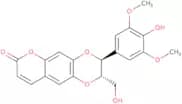
CAS:<p>Fraxinol is a natural lignan, which is a small class of polyphenols, derived from the inner bark of the Ash tree (Fraxinus species). Its primary action is believed to involve antioxidant and anti-inflammatory pathways, where it scavenages reactive oxygen species and modulates cytokine production. This activity suggests potential modulation of cellular oxidative stress responses, contributing to its therapeutic interest.</p>Pureza:Min. 95%7,8-Dihydroxy-4-methylcoumarin
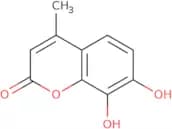
CAS:<p>7,8-Dihydroxy-4-methylcoumarin is a bioactive compound, specifically a derivative of coumarin. This compound is naturally derived from plant sources, where it acts as a metabolite in various biochemical pathways. Its chemical structure is characterized by the presence of two hydroxyl groups at the 7 and 8 positions, along with a methyl group at the 4 position of the coumarin core, contributing to its unique pharmacological profile.</p>Fórmula:C10H8O4Pureza:Min. 95%Peso molecular:192.17 g/molPrenyletin methyl ether
CAS:<p>Prenyletin methyl ether is a flavonoid compound, which is a naturally occurring polyphenolic molecule sourced primarily from specific plant species. This compound exerts its effects through a variety of biochemical interactions, notably influencing cellular signaling pathways, including antioxidative and anti-inflammatory processes.</p>Fórmula:C15H16O4Pureza:Min. 95%Peso molecular:260.29 g/mol7-Ethoxy-4-methylcoumarin
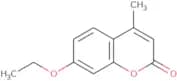
CAS:<p>7-Ethoxy-4-methylcoumarin is a fluorescent probe, which is a synthetic compound commonly sourced from organic chemical synthesis. With its distinct chromophore, this compound becomes highly fluorescent upon enzymatic cleavage, offering a reliable mechanism for the detection of specific enzymatic activities. The mode of action involves the enzymatic cleavage of the ethoxy group, leading to the release of 4-methylumbelliferone, a fluorescent product. This conversion provides a measurable signal that correlates with enzyme activity, making it an invaluable tool in studying enzyme kinetics.</p>Fórmula:C12H12O3Pureza:Min. 95%Forma y color:PowderPeso molecular:204.22 g/molFraxetin
CAS:<p>Fraxetin is a chemical compound known as a coumarin derivative, which is a natural product primarily sourced from various plant species. As a member of the coumarin family, fraxetin is often extracted from the roots, bark, and leaves of plant sources like Fraxinus species and other related flora. The compound operates through an array of biochemical pathways, prominently exhibiting antioxidant and anti-inflammatory properties. It acts by scavenging free radicals and modulating oxidative stress-related pathways, while also influencing the expression of various inflammatory cytokines.</p>Fórmula:C10H8O5Peso molecular:208.17 g/molRef: 3D-Q-100662
1gA consultar5gA consultar10gA consultar500mgA consultar2500mgA consultar-Unit-ggA consultarDaphnetin-8-methyl ether
CAS:<p>Daphnetin-8-methyl ether is a naturally derived coumarin compound, which is predominantly sourced from the Daphne genus of plants, among other botanical species known for their therapeutic potential. This compound is recognized for its biochemical interaction with key cellular pathways, particularly through the modulation of enzymes and receptors associated with inflammatory and oxidative stress responses.</p>Fórmula:C10H8O4Pureza:Min. 95%Peso molecular:192.17 g/molSuberosin epoxide
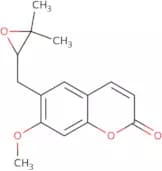
CAS:<p>Suberosin epoxide is a naturally occurring compound, classified as a type of sesquiterpene lactone, which is extracted from certain plant species, particularly those belonging to the Rutaceae family. This compound is of significant interest due to its biologically active properties. Its mode of action typically involves the modulation of enzymatic pathways within biological systems, often interacting with cellular proteins and potentially affecting signal transduction processes.</p>Pureza:Min. 95%Ostruthin
CAS:<p>Ostruthin is a naturally occurring coumarin derivative, which is isolated from plants such as *Peucedanum ostruthium* and other species within the Apiaceae family. It functions as an enzyme inhibitor, acting primarily through its interference with various cellular processes, including the inhibition of specific enzyme pathways that contribute to its bioactivity. Ostruthin exhibits a range of biological activities, making it of significant interest in pharmacological research.</p>Fórmula:C19H22O3Pureza:Min. 95%Peso molecular:298.38 g/mol7-Geranyloxycoumarin
CAS:<p>7-Geranyloxycoumarin is a naturally occurring coumarin derivative, which is primarily sourced from plant species in the Rutaceae family. It is a bioactive compound known for its presence in various essential oils and its contribution to the properties of these plant extracts. The mode of action of 7-Geranyloxycoumarin involves interactions at the cellular level, including enzyme inhibition and modulation of signal transduction pathways, which can lead to diverse pharmacological effects.</p>Fórmula:C19H22O3Pureza:Min. 95%Forma y color:PowderPeso molecular:298.38 g/molMoluccanin
CAS:<p>Please enquire for more information about Moluccanin including the price, delivery time and more detailed product information at the technical inquiry form on this page</p>Pureza:Min. 95%Vaginidin
CAS:<p>Please enquire for more information about Vaginidin including the price, delivery time and more detailed product information at the technical inquiry form on this page</p>Fórmula:C19H22O6Pureza:Min. 95%Peso molecular:346.37 g/mol7-Prenyloxyumbelliferone
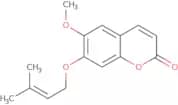
<p>7-Prenyloxyumbelliferone is a natural coumarin derivative, which is primarily sourced from plants belonging to the Rutaceae and Apiaceae families. This compound exhibits a range of biological activities, including anti-inflammatory, antioxidant, and antimicrobial properties. The mode of action of 7-Prenyloxyumbelliferone involves the modulation of specific enzymes and signaling pathways, such as the inhibition of cyclooxygenase and lipoxygenase, and the scavenging of free radicals, which collectively contribute to its pharmacological effects.</p>Pureza:Min. 95%7,8-Methylenedioxycoumarin
CAS:<p>7,8-Methylenedioxycoumarin is a furanocoumarin compound, which is a type of organic molecule characterized by a coumarin core with an additional methylenedioxy group. It is primarily sourced from various plant species, particularly those in the Rutaceae family, where it is found in essential oils and extracts. The mode of action of 7,8-Methylenedioxycoumarin involves its natural fluorescing properties, making it highly valuable for use in various biochemical assays where visualization is key. Due to its unique chemical structure, it efficiently absorbs ultraviolet light and emits visible fluorescence, which is exploited in photochemistry and as a biological marker. Its applications extend to the fields of pharmaceuticals and environmental sciences, where it serves in drug development studies and as a tool for tracking organic pollutants in ecosystems. Researchers continue to explore its potential uses due to its distinctive chemical behavior and natural origin.</p>Fórmula:C10H6O4Pureza:Min. 95%Peso molecular:190.15 g/mol7-Amino-4-(methoxymethyl)coumarin
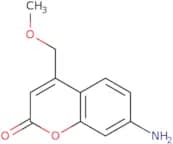
CAS:<p>7-Amino-4-(methoxymethyl)coumarin is a fluorogenic compound, which is synthesized chemically for bioanalytical applications. This compound serves as a substrate in enzyme assays and is particularly valuable in studying enzymatic activity due to its fluorescent properties.</p>Fórmula:C11H11NO3Pureza:Min. 95%Peso molecular:205.21 g/molScopoletin-2',3'-epoxy-3'-methylbutyl ether
<p>Scopoletin-2',3'-epoxy-3'-methylbutyl ether is a synthetic derivative of scopoletin, which is a coumarin compound. This ether derivative is primarily obtained from chemical synthesis processes designed to modify the parent compound, scopoletin, which is naturally found in various plants, such as those in the Asteraceae and Rubiaceae families. The mode of action typically involves the modulation of biochemical pathways, primarily through interacting with enzymes or receptors that regulate oxidative stress or inflammation.</p>Pureza:Min. 95%Cichoriin
CAS:<p>Cichoriin is a coumarin glycoside, which is a type of phytochemical compound found in certain plants. It is primarily sourced from plants of the Asteraceae family, particularly chicory (Cichorium intybus). The compound exhibits its biochemical effects by interacting with various cellular pathways, including acting as an antioxidant and displaying potential anti-inflammatory and antimicrobial properties.</p>Fórmula:C15H16O9Pureza:Min. 95%Peso molecular:340.28 g/mol7-(Diethylamino)-3-(1-methyl-2-benzimidazolyl)coumarin
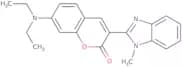
CAS:<p>7-(Diethylamino)-3-(1-methyl-2-benzimidazolyl)coumarin is a fluorescent dye, which is synthesized through chemical derivatization of coumarin compounds. Originating from coumarin, a naturally occurring compound in plants, this dye is particularly noted for its ability to fluoresce under UV and visible light.</p>Fórmula:C21H21N3O2Pureza:Min. 95%Peso molecular:347.41 g/mol